Romanos 16
Nhandejáry Nhe'ẽ · Toca un versículo para ver sus referencias cruzadas.
Paulo omombe'u Hesu reroviaha Roma pygwa-rehe omandu'a porãha
1Amombe'u-ta peẽ-my nhande re'ýi Febe héry va'e rehegwa nhe'ẽ. Hekoha porã pe kunha. Hesu reroviaha Cencréia tetã-my onhomboaty va'e pytygwõha voi pe kunha. 2Ha'e Cristo irũ voi. Upéa-gwi pemogwahẽ katu íxupe. Nhande kwéry jarovia va'e nhanhomogwahẽ porã katu. Upéa-gwi pemogwahẽ porã katu íxupe ave. Heta oĩ hemipytygwõ. Ha xe-vy xe pytygwõ ave. Upéa-gwi, pendéhegwi ha'e oikotevẽ ramo, peme'ẽ katu íxupe.
3Amombe'u-ta xe mandu'a porãha ave Priscila-pe Áqüila ndive. Xe ndive omba'apo Hesu Cristo-pe. 4Xe-rehe ha-py nahakate'ỹiry va'ekwe gwekove-rehe. Xe-rehe ha-py ojejuka hagwã-rami joty oiko va'ekwe. Xe rayhu tee hagwe-rehe, xe atima porã íxupe. Naxe anhóiry atima porã íxupe. Entéro Hesu reroviaha gwive judeu kwéry e'ỹ va'e, onhomboaty aty ha-rupi, otima porã ave íxupe. 5Ha'e uka-ta ave xe mandu'a porãha Hesu reroviaha-pe gwive upe mokõi va'e róga-py onhomboaty va'e. Ha'e uka-ta ave xe mandu'a porãha Epêneto-pe. Ha'e xe rembiayhu voi. Ásia yvy-py ha'e anho ranhe ojerovia ypy-ma va'ekwe Cristo-rehe. 6Ha'e uka-ta ave Maria-pe xe mandu'a porãha. Heta omba'apo pende-rehe. 7Amombe'u uka-ta ave Andrônico-pe Júnias ndive. Ha'e xe rugwy re'ýi tee voi. Preso aĩ ramo xe moirũ-ma va'ekwe upe-py. Hesu remimondo upéa. Enterove mandu'a porãha. Voive ogwerovia-ma va'ekwe Cristo-pe xe renonde-py. Hapykwéri-ma xe ajerovia va'ekwe Hesu-rehe.
8Ha'e uka-ta ave Amplíato-pe. Xe rembiayhu voi. Cristo irũ va'e. 9Ha'e uka-ta ave Urbano-pe. Cristo-pe oromba'apo ramo ore irũ voi. Xe rembiayhu Estáquis-pe ave ha'e uka-ta xe mandu'a porãha. 10Ha'e uka-ta ave Apeles-pe. “Cristo-rehe ojerovia tee-ma nipo ra'e” he'i hese imandu'a porã-vy. Aristóbulo róga pygwa-pe ave ha'e uka-ta. 11Ha'e uka-ta ave Herodião-pe. Ha'e xe rugwy re'ýi tee voi. Hesu reroviaha Narciso róga pygwa-pe ha'e uka-ta ave.
12Amondo-ta ave xe mandu'a porãha Trifena-pe Trifosa ndive. Pe kunha omba'apo Cristo-pe. Pérside-pe amondo-ta ave. Pe kunha ave heta omba'apo Cristo-pe. 13Amondo-ta Rufo-pe xe mandu'a porãha. Cristo-pe omba'apo ramo imandu'a porã hese. Isy-pe ave amondo-ta. Omemby-rami hembiereko ave xe. 14Amondo-ta Asíncrito-pe, Flegonte-pe ave xe mandu'aha. Amondo-ta ave Hermes-pe, Pátrobas ndive Hermas-pe ave. Indive kwéry Hesu reroviaha-pe gwive ha'e uka-ta. 15Ha'e uka-ta Filólogo-pe Júlia ndive. Heindýry ndive Nereu-pe, Olimpas-pe ave, indive kwéry Nhandejáry re'ýi oĩ va'e-pe gwive ha'e uka-ta xe mandu'a porãha.
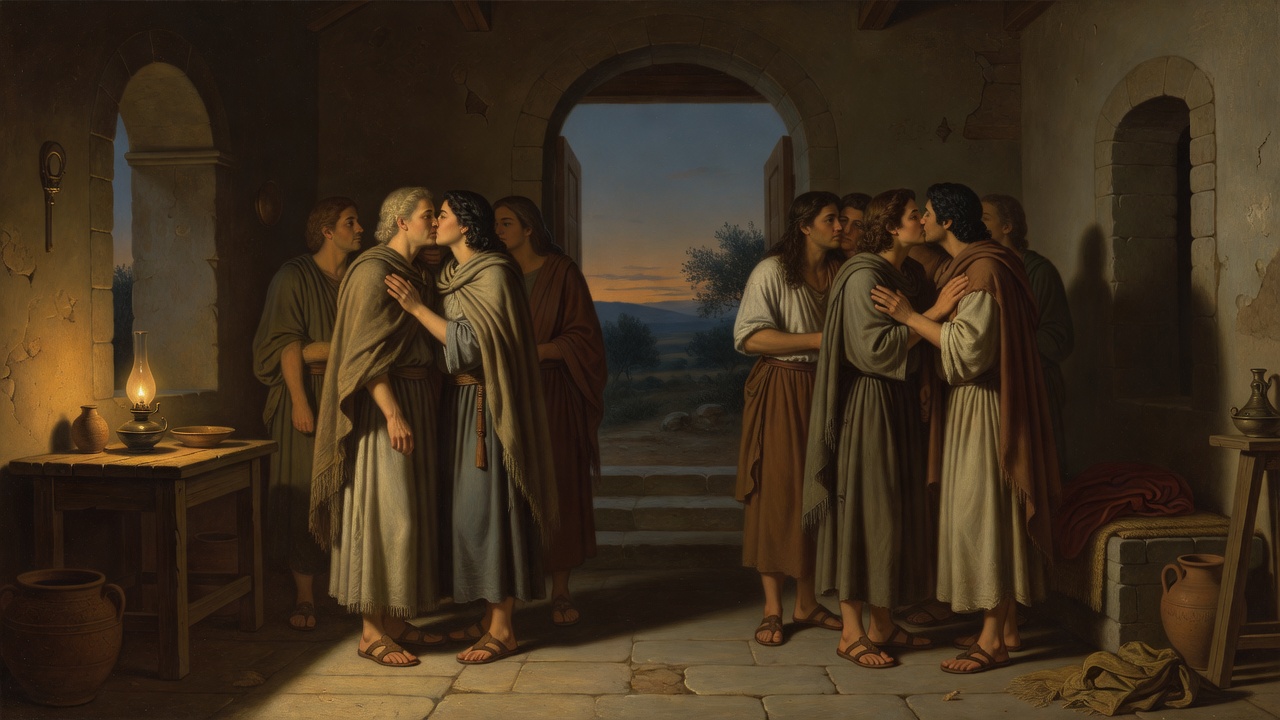
16Pejohayhu-gwi, penhokwavã kwavã katu peiko-vy onhondive. Entéro Cristo reroviaha gwive onhomboaty aty ha-rupi omondo-ta peẽ-my omandu'a porãha.
“Ani pene mitã arandu teĩ. Peiko arandúke” he'i Paulo
17Oĩ onhe'ẽ rei rei va'erã nhande joja e'ỹ hagwã. Nhande rerovase Cristo-gwi. Aporandu randu-ta peẽ-my, xe re'ýi kwéry: Perepara kena hese hekoha rexa-vy. Peiko arandu kena. Ani pemoirũ teĩ íxupe. Orombo'e hagwe-rami, napene mbo'éi va'erã. Pende rerovase-vy omombe'u a'ã a'ã va'erã peẽ-my Cristo nhe'ẽ. 18Upéa rehegwa apoha Nhandejáry Hesu Cristo-pe noipytygwõiry. Ójehe anho rei omba'apo oiko va'e. Cristo pytygwõha e'ỹ voi gwĩa. Ojapose va'e rei-ma ojapo. Onhe'ẽ porã va'e vérami rei-ma oiko-vy. Onhe'ẽ-py oporombotavy. Inhe'ẽ reroviaha-pe, mitã arandu-rami itavy rei rei va'e-pe ave ombotavy. Ndohexa kwaái ha nohendu kwaáiry. Upéa-gwi ogwerovia mo'ã. 19Pende-rehe ae enterove imandu'a porã: “Ogwerovia tee voi íxupe, Cristo-gwi ojehesa rerova e'ỹ va'e” he'i pende-rehe. Upéa-gwi avy'a pende-rehe. Aipota pene arandu. Pejapo porã kwaa katu. Ani erejapo vai kwaa teĩ. 20Ha Nhandejáry nhane mbopy'agwapy voi ani hagwã nhande joja e'ỹ teĩ onhondive. Ndahi'are mo'ãi, pene pytygwõ-ta kuri. Mbói ijukapyre-rehe nhapyrũha-ramima, pene mbopu'aka uka-ta kuri anháy ruvixa Satanás-rehe.
Tapende rovasa katu Nhandejáry Hesu pende rexakwaa rei-vy
21Ha Timóteo katu xe rembiapoha irũ va'e omondo-ta peẽ-my omandu'aha. Omondo-ta ave xe rugwy re'ýi Lúcio, Jasão, Sosípatro ave.
22Ha xe Tércio, Paulo nhe'ẽ raiha, Hesu reroviaha va'e ave, amondo-ta ave peẽ-my xe mandu'aha.
23Omondo-ta ave omandu'aha Gaio. Hóga-py aime. A-py ave ojogweroaty haty Hesu reroviaha. Omondo-ta ave omandu'aha Erasto, ko tetã mygwa ome'ẽ va'ekwe pirapire nhongatuha. Quarto, nhande re'ýi omondo-ta ave omandu'aha. 24Tapende rovasa vasa Nhandejáry Hesu Cristo pende rexakwaa rei-vy. Amém.
Ipaha-ma omboete Nhandejáry-pe Paulo
25Nhamomba'egwasúke Nhandejáry-pe. Hesu rehegwa nhe'ẽ porã xe remimombe'u pehendu ramo, pene moingo kwaa Nhandejáry tape porã-rupi pejehesa rerova e'ỹ reheve. Yma gwembiaporã nhongatu araka'e avave-pe nomombe'úi araka'e gwembiaporã. Ha upe rire katu nhande-vy omombe'u oikwaa uka-vy gweminhongatugwe. Anhetegwa va'e omombe'u va'e. Upéa rehegwa nhe'ẽ pehendu ramo, pene moingo kwaa Nhandejáry tape porã-rupi pejehesa rerova e'ỹ reheve. 26Ha ko'ánga katu heminhongatu omombe'u atýra-py Nhandejáry nhe'ẽ omombe'uhaty kwatia-rehe oikwaa uka-vy nhande-vy. Ha Nhandejáry opa e'ỹ va'e ha'e ae ave oikwaa uka. Nhandejáry nhe'ẽ-py ojekwaa-ma entéro tetã tetã mygwa-pe gwive, hembiaporã enterove va'e ogwerovia ramo ojapo hagwã inhe'ẽ.
27Nhande rexakwaa porã rei va'ekwe Hesu Cristo. Upéa-gwi tomomba'egwasu meme katu Nhandejáry-pe. Ha'eixagwa hi'aranduve va'e ndoikóiry. Upéa-gwi tomboete katu íxupe opa e'ỹ reheve. Amém.
¿Sabías que…?
Saludos a la iglesia en Roma
- Pablo recomienda a Febe, sierva de la iglesia en Cencrea, y pide a los destinatarios en Roma que la reciban bien y la ayuden en lo que necesite, porque ha sido de gran ayuda para mucha gente, incluido él. Cencrea era el puerto oriental de Corinto, a unas nueve millas al este de la ciudad y la salida de su comercio con las costas asiáticas del Mediterráneo; el Easton's Bible Dictionary (1897) dice que ella probablemente fue quien llevó esta carta.Fuentes: el propio texto bíblico · Phebe · Cenchreae
- Pablo saluda a Prisca y a Aquila, sus colaboradores en Cristo Jesús, que arriesgaron la vida por él, y también a la iglesia que se reúne en su casa; dice que no solo él, sino todas las iglesias de los gentiles les están agradecidas. El Easton's Bible Dictionary (1897) la llama Priscila y describe a Aquila como fabricante de tiendas, natural del Ponto, que con su esposa dejó Roma a causa de un decreto de Claudio, en el año 50 d. C., que ordenaba a todos los judíos salir de la ciudad; el nombre de ella a veces aparece antes que el de él, como aquí.Fuentes: el propio texto bíblico · Priscilla · Aquila
- Cerca del final, Tercio, quien puso la carta por escrito, añade su propio saludo. Gayo, que ha hospedado a Pablo y a toda la iglesia, también envía saludos, al igual que Erasto, el tesorero de la ciudad, y Cuarto.Fuentes: el propio texto bíblico
Notas escritas con ayuda de IA a partir de fuentes abiertas (Theographic Bible Metadata, CC BY-SA 4.0; Easton’s Bible Dictionary, dominio público) y revisadas antes de publicarse.
Lugares de este capítulo
Solo aparecen lugares identificados con alta confianza (90 % o más según las fuentes académicas reunidas por OpenBible). Mapa de la época: DARE (Digital Atlas of the Roman Empire), CC BY 4.0; mapa actual: © colaboradores de OpenStreetMap; lugares: OpenBible.info (CC BY 4.0).
Créditos y licencia de esta traducción
Nhandejáry Nhe'ẽ
New Testament in Kaiwá (BR:kgk:Kaiwá)
copyright © 2006 Wycliffe Bible Translators, Inc.
Language: Kaiwá
Translation by: Wycliffe Bible Translators, Inc.
Copyright Information
© 2006, Wycliffe Bible Translators, Inc. All rights reserved.
This translation text is made available to you under the
terms of the Creative Commons License: Attribution-Noncommercial-No Derivative Works.
( http://creativecommons.org/licenses/by-nc-nd/3.0/ )
In addition, you have permission to port the text to different file formats, as long as you
do not change any of the text or punctuation of the Bible.
You may share, copy, distribute, transmit, and extract portions
or quotations from this work, provided that you include the above copyright
information:
You must give Attribution to the work.
You do not sell this work for a profit.
You do not make any derivative works that change any of the actual words or punctuation of the Scriptures.
Permissions beyond the scope of this license may be
available if you contact
us with your request.
The New Testament
in Kaiwá
© 2006, Wycliffe Bible Translators, Inc. All rights reserved.
This translation is made available to you under the terms of the
Creative Commons Attribution-Noncommercial-No Derivatives license 4.0.
You may share and redistribute this Bible translation or extracts from it in any format, provided that:
You include the above copyright and source information.
You do not sell this work for a profit.
You do not change any of the words or punctuation of the Scriptures.
Pictures included with Scriptures and other documents on this site are licensed just for use with those Scriptures and documents.
For other uses, please contact the respective copyright owners.
2014-04-27
Fuente: http://ebible.org/kgkNT/ · eBible.org