Romans 16
Nhandejáry Nhe'ẽ · Tap a verse to see its cross-references.
Paulo omombe'u Hesu reroviaha Roma pygwa-rehe omandu'a porãha
1Amombe'u-ta peẽ-my nhande re'ýi Febe héry va'e rehegwa nhe'ẽ. Hekoha porã pe kunha. Hesu reroviaha Cencréia tetã-my onhomboaty va'e pytygwõha voi pe kunha. 2Ha'e Cristo irũ voi. Upéa-gwi pemogwahẽ katu íxupe. Nhande kwéry jarovia va'e nhanhomogwahẽ porã katu. Upéa-gwi pemogwahẽ porã katu íxupe ave. Heta oĩ hemipytygwõ. Ha xe-vy xe pytygwõ ave. Upéa-gwi, pendéhegwi ha'e oikotevẽ ramo, peme'ẽ katu íxupe.
3Amombe'u-ta xe mandu'a porãha ave Priscila-pe Áqüila ndive. Xe ndive omba'apo Hesu Cristo-pe. 4Xe-rehe ha-py nahakate'ỹiry va'ekwe gwekove-rehe. Xe-rehe ha-py ojejuka hagwã-rami joty oiko va'ekwe. Xe rayhu tee hagwe-rehe, xe atima porã íxupe. Naxe anhóiry atima porã íxupe. Entéro Hesu reroviaha gwive judeu kwéry e'ỹ va'e, onhomboaty aty ha-rupi, otima porã ave íxupe. 5Ha'e uka-ta ave xe mandu'a porãha Hesu reroviaha-pe gwive upe mokõi va'e róga-py onhomboaty va'e. Ha'e uka-ta ave xe mandu'a porãha Epêneto-pe. Ha'e xe rembiayhu voi. Ásia yvy-py ha'e anho ranhe ojerovia ypy-ma va'ekwe Cristo-rehe. 6Ha'e uka-ta ave Maria-pe xe mandu'a porãha. Heta omba'apo pende-rehe. 7Amombe'u uka-ta ave Andrônico-pe Júnias ndive. Ha'e xe rugwy re'ýi tee voi. Preso aĩ ramo xe moirũ-ma va'ekwe upe-py. Hesu remimondo upéa. Enterove mandu'a porãha. Voive ogwerovia-ma va'ekwe Cristo-pe xe renonde-py. Hapykwéri-ma xe ajerovia va'ekwe Hesu-rehe.
8Ha'e uka-ta ave Amplíato-pe. Xe rembiayhu voi. Cristo irũ va'e. 9Ha'e uka-ta ave Urbano-pe. Cristo-pe oromba'apo ramo ore irũ voi. Xe rembiayhu Estáquis-pe ave ha'e uka-ta xe mandu'a porãha. 10Ha'e uka-ta ave Apeles-pe. “Cristo-rehe ojerovia tee-ma nipo ra'e” he'i hese imandu'a porã-vy. Aristóbulo róga pygwa-pe ave ha'e uka-ta. 11Ha'e uka-ta ave Herodião-pe. Ha'e xe rugwy re'ýi tee voi. Hesu reroviaha Narciso róga pygwa-pe ha'e uka-ta ave.
12Amondo-ta ave xe mandu'a porãha Trifena-pe Trifosa ndive. Pe kunha omba'apo Cristo-pe. Pérside-pe amondo-ta ave. Pe kunha ave heta omba'apo Cristo-pe. 13Amondo-ta Rufo-pe xe mandu'a porãha. Cristo-pe omba'apo ramo imandu'a porã hese. Isy-pe ave amondo-ta. Omemby-rami hembiereko ave xe. 14Amondo-ta Asíncrito-pe, Flegonte-pe ave xe mandu'aha. Amondo-ta ave Hermes-pe, Pátrobas ndive Hermas-pe ave. Indive kwéry Hesu reroviaha-pe gwive ha'e uka-ta. 15Ha'e uka-ta Filólogo-pe Júlia ndive. Heindýry ndive Nereu-pe, Olimpas-pe ave, indive kwéry Nhandejáry re'ýi oĩ va'e-pe gwive ha'e uka-ta xe mandu'a porãha.
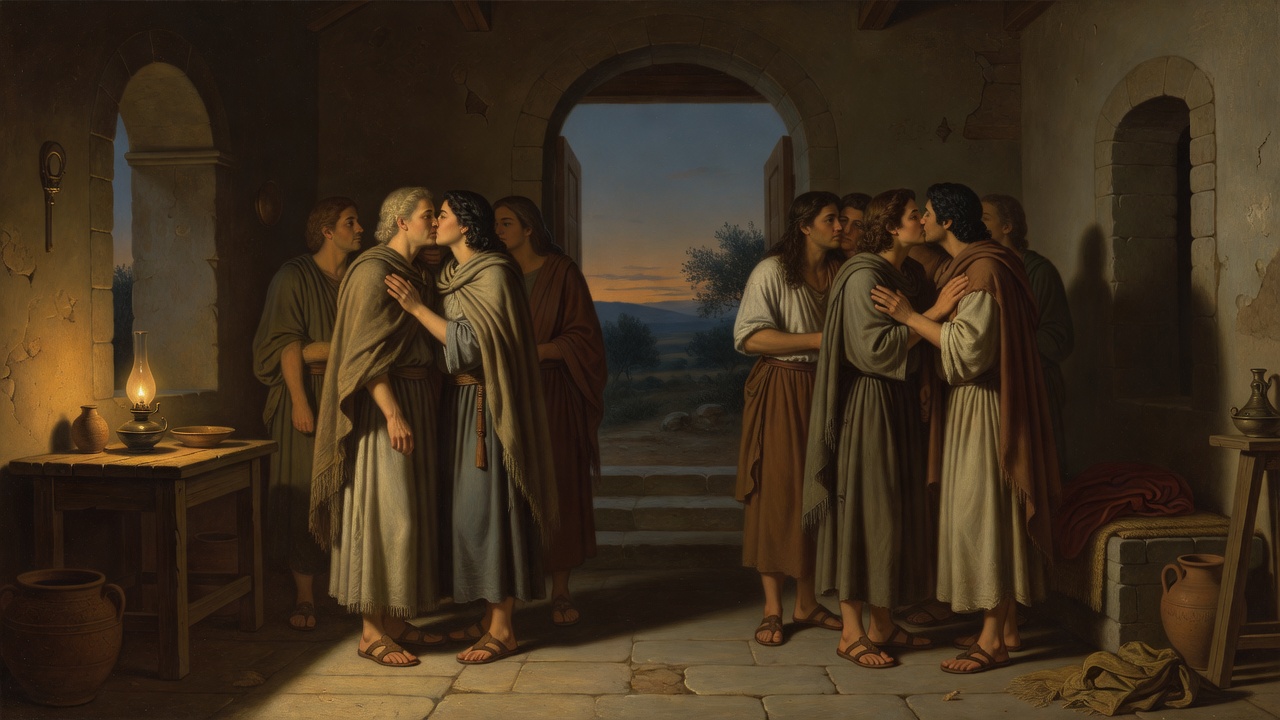
16Pejohayhu-gwi, penhokwavã kwavã katu peiko-vy onhondive. Entéro Cristo reroviaha gwive onhomboaty aty ha-rupi omondo-ta peẽ-my omandu'a porãha.
“Ani pene mitã arandu teĩ. Peiko arandúke” he'i Paulo
17Oĩ onhe'ẽ rei rei va'erã nhande joja e'ỹ hagwã. Nhande rerovase Cristo-gwi. Aporandu randu-ta peẽ-my, xe re'ýi kwéry: Perepara kena hese hekoha rexa-vy. Peiko arandu kena. Ani pemoirũ teĩ íxupe. Orombo'e hagwe-rami, napene mbo'éi va'erã. Pende rerovase-vy omombe'u a'ã a'ã va'erã peẽ-my Cristo nhe'ẽ. 18Upéa rehegwa apoha Nhandejáry Hesu Cristo-pe noipytygwõiry. Ójehe anho rei omba'apo oiko va'e. Cristo pytygwõha e'ỹ voi gwĩa. Ojapose va'e rei-ma ojapo. Onhe'ẽ porã va'e vérami rei-ma oiko-vy. Onhe'ẽ-py oporombotavy. Inhe'ẽ reroviaha-pe, mitã arandu-rami itavy rei rei va'e-pe ave ombotavy. Ndohexa kwaái ha nohendu kwaáiry. Upéa-gwi ogwerovia mo'ã. 19Pende-rehe ae enterove imandu'a porã: “Ogwerovia tee voi íxupe, Cristo-gwi ojehesa rerova e'ỹ va'e” he'i pende-rehe. Upéa-gwi avy'a pende-rehe. Aipota pene arandu. Pejapo porã kwaa katu. Ani erejapo vai kwaa teĩ. 20Ha Nhandejáry nhane mbopy'agwapy voi ani hagwã nhande joja e'ỹ teĩ onhondive. Ndahi'are mo'ãi, pene pytygwõ-ta kuri. Mbói ijukapyre-rehe nhapyrũha-ramima, pene mbopu'aka uka-ta kuri anháy ruvixa Satanás-rehe.
Tapende rovasa katu Nhandejáry Hesu pende rexakwaa rei-vy
21Ha Timóteo katu xe rembiapoha irũ va'e omondo-ta peẽ-my omandu'aha. Omondo-ta ave xe rugwy re'ýi Lúcio, Jasão, Sosípatro ave.
22Ha xe Tércio, Paulo nhe'ẽ raiha, Hesu reroviaha va'e ave, amondo-ta ave peẽ-my xe mandu'aha.
23Omondo-ta ave omandu'aha Gaio. Hóga-py aime. A-py ave ojogweroaty haty Hesu reroviaha. Omondo-ta ave omandu'aha Erasto, ko tetã mygwa ome'ẽ va'ekwe pirapire nhongatuha. Quarto, nhande re'ýi omondo-ta ave omandu'aha. 24Tapende rovasa vasa Nhandejáry Hesu Cristo pende rexakwaa rei-vy. Amém.
Ipaha-ma omboete Nhandejáry-pe Paulo
25Nhamomba'egwasúke Nhandejáry-pe. Hesu rehegwa nhe'ẽ porã xe remimombe'u pehendu ramo, pene moingo kwaa Nhandejáry tape porã-rupi pejehesa rerova e'ỹ reheve. Yma gwembiaporã nhongatu araka'e avave-pe nomombe'úi araka'e gwembiaporã. Ha upe rire katu nhande-vy omombe'u oikwaa uka-vy gweminhongatugwe. Anhetegwa va'e omombe'u va'e. Upéa rehegwa nhe'ẽ pehendu ramo, pene moingo kwaa Nhandejáry tape porã-rupi pejehesa rerova e'ỹ reheve. 26Ha ko'ánga katu heminhongatu omombe'u atýra-py Nhandejáry nhe'ẽ omombe'uhaty kwatia-rehe oikwaa uka-vy nhande-vy. Ha Nhandejáry opa e'ỹ va'e ha'e ae ave oikwaa uka. Nhandejáry nhe'ẽ-py ojekwaa-ma entéro tetã tetã mygwa-pe gwive, hembiaporã enterove va'e ogwerovia ramo ojapo hagwã inhe'ẽ.
27Nhande rexakwaa porã rei va'ekwe Hesu Cristo. Upéa-gwi tomomba'egwasu meme katu Nhandejáry-pe. Ha'eixagwa hi'aranduve va'e ndoikóiry. Upéa-gwi tomboete katu íxupe opa e'ỹ reheve. Amém.
Did you know?
Greetings to the church in Rome
- Paul commends Phoebe, a servant of the church in Cenchrea, and asks the recipients in Rome to welcome her and help her with whatever she needs, because she has been a great help to many people, including him. Cenchrea was the eastern harbor of Corinth, about nine miles east of the city and the outlet for its trade with the Asiatic shores of the Mediterranean; Easton's Bible Dictionary (1897) says she was probably the bearer of this letter.Sources: the Bible text itself · Phebe · Cenchreae
- Paul greets Prisca and Aquila, his fellow workers in Christ Jesus, who risked their lives for him, and also the church that meets in their house; he says that not only he but all the churches of the Gentiles are grateful to them. Easton's Bible Dictionary (1897) calls her Priscilla and describes Aquila as a tent-maker from Pontus who, with his wife, left Rome because of a decree of Claudius in A.D. 50 commanding all Jews to leave the city; her name sometimes comes before his, as it does here.Sources: the Bible text itself · Priscilla · Aquila
- Near the close, Tertius, who wrote the letter down, adds his own greeting. Gaius, who has hosted Paul and all the church, also sends greetings, as do Erastus, the city treasurer, and Quartus.Sources: the Bible text itself
Notes written with AI assistance from open sources (Theographic Bible Metadata, CC BY-SA 4.0; Easton’s Bible Dictionary, public domain) and reviewed before publishing.
Places in this chapter
Only places identified with high confidence are shown (90% or more according to the scholarly sources compiled by OpenBible). Period map: DARE (Digital Atlas of the Roman Empire), CC BY 4.0; modern map: © OpenStreetMap contributors; places: OpenBible.info (CC BY 4.0).
Credits and license for this translation
Nhandejáry Nhe'ẽ
New Testament in Kaiwá (BR:kgk:Kaiwá)
copyright © 2006 Wycliffe Bible Translators, Inc.
Language: Kaiwá
Translation by: Wycliffe Bible Translators, Inc.
Copyright Information
© 2006, Wycliffe Bible Translators, Inc. All rights reserved.
This translation text is made available to you under the
terms of the Creative Commons License: Attribution-Noncommercial-No Derivative Works.
( http://creativecommons.org/licenses/by-nc-nd/3.0/ )
In addition, you have permission to port the text to different file formats, as long as you
do not change any of the text or punctuation of the Bible.
You may share, copy, distribute, transmit, and extract portions
or quotations from this work, provided that you include the above copyright
information:
You must give Attribution to the work.
You do not sell this work for a profit.
You do not make any derivative works that change any of the actual words or punctuation of the Scriptures.
Permissions beyond the scope of this license may be
available if you contact
us with your request.
The New Testament
in Kaiwá
© 2006, Wycliffe Bible Translators, Inc. All rights reserved.
This translation is made available to you under the terms of the
Creative Commons Attribution-Noncommercial-No Derivatives license 4.0.
You may share and redistribute this Bible translation or extracts from it in any format, provided that:
You include the above copyright and source information.
You do not sell this work for a profit.
You do not change any of the words or punctuation of the Scriptures.
Pictures included with Scriptures and other documents on this site are licensed just for use with those Scriptures and documents.
For other uses, please contact the respective copyright owners.
2014-04-27
Source: http://ebible.org/kgkNT/ · eBible.org