Lucas 23
Tẹsitamenti Ikne n'Ọnu Ikwere · Toca un versículo para ver sus referencias cruzadas.
Jizọsi gwuzo nụ // ruwhnu Paịleti
1Ele iznuznu ikpe ele Ju lizọ duru Jizọsi zne nụ ruwhnu Paịleti, 2be bete noobno a nhne, be kaa, “A whnụrnu nwerukna ka hne o nooduwhu ele ke aị, o nookwu be tụ́kwadia ntụ nye Siza, naakaa masị nụ ọ bụ Karaịsi, eze aị.”
3Paịleti sịkwa a, “I bụ eze ele Ju?”
Jizọsi sarụ a, “Owe! Jị n'iwhuru i karụ kpam.”
4Paịleti kanụ ele risi arịohna nụ igbudu badnụ wam, “Ọ zá nhne ọjo me whnụrnu nụ rime nwerukna ka.”
5Kọvu be kwusiri a rikne, “O neegweya ọnu gharụ ọnu n'esilawụru ele Ju zị nụ Judiya hite nụ nhne o neezni. Ọ panịzoru a nụ Galili tem ọ vadu hna.”
Jizọsi gwuzo nụ // ruwhnu Erọdu
6Nga Paịleti nụrnu a, ọ sịkwa be ma nwerukna ka ọ bụ nye Galili. 7Nga ọ mahịaru nụ Jizọsi hi n'ẹli ke Erọdu nẹechi, o ziznenu a Erọdu nye zị nụ Jerusẹlem n'ige wam.
8Mkpọma sọru Erọdu n'ọnu k'agịda nga ọ whnụrnu Jizọsi, kwnornu nụ o noopio ọ whnụ a agịda ige wheru ewhe. Hite nụ nhne ọ nụrnu gbasịri a, o neele anya nụ Jizọsi jọornu ẹrnu ndu-ẹhni nụ ruwhnu a. 9Kam kpayarụ, Erọdu sịkwa Jizọsi agịda ajịji, kọvu nụ Jizọsi sála a ọka ọbula. 10Ele risi arịohna nụ ele zni iwu ele Ju gwuzoru pịi noobno Jizọsi agịda nhne. 11Erọdu nụ ele ọgwnu a mee Jizọsi nhne rụmu, kpasị a iwhnerne. Be wosi a iwo marnụ mma, zihnaznenu a Paịleti. 12Paịleti nụ Erọdu bụru enyi hite n'ọbochi wam, kwnornu nụ be bụ ele irno nụ mbọm.
Be marnụ Jizọsi // ikpe ẹnwu
13Paịleti sukwukọta ele risi arịohna nụ ele nẹechi ẹchi nụ kpakara ele badnụ, 14ọ kanụ be, “Anụ kwuyannụ m nwerukna ka nụ ọ bụ nye nooduhie ele badnụ, m lebnana m anya nụ kpakara nhne anụ bnornu nwerukna ka nụ ruwhnu anụ, ọ zá nhne me whnụrnu bụ risi nhne anụ noobno a. 15Erọdu masị whnụ́ge nhne ọjo ọbula nụ rime a, kwnornu nụ o zihnayarnụ aị ya, ọ zá nhne kwesiri ẹnwu ke o mernu. 16M jaapnịa nhne, gharụ a, ọ la.” [ 17N'ige Iriri Ọgawhe ọbula, Paịleti nẹesigbasinu be otu nye ikelu.]
18Kpakara igbudu badnụ gweru otu nkọli siwama, “Gbu nwerukna ka, sịgbasinu aị Barabasị.”
19(Be yisiri Barabasị n'ọro ikelu kwnornu nụ o yiri aka n'ele megidnernu nye nẹechi ẹchi, o gburu badnụ.) 20Paịleti pioru ma ọ sịgbasi Jizọsi, ọ rịasno igbudu badnụ wam. 21Kọvu be siwama kọriri, “Kpọgidne n'ọgba, kpọgidne a n'ọgba.”
22Paịleti sịkwa be ke mgba ẹto, “Kịni mernu? Kịni bụ nhne ọjo ke o mernu? M whnụ́ge m nhne ọjo ke o mernu ke kwesiri ẹnwu. M jaapnịa nhne, sịgbasi a, ọ la.”
23Kọvu be zị kọriri neesi lụlo n'okne nkọli be kpọgidne a n'ọgba, be nwehịaru nhne be neesi. 24Paịleti marnụ Jizọsi ikpe, o nyee be nhne be pioru. 25Ọ sịgbasinu be nye wam zị n'ọro ikelu nye megidnernu ele nẹechi ẹchi, gbu masị badnụ, nye be rịoru a. O gweru Jizọsi nyewhete be.
Be kpọgidnernu Jizọsi // n'ọgba
26Be duru Jizọsi zne, n'apna be sigidne Saịmoni nye Sirini, nye hi n'aznụ mba naabnanya, be vukwasị a ọgba, ma o vuru a snornu Jizọsi n'aznụ. 27Agịda ele badnụ snornu a, ma ele rinya ele naakwnanụ Jizọsi ẹkwna. 28Jizọsi tụhnasnarnu, kanụ be, “Ele rinya Jerusẹlem, anụ kwnánụ m ẹkwna, kọvu anụ kwanụ ehni anụ nụ rụmu anụ ẹkwna. 29Kwnornu nụ ige vawa nga be jaakaa, ‘Ele rinya nwée nnwọ bụ ele ọwa ọma, nụ ele mụ́ge nnwọ nụ ele chíge rụmu rẹma.’ 30Ige wam,
Ele badnụ jaakanụ rugwu, ‘Dnagidne aị,’
nụ rugwu matị ‘Kpusni aị.’
31Ọ bụru nụ ele badnụ mee kpa nga isisi zị bụdnu, ndaa kpa ọ jọonu nga ọ kpọru bẹkwnu?”
32Be kwuru ele ọjo lawụru berere ma be gbu be nụ Jizọsi. 33Nga be vaduru nụ hne be kwu Okpokoro Risi, be kpọgbu a, ya nụ ele ọjo wam, otu badnụ n'akarikwnunga a, nye ke berere n'akarita a. 34Jizọsi kaa, “Nda m, gbarụnu be kwnornu nụ be máa nhne be neeme.”
Be keri iwo a n'esilawụru be, nga be vukworu ọgbanuchi. 35Ele badnụ gwuzoru neelekiri, ele risi ele Ju nọomu a rụmu. Be kaa, “Ọ znọhiaru ele berere, ọ znọhia ẹhni a, ọ bụru nụ ọ bụ Karaịsi wam, nye Chiokike họhiaru.”
36Ele ọgwnu nọomu a rụmu. Be nyee a manya gbarụ ọka, 37be kaa, “Ọ bụru nụ ị bụ eze ele Ju, znọhia ẹhni ị.”
38Be gbarụ nhne gbasịri a n'olu ọgba a, “Ka bụ Eze ele Ju.”
39Otu nyenum nụ rime ele be kpọgidnernu ya nụ be, nọogo a ngụgo, “Kwa ị bụ Karaịsi, znọhia ẹhni ị, znọhia masị aị.”
40Nye ke berere bigbọ a, kaa, “Ị tụ́ ogwnu Chiokike, ị zị n'otu ikpe wam. 41A naata awhnụwhnu kwesiri aị, kwnornu nụ a nanahịa ọgwo ẹrnu aị. Kọvu nwerukna ka méne nhne ọjo ọbula.”
42Ọ kanụ Jizọsi, “Jizọsi, chenwanya m nga ị jaava chị lele eze.”
43Jizọsi sarụ a, “Me kanụ ị ezi ọka, me nụ jị jaazị tna nụ Paradasị.”
Ẹnwu Jizọsi
44Hite n'esilawụru iwhnehnie, ọchichiri gbasnirni kpakara ẹli wam dụ n'ọtnu-ige ke ẹto, 45kwnornu nụ ẹhnam gbarụ ọchichiri. Ikpe ke bnosnirni hne zị nsọ n'Ọro Nsọ Chiokike gbawarụ nga lawụru. 46Jizọsi gweru okne nkọli siwama lụlo, “Nda m, m neeyisi enine m n'aka ị.” Nga o kwuru ka, ọ kna inwe.
47Nga nye nẹechi otu riwhu ele ọgwnu whnụrnu nhne mernu, ọ znarnị Chiokike, kaa, “N'ezi, nwerukna ka bụ nye mee ọma.” 48Nga ele gwuzo neelekiri whnụrnu nhne mernu, be kwa aka nụ mkpọma, whọga. 49Kọvu kpakara ele magwụ Jizọsi nụ ele rinya ele snornu a hite nụ Galili gwuzo nụ hne zị ikere, nọowhnu nhne neeme.
Be liri Jizọsi
50Otu nwerukna rẹwhna a bụ Josefu, nye bụ otu nụ ele ikpe, nye be nọoso anya, nye ọma. 51Ọ bụ nye ikpe, kọvu o snóge be kwekọrita nụ nhne be kpebiri nụ nhne be mernu, nye hi nụ Arimatiya ke zị nụ Judiya, nye neese nga ige ẹli-eze Chiokike jaava. 52O znekwnusi Paịleti, rịo a iznu Jizọsi. 53O vudna iznu Jizọsi n'olu ọgba, gweru ikpe marnụ mma whụ a, lite a nụ rime ilili ke zị nụ rime rugwu ke ọ zá nye be liru nụ rime a nụ mbọm. 54Ọ bụ ọbochi ojiknernu, Ọbochi Ozukwa Inwe ele Ju gwnarnụ matị ọ panịzo.
55Ele rinya wam hi nụ Galili va snornu Josefu whnụ kpa ilili a nụ, nụ kpa ọ dnanyịtaru a Jizọsi. 56Be lahna ọro, gwakọta mọno otute nwernu ẹknarna ọma be jeete iznu a.
Be zukwa inwe n'Ọbochi Ozukwa Inwe lele kpa nhne be nyernu n'iwu kwuru.
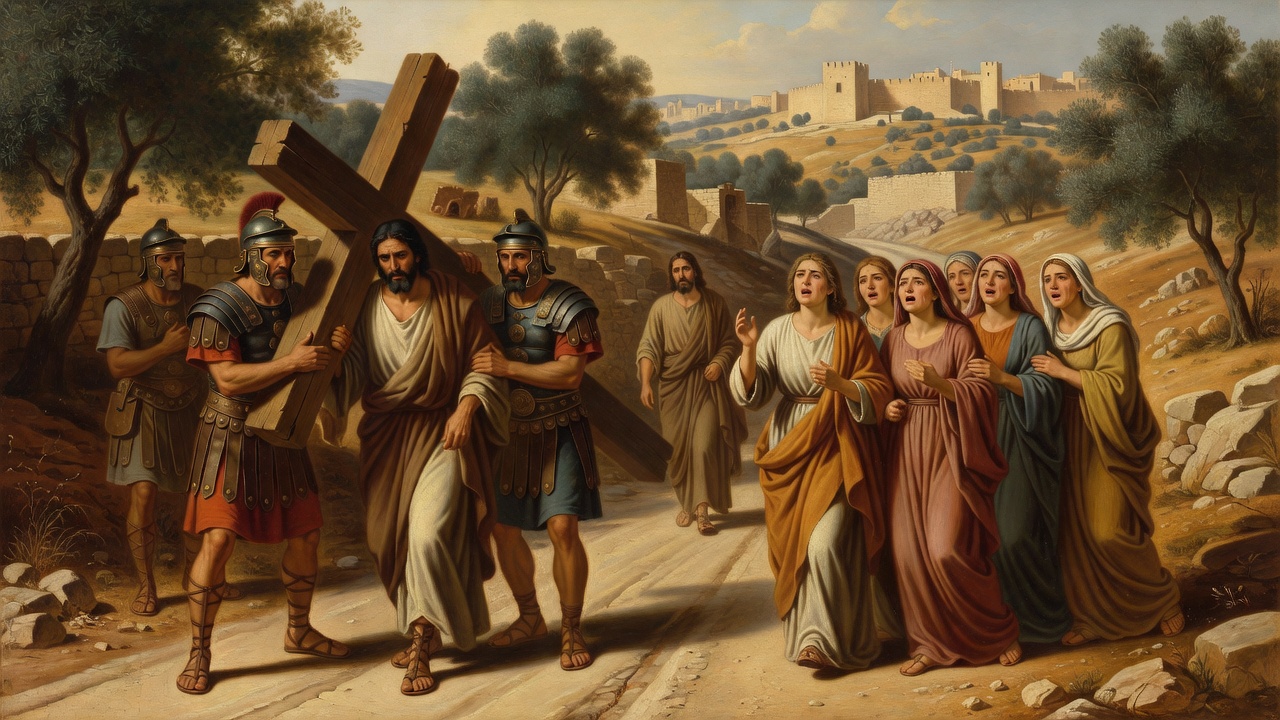
¿Sabías que…?
Juicio, cruz y sepultura
- Poncio Pilato, identificado por el Diccionario Bíblico de Easton (1897) como el sexto procurador romano de Judea (26–36 d.C.), tenía su sede en Cesarea, pero subía con frecuencia a Jerusalén. Las acusaciones del consejo en este capítulo son políticas: que Jesús subvertía a la nación, prohibía el pago de impuestos al César y se proclamaba el Cristo, un rey.Fuentes: Pontius Pilate · el propio texto bíblico
- Cuando Pilato supo que Jesús era galileo y estaba bajo la jurisdicción de Herodes, lo envió a Herodes Antipas, hijo de Herodes con Maltace, que entonces estaba en Jerusalén. Herodes hacía tiempo que quería ver a Jesús y esperaba un milagro, pero Jesús no respondió a sus preguntas. Después de que Herodes y sus soldados se burlaron de Jesús y lo vistieron con un manto fino, lo enviaron de vuelta, y aquel día Herodes y Pilato, que habían sido enemigos, se hicieron amigos.Fuentes: Herod Antipas · el propio texto bíblico
- El lugar de la crucifixión se llama la Calavera; la forma latina Calvaria traducía el griego Kranion, que vertía el hebreo Gulgoleth. Probablemente recibió ese nombre por su forma, una elevación baja, redondeada y desnuda, algo parecida a un cráneo humano, y la Escritura en ningún lugar lo llama colina. La crucifixión tuvo lugar fuera de los muros de la ciudad y cerca de un camino público.Fuentes: Skull · el propio texto bíblico
Notas escritas con ayuda de IA a partir de fuentes abiertas (Theographic Bible Metadata, CC BY-SA 4.0; Easton’s Bible Dictionary, dominio público) y revisadas antes de publicarse.
Lugares de este capítulo
- Galilee · 32.760, 35.527 · versículos 5, 6, 7, 49, 55
- Jerusalem · 31.777, 35.234 · versículos 5, 7, 19, 28
- Judea · Hoy: Judea 1 · 31.777, 35.234 · versículos 5, 51
- Cyrene · 32.821, 21.851 · versículo 26
Solo aparecen lugares identificados con alta confianza (90 % o más según las fuentes académicas reunidas por OpenBible). Mapa de la época: DARE (Digital Atlas of the Roman Empire), CC BY 4.0; mapa actual: © colaboradores de OpenStreetMap; lugares: OpenBible.info (CC BY 4.0).
Créditos y licencia de esta traducción
Tẹsitamenti Ikne n'Ọnu Ikwere
New Testament in Ikwere
copyright © 2010 Wycliffe
Language: Ikwere
Translation by: Wycliffe
Ikwerre – (ikw) Nigeria
The Iwerre language of Nigeria can also be spelled Ikwere and Ikwerri. This language is spoken primarily by the Ikwerre people who live in the Rivers State of Nigeria and is one of the many ethnic groups in the Niger Delta. There were more than 23,000 speakers of this language in 1973. There is also a considerable local interest in literacy and grammar.
Copyright Information
© 2010, The Nigeria Bible Translation Trust. All rights reserved.
This translation text is made available to you under the
terms of the Creative Commons License: Attribution-Noncommercial-No Derivative Works.
( http://creativecommons.org/licenses/by-nc-nd/3.0/ )
In addition, you have permission to port the text to different file formats, as long as you
do not change any of the text or punctuation of the Bible.
You may share, copy, distribute, transmit, and extract portions
or quotations from this work, provided that you include the above copyright
information:
You must give Attribution to the work.
You do not sell this work for a profit.
You do not make any derivative works that change any of the actual words or punctuation of the Scriptures.
Permissions beyond the scope of this license may be
available if you contact
us with your request.
Printed book ISBN 9789789076369
New
The New Testament
in Ikwere
© 2010, The Nigeria Bible Translation Trust. All rights reserved.
This translation is made available to you under the terms of the
Creative Commons Attribution-Noncommercial-No Derivatives license 4.0.
You may share and redistribute this Bible translation or extracts from it in any format, provided that:
You include the above copyright and source information.
You do not sell this work for a profit.
You do not change any of the words or punctuation of the Scriptures.
Pictures included with Scriptures and other documents on this site are licensed just for use with those Scriptures and documents.
For other uses, please contact the respective copyright owners.
2019-08-09
Fuente: http://ebible.org/ikwNT/ · eBible.org