Hechos 12
Tẹsitamenti Ikne n'Ọnu Ikwere · Toca un versículo para ver sus referencias cruzadas.
Erọdu gburu Jemisi, // tụ Pita ikelu
1N'ige ka Eze Erọdu panịzoru ọ kpakna agwna ele zị n'ọgbako Chiokike ẹhni. 2O gweru ama-ọgwnu gbu Jemisi nwene rukna Jọni. 3Nga ọ whnụrnu nụ ọ sọru ele Ju ovu n'ọnu, o zne nụ ruwhnu nwudne Pita. (Ka mernu n'ige Iriri Brẹdi Whụ́ge Ọwhu.) 4Nga ọ nwudnernu Pita, o yisi a n'ọro ikelu, o gweru a nyewhete n'aka otu ele ọgwnu ẹno ẹno. Erọdu neese o gwehịa a n'ikpe ọhna nga Iriri Ọgawhe whemernu. 5Pita zị n'ọro ikelu, kọvu ọgbako Chiokike neekpesi okpukpe rikne gbasịri a nụ ruwhnu Chiokike.
Pita whụyaru n'ọro ikelu
6N'abalị ke jọobo ọbochi Erọdu jeegweya nụ ruwhnu ele ọhna, Pita zị neezni anyarna n'esilawụru ele ọgwnu lawụru ele neese a. Be tụru a ijigba lawụru, ele neese nhne gwuzo n'ọnu-mgbo. 7Ngangam, enine izi Nyenwe aị varụ gwuzoru, iwhne mụkwasi nụ rime ọro ikelu. Enine izi wam kpatụ Pita aka nụ ngeri ẹhni, ọ kanụ a, “Lizọ wara wara.” Ijigba dnahnala n'aka Pita. 8Enine izi wam kaa, “Sụru ajnị ị, woru okoro-ọchi ị.” Pita mee kpam, enine izi wam kanụ a, “Woru iwo i, snornu m.” 9Pita snornu a whọga n'ọro ikelu. O máa nụ hne enine izi wam neeme bụ nhne zị ire. O che nụ ọ nọowhnu ọwhnurninya. 10Be whe ele nse ke mbọm, nụ ke ẹbo, be va nụ ke ipne-aznụ ke bụ ọnu-mgbo rugwe bnarnụ nụ rime ẹli-ọhna. Ọnu-mgbo wam gbama n'aka a. Be whọga, be neezne n'otu apna, ngangam, enine izi wam ghasa Pita.
11Pita mahịa ẹhni a, ọ kaa, “Kịtna, m maam nụ ọ bụ n'ezi nụ Nyenwe aị ziyaru enine izi a, dọhia m n'aka Erọdu, dọhia m nụ kpakara nhne ele Ju neele anya a.” 12Nga ọ mahịaru nhne ka, o zne nụ ọro Meri nne Jọni Makị. Agịda ele badnụ gbakọru pịi neekpe okpukpe. 13Pita znu aka nụ ọnu-mgbo, otu nnwọ rinya rẹwhna a bụ Roda zne ọ nakwe a. 14Nga ọ mahịaru nkọli a, ovu ọso n'ọnu mernu o nwée rikne gbama ọro, ọ gba ẹso zne kanụ be nụ Pita gwuzogwu nụ ọnuhna.
15Be kanụ a, “Anya bụ́o i ọma.” Kọvu o kwusi a rikne, be kanụ a, “Ọ bụ enine a.”
16Kọvu Pita zị kọriri nooznu aka n'ọnu-mgbo. Nga be gbamarnụ ọro, whnụ a, ọ gbagwojiri be anya. 17O whenu be aka be kpusnime ọnu be. Ọ kanụ be kpa Nyenwe aị gwehịaru a n'ọro ikelu. Ọ kanụ be, “Anụ kanụ Jemisi nụ rụmu nda m ele berere.” Ọ whọga zne hne berere.
18N'ọsisi, o mernu ele neese nhne anya agharị k'agịda nhne mernu Pita. 19Erọdu kaa be pio a, kọvu be nwée rikne piohịa a, ọ kaa be sịkwa ele neese nhne ajịji, o nyee iwu be gbu kpakara be. Omekwo, Erọdu hiri nụ Judiya zne nụ Sizaria dazịri ige matị.
Ẹnwu Erọdu
20Ele Taya nụ Saịdoni mernu Erọdu ovu owe ẹhni, be zịri n'otu zne ọ whnụ a, be mee ma Bilatọsi nye neelekwa ọro eze gbagwasịnu be. Be zne rịasno Erọdu ma udno zịri, kwnornu nụ ẹli be neenwehịa nhne oriri hite n'ẹli a. 21N'ọbochi be họhiaru, Erọdu woru iwo eze a dazịri nụ ngadna eze a, kwunu ele badnụ wam ọka. 22Be siwama lụlo, kaa, “Ọ bụ́o badnụ nookwu ọka ka, kọvu ọ bụ otu chi.” 23Ngangam, enine izi Nyenwe aị lịdna Erọdu kwnornu nụ o nyéne Chiokike igwugwu. Rukpurukpuru ri a, ọ nwụma.
24Ikwu-ọnu Chiokike neezne nụ ruwhnu, naagbasa, nooso oso. 25Nga Banabasị nụ Sọlu rnụkworu ẹrnu be, be hi nụ Jerusẹlem hiehna kwuru Jọni Makị.
¿Sabías que…?
La huida de Pedro y la muerte de Herodes
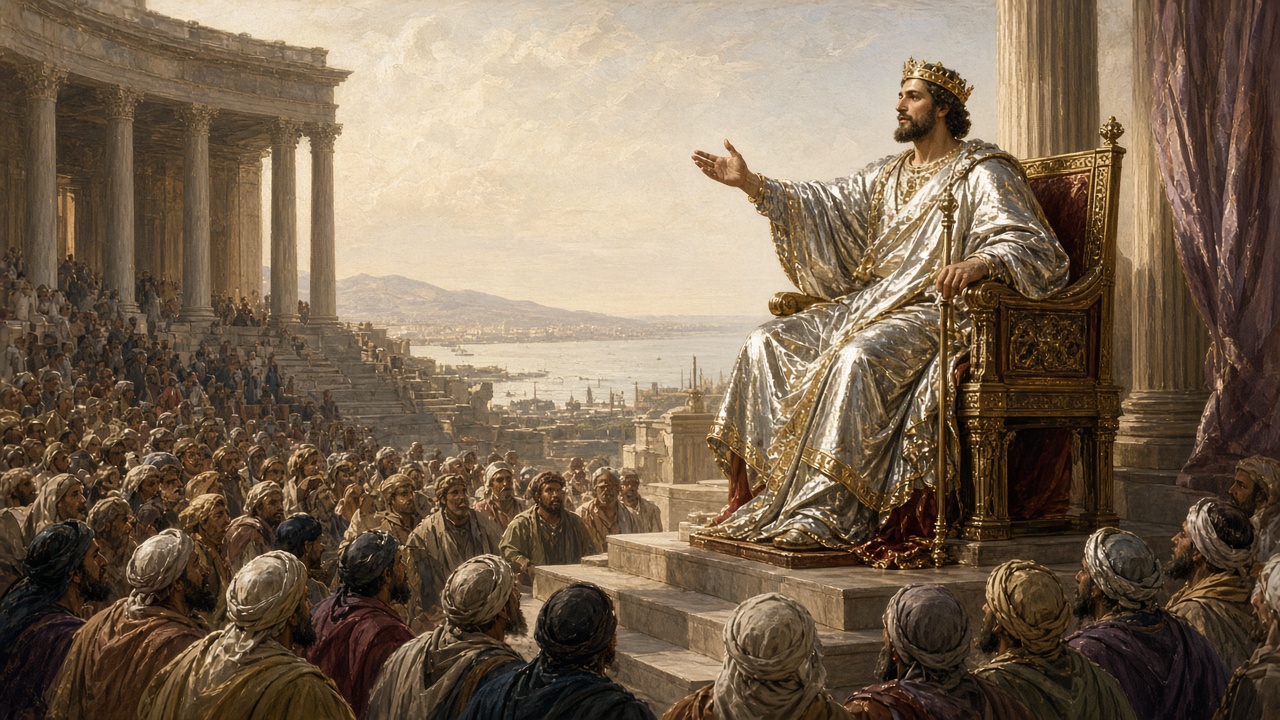
- El rey Herodes de este capítulo es Herodes Agripa I, nieto de Herodes el Grande, que con el tiempo llegó a poseer todo el reino de su abuelo y el título de rey. Hizo matar a Santiago y encarceló a Pedro. El Diccionario Bíblico de Easton (1897) dice que, en el segundo día de una fiesta en honor del emperador Claudio, Agripa apareció en el gran teatro de Cesarea con magníficas vestiduras de plata; era temprano, y los rayos del sol deslumbraban a quienes lo veían.Fuentes: Herod Agrippa I · el propio texto bíblico
- El Santiago muerto a espada era Santiago, hijo de Zebedeo, hermano del apóstolo Juan, un pescador que había trabajado como socio de Pedro. El Diccionario Bíblico de Easton (1897) lo presenta como el primero de los apóstoles en ser muerto y dice que Herodes Agripa lo hizo decapitar. El Santiago a quien Pedro pide que se avise a los creyentes es otro hombre: el mismo diccionario lo identifica como el Santiago que encabezaba la iglesia en Jerusalén.Fuentes: James (Son of Zebedee) · James (Brother of Jesus) · el propio texto bíblico
- Cuando comprendió que estaba libre, Pedro fue a la casa de María, madre de Juan Marcos, en Jerusalén, que el Diccionario Bíblico de Easton (1897) llama lugar habitual de reunión de los discípulos; mucha gente estaba reunida allí orando. La sirvienta que acudió a la puerta exterior se llamaba Rode, nombre que significa una rosa; llena de alegría al oír su voz, corrió adentro para anunciarlo y olvidó abrir la puerta. Juan, llamado también Marcos, era hijo de María —Marcos, su nombre romano, poco a poco reemplazó al nombre judío Juan— y más tarde salió de Jerusalén con Bernabé y Saulo.Fuentes: Mary (Mother of John Mark) · Rhoda · John Mark · el propio texto bíblico
Notas escritas con ayuda de IA a partir de fuentes abiertas (Theographic Bible Metadata, CC BY-SA 4.0; Easton’s Bible Dictionary, dominio público) y revisadas antes de publicarse.
Lugares de este capítulo
- Caesarea · Hoy: Caesarea Maritima · 32.500, 34.892 · versículo 19
- Judea · Hoy: Judea 1 · 31.777, 35.234 · versículo 19
- Sidon · Hoy: Sandikli archaeological site in Sidon · 33.561, 35.372 · versículo 20
- Tyre · 33.271, 35.196 · versículo 20
- Jerusalem · 31.777, 35.234 · versículo 25
Solo aparecen lugares identificados con alta confianza (90 % o más según las fuentes académicas reunidas por OpenBible). Mapa de la época: DARE (Digital Atlas of the Roman Empire), CC BY 4.0; mapa actual: © colaboradores de OpenStreetMap; lugares: OpenBible.info (CC BY 4.0).
Créditos y licencia de esta traducción
Tẹsitamenti Ikne n'Ọnu Ikwere
New Testament in Ikwere
copyright © 2010 Wycliffe
Language: Ikwere
Translation by: Wycliffe
Ikwerre – (ikw) Nigeria
The Iwerre language of Nigeria can also be spelled Ikwere and Ikwerri. This language is spoken primarily by the Ikwerre people who live in the Rivers State of Nigeria and is one of the many ethnic groups in the Niger Delta. There were more than 23,000 speakers of this language in 1973. There is also a considerable local interest in literacy and grammar.
Copyright Information
© 2010, The Nigeria Bible Translation Trust. All rights reserved.
This translation text is made available to you under the
terms of the Creative Commons License: Attribution-Noncommercial-No Derivative Works.
( http://creativecommons.org/licenses/by-nc-nd/3.0/ )
In addition, you have permission to port the text to different file formats, as long as you
do not change any of the text or punctuation of the Bible.
You may share, copy, distribute, transmit, and extract portions
or quotations from this work, provided that you include the above copyright
information:
You must give Attribution to the work.
You do not sell this work for a profit.
You do not make any derivative works that change any of the actual words or punctuation of the Scriptures.
Permissions beyond the scope of this license may be
available if you contact
us with your request.
Printed book ISBN 9789789076369
New
The New Testament
in Ikwere
© 2010, The Nigeria Bible Translation Trust. All rights reserved.
This translation is made available to you under the terms of the
Creative Commons Attribution-Noncommercial-No Derivatives license 4.0.
You may share and redistribute this Bible translation or extracts from it in any format, provided that:
You include the above copyright and source information.
You do not sell this work for a profit.
You do not change any of the words or punctuation of the Scriptures.
Pictures included with Scriptures and other documents on this site are licensed just for use with those Scriptures and documents.
For other uses, please contact the respective copyright owners.
2019-08-09
Fuente: http://ebible.org/ikwNT/ · eBible.org