Juan 4
Elu Ọhụn: Ẹkụkwọ-Nsọ (Azụụn Ọhụn rịn'a) · Toca un versículo para ver sus referencias cruzadas.
Jizọsị Lẹ Okpoho Onyẹ Samerịa
1Ogẹn ahụn, Jesu nọ nwan marịn nị itu-ndị Farisi a nụgụọ nị ụmụ-azụụn ndị Jesu rị e nwẹhẹn e mẹ mirin-Chuku kadẹ nke Jọnụ. 2(Kanị, ẹlẹ Jesu rị e mẹ wẹ mirin-Chuku, ụmụ-azụụn a sụọ rị e mẹ.) 3Ya Jesu nọ gha Judia pụ, kinkọ Galili. 4Ọ nọ ghasi alị Samerịa makẹlẹ ọ rị mkpa n'o k'a gharịrị ebẹhụ. 5'Ya ọ nọ pụha obodo ohu w'a kpọ Sika, hụn rị imẹ Samerịa, ẹhụ alị hụ Jekọpụ ye nwa a wụ Josẹfụ. 6Ọmị Jekọpụ rị ebẹhụ; ndụn gụụ Jesu makẹ ijẹn o jẹn; otudẹni, ọ nọ nọdị alị ẹhụ ọmị hụ. (Ihiẹn rịkẹ ọkụlọkụ mmẹbụọ efinnaị rọ, ogẹn hụ anwụn gi a rị isi.)
7'Ya kẹ okpoho ohu, onyẹ alị Samerịa, nọ bịa d'a dọrị mirin. Jesu nọ sị a, “Ye m mirin ra.” 8(Ogẹn hụ, ụmụ-azụụn a e jẹnmẹgụọ imẹ obodo d'e ṅọnhẹn ihiẹn-oriri.) 9Okpoho onyẹ Samerịa hụ nọ sị a, “Nanị kẹ ịyụ wụ onyẹ Ju dọn nwan a rịọ mmẹ wụ okpoho onyẹ Samerịa mirin?” (O ku ọnwan makẹni ndị-Ju lẹ ndị-Samerịa ara mẹkọ.) 10Jizọsị nọ za a, sị, “Omẹni i te marịn ihiẹn Osolobuẹ e ye lẹ onyẹ hụn rị a sị ị, ‘Ye m mirin ra’, nkẹ y'a rịọ a, o ye i mirin hụn e ye ndụn.” 11Okpoho hụ nọ sị a, “Di-ọkpa, ọmịnị mi emi bụ y'e gi mkpu y'e gi dọ mirin. Elebe kẹ y'a nọ nwan nwẹhẹn mirin hụ e ye ndụn? 12'Yụ ka Jekọpụ nẹdi ẹnyi kanị hụn ye ẹnyi ọmịnị, hụn 'ya lẹ ụmụ a lẹ ihiẹn-uriri ẹ ra mirin rịn'a?” 13Jesu nọ sị a, “Onyẹ ọwụlẹ hụn ra mirinni, ẹgụn mirin jẹnkọ d'a gụnzị a. 14Kanị, onyẹ ọwụlẹ hụn ra mirin hụ m jẹnkọ d'e ye ẹ, ẹgụn mirin agụnkọzị a; kama, mirin hụ m sikọ d'e ye ẹ jẹnkọ d'e hẹnrin n'ẹ isi-mirin hụn rị imẹ ẹ e hupụha ndụn itẹbitẹ.”
15Okpoho hụ nọ sị a, “Di-ọkpa, ye m nwan mirin hụ amamgbe ẹgụn-mirin gha a gụnzị m mọbụ a bịamazị m ebeni d'a dọ mirin.” 16Jizọsị nọ sị a, “Jẹn d'a kpọ di i, y'e kinhẹn azụụn.” 17Okpoho hụ nọ sị a, “Enwọn m di.” Jesu nọ sị a, “Ezioku kẹ i ku ebe ị nọ sị, ‘Enwọn m di’, 18makẹni y'a lụpụgụọ di isẹn, bụ okẹnnyẹ hụn ịyụ lẹ 'ya rị nwan ẹlẹ di i; ezioku k'i ku!”
19Okpoho hụ nọ sị a, “Di-ọkpa, a hụnọlẹ m'a nị ị wụ onyẹ-amụma. 20Ndị-nẹdi ẹnyi wẹ kanị nọ uguni fe ofufe, bụ ụnụ ndị Ju sị nị Jerusalẹm wụ ebe furu ịhịan jẹnkọ d'a nọrịrị e fe ofufe.” 21Jesu nọ sị a, “Okpoho, gi ihiẹn m rị e ku dọn: ogẹn lala, hụn o gi mẹ ni ẹlẹzi enu uguni mọbụ imẹ Jerusalẹm kẹ ụnụ sikọ d'a nọ fe Chuku-Nẹdi. 22Ụnụ amarịn onyẹ ụnụ rị e fe; kanị, ẹnyi a marịnghọ onyẹ ẹnyi rị e fe, makẹni ẹka ndị Ju kẹ nzụọpụha gha a bịa. 23Kanị ogẹn lala, o rugụọdẹ nwan, hụn ndị hụn e fe ezigbo ofufe k'e fe Chuku-Nẹdi ofufe imẹ-mmọn lẹ nkẹ ezioku. Makẹni ndị hụn e fe ofufe nọ ẹrịra kẹ Chuku-Nẹdi chọ nị w'e fe ẹ ofufe. 24Osolobuẹ wụ Mmọn, ẹlẹ ịhịan; ndị hụn k'e fe ẹ ofufe sikọ d'e ferịrị a imẹ-mmọn, gi ezioku fee ẹ.” 25Okpoho hụ nọ sị a, “A marịngụọ m nị Onyẹ Hụ Osolobuẹ Tumẹ wụ Mezaya, (hụn w'a kpọ Kraịstị), lala; ọ bịa, ọ gwachanrịn ẹnyi ihiẹn ile.” 26Jesu nọ sị a, “Mmẹ hụn rị a gwa ị oku rọ.”
27Ozigbo hụra, ụmụ-azụụn a nọ lụa. Ọ nọ tụ wẹ ẹnya ọda-ọda n'ọ rị e sọn okpoho e ku oku; kanị o nwọnni onyẹ sị, “K'ị chọ”, mọbụ “Kị haịn i gi rị e sọn ẹ e ku oku.” 28Ya okpoho hụ nọ la ite mirin ẹ tọ, kin-azụụn si imẹ obodo; ọ nọ sị ndị rịn'a, 29“Bịa nị d'e lee onyẹ hụn gwa m ihiẹn ile m mẹ. Onyẹ ma kẹ 'ya wụ Onyẹ Hụ Osolobuẹ Tumẹ wụ Kraịstị?” 30Wẹ nọ gha imẹ obodo pụha, ruhẹmẹ ebe Jesu rị.
31Ogẹn hụ, ụmụ-azụụn hụ a rịọ Jesu, a sị, “Onyẹ-nkuzi, dodo ri ihiẹn-oriri.” 32Kanị ọ nọ sị wẹ, “M nwọn ihiẹn-oriri m'e ri hụn ụnụ marịnlẹni.” 33'Ya ụmụ-azụụn a nọ jụma ibe wẹ, sị, “O nwọndẹ nwan onyẹ wẹhẹ n'ẹ ihiẹn-oriri ra?” 34Jizọsị nọ sị wẹ, “Ihiẹn-oriri m wụ imẹ uche onyẹ zini m lẹ ịrụnchanrịn ọrụn a. 35Ẹlẹ ụnụ a sị, ‘Ọ họdụ ifọn ẹnọ nị ogẹn wẹ gi a ghọ ihiẹn-ugbo ru?’ Kanị m rị a gwa ụnụ, lehunmẹ ni ẹnya ebe ụnụ rị nị ụnụ hụn nị ihiẹn-ugbo a kagụọlẹ hụn w'a ghọ. 36Onyẹ hụn a ghọnị rị nwan a ghọ, a narịn ụgwọ-ọrụn a; ọ hụ e kpọnkikomẹ mkpụrụ a tọnị ndụn itẹbitẹ, kẹni onyẹ hụn kụnn'a lẹ onyẹ hụn ghọn'a hụn ụzọ nwọngbamẹ ịghọghọ. 37O mẹgụọ nwan kẹ wẹ dọn e ku,
‘Onyẹ ọzọ a kụn,
onyẹ ọzọ a ghọ.’ ”
38“M zi ụnụ d'a ghọ ihiẹn ụnụ rụnlẹni; ndị ọzọ a rụngụọlẹ ọrụn, ụnụ a banhangụọ d'a ghọ mkpụrụ wẹ rụnpụha.”
Ndị Samerịa A Bịa D'e Kunrun Jesu
39Ndị Samerịa bu ọda wụ ndị obodo hụ nọ kwerini Jesu makẹni okpoho hụ sị, “Ọ gwa m ihiẹn ile m mẹ!” 40Ogẹn ndị Samerịa gi nwan bịa d'e kunrun Jesu, wẹ nọ rịọ a n'o sọn wẹ nọdị. 'Ya ọ nọ sọn wẹ nọdị akp'ọhịn ẹbụọ. 41Ndị bu ọda nọ gi ufiri ihiẹn ndị ọ rị e ku kwerizi, cheni ndị ibuzọ. 42Wẹ nọ sị okpoho hụ, “Ẹlẹzi ihiẹn i ku sụọ kẹ ẹnyi gi kweri, makẹlẹ ẹnyi lẹ enwẹn ẹnyi a nụọlẹ ọnụ a, marịn nị ezioku-ezioku, ọnwan wụ Onyẹ-nzụọpụha ụwa.”
Jizọsị A Zụọ Nwa Onyẹ-isi-ọrụn Eze
43Ogẹn akpụ-ụhụọhịn ẹbụọ gi ghafegụụ, Jesu nọ gha Samerịa si Galili. 44(Jizọsị lẹ enwẹn ẹ e kugụọ a nị w'a ra ye onyẹ-amụma mgbaye imẹ alị onyẹ-amụma ahụn.) 45Ogẹn o gi ru Galili, ndị Galili nọ nabanhan a, makẹni a hụngụọ wẹ ihiẹn ile o mẹ imẹ Jerusalẹm ogẹn Mmẹmmẹ-Nghafe (makẹni wẹ nwẹn e jẹnghọzị mmẹmmẹ hụ).
46Ọ nọ bịazị obodo Kana hụn rị imẹ Galili ebe ọ nọ gi mirin hẹnrin manya.
O nwẹ okẹnnyẹ ohu emu rị a kụ nwa-a-okẹnnyẹ imẹ Kapanọm. Okẹnnyẹni wụ onyẹ ohu imẹ ndị-isi-ọrụn eze. 47Ogẹn okẹnnyẹ hụ gi nụ nị Jizọsị a ghagụọ Judia kinhẹn Galili, ọ nọ buru ẹ, rịọ a 'ya bịa d'a zụọ nwa a makẹni o d'a nwụn. 48'Ya Jesu nọ sị a, “Manị ụnụ hụn ahịma lẹ ihiẹn atụmẹnya, ụnụ ekwerikọ.” 49Onyẹ-isi ọrụn hụ nọ sị a, “Di-ọkpa bịa ndọ-o, nwa m gini d'a nwụn.” 50Jizọsị nọ sị a, “Lama, nwa ị jẹnkọ d'a rị ndụn.” Okẹnnyẹ hụ nọ kweri oku Jizọsị gwa a, ọ nọ lama. 51Ebe ọ lakọ, ndị idibo ẹ nọ kunrun ẹ; wẹ nọ gwa a nị nwa a hụ a rịgụọ mma. 52Ọ nọ jụ wẹ kẹ ẹlẹ ogẹn k'o gi rịma mma. Wẹ nọ sị a, “Ọkụlọkụ ohu efinnaị ụnyanhụn kẹ ẹhụ-ọkụn hụ gi hapụ a.” 53Nẹdi ẹ nọ nyanhan nị ogẹn hụ kẹ Jizọsị gi sị a, “Nwa ị jẹnkọ d'a rị ndụn.” Ifiri ẹ, kẹ ya lẹ enwẹn ẹ kẹ ikpun-ụlọ a nọ kwerini Jesu. 54Ọnwan wụ ọrụn-atụmẹnya nke ẹbụọ Jesu rụn ogẹn o gi ghagụụ Judia bịa Galili.
¿Sabías que…?
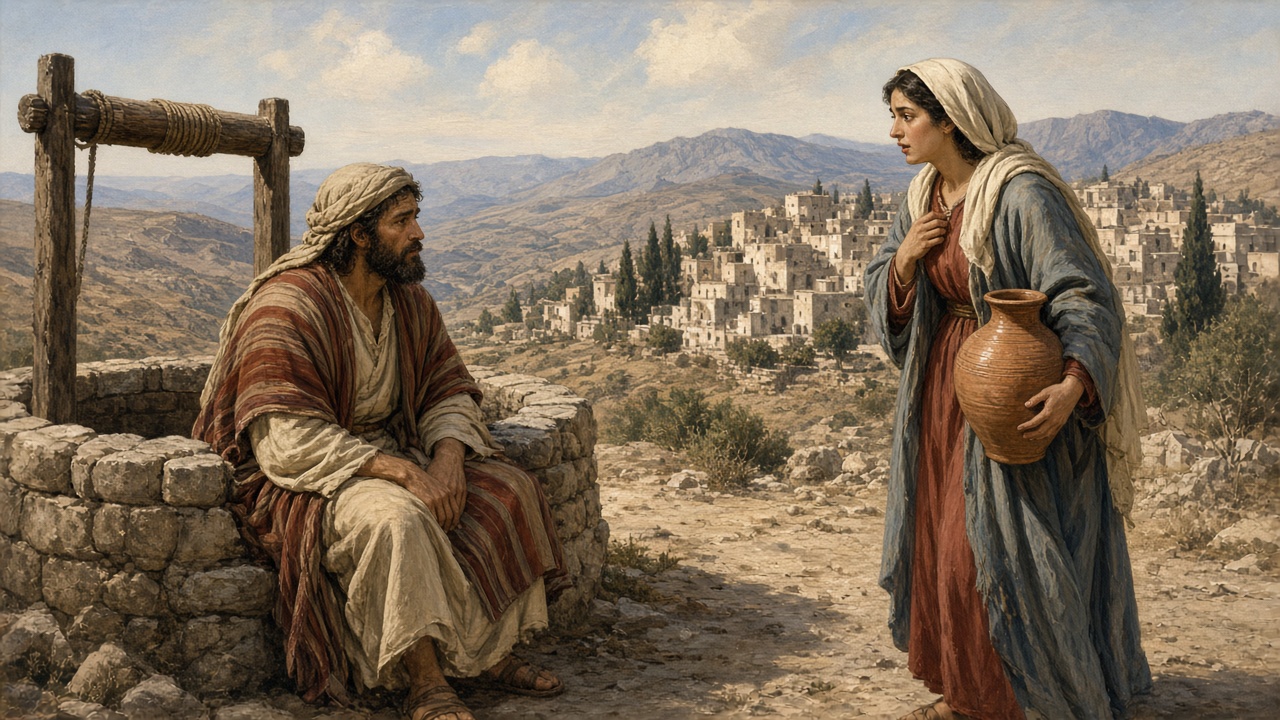
Agua viva en Samaria
- Jesús dejó Judea para regresar a Galilea, y el Evangelio dice que tenía que pasar por Samaria. Bajo los romanos, en tiempos de Jesús, Judea era la más meridional de las tres divisiones de Palestina, distinta de Samaria y de Galilea, y el relato señala que los judíos no se trataban con los samaritanos.Fuentes: el propio texto bíblico · Judea
- Llegó a Sicar, cerca del terreno que Jacob había dado a su hijo José y, cansado del camino, se sentó junto al pozo de Jacob. El diccionario bíblico de Easton (1897) registra que, desde la época de las Cruzadas, Sicar solía identificarse con Siquem, pero que unas exploraciones la identificaron con 'Askar, un pequeño pueblo samaritano en la base sur de Ebal, aproximadamente una milla al norte del pozo.Fuentes: el propio texto bíblico · Sychar
- La mujer contrastó la adoración en este monte con la afirmación judía de que había que adorar en Jerusalén, y habló de un Mesías que había de venir, llamado Cristo. Cuando los discípulos volvieron de comprar comida en el pueblo, se sorprendieron de que Jesús estuviera hablando con una mujer.Fuentes: el propio texto bíblico
Notas escritas con ayuda de IA a partir de fuentes abiertas (Theographic Bible Metadata, CC BY-SA 4.0; Easton’s Bible Dictionary, dominio público) y revisadas antes de publicarse.
Lugares de este capítulo
- Galilee · 32.760, 35.527 · versículos 3, 43, 45, 46, 47, 54
- Judea · Hoy: Judea 1 · 31.777, 35.234 · versículos 3, 47, 54
- Samaria · Hoy: Samaria 2 · 32.276, 35.195 · versículos 4, 5, 7, 9
- Jerusalem · 31.777, 35.234 · versículos 20, 21, 45
- Mount Gerizim · 32.199, 35.273 · versículo 20
Solo aparecen lugares identificados con alta confianza (90 % o más según las fuentes académicas reunidas por OpenBible). Mapa de la época: DARE (Digital Atlas of the Roman Empire), CC BY 4.0; mapa actual: © colaboradores de OpenStreetMap; lugares: OpenBible.info (CC BY 4.0).
Créditos y licencia de esta traducción
Elu Ọhụn: Ẹkụkwọ-Nsọ (Azụụn Ọhụn rịn'a)
Revision of New Testament in Ika
copyright © 2010 Wycliffe
Language: Ika
Translation by: Wycliffe
Ika (ikk) Nigeria
In Nigeria the word Ika is not only the name of the Ika
people, but is also used to designate a local government area in the Akwa Ibom
State. The Ika people are a sub group of the Igbo people. It is interesting to note
that Ika is the name of a town in Croatia is one of the eight Annang local
government areas of the local government areas in Akwa Ibom State. An alternative
name for the Ika people is Ika-Annang. There appears to be another dialect of Ika
that is spoken in Delta State of Nigeria.
Copyright Information
© 2010, Wycliffe. All rights reserved.
This translation text is made available to you under the terms of the Creative
Commons License: Attribution-Noncommercial-No Derivative Works. ( http://creativecommons.org/licenses/by-nc-nd/3.0/ ) In addition, you have
permission to port the text to different file formats, as long as you do not change
any of the text or punctuation of the Bible.
You may share, copy, distribute, transmit, and extract portions or quotations from
this work, provided that you include the above copyright information:
You must give Attribution to the work.
You do not sell this work for a profit.
You do not make any derivative works that change any of the actual words or
punctuation of the Scriptures.
Permissions beyond the scope of this license may be available if you contact us
with your request.
Printed book ISBN 9789789037056
Revision
The New Testament
in Ika
© 2010, Wycliffe. All rights
reserved.
This translation is made available to you under the terms of the
Creative Commons Attribution-Noncommercial-No Derivatives license 4.0.
You may share and redistribute this Bible translation or extracts from it in any format, provided that:
You include the above copyright and source information.
You do not sell this work for a profit.
You do not change any of the words or punctuation of the Scriptures.
Pictures included with Scriptures and other documents on this site are licensed just for use with those Scriptures and documents.
For other uses, please contact the respective copyright owners.
2019-08-09
Fuente: http://ebible.org/ikkNT/ · eBible.org