Josué 1
Biblica® Baịbụlụ Nsọ nʼIgbo Ndị Ugbu a nke dịrị onye ọbụla ịgụ · Toca un versículo para ver sus referencias cruzadas.
Acerca de este libro
Acerca de Josué
- El Diccionario Bíblico de Easton (1897) explica el nombre de Josué como "Jehová es su ayuda" o "Jehová el Salvador". Era hijo de Nun, de la tribu de Efraín, nacido en Egipto, y sucesor de Moisés como líder de Israel; las guerras de conquista que dirigió quedan registradas en el libro que lleva su nombre. Ese artículo no nombra al autor del libro ni da una fecha para su composición.Fuentes: Easton: Joshua · Joshua
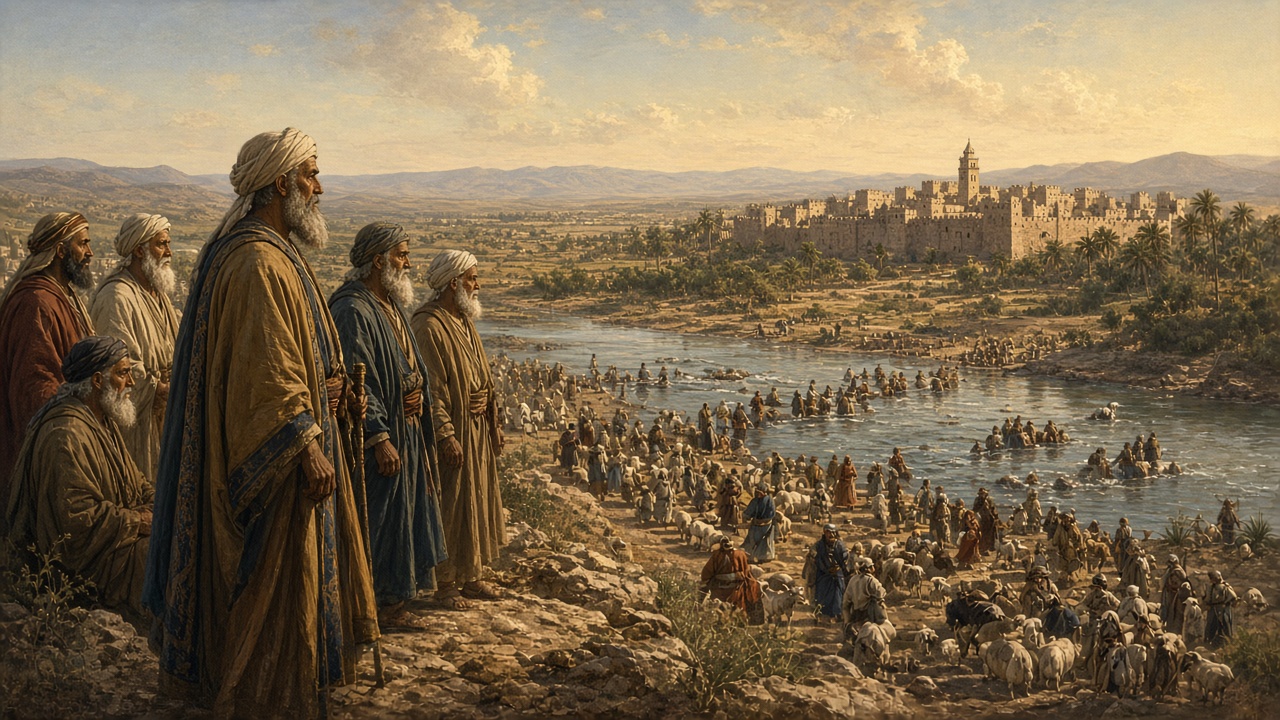
- Cuando Josué asumió el mando, el pueblo estaba acampado en Sitim. Cruzaron el Jordán y acamparon en Gilgal, donde, según Easton, circuncidó al pueblo y celebró la Pascua. Jericó, ciudad fortificada entre palmeras, a unas cinco millas al oeste del Jordán, se describe como la fortaleza más fuerte de Canaán y la llave de la Palestina occidental; Hai, al este de Betel, fue la segunda ciudad cananea tomada, después de una derrota inicial.Fuentes: Easton: Joshua · Jericho · Ai
- El Diccionario Bíblico de Easton (1897) dice que Josué conquistó seis naciones y treinta y un reyes, y luego repartió la tierra entre las tribus, quedándose Timnat-sera, en el monte Efraín, como herencia propia. Al este del Jordán, Galaad se describe como una región montañosa ocupada por las tribus de Gad y Rubén y por la parte sur de Manasés.Fuentes: Easton: Joshua · Gilead
- Citando a Edersheim, el diccionario dice que el nombre de Josué fue cambiado de Oshea, "ayuda", a Jehoshua, "Jehová es ayuda", y señala que se le llama Jesús en Hechos 7:45 y Hebreos 4:8. Afirma que murió a los ciento diez años, veinticinco años después de cruzar el Jordán, y que fue sepultado en su propia ciudad, Timnat-sera; de su padre, Nun, no se registra nada más que el hecho de que era el padre de Josué.Fuentes: Easton: Joshua · Joshua · Nun
- Antes de dirigir la conquista, Josué comandó el ejército de Israel contra los amalecitas en Refidim, sirvió como ministro de Moisés y fue uno de los doce enviados a explorar Canaán; solo él y Caleb trajeron un informe alentador. Tal como Easton describe el libro, este va desde el cruce del Jordán y la toma de Jericó, a través de años de guerra, hasta el reparto de la tierra y el último discurso de Josué.Fuentes: Easton: Joshua
Notas escritas con ayuda de IA a partir de fuentes abiertas (Theographic Bible Metadata, CC BY-SA 4.0; Easton’s Bible Dictionary, dominio público) y revisadas antes de publicarse.
Iwu Onyenwe anyị nyere Joshua
1Mgbe Mosis, bụ odibo Onyenwe anyị nwụrụ, Onyenwe anyị gwara Joshua nwa Nun, onye na-enyere Mosis aka okwu sị, 2“Mosis, odibo m anwụọla. Ugbu a, jikere onwe gị, meekwa ka ndị m jikere ịgafe ofe ọzọ nke osimiri Jọdan, ịbanye nʼala ahụ m na-aga inye ha, bụ ndị Izrel. 3Ana m agwa gị ihe m gwara Mosis mgbe ọ dị ndụ sị, Ebe ọbụla unu ga-azọkwasị ụkwụ unu nʼala, ala ahụ ga-abụ nke unu. 4Oke ala unu ga-abụ site nʼọzara dị na ndịda ruo Lebanọn, ma site nʼiyi ukwu Yufretis, tinyere ala niile nke ndị Het, ruo nʼosimiri ukwu ahụ dị nʼọdịda anyanwụ. 5Ọ dịghị onye ọbụla pụrụ iguzo imegide gị ụbọchị niile nke ndụ gị. Aga m anọnyere gị dịka m si nọnyere Mosis. Agaghị m ahapụ gị aka. Agaghị m agbakụtakwa gị azụ. 6Dịrị ike, nweekwa ume, nʼihi na ị ga-abụ onye ga-edu ndị a iketa ala ahụ m ṅụrụ nʼiyi inye nna nna ha ochie.
7“Naanị dịrị ike, nweekwa ume. Lezie anya ime ihe niile Mosis bụ odibo m nyere gị nʼiwu. Ewezugala onwe gị na ya gaa aka nri maọbụ aka ekpe, ka ihe si otu a gaara gị nke ọma nʼebe ọbụla ị na-aga. 8Esitela nʼọnụ gị wezuga ihe dị nʼAkwụkwọ Iwu a. Kama na-atụgharị uche gị na ya ehihie na abalị, ka i si otu a lezie anya imezu ihe niile e dere nʼime ya. Mgbe ahụ ị ga-aba ụba, ihe ga-agakwara gị nke ọma. 9Ọ bụ na m enyebeghị gị iwu sị gị, Nwee obi ike, dịrịkwa ike! Wezuga ụjọ niile na ịda mba nke obi. Cheta na mụ, bụ Onyenwe anyị Chineke gị, nọnyeere gị ebe ọbụla ị na-aga.”
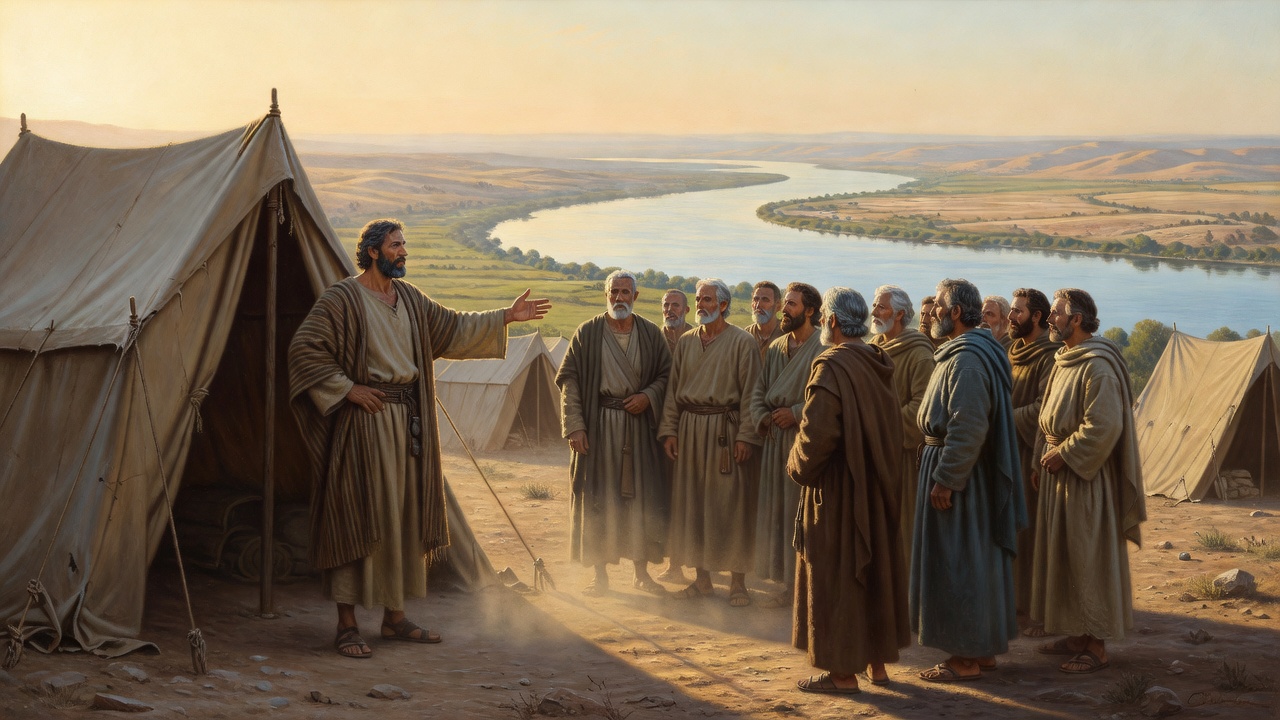
10Mgbe ahụ, Joshua nyere ndịisi Izrel niile iwu sị ha, 11“Jegharịanụ nʼetiti ebe obibi ụmụ Izrel gwa mmadụ niile okwu sị ha ‘Dozierenụ onwe unu ihe unu ga-eri nʼụzọ, nʼihi na nʼime ụbọchị atọ, anyị ga-agafe osimiri Jọdan, imeri na inweta ala ahụ Onyenwe anyị bụ Chineke na-enye unu.’ ”
12Joshua kpọkọtara ndịisi ebo Ruben, na Gad, na ọkara ebo Manase, gwa ha okwu sị, 13“Chetanụ iwu ahụ Mosis odibo Onyenwe anyị nyere unu, mgbe ọ sịrị, ‘ Onyenwe anyị Chineke unu na-enye unu izuike. O nyekwala unu ala a.’ 14Kama ndị nwunye unu, na ụmụntakịrị unu, na anụ ụlọ unu, ga-anọ nʼala a dị nʼọwụwa anyanwụ nke Mosis nyere unu. Ma ndị agha unu, ndị jikeere ejike, ga-eduru ndị Izrel ndị ọzọ gafee osimiri Jọdan inyere ụmụnna ha aka, 15tutu ruo mgbe Onyenwe anyị Chineke unu nyere ha izuike, dịka o si nye unu, na tutu ruo mgbe ha nwetara ala niile bụ nke Onyenwe anyị Chineke unu ga-enye ha. Mgbe nke a mezuru, unu ga-alaghachi azụ, nweta ala ahụ Mosis onyeozi Onyenwe anyị nyere unu nʼakụkụ ọwụwa anyanwụ osimiri Jọdan.”
16Mgbe ahụ, ha zara Joshua, “Ihe ọbụla nke ị nyere anyị nʼiwu anyị ga-eme ha, ebe ọbụla i zigara anyị ka anyị ga-aga. 17Anyị ga-ege gị ntị dịka anyị si gee Mosis ntị. Ka Onyenwe anyị Chineke gị nọnyere gị dịka o si nọnyere Mosis. 18Onye ọbụla nupuru isi nʼiwu i nyere anyị, ọ ga-anwụ. Naanị dịrị ike, nweekwa obi ike.”
¿Sabías que…?
Josué asume el liderazgo
- Josué, hijo de Nun y de la tribu de Efraín, sirvió como asistente y comandante militar de Moisés antes de ser designado para sucederlo como líder de Israel. Su nombre significa "el Señor es su ayuda" o "el Señor el Salvador".Fuentes: Joshua · el propio texto bíblico
- El territorio descrito en el encargo a Josué abarcaba desde el desierto y la cordillera del Líbano, al norte, hasta el río Éufrates ("el gran río"), al este, y el mar Mediterráneo ("el gran mar"), al oeste.Fuentes: el propio texto bíblico · Lebanon · Euphrates · Great Sea
- Las tribos de Rubén, Gad y la media tribu de Manasés ya habían recibido tierras al este del río Jordán bajo el mando de Moisés. Aun así, sus hombres de guerra debían cruzar armados delante de las demás tribus para ayudarlas hasta asegurar toda la tierra.Fuentes: el propio texto bíblico · Manasseh (son of Joseph)
Notas escritas con ayuda de IA a partir de fuentes abiertas (Theographic Bible Metadata, CC BY-SA 4.0; Easton’s Bible Dictionary, dominio público) y revisadas antes de publicarse.
Lugares de este capítulo
- Jordan · Hoy: Jordan River · 31.761, 35.558 · versículos 2, 11, 14, 15
- Euphrates · Hoy: Euphrates River · 31.004, 47.442 · versículo 4
- Great Sea · Hoy: Mediterranean Sea · 31.805, 34.170 · versículo 4
- Lebanon · 33.540, 35.584 · versículo 4
- Negeb · 31.245, 34.841 · versículo 4
- Syria · Hoy: Aram · 33.511, 36.306 · versículo 4
Solo aparecen lugares identificados con alta confianza (90 % o más según las fuentes académicas reunidas por OpenBible). Mapa de la época: DARE (Digital Atlas of the Roman Empire), CC BY 4.0; mapa actual: © colaboradores de OpenStreetMap; lugares: OpenBible.info (CC BY 4.0).
Créditos y licencia de esta traducción
Biblica® Baịbụlụ Nsọ nʼIgbo Ndị Ugbu a nke dịrị onye ọbụla ịgụ The Holy Bible in the Igbo language of Nigeria: Biblica® Baịbụlụ Nsọ nʼIgbo Ndị Ugbu a nke dịrị onye ọbụla ịgụ copyright © 2020 Biblica, Inc. Language: Igbo Contributor: Biblica, Inc. This work is made available under the Creative Commons Attribution-ShareAlike 4.0 International License (CC BY-SA). To view a copy of this license, visit http://creativecommons.org/licenses/by-sa/4.0 or send a letter to Creative Commons, PO Box 1866, Mountain View, CA 94042, USA. Biblica® is a trademark registered by Biblica, Inc., and use of the Biblica® trademark requires the written permission of Biblica, Inc. Under the terms of the CC BY-SA license, you may copy and redistribute this unmodified work as long as you keep the Biblica® trademark intact. If you modify a copy or translate this work, thereby creating a derivative work, you must remove the Biblica® trademark. On the derivative work, you must indicate what changes you have made and attribute the work as follows: “The original work by Biblica, Inc. is available for free at www.biblica.com and open.bible.” Notice of copyright must appear on the title or copyright page of the work as follows: Biblica® Baịbụlụ Nsọ nʼIgbo Ndị Ugbu a nke dịrị onye ọbụla ịgụ Ndị Biblica, Inc. degharịrị ya nʼafọ © 1980, 1988, 2019, 2020 Biblica® Open Igbo Contemporary Bible™ Copyright © 1980, 1988, 2019, 2020 by Biblica, Inc. “Biblica” bụ akara e ji mara ụlọ ọrụ a, nke edebanyere dịka iwu si kwado nʼụlọ ọrụ dị nʼobodo United States, ebe a na-enye akara a na ikike maka azụm ahịa ndị Biblica, Inc. Ọ bụ ha ka e nyere ikike idenye ya. “Biblica” is a trademark registered in the United States Patent and Trademark Office by Biblica, Inc. Used with permission. You must also make your derivative work available under the same license (CC BY-SA). If you would like to notify Biblica, Inc. regarding your translation of this work, please contact us at https://open.bible/contact-us. This translation is made available to you under the terms of the Creative Commons Attribution Share-Alike license 4.0. You have permission to share and redistribute this Bible translation in any format and to make reasonable revisions and adaptations of this translation, provided that: You include the above copyright and source information. If you make any changes to the text, you must indicate that you did so in a way that makes it clear that the original licensor is not necessarily endorsing your changes. If you redistribute this text, you must distribute your contributions under the same license as the original. Pictures included with Scriptures and other documents on this site are licensed just for use with those Scriptures and documents. For other uses, please contact the respective copyright owners. Note that in addition to the rules above, revising and adapting God's Word involves a great responsibility to be true to God's Word. See Revelation 22:18-19. 2023-04-12
Fuente: http://ebible.org/ibo/ · eBible.org