2 Corintios 3
God Lavayiyat Aṅ Puhuvasiwni · Toca un versículo para ver sus referencias cruzadas.
Servants of the New Covenant
1Ya sen itam nāt pas pu’ piw hákimnihqey umuy āwintani? Hal sen pi itam aṅ hakimuy amún umumi pan tutuvenit hintaniqat uma nānawakna? Ya sen itam umuṅaqw pan tutuvenit tuṅlay’ta? 2Qae; itam pan tutuvenit qa nāwakna, pi uma pas nāp tutuvenit anyuṅwa, itah’unaṅwpeq pey’taqata; noqw sohsoyam put aṅ túṅwayaqam itamuy hakimuynihqat pu hihta tumaltaqat navoti’yuṅwa. 3Uma tutuvenit Christ tuawi’taqat anyuṅwa. Pi itam umumi lomatuawit taviqw, qátuhqat God Hikwsiat soñawnen put pēna, qa tutuvenkuyit akw tutuvenit aṅ’a, pu qa owavutsqat aṅ’a. Pam umuh’naṅway taytaqat aṅ put pēna. 4Itam qa nāmi yantat, God aw yank̇aṅw Christ aṅ yan yuaata. Pi itam nahpiy qa hihta aṅ aptsiwta, pas God öqalayat‐sa ahpiy’o. 6Pam hapi itamuy it puhuvasiwnit eṅem hintsatsnaniqey aṅ aptsiwtaniqat itamuṅem yuku. Noqw i’ pasiwni Hikwsit ahpiy mātaviwa, hísatwat tutuvenit aṅ pey’taqat qa pan’i. Pi sinom mokiwuy hihk̇ay’yuṅqat pan hisatvasiwnit aṅ pey’ta; noqw pay puhuvasiwni Hikwsit ahpiy mātaviwhqa sinmuy qatsímqaṅwu. 7Ura i’ tutavo owat aṅ pey’taqa sinmuy so’niqat pan amumṅem yuku; nīk̇aṅw pam God lolmat tālawṅwayat mahtakna; ōviy pi Moses taywaat put tālat akw tālawva, pam tutavot makiwhq’ö. Noqw Israel‐sinom kurs hin put taywayat aw tātayyani, nāmahin pi pay tāla as ahpa’ súlaw’iwmaq’ö. 8Noqw ōviy i’ pasiwni Hikwsit ahpiy makiwhqa tis pas pavan put lolmat tālawṅwayat mahtaknani. 9Pi kurs lolma tālawṅwa hisatvasiwnit amum yante’, tis pas pavan pam piw puhuvasiwnit amum yantani. Pi hisatvasiwni sinmuy mokiwuy hihk̇ay’yuṅqat paṅqawu, noqw puhuvasiwni pumuy suan qatsit aw tsāmi’ma. 10Noqw ōviy hisatvasiwnit aṅqw tāla pēvewma, puhuvasiwnit aṅqw tāla put epnihqe pas suyan tālawvaqw ōviy’o. 11Noqw kurs i’ pasiwni tūwayatoqa tālat amum mātaviwhq, tis pas pavan i’ qa tūwayaniqa tālawvani. 12Noqw ōviy itam it puhuvasiwnit aw yanyuṅqe pas qa tuhtusk̇ahk̇aṅw yuaatota. 13Pu itam Moses hihta akw pitsáṅway nȫmaqw qa panyuṅwa; ura pam panhtiqw Israel‐sinom tālat pay súlaw’iwmaqat qa pas aw tayyuṅwa. 14Noqw pay pumuy wuwniam qatālawvaya; ōviy pi hikis nāt pu’ puma mohtiwat pasiwnit aṅ túṅwantotaqw pumuy unaṅwaam soñawnen hihta akw nȫmiwyuṅwa. Noqw pi pay Christ itamuṅem nȫmiwtaqat ayo hö́lökna. 15Hikis pi nāt pu’ it talöṅvaqat ep pumuy Moses tutuveniyat aṅ túṅwantotaqw unaṅwaam nākwapta. 16Noqw pay ason hisat puma Tutuyqawhqat aw nánamtök̇e’, puma suyan māmatsyani, ispi nākwapnit ayo yukiwhq’ö. 17Noqw i’ Tutuyqawhqa hapi Qahováriwtaqa Hikwsi. Puma put aw nánamtökq, Tutuyqawhqat Hikwsiat pumuy qenivo óyani. 18Noqw itam qa nākwapk̇ahk̇aṅw soñawnen panaptsat aqw Tutuyqawhqat lomavitsaṅwayat tuway’yuṅwa; nihqe paṅqw kuytaqat an suytsepṅwat nānaṅumo lomavitsaṅwayat aw alöṅ’iwwisa, Tutuyqawhqat Hikwsiyat ahpiy’o.
¿Sabías que…?
Un pacto más glorioso
- El capítulo pregunta si hacen falta cartas de recomendación para los creyentes o de parte de ellos, como algunas personas exigen. Responde que los propios creyentes son una carta de Cristo, fruto de este ministerio, inscrita en los corazones de los ministros y conocida y leída por todos.Fuentes: el propio texto bíblico
- El capítulo contrasta la tinta y las tablas de piedra con el Espíritu del Dios vivo escribiendo en corazones humanos. Llama ministerio de muerte y de condenación al ministerio grabado con letras en piedra, y describe un nuevo pacto del Espíritu, porque la letra mata, pero el Espíritu da vida.Fuentes: el propio texto bíblico
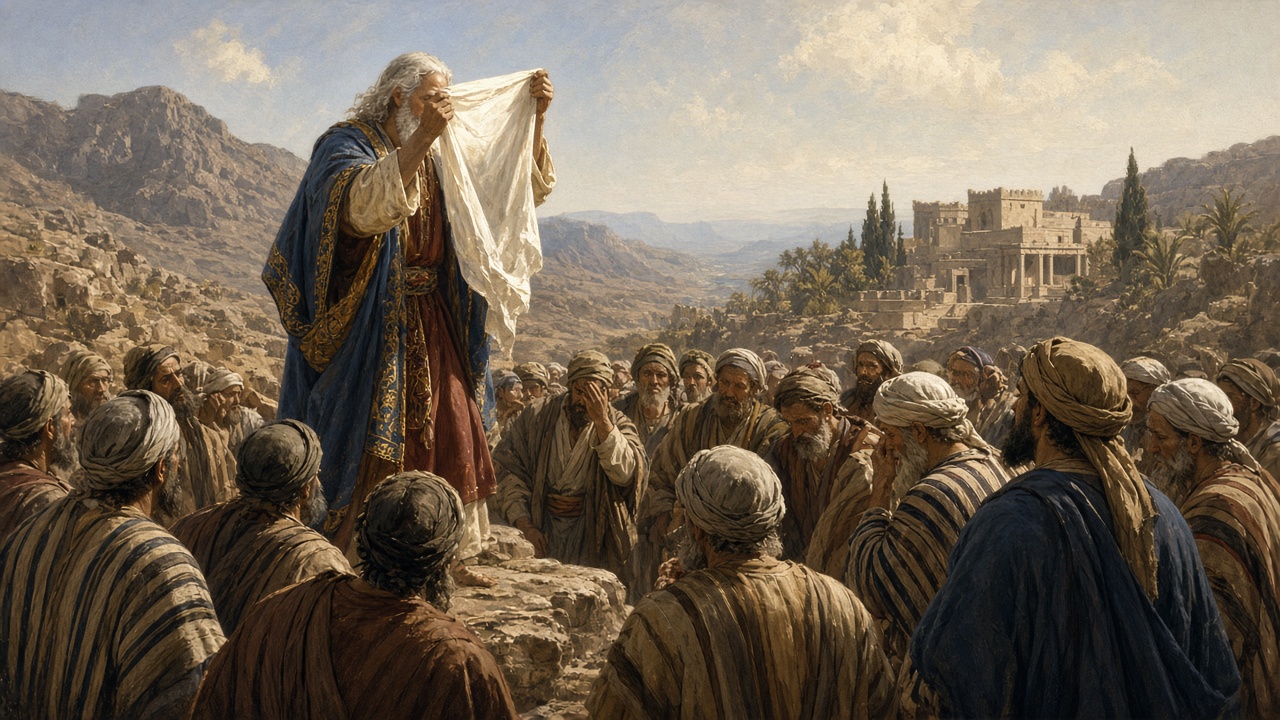
- Los israelitas no podían mirar fijamente el rostro de Moisés a causa de una gloria que se desvanecía, y Moisés se puso un velo sobre el rostro para que no contemplaran el fin de lo que iba pasando. El capítulo dice que un velo aún cubre sus corazones cuando se lee a Moisés, y que se quita siempre que alguien se vuelve al Señor.Fuentes: el propio texto bíblico
Notas escritas con ayuda de IA a partir de fuentes abiertas (Theographic Bible Metadata, CC BY-SA 4.0; Easton’s Bible Dictionary, dominio público) y revisadas antes de publicarse.
Créditos y licencia de esta traducción
God Lavayiyat Aṅ Puhuvasiwni
New Testament in Hopi (US:hop:Hopi)
copyright © 2012 Wycliffe Bible Translators, Inc.
Language: Hopi
Translation by: Wycliffe Bible Translators, Inc.
Hopi [hop], USA
Copyright Information
© 2012, Wycliffe Bible Translators, Inc. All rights reserved.
This translation text is made available to you under the
terms of the Creative Commons License: Attribution-Noncommercial-No Derivative Works.
( http://creativecommons.org/licenses/by-nc-nd/3.0/ )
In addition, you have permission to port the text to different file formats, as long as you
do not change any of the text or punctuation of the Bible.
You may share, copy, distribute, transmit, and extract portions
or quotations from this work, provided that you include the above copyright
information:
You must give Attribution to the work.
You do not sell this work for a profit.
You do not make any derivative works that change any of the actual words or punctuation of the Scriptures.
Permissions beyond the scope of this license may be
available if you contact
us with your request.
The New Testament
in Hopi
© 2012, Wycliffe Bible Translators, Inc. All rights reserved.
This translation is made available to you under the terms of the
Creative Commons Attribution-Noncommercial-No Derivatives license 4.0.
You may share and redistribute this Bible translation or extracts from it in any format, provided that:
You include the above copyright and source information.
You do not sell this work for a profit.
You do not change any of the words or punctuation of the Scriptures.
Pictures included with Scriptures and other documents on this site are licensed just for use with those Scriptures and documents.
For other uses, please contact the respective copyright owners.
2014-04-25
Fuente: http://ebible.org/hopNT/ · eBible.org