2 Corinthians 3
God Lavayiyat Aṅ Puhuvasiwni · Tap a verse to see its cross-references.
Servants of the New Covenant
1Ya sen itam nāt pas pu’ piw hákimnihqey umuy āwintani? Hal sen pi itam aṅ hakimuy amún umumi pan tutuvenit hintaniqat uma nānawakna? Ya sen itam umuṅaqw pan tutuvenit tuṅlay’ta? 2Qae; itam pan tutuvenit qa nāwakna, pi uma pas nāp tutuvenit anyuṅwa, itah’unaṅwpeq pey’taqata; noqw sohsoyam put aṅ túṅwayaqam itamuy hakimuynihqat pu hihta tumaltaqat navoti’yuṅwa. 3Uma tutuvenit Christ tuawi’taqat anyuṅwa. Pi itam umumi lomatuawit taviqw, qátuhqat God Hikwsiat soñawnen put pēna, qa tutuvenkuyit akw tutuvenit aṅ’a, pu qa owavutsqat aṅ’a. Pam umuh’naṅway taytaqat aṅ put pēna. 4Itam qa nāmi yantat, God aw yank̇aṅw Christ aṅ yan yuaata. Pi itam nahpiy qa hihta aṅ aptsiwta, pas God öqalayat‐sa ahpiy’o. 6Pam hapi itamuy it puhuvasiwnit eṅem hintsatsnaniqey aṅ aptsiwtaniqat itamuṅem yuku. Noqw i’ pasiwni Hikwsit ahpiy mātaviwa, hísatwat tutuvenit aṅ pey’taqat qa pan’i. Pi sinom mokiwuy hihk̇ay’yuṅqat pan hisatvasiwnit aṅ pey’ta; noqw pay puhuvasiwni Hikwsit ahpiy mātaviwhqa sinmuy qatsímqaṅwu. 7Ura i’ tutavo owat aṅ pey’taqa sinmuy so’niqat pan amumṅem yuku; nīk̇aṅw pam God lolmat tālawṅwayat mahtakna; ōviy pi Moses taywaat put tālat akw tālawva, pam tutavot makiwhq’ö. Noqw Israel‐sinom kurs hin put taywayat aw tātayyani, nāmahin pi pay tāla as ahpa’ súlaw’iwmaq’ö. 8Noqw ōviy i’ pasiwni Hikwsit ahpiy makiwhqa tis pas pavan put lolmat tālawṅwayat mahtaknani. 9Pi kurs lolma tālawṅwa hisatvasiwnit amum yante’, tis pas pavan pam piw puhuvasiwnit amum yantani. Pi hisatvasiwni sinmuy mokiwuy hihk̇ay’yuṅqat paṅqawu, noqw puhuvasiwni pumuy suan qatsit aw tsāmi’ma. 10Noqw ōviy hisatvasiwnit aṅqw tāla pēvewma, puhuvasiwnit aṅqw tāla put epnihqe pas suyan tālawvaqw ōviy’o. 11Noqw kurs i’ pasiwni tūwayatoqa tālat amum mātaviwhq, tis pas pavan i’ qa tūwayaniqa tālawvani. 12Noqw ōviy itam it puhuvasiwnit aw yanyuṅqe pas qa tuhtusk̇ahk̇aṅw yuaatota. 13Pu itam Moses hihta akw pitsáṅway nȫmaqw qa panyuṅwa; ura pam panhtiqw Israel‐sinom tālat pay súlaw’iwmaqat qa pas aw tayyuṅwa. 14Noqw pay pumuy wuwniam qatālawvaya; ōviy pi hikis nāt pu’ puma mohtiwat pasiwnit aṅ túṅwantotaqw pumuy unaṅwaam soñawnen hihta akw nȫmiwyuṅwa. Noqw pi pay Christ itamuṅem nȫmiwtaqat ayo hö́lökna. 15Hikis pi nāt pu’ it talöṅvaqat ep pumuy Moses tutuveniyat aṅ túṅwantotaqw unaṅwaam nākwapta. 16Noqw pay ason hisat puma Tutuyqawhqat aw nánamtök̇e’, puma suyan māmatsyani, ispi nākwapnit ayo yukiwhq’ö. 17Noqw i’ Tutuyqawhqa hapi Qahováriwtaqa Hikwsi. Puma put aw nánamtökq, Tutuyqawhqat Hikwsiat pumuy qenivo óyani. 18Noqw itam qa nākwapk̇ahk̇aṅw soñawnen panaptsat aqw Tutuyqawhqat lomavitsaṅwayat tuway’yuṅwa; nihqe paṅqw kuytaqat an suytsepṅwat nānaṅumo lomavitsaṅwayat aw alöṅ’iwwisa, Tutuyqawhqat Hikwsiyat ahpiy’o.
Did you know?
A More Glorious Covenant
- The chapter asks whether letters of recommendation to or from the believers are needed, as some people require. It answers that the believers themselves are a letter from Christ, the result of this ministry, inscribed on the ministers' hearts and known and read by everyone.Sources: the Bible text itself
- The chapter contrasts ink and tablets of stone with the Spirit of the living God writing on human hearts. It calls the ministry engraved in letters on stone a ministry of death and condemnation, and describes a new covenant of the Spirit, for the letter kills but the Spirit gives life.Sources: the Bible text itself
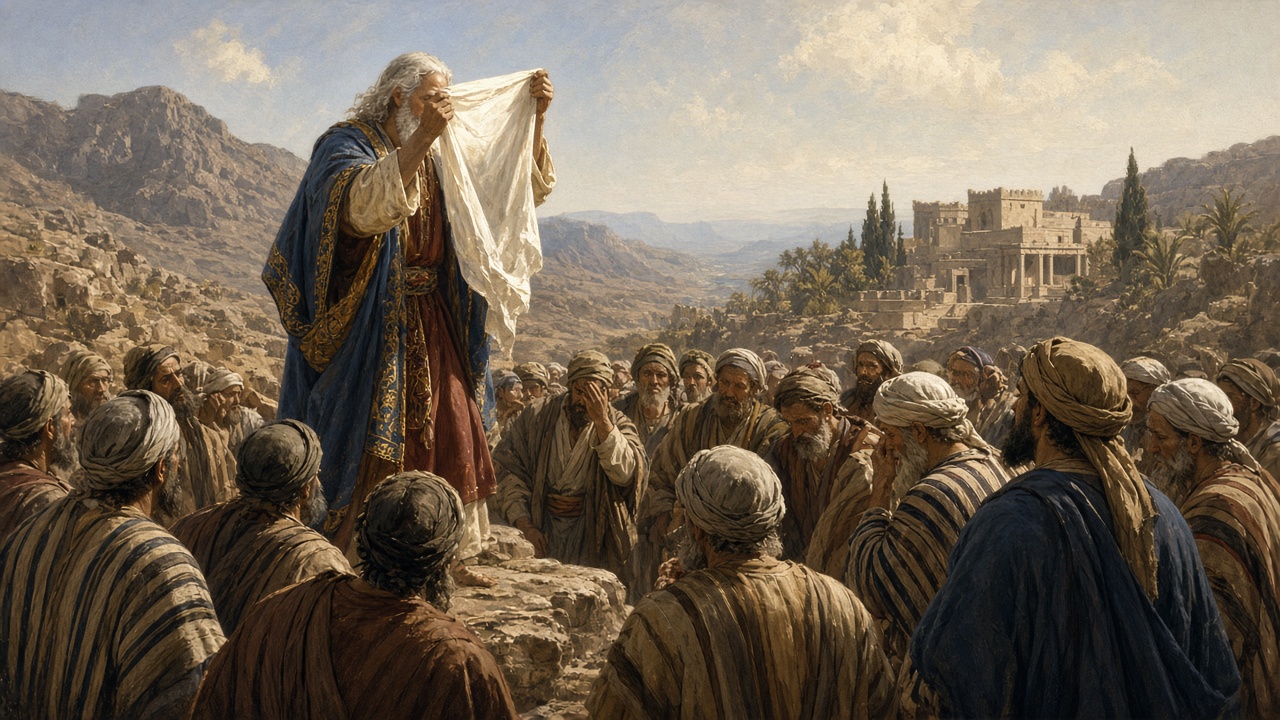
- The Israelites could not gaze at Moses's face because of a glory that was fading, and Moses put a veil over his face so they would not look at the end of what was passing away. The chapter says that a veil still covers their hearts when Moses is read, and that it is taken away whenever anyone turns to the Lord.Sources: the Bible text itself
Notes written with AI assistance from open sources (Theographic Bible Metadata, CC BY-SA 4.0; Easton’s Bible Dictionary, public domain) and reviewed before publishing.
Credits and license for this translation
God Lavayiyat Aṅ Puhuvasiwni
New Testament in Hopi (US:hop:Hopi)
copyright © 2012 Wycliffe Bible Translators, Inc.
Language: Hopi
Translation by: Wycliffe Bible Translators, Inc.
Hopi [hop], USA
Copyright Information
© 2012, Wycliffe Bible Translators, Inc. All rights reserved.
This translation text is made available to you under the
terms of the Creative Commons License: Attribution-Noncommercial-No Derivative Works.
( http://creativecommons.org/licenses/by-nc-nd/3.0/ )
In addition, you have permission to port the text to different file formats, as long as you
do not change any of the text or punctuation of the Bible.
You may share, copy, distribute, transmit, and extract portions
or quotations from this work, provided that you include the above copyright
information:
You must give Attribution to the work.
You do not sell this work for a profit.
You do not make any derivative works that change any of the actual words or punctuation of the Scriptures.
Permissions beyond the scope of this license may be
available if you contact
us with your request.
The New Testament
in Hopi
© 2012, Wycliffe Bible Translators, Inc. All rights reserved.
This translation is made available to you under the terms of the
Creative Commons Attribution-Noncommercial-No Derivatives license 4.0.
You may share and redistribute this Bible translation or extracts from it in any format, provided that:
You include the above copyright and source information.
You do not sell this work for a profit.
You do not change any of the words or punctuation of the Scriptures.
Pictures included with Scriptures and other documents on this site are licensed just for use with those Scriptures and documents.
For other uses, please contact the respective copyright owners.
2014-04-25
Source: http://ebible.org/hopNT/ · eBible.org