Job 8
Bib Sen An · Toca un versículo para ver sus referencias cruzadas.
1Konsa, Bildad Schuach la, te reponn:
2“Pou konbyen de tan ou va pale bagay sa yo
pou pawòl a bouch ou fè gwo van?
3Èske Bondye konn konwonpi jistis la?
Oswa èske Toupwisan an konwonpi sa ki dwat?
4Si fis ou yo te peche kont Li,
alò, Li livre yo antre nan pouvwa transgresyon yo.
5Si ou ta chache Bondye e mande
konpasyon a Toupwisan an,
6si ou te san tach e dwat;
anverite, koulye a,
Li ta leve Li menm pou ou e rekonpanse ou
jan ou te ye nan ladwati ou.
7Malgre, kòmansman ou pa t remakab,
ou ta fini avèk anpil gwo bagay.
8“Souple, fè rechèch nan jenerasyon zansèt ansyen yo,
e bay konsiderasyon a bagay ke papa yo te twouve.
9Paske nou menm se sèl bagay ayè nou konnen,
e nou pa konnen anyen,
paske jou pa nou yo sou latè
se sèl yon lonbraj ki pase.
10Èske yo p ap enstwi ou, pale ou e
fè pawòl ki nan tèt yo vin parèt?
11“Èske jon kab grandi san ma dlo?
Èske wozo konn pouse san dlo?
12Pandan li toujou vèt e san koupe a,
l ap fennen avan tout lòt plant yo.
13Se konsa chemen a tout moun ki bliye Bondye yo.
Konsa espwa a moun enkwayan yo peri,
14sila a ak konfyans frajil la
kap mete konfyans li nan fil arenye a.
15Arenye a mete konfyans sou lakay li,
men li p ap kanpe.
Li kenbe rèd sou li, men li p ap dire.
16Li byen reyisi nan solèy la e
gaye toupatou nan jaden an.
17Rasin li yo vlope toupatou sou pil wòch;
li sezi yon kay wòch.
18Si li vin deplase sou plas li,
alò plas li va refize rekonèt li e di:
“Mwen pa t janm wè w.
19Gade byen, se sa ki fè lajwa chemen li;
epi dèyè li, gen lòt yo k ap pete sòti nan pousyè tè a.
20“Alò, Bondye p ap rejte yon nonm entèg;
ni li p ap bay soutyen a malfektè yo.
21Jiska prezan, Li va ranpli bouch ou
avèk ri lajwa e lèv ou avèk kri plezi.
22Sila ki rayi ou yo va vin abiye ak wont
e tant a mechan yo p ap la ankò.”
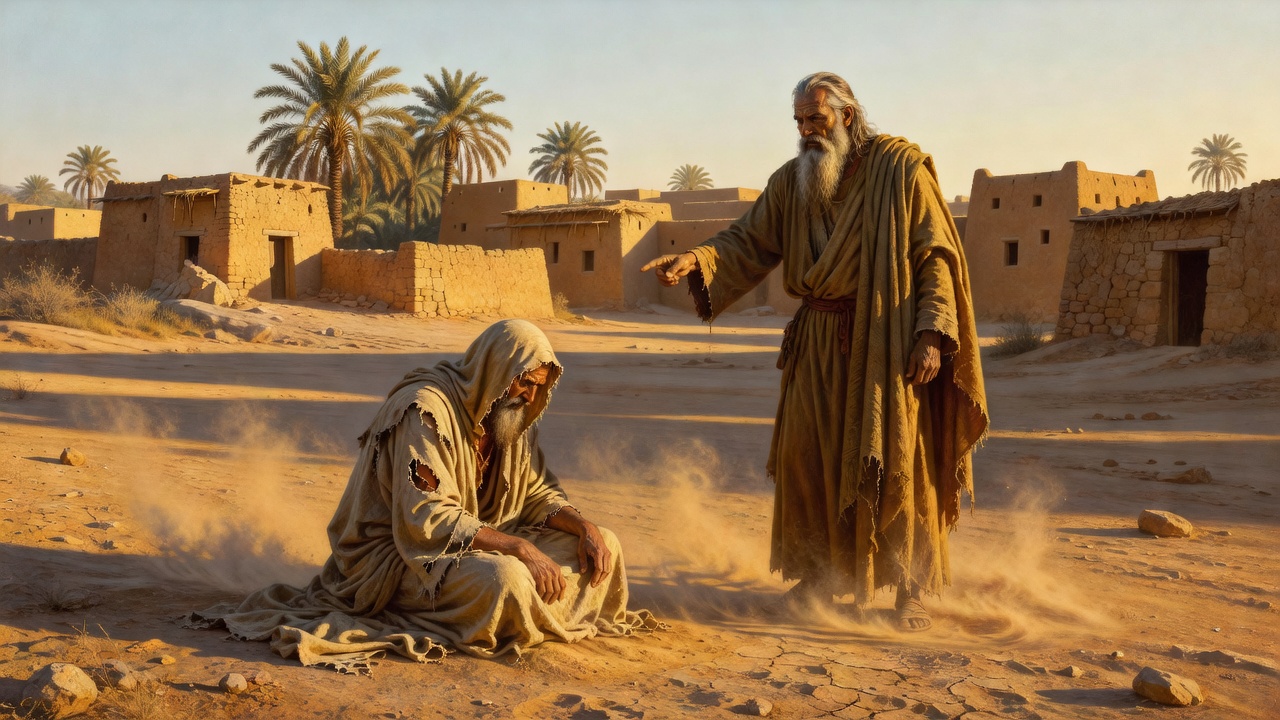
¿Sabías que…?
El llamado de Bildad a la sabiduría antigua
- Bildad es identificado como suhita, lo que probablemente lo vincula con Súa, una región árabe poblada por los descendientes de Abraham y Cetura. En este capítulo, pronuncia el primero de sus tres discursos severos a Job, afirmando que la justicia divina es absoluta e inalterable.Fuentes: Bildad · el propio texto bíblico
- En lugar de recurrir a su propia experiencia, Bildad apela al conocimiento acumulado de las generaciones pasadas, comparando los días humanos con una sombra pasajera. Para ilustrar la ruina del impío, utiliza metáforas de la naturaleza como juncos que se marchitan sin agua y la fragilidad de una telaraña.Fuentes: el propio texto bíblico
Notas escritas con ayuda de IA a partir de fuentes abiertas (Theographic Bible Metadata, CC BY-SA 4.0; Easton’s Bible Dictionary, dominio público) y revisadas antes de publicarse.
Créditos y licencia de esta traducción
Bib Sen An
The Holy Bible in Haitian Creole, 2023 update
copyright © 2017-2023 Ron Smith
Language: Kreyòl Ayisyen (Haitian)
Translation by: Ron Smith
Contributor: Felix Nixon
This translation is made available to you under the terms of the
Creative Commons Attribution Share-Alike license 4.0.
You have permission to share and redistribute this Bible translation in any format and to make reasonable revisions and adaptations of this translation, provided that:
You include the above copyright and source information.
If you make any changes to the text, you must indicate that you did so in a way that makes it clear that the original licensor is not necessarily endorsing your changes.
If you redistribute this text, you must distribute your contributions under the same license as the original.
Pictures included with Scriptures and other documents on this site are licensed just for use with those Scriptures and documents.
For other uses, please contact the respective copyright owners.
Note that in addition to the rules above, revising and adapting God's Word involves a great responsibility to be true to God's Word. See Revelation 22:18-19.
2026-06-11
Fuente: http://ebible.org/hatbsa/ · eBible.org