Jueces 2
Bib Sen An · Toca un versículo para ver sus referencias cruzadas.
1Alò, zanj SENYÈ a te monte soti Guilgal a Bokim. Li te di: “Mwen te mennen nou sòti an Égypte, e Mwen te mennen nou antre nan peyi ke M te sèmante a zansèt nou yo. Epi Mwen te di: ‘Mwen p ap janm kraze akò Mwen avèk nou. 2Konsa, pou nou menm, nou p ap fè okenn akò avèk pèp peyi sila yo. Nou va chire lotèl pa yo.’ Men nou pa t obeyi Mwen. Kisa sa ye ke nou fè la a? 3Pou sa, Mwen te di anplis, ‘Mwen p ap pouse yo sòti devan nou, men yo va devni tankou zepin akote nou e dye pa yo va vin yon pèlen pou nou.’”
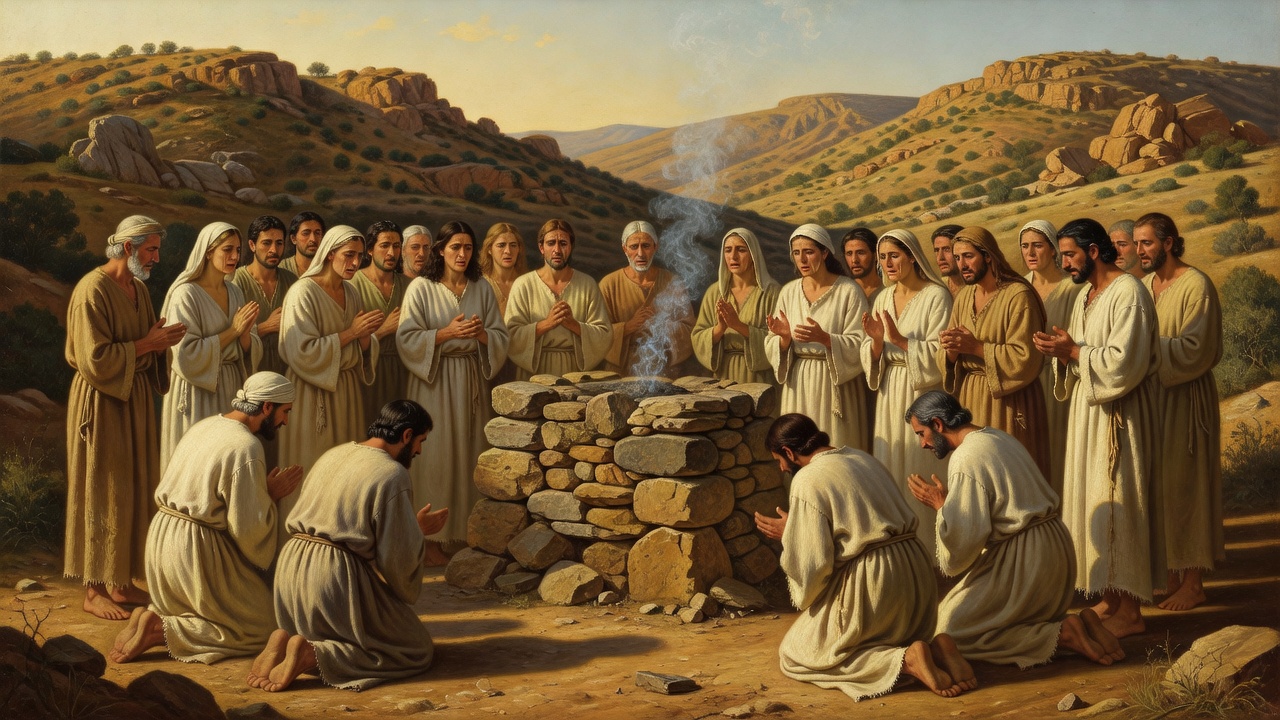
4Lè zanj SENYÈ a te pale pawòl sa yo a tout fis Israël yo, pèp la te leve vwa pa yo pou te kriye.
5Pou sa, yo te bay plas sa non Bokim, epi la, yo te fè sakrifis bay SENYÈ a. 6Lè Josué te fin fè pèp la ale, fis Israël yo te ale yo chak nan pwòp eritaj pa yo pou posede tèren an. 7Pèp la te sèvi Josué pandan tout jou a Josué yo e tout jou a ansyen ki te sèvi Josué yo, ki te wè tout gran zèv SENYÈ a te fè pou Israël yo.
8Epi Josué, fis a Nun nan, Sèvitè SENYÈ a, te mouri nan laj san-dis ane. 9Yo te antere li nan tèritwa eritaj pa li, nan Thimnath-Hérès nan peyi ti kolin Éphraïm yo, vè nò a Mòn Gaasch. 10Tout jenerasyon sila a, osi, te vin ranmase vè zansèt pa yo. Konsa, te vin leve yon lòt jenerasyon apre yo ki pa t rekonèt SENYÈ a, ni nonplis zèv ke Li te fè pou Israël yo. 11Alò, fis Israël yo te fè mal nan zye SENYÈ a, e yo te sèvi Baal yo. 12Yo te abandone SENYÈ a, Bondye a zansèt pa yo a, ki te mennen yo sòti nan peyi Égypte la pou te swiv lòt dye yo, soti nan dye a pèp ki te antoure yo. Yo te bese yo ba devan yo. Konsa, yo te pwovoke SENYÈ a a lakòlè. 13Yo te abandone SENYÈ a pou te sèvi Baal avèk Astarté yo. 14Lakòlè SENYÈ a te brile kont Israël. Li te livre yo nan men a piyajè ki te piyaje yo. Li te vann yo antre nan men a lènmi ki te antoure yo pou yo pa t kab kanpe ankò devan lènmi yo. 15Nenpòt kote ke yo te ale, men SENYÈ a te kont yo pou mal, jan SENYÈ a te pale yo a, jan Li te sèmante a yo a. Konsa, vrèman yo te vin gen gwo pwoblem. 16Alò, SENYÈ a te fè leve jij ki te livre yo soti nan men a sila ki t ap piyaje yo. 17Malgre sa, yo pa t koute jij yo, paske yo te fè pwostitiye dèyè lòt dye yo, e te bese yo ba anvè yo. Yo te vire akote byen vit soti nan chemen an nan sila zansèt yo te mache ak obeyisans lòd a SENYÈ yo. Yo pa t fè tankou yo. 18Lè SENYÈ a te konn fè leve yon jij pou yo, SENYÈ a te avèk jij la, e te delivre pèp la nan men lènmi yo pandan tout jou a jij yo. Konsa, SENYÈ a te vin gen pitye pou yo akoz sila ki te oprime ak aflije yo. 19Men li te konn rive ke nan lè jij la vin mouri, yo ta vire tounen pou aji pi konwonpi pase zansèt yo. Yo te swiv lòt dye yo pou sèvi yo, e bese ba devan yo. Yo pa t janm abandone zèv sila yo, ni chemen tèt mato yo. 20Konsa, lakòlè SENYÈ a te brile kont Israël. Li te di: “Akoz nasyon sa a te transgrese akò ke Mwen te kòmande zansèt yo, e pa t koute vwa M, 21Mwen menm tou, Mwen va sispann chase devan yo, okenn nan nasyon ke Josué te kite la lè l te mouri yo, 22pou pase Israël a leprèv pa yo menm, pou wè si yo va kenbe chemen a SENYÈ a pou mache ladann jan zansèt pa yo te fè a oswa non.” 23Konsa SENYÈ a te pèmèt ke nasyon sa yo rete pami yo, e pa t pouse yo sòti vit. Li pa t livre yo nan men Josué.
¿Sabías que…?
El ciclo de desobediencia de Israel y los jueces
- El nombre Boquim significa "los que lloran". El lugar, probablemente situado entre Gilgal y Silo, recibió este nombre después de que los israelitas lloraron en voz alta cuando el ángel del Señor los reprendió por pactar con los habitantes de la tierra.Fuentes: Bochim · el propio texto bíblico
- Josué fue sepultado en Timnat-serah (o Timnat-heres, "porción del sol"), al norte del monte Gaas, en la región montañosa de Efraín. Había liderado a los israelitas tras la muerte de Moisés y murió a la edad de 110 años.Fuentes: Timnath-heres · Gaash · Joshua · el propio texto bíblico
- El término baales es la forma plural que alude a las diversas manifestaciones locales de Baal, la principal deidad masculina de los fenicios. Jueces 2 establece el ciclo recurrente del libro: Israel abandona al Señor por dioses ajenos, cae ante sus enemigos y es librado cuando Dios levanta un juez.Fuentes: Baal · el propio texto bíblico
Notas escritas con ayuda de IA a partir de fuentes abiertas (Theographic Bible Metadata, CC BY-SA 4.0; Easton’s Bible Dictionary, dominio público) y revisadas antes de publicarse.
Lugares de este capítulo
Solo aparecen lugares identificados con alta confianza (90 % o más según las fuentes académicas reunidas por OpenBible). Mapa de la época: DARE (Digital Atlas of the Roman Empire), CC BY 4.0; mapa actual: © colaboradores de OpenStreetMap; lugares: OpenBible.info (CC BY 4.0).
Créditos y licencia de esta traducción
Bib Sen An
The Holy Bible in Haitian Creole, 2023 update
copyright © 2017-2023 Ron Smith
Language: Kreyòl Ayisyen (Haitian)
Translation by: Ron Smith
Contributor: Felix Nixon
This translation is made available to you under the terms of the
Creative Commons Attribution Share-Alike license 4.0.
You have permission to share and redistribute this Bible translation in any format and to make reasonable revisions and adaptations of this translation, provided that:
You include the above copyright and source information.
If you make any changes to the text, you must indicate that you did so in a way that makes it clear that the original licensor is not necessarily endorsing your changes.
If you redistribute this text, you must distribute your contributions under the same license as the original.
Pictures included with Scriptures and other documents on this site are licensed just for use with those Scriptures and documents.
For other uses, please contact the respective copyright owners.
Note that in addition to the rules above, revising and adapting God's Word involves a great responsibility to be true to God's Word. See Revelation 22:18-19.
2026-06-11
Fuente: http://ebible.org/hatbsa/ · eBible.org