Amós 4
Bib Sen An · Toca un versículo para ver sus referencias cruzadas.
1Tande pawòl sa a, nou menm, vach Basan k ap rete sou mòn Samarie yo, k ap oprime malere, k ap kraze sila ki nan bezwen yo, ki di a mari nou yo: “Pote bwason nou!”
2Senyè BONDYE a te sèmante pa sentete Li,
“Gade byen, jou yo ap vini sou nou,
lè yo va rache pran nou ak kwòk vyann,
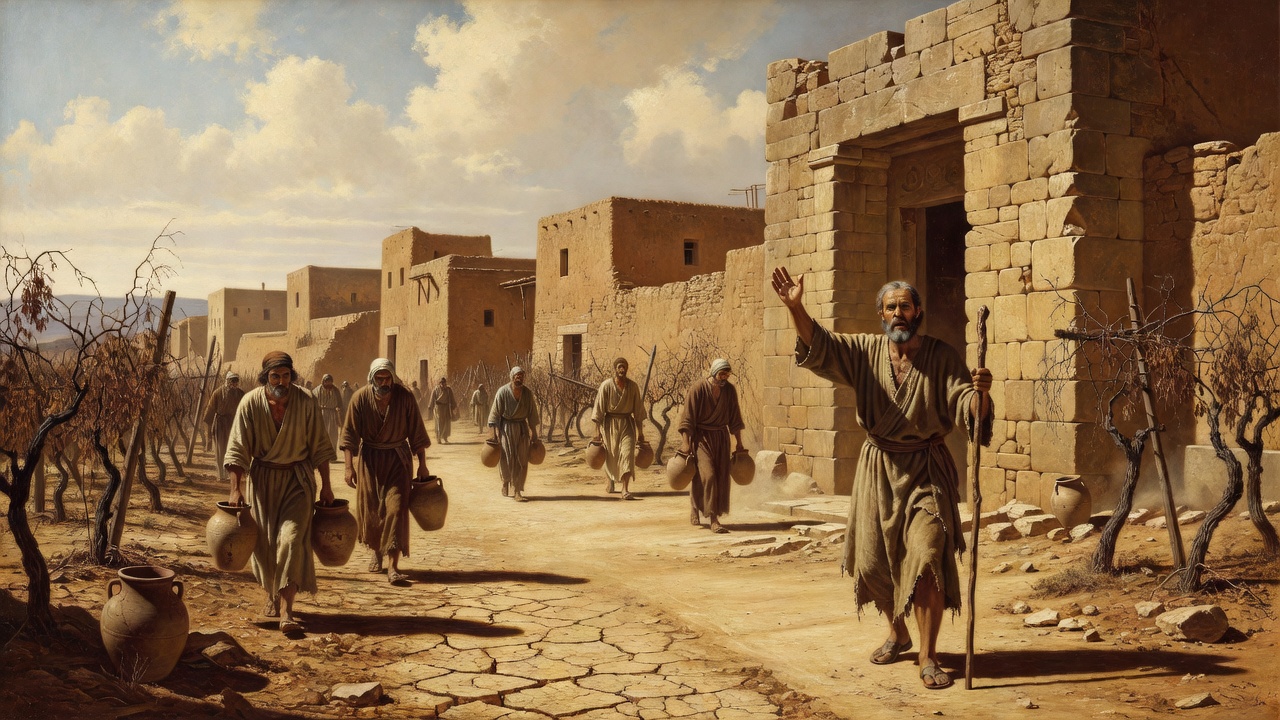
e dènye bout nan nou ak gaf pwason.
3Nou va sòti atravè brèch miray yo,
nou chak tou dwat devan li a,
e konsa, nou va jete nan sitadèl la,” deklare SENYÈ a.
4“Antre nan Béthel pou fè peche;
nan Guilgal pou miltipliye peche yo!
Pote sakrifis nou yo chak maten,
dim nou yo chak twa jou.
5Ofri yon ofrann remèsiman,
sitou sa ki gen ledven ladann,
epi pwoklame ofrann bòn volonte yo.
Fè l parèt wo pou moun wè!
Paske se konsa nou renmen fè l, nou menm,
fis Israël yo,” deklare SENYÈ a.
6“Men Mwen te bay nou anplis, dan netwaye
nan tout vil nou yo,
ak mank pen tout kote.
Malgre sa, nou pa t retounen
vin jwenn Mwen,” deklare SENYÈ a.
7Anplis de sa, Mwen te fè lapli sispann
pandan te gen twa mwa ankò avan rekòlt la.
Konsa, Mwen te voye lapli nan yon vil
pandan Mwen te refize li nan yon lòt.
Yon pati te jwenn lapli, pandan pati ki pa t
resevwa lapli a te seche.
8Konsa, de oswa twa vil te kilbite rive nan
yon lòt pou bwè dlo, men yo pa t satisfè;
malgre sa, nou pa t retounen vin jwenn Mwen,
deklare SENYÈ a.
9Mwen te frape nou ak van cho, ak lakanni;
epi cheni te devore jaden ak chan
rezen nou yo, pye figye etranje ak pye doliv yo.
Malgre sa, nou pa t retounen vin jwenn Mwen,”
deklare SENYÈ a.
10“Mwen te voye yon epidemi nan mitan nou,
tankou sa ki te konn rive an Égypte yo.
Mwen te touye jenn mesye nou yo ak nepe,
e te retire cheval nou yo.
E Mwen te fè movèz odè kan nou an,
monte antre nan nen nou.
Malgre sa, nou pa t retounen vin jwenn Mwen,”
deklare SENYÈ a.
11“Mwen te boulvèse kèk nan nou nèt,
jan Bondye te boulvèse Sodome ak Gomorrhe.
Nou te tankou yon bout bwa byen cho
ki te rache soti nan dife;
malgre sa, nou pa t retounen vin jwenn Mwen,” deklare SENYÈ a.
12“Akoz sa, se konsa Mwen va fè ou, O Israël!
Paske se sa Mwen va fè ou;
prepare pou rankontre Bondye ou a, O Israël.
13Paske gade byen, Sila ki fòme mòn yo,
ki kreye van an,
e ki deklare a lòm tout refleksyon li yo;
sila ki fè jou leve nan fènwa a,
e ki foule wo plas sou latè yo;
SENYÈ Bondye dèzame yo, se non Li.”
¿Sabías que…?
Advertencias desoídas y el Dios de los Ejércitos
- Amós se dirige a las mujeres ricas y opresoras de Samaria llamándolas vacas de Basán. Samaria era la capital del reino del norte de Israel, construida sobre una colina, mientras que Basán era una región fértil al norte de Galaad, famosa por sus abundantes pastos.Fuentes: el propio texto bíblico · Samaria · Bashan
- El profeta invita con ironía al pueblo a llevar sacrificios y diezmos a Betel y a Gilgal. Ambos lugares poseían una profunda relevancia histórica y religiosa en Israel, pero se habían convertido en centros de rituales vacíos y transgresión.Fuentes: el propio texto bíblico · Bethel (of Palestine) · Gilgal
- Amós enumera una serie de advertencias divinas mediante desastres naturales y militares, como sequías severas, plagas de langostas, pestilencias semejantes a las de Egipto y derrotas en el campo de batalla. A pesar de cada calamidad, el texto repite el estribillo de que el pueblo no se volvió a Dios.Fuentes: el propio texto bíblico · Egypt
Notas escritas con ayuda de IA a partir de fuentes abiertas (Theographic Bible Metadata, CC BY-SA 4.0; Easton’s Bible Dictionary, dominio público) y revisadas antes de publicarse.
Lugares de este capítulo
- Bashan · 32.781, 35.935 · versículo 1
- Samaria · 32.276, 35.195 · versículo 1
- Egypt · 30.129, 31.308 · versículo 10
Solo aparecen lugares identificados con alta confianza (90 % o más según las fuentes académicas reunidas por OpenBible). Mapa de la época: DARE (Digital Atlas of the Roman Empire), CC BY 4.0; mapa actual: © colaboradores de OpenStreetMap; lugares: OpenBible.info (CC BY 4.0).
Créditos y licencia de esta traducción
Bib Sen An
The Holy Bible in Haitian Creole, 2023 update
copyright © 2017-2023 Ron Smith
Language: Kreyòl Ayisyen (Haitian)
Translation by: Ron Smith
Contributor: Felix Nixon
This translation is made available to you under the terms of the
Creative Commons Attribution Share-Alike license 4.0.
You have permission to share and redistribute this Bible translation in any format and to make reasonable revisions and adaptations of this translation, provided that:
You include the above copyright and source information.
If you make any changes to the text, you must indicate that you did so in a way that makes it clear that the original licensor is not necessarily endorsing your changes.
If you redistribute this text, you must distribute your contributions under the same license as the original.
Pictures included with Scriptures and other documents on this site are licensed just for use with those Scriptures and documents.
For other uses, please contact the respective copyright owners.
Note that in addition to the rules above, revising and adapting God's Word involves a great responsibility to be true to God's Word. See Revelation 22:18-19.
2026-06-11
Fuente: http://ebible.org/hatbsa/ · eBible.org