1 Reyes 19
Bib Sen An · Toca un versículo para ver sus referencias cruzadas.
1Alò, Achab te di Jizréel tout sa ke Élie te fè ak jan li te touye tout pwofèt yo avèk nepe. 2Epi Jizréel te voye yon mesaje kote Élie. Li te di: “Konsa ke dye yo fè m sa e menm plis si mwen pa fè lavi ou tankou youn nan sa yo avan demen vè menm lè sa a.”
3Epi Élie te vin pè, e li te leve kouri pou sove lavi li. Li te rive nan Beer-Schéba, ki pou Juda a, e li te kite sèvitè li a la. 4Men li menm te vwayaje pandan yon jou antre nan dezè a, pou l te rive chita anba yon bwa pikan. Konsa, li te fè demann pou l ta mouri e te di: “Sa se kont! Koulye a, O SENYÈ, pran lavi mwen; paske mwen pa pi bon ke zansèt mwen yo.”
5Li te kouche dòmi anba bwa pikan an. Epi vwala, te gen yon zanj ki touche li. Li te di: “Leve, manje!”
6Li te gade, e vwala, te gen bò tèt li yon gato pen wòch cho, ak yon veso dlo. Konsa, li te manje, bwè e te kouche ankò. 7Zanj Bondye a te vini ankò yon dezyèm fwa, li te touche li e te di: “Leve, manje, paske vwayaj la twò gran pou ou.”
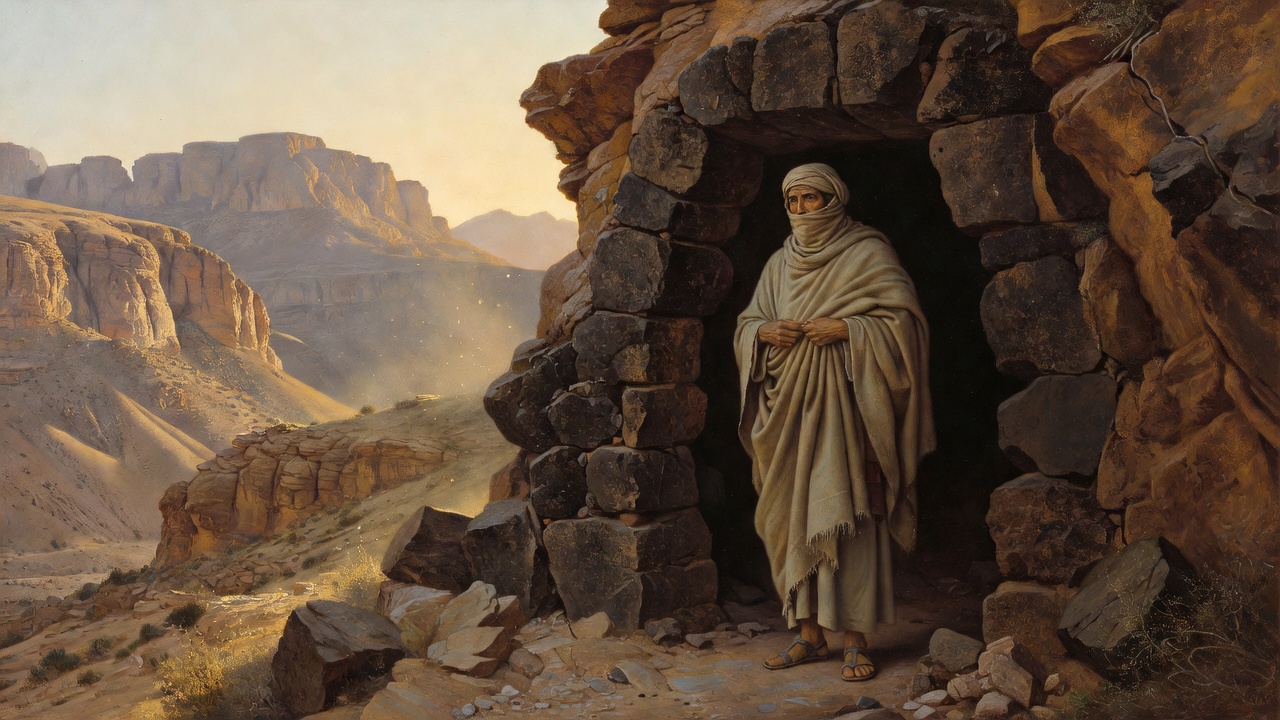
8Konsa, li te leve. Li te manje e bwè, epi li te ale ak fòs manje sa a pandan karant jou ak karant nwit pou rive Horeb, mòn Bondye a. 9Alò, li te rive la nan yon kav e li te rete ladann. Epi vwala, pawòl Bondye a te vini sou li, e Li te di li: “Kisa w ap fè isit la, Élie?”
10Li te di: “Mwen te tèlman ranpli avèk zèl pou SENYÈ a, Bondye dèzame yo, pwiske fis Israël yo te abandone akò Ou a, yo te dechire lotèl Ou yo, e te touye pwofèt Ou yo avèk nepe. Epi se mwen sèl ki rete, e y ap chache lavi m pou pran l.”
11Pou sa, Li te di: “Ale kanpe sou mòn nan devan SENYÈ a.”
Epi veye byen, SENYÈ a t ap pase! Yon gwo van fò t ap boulvèse mòn yo e t ap chire wòch yo an mòso devan SENYÈ a. Men SENYÈ a pa t nan van an. Epi apre van an, yon tranbleman detè, men SENYÈ a pa t nan tranbleman detè a. 12Apre van an yon dife, men SENYÈ a pa t nan dife a. Epi apre dife a, yon ti bwi tankou yon souf lejè. 13Lè Élie te tande l, li te fin vlope figi li nan manto li a e li te ale deyò nan antre kav la. Epi vwala, yon vwa te parèt a li menm e te di: “Kisa w ap fè isit la, Élie?” 14Epi li te di: “Mwen te tèlman ranpli avèk zèl pou SENYÈ a, Bondye dèzame yo, paske fis Israël yo te abandone akò Ou a, dechire lotèl Ou yo e te touye pwofèt Ou yo avèk nepe. Epi se mwen sèl ki rete; epi y ap chache lavi mwen pou pran l.”
15SENYÈ a te di li: “Ale, retounen sou chemen ou vè dezè Damas la, e lè ou fin rive, ou va onksyone Hazaël wa sou Syrie; 16epi Jéhu, fis Nimschi a, ou va onksyone wa sou Israël; epi Élisée, fis a Schaphath la nan Abel-Mehola a, ou va onksyone li kòm pwofèt nan plas ou. 17Li va vin rive ke sila ki chape anba nepe Hazaël la, Jéhu va mete l a lanmò e sila ki chape anba nepe a Jéhu a, Élisée va mete l a lanmò. 18Sepandan, Mwen va kite sèt-mil an Israël, tout jenou ki pa t bese a Baal e tout bouch ki pa t konn bo li.”
19Konsa, li te kite la e te twouve Élisée, fis a Schaphath la, pandan li t ap raboure avèk douz pè bèf devan li, li menm avèk douzyèm nan. Epi Élie te pase bò kote li e te jete manto li sou li. 20Li te kite bèf yo e te kouri dèyè Élie. Li te di: “Souple, kite m bo papa m avèk manman m e mwen va swiv ou.” Epi li te di li:
“Ale, retounen, paske kisa ke m te fè ou?” 21Konsa, li te retounen soti swiv li, li te pran pè bèf la e li te fè sakrifis avèk yo, li te bouyi chè avèk dife fèt ak zouti bèf e li te bay a pèp la pou yo te manje. Epi li te leve, li te swiv Élie pou te sèvi li.
¿Sabías que…?
Elías en el monte Horeb y el llamamiento de Eliseo
- El monte Horeb, identificado también en la tradición bíblica con el monte Sinaí, fue la cordillera donde Israel recibió el pacto y la ley. El viaje de cuarenta días de Elías hacia el sur hasta Horeb sitúa su encuentro con Dios en el mismo escenario de las revelaciones concedidas a Moisés.Fuentes: el propio texto bíblico · Horeb
- Al ordenar a Elías que unja a Hazael como rey de Siria y a Jehú como rey de Israel, la narración vincula la autoridad profética con la sucesión geopolítica de ambas naciones, asegurando a Elías que aún quedaban siete mil israelitas fieles.Fuentes: el propio texto bíblico · Hazael · Jehu
- Echar el manto sobre los hombros de Eliseo mientras este araba con doce yuntas de bueyes en Abel-mehola fue un acto simbólico que lo designó como discípulo, heredero adoptivo y sucesor profético de Elías.Fuentes: el propio texto bíblico · Elisha · Abel-meholah
Notas escritas con ayuda de IA a partir de fuentes abiertas (Theographic Bible Metadata, CC BY-SA 4.0; Easton’s Bible Dictionary, dominio público) y revisadas antes de publicarse.
Lugares de este capítulo
- Mount Horeb · Hoy: Jebel Musa · 28.540, 33.973 · versículo 8
- Damascus · 33.511, 36.306 · versículo 15
- Syria · Hoy: Aram · 33.511, 36.306 · versículo 15
Solo aparecen lugares identificados con alta confianza (90 % o más según las fuentes académicas reunidas por OpenBible). Mapa de la época: DARE (Digital Atlas of the Roman Empire), CC BY 4.0; mapa actual: © colaboradores de OpenStreetMap; lugares: OpenBible.info (CC BY 4.0).
Créditos y licencia de esta traducción
Bib Sen An
The Holy Bible in Haitian Creole, 2023 update
copyright © 2017-2023 Ron Smith
Language: Kreyòl Ayisyen (Haitian)
Translation by: Ron Smith
Contributor: Felix Nixon
This translation is made available to you under the terms of the
Creative Commons Attribution Share-Alike license 4.0.
You have permission to share and redistribute this Bible translation in any format and to make reasonable revisions and adaptations of this translation, provided that:
You include the above copyright and source information.
If you make any changes to the text, you must indicate that you did so in a way that makes it clear that the original licensor is not necessarily endorsing your changes.
If you redistribute this text, you must distribute your contributions under the same license as the original.
Pictures included with Scriptures and other documents on this site are licensed just for use with those Scriptures and documents.
For other uses, please contact the respective copyright owners.
Note that in addition to the rules above, revising and adapting God's Word involves a great responsibility to be true to God's Word. See Revelation 22:18-19.
2026-06-11
Fuente: http://ebible.org/hatbsa/ · eBible.org