Hechos 4
Cohamacʉ Yare Yahari Tjuel · Toca un versículo para ver sus referencias cruzadas.
Pedro, João mehne pʉhtoa mehne sʉhʉduha
1Pedro, João cʉ̃hʉ masa mehne ti durucuro watoi sacerdotea, Cohamacʉ wʉhʉre cohtaina surara pʉhtoro, saduceo curua macaina cʉ̃hʉ tinare tʉhoha. Õ sehe ni buheha Pedro João mehne masare:
—Jesu to yariari baharo masa mʉjaa wahahre. To ã masa mʉjarire ñʉna mari cʉ̃hʉ baharo to yaina mari masa mʉjahtore masija mari —ni yahuha Pedro cʉ̃hʉ.
Ti ã nichʉ tʉhoa pʉhtoa sehe tina mehne suaha. Ã suaa nahi cahachʉ ñʉa tina Pedrore, João cʉ̃hʉre ñaha, peresu yoaha. 4Ã tinare peresu ti yoapachʉta payʉ ti yahuare tʉhoina sehe “Potocãta jira”, ni tʉhotuha. Ã jia Jesu yaina payʉ waha, tí dachoi wahma to yaina ji dʉcaina, ã yoa tó panopʉ Jesure wacũ tua tuhsʉrina mehne mʉa sahserore mari quihõchʉ, cinco mil masa sʉro cahai jiha.
5Ã yoa pa dachoi tí maca macaina pʉhtoa, bʉcʉna, ã yoa judio masa buheina cʉ̃hʉ Jerusalẽpʉ cahmachuha. 6Ti ã cahmachunoi sacerdotea bui pʉhtoro, Ana wama tiriro cʉ̃hʉ tói jiha. Ã yoa to coyea cʉ̃hʉ jiha. Caifa, João, Alejandro, paina mehne Ana coyea cʉ̃hʉ jiha. To coyea to dahraare dahraina jiha tina cʉ̃hʉ. 7Ã jia tina Pedro cʉ̃hʉre ti cahmarocachʉ, surara sehe pʉhtoa watopʉ tinare naa wihi dapoha. Ti ã na wihi dapochʉ, tina pʉhtoa õ sehe ni sinitu ñʉha Pedro cʉ̃hʉre:
—¿Noa ya tuaa mehne mʉsa tirore noariro yoari? ¿Noa jijari mʉsare tíre yoa dutiriro? —ni sinitu ñʉha tina.
8Ti ã nichʉ tʉhoro Espíritu Santo to yoa dutiriro seheta to tuaa mehne yahuha Pedro tinare:
9—Mʉsa pʉhtoa, ¿mʉsa bʉcʉna, sã dohse yoa ahriro tini masierarirore sã tinichʉ yoarire masi duana, sãre sinitu ñʉna nijari mʉsa? 10Tí pja pini ahrire masiga mʉsa jipihtina, Israe masa. Jesucristo Nazare macariro, mʉsa crusapʉ wajãriro, Cohamacʉ to masoriro tiro sehe ahriro tini masierarirore noariro wahachʉ yoahre. Ã jina ahrirore mipʉre mʉsa ñʉrocaroi to tinichʉ ñʉna mʉsa. Õ sehe nina Cohamacʉ yare ti joari pũi Jesu cjihtore yahuro: 11“Ahriro tãca yoaro sehe jiriro jira. Tãcare wʉhʉ dahreina wiho jiriare ti cohãriro seheta mʉsa judio masa tirore cohãhre. Mʉsa ã yoapachʉta mipʉre wʉhʉ dahreina wʉhʉre yoaa ti cũ mʉhtari tãcare ti cũriro seheta Cohamacʉ tirore pʉhtoro sõhre. Tiro Cristo mariachʉ Cohamacʉ yaina wahaeraboa masa. (To ã wiho jiriro jierapachʉta mʉsa mari pʉhtoa mehne tirore cahmaerare. Mʉsa ã cahmaerapachʉta Cohamacʉ sehe tirore mari pʉhtoro sõhre)”, ni joaha panopʉ. 12Ne, pairo masare pichacapʉ wahaborinare yʉhdoriro ne mariahna. Ahri yahpapʉre Jesu dihta masare yʉhdoriro jira. Ne paina tiro yoaro sehe jiina mariahna —ni yahuha Pedro tinare.
13To ã ni yahuri baharo Pedro, João mehne buhemahnoeraina jipahta cuiro marieno ti buhechʉ ñʉa, pʉhtoa, bʉcʉna, judio masa buheina mehne ñʉ cʉaa wahaha. Ã jia Jesu yoaro sehe ti buhechʉ ñʉa, õ sehe masiha tina: “Potocã Jesu mehne macaina tjira ahrina”, ni masiha tina. 14Ã yoa tini masierariro cjiro Pedro cʉ̃hʉ mehne jiha. Tiro to noariro jichʉ ñʉha pʉhtoa, bʉcʉna, judio masa buheina mehne. Ã jia tina Pedro cʉ̃hʉre “Ñano yoaa nina”, ni yahusã masieraha. 15Ã yahusã masieraa pʉhtoa ti cahmachuri tahtiapʉ jiinare Pedro cʉ̃hʉre wijaa dutiha. 16Ti wijaari baharo pʉhtoa sehe ti basi õ sehe ni sʉhʉduha:
—¿Ahrinare dohse yoanahcari mari? —ni durucuha tina ti basi.
Õ sehe ni durucu namoha:
—Pedro, João Cohamacʉ tuaa mehne tini masierarirore tinichʉ yoari jire. Ã jia Jerusalẽ macaina jipihtina ti ã yoarire masica. Ã jina mari sehe “Ã yoaerare tina” ni masieraja mari. 17Ã jina Jesu to buheri cjirire painare buhe dutiena tjijihna tinare, “Paina tí buheare cahmari”, nina —ni durucuha tina ti basi.
18Ã ni durucu tuhsʉa Pedro cʉ̃hʉre pjiroca, õ sehe niha:
—Jesu to buheri cjirire ne buhena tjiga painare. Tíre ne durucu namoena tjiga —ni yahumaha tinare.
19Ti ã ni yahuchʉ tʉhoa tina Pedro João mehne õ sehe ni yʉhtiha tinare:
—Mʉsa õ sehe ni dutichʉ mʉsare yʉhtina, Cohamacʉ sehere yʉhdʉrʉcana niboca sã. ¿Diro ya sehere sã yoachʉ quihõno jijari Cohamacʉ to ñʉrocarore? ¿Mʉsa ya sehere sã yoachʉ quihõno jijari? ¿Cohamacʉ ya sehere sã yoachʉ quihõno jierajari, mʉsa tʉhotuchʉ? 20Sã sehere sã ñʉrire, sã tʉhorire sãre yahto basioerara —ni yʉhtiha Pedro, João mehne.
21Ti ã nichʉ tʉhoa pʉhtoa sehe pari turi dutimaha tjoa tinare:
—Jesu to buherire mʉsa buheri buhiri ñano yʉhdʉnahca mʉsa —niri jimare pʉhtoa tinare.
“João, Pedro mehne ñano yoaa nina”, ni masierari jire tina. Ã jia masa sehe tini masierariro to noariro wahachʉ ñʉa, “Cohamacʉ potocãta noariro jira”, niha masa. Ti ã nichʉ tʉhoa pʉhtoa sehe Pedro cʉ̃hʉre ti dohse yoa buhiri dahreboare bocaeraa, tinare wioha. 22Tini masierariro, noariro ti yoariro cuarenta cʉhmari bui cjʉariro jiha.
Jesu yaina ti cuierahto cjihtore siniha Cohamacʉre
23Ã yoa, Pedro João mehne ti wiori baharo tina mehne macaina cahapʉ sʉ, sacerdotea pʉhtoa, bʉcʉna jipihtia tinare ti niri cjirire yahuha. 24Ti ã ni yahuchʉ tʉhoa tina jipihtina cʉ̃no potori Cohamacʉre siniha:
—Sã pʉhtoro mʉhʉ mʉanore, yahpare, mári cʉ̃hʉre yoariro jipihtina catiinare bajuamehneriro jira mʉhʉ. 25Mʉ Espíritu Santo sã ñʉchʉ cjirore Davire mʉ cahamacʉnore ahrire yahu dutia tiha mʉ niriro seheta:
“¿Dohse yoa Israe masa jieraina suajari?
¿Dohse yoa Cohamacʉre ti yʉhdʉrʉcahtire wiho waro durucujari tina?
26Payʉ yahpari macaina pʉhtoa cahmachu, mari pʉhtoro Cohamacʉre, to pʉhtoro sõriro Cristo cʉ̃hʉre ñʉ tuhti, ñano yoa duara tinare”,
ni yahua tiha Davi cjiro mʉ ni dutiriro seheta.
27’Ã tjira. Ahri macai Herode, Poncio Pilato, judio masa jieraina, ã yoa judio masa cʉ̃hʉ cahmachuhre, mʉ beserirore Jesure noariro mʉ cahamacʉnore wajãa taa. 28Tí pja mʉ cahmariro seheta “Ã waharohca”, mʉ niriro seheta yoahre tina. Mʉ masia mehne ã ni yahuha mʉhʉ. 29Ã jicʉ mipʉre sã pʉhtoro, tina sãre purĩno mehne mʉ jia tiare ti yahu namo dutierachʉ wacũ payoga mʉhʉ. Sãre mʉ cahamacare cuiro marieno mʉ buheare yahuchʉ yoaga sãre. 30Mʉhʉ mʉ tuaa mehne dohatiinare noaina yoaga. Ã jicʉ mʉ buheare cuiro marieno yahu dutiga sãre. Ã yoa Jesu noariro mʉ cahamacʉno to tuaa mehne yoa ño masichʉ yoaga sãre. Ã jicʉ dohatiinare noaina sã waha dutichʉ to tuaa mehne yoadohoga sãre —ni siniha tina Cohamacʉre.
31Ti ã ni siniri baharo, ti cahmachuri wʉhʉ ñuhmi mʉaa wahaha. To ã ñuhmichʉta Espíritu Santo to tuaa mehne wacũ tua namoina wahachʉ yoaha tinare. Tinare ã wahachʉ Espíritu Santo to dutiriro seheta yoaa, cuiro marieno Cohamacʉ yare yahu namoha tjoa tina.
Jesu yaina ti yare tju waa tiha
32Ã jia Cohamacʉ to tuaa mehne tina Jesu to cũrina õ sehe ni yahua tiha masare: “Jesu yariariro to masarire sã ñʉhi”, ni yahua tiha tina masare. Ã jiro tinare jipihtinare Cohamacʉ noano yoadohorucua tiha. Ã yoa Jesure wacũ tuaina payʉ jia, tina cʉ̃no potori tʉhotuina jia tiha. Ã jia tina ti yare ti cjʉaare “Yʉ ya dihta jira”, ne niera tiha. Tina jipihtina ti yare paye baro maerainare tina mehne macainare tju waa tiha. 34Ã jia tina mehne macaina pjacʉoina mariea tiha. Tina mehne macaina yahpari cjʉaina, wʉhʉse cjʉaina ti yare duaa tiha. 35Ã duaa ti wapa narire tina na ta, Jesu to cũrinare waa tiha. Ã jia tina sehe tíre tina mehne macainare tju waa tiha. Jipihtina cjʉaerainare tju waa tiha. 36Tí pjare cʉ̃iro tina mehne macariro José wama tiriro jiha. Jesu to cũrina Josére Bernabé ni wama pisuha. To wama Bernabé “Masare wahchechʉ yoariro jira”, nia nina. Tiro Leví ya curua macariro Chipre nʉco macariro jiha. 37Ã jiro tiro yahpare cjʉariro jiro tíre duaha. Ã duaro to wapa narire Jesu to cũrinare waha tiro painare witi dutiro.
¿Sabías que…?
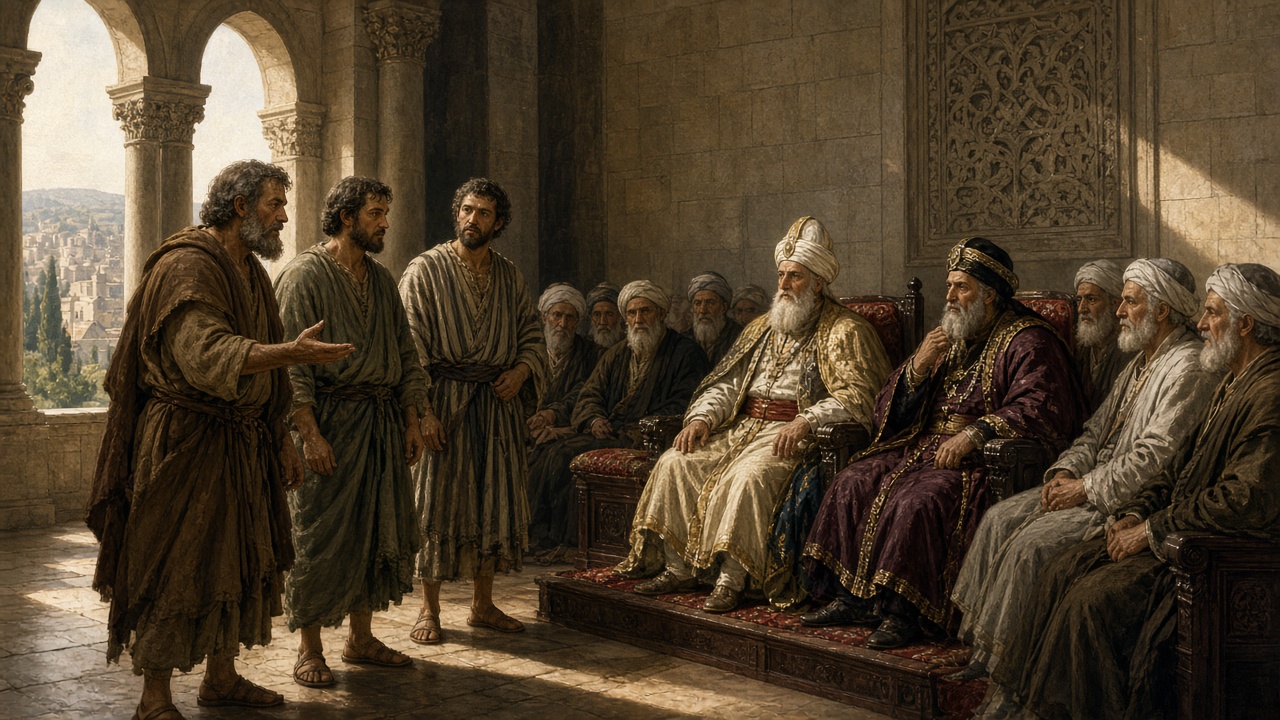
Pedro y Juan ante el Sanedrín
- Los sacerdotes, el capitán de la guardia del templo y los saduceos prendieron a Pedro y a Juan porque enseñaban al pueblo y proclamaban en Jesús la resurrección de los muertos. Caifás, que participó en la asamblea al día siguiente, pertenecía a los saduceos.Fuentes: el propio texto bíblico · Caiaphas
- Anás, llamado aquí sumo sacerdote, ocupó ese cargo del año 7 al 14 d.C., hasta que un procurador romano lo depuso. Caifás, que se había casado con la hija de Anás, fue elevado al cargo en el año 25 d.C.; aun así, algunos judíos podían seguir considerando a Anás el sumo sacerdote legal, pues la ley mosaica trataba el oficio como vitalicio, y Anás probablemente era presidente o auxiliar del Sanedrín. Juan y Alejandro, parientes del sumo sacerdote y por lo demás desconocidos, estaban sentados con ellos.Fuentes: el propio texto bíblico · Annas · John (Relative of the High Priest) · Alexander (Son of Simon)
- Pedro, pescador de Betsaida, y Juan, también pescador e hijo de Zebedeo, fueron llevados ante los gobernantes, los ancianos y los escribas. El concilio se maravilló de su valentía al darse cuenta de que eran hombres sin estudios y comunes, y notó que habían estado con Jesús.Fuentes: el propio texto bíblico · Simon Peter · John the Apostle
Notas escritas con ayuda de IA a partir de fuentes abiertas (Theographic Bible Metadata, CC BY-SA 4.0; Easton’s Bible Dictionary, dominio público) y revisadas antes de publicarse.
Lugares de este capítulo
- Jerusalem · 31.777, 35.234 · versículos 5, 16
- Nazareth · 32.702, 35.298 · versículo 10
- Cyprus · 35.000, 33.000 · versículo 36
Solo aparecen lugares identificados con alta confianza (90 % o más según las fuentes académicas reunidas por OpenBible). Mapa de la época: DARE (Digital Atlas of the Roman Empire), CC BY 4.0; mapa actual: © colaboradores de OpenStreetMap; lugares: OpenBible.info (CC BY 4.0).
Créditos y licencia de esta traducción
Cohamacʉ Yare Yahari Tjuel
New Testament in Guanano
copyright © 2007 Wycliffe Bible Translators, Inc.
Language: Guanano
Translation by: Wycliffe Bible Translators, Inc.
Copyright Information
© 2007, Bible League International. All rights reserved.
This translation text is made available to you under the
terms of the Creative Commons License: Attribution-Noncommercial-No Derivative Works.
( http://creativecommons.org/licenses/by-nc-nd/3.0/ )
In addition, you have permission to port the text to different file formats, as long as you
do not change any of the text or punctuation of the Bible.
You may share, copy, distribute, transmit, and extract portions
or quotations from this work, provided that you include the above copyright
information:
You must give Attribution to the work.
You do not sell this work for a profit.
You do not make any derivative works that change any of the actual words or punctuation of the Scriptures.
Permissions beyond the scope of this license may be
available if you contact
us with your request.
The New Testament
in Guanano
© 2007, Wycliffe Bible Translators, Inc. All rights reserved.
This translation is made available to you under the terms of the
Creative Commons Attribution-Noncommercial-No Derivatives license 4.0.
You may share and redistribute this Bible translation or extracts from it in any format, provided that:
You include the above copyright and source information.
You do not sell this work for a profit.
You do not change any of the words or punctuation of the Scriptures.
Pictures included with Scriptures and other documents on this site are licensed just for use with those Scriptures and documents.
For other uses, please contact the respective copyright owners.
2014-08-06
Fuente: http://ebible.org/gvc/ · eBible.org