Amós 5
Nhanderuete ayvu iky'a e'ỹ va'e · Toca un versículo para ver sus referencias cruzadas.
“Peka Nhanderuete peikove aguã”, he'iague
1Peẽ Israel kuery, pendu ke pova'e ayvu peẽ kuery re nda'eveia rupi xeayvu rã.
2Mba'eta ho'a ma Israel kuery kunhataĩgue rami ikuai va'ekue, nopu'ã kuaavei ma guive. Oyvy re ae ho'a oupy, ha'e ndoikoi imbovyarã.
3Mba'eta po rami Senhor Nhanderuete ijayvu:
— Tetã gui mil Israel regua joe opu'ãa katy oje'oi teĩ cem ete'i ju 'rã ojevy, ha'e cem oo va'ekue regua ma dez ete'i 'rã ojevy.
4Ha'e gui po rami Senhor ijayvu Israel kuery pe:
— Xereka ke peikove aguã.
5Peka eme mba'emo Betel py oĩ va'e, neĩ Gilgal ha'e Berseba katy ma voi tapeove eme. Mba'eta Gilgal pygua kuery ma ogueraapaa 'rã escravo-rã, Betel tetã voi ombovaipaa 'rã — he'i.
6Peka ke Senhor anho peikove aguã. Ha'e rami e'ỹ rã José kuery ikuaia py ou 'rã tata rami imokanhymbaarã. Ha'e va'e mboguearã ma ndoikoi 'rã Betel tetã py.
7Peẽ kuery ma ha'evea rami pejoguerekoa gui pejepe'a vy penhombojexavai, yvy py rive peity vy teko porã rupi pejoguereko aguã va'ekue.
8Peka ke jaxy-tata Eixu ha'e Órion apoare, ha'e ko'ẽ ju aguã pytũ reia oguerova va'e, ha'e pytũ aguã ju ára oguerova va'e. Ha'e ma ye'ẽ ogueru vy yvy áry rupi ju onhoẽ va'e. Senhor ma hery va'e.
9Ha'e ae ombou 'rã imbaraetekueve mokanhymbaarã, oo ikorapa va'e mbovaipaarã guive.
10Ha'e rã peẽ kuery ma napenduxei tetã rokẽ py penemongetaa rã, anhetẽ rupi ijayvua rã pejou vai guive.
11Ha'e nunga rupi iporiaukue'i re pepyrõmba rei vy ha'e kuery pe trigo pendejeupe guarã ae peme'ẽ uka rire napeĩvei 'rã penderorã ita gui pejapo va'ekue py, ndapey'uvei 'rã guive vinho uva porãgueve penhotỹ va'ekue guigua.
12Mba'eta xee aikuaa mbovykue rei e'ỹ pendeko vai rã, opa marã rei pejejavy ramo guive. Mba'eta pembojexavai heko porã va'e, ha'eve'ỹa rami guarã pejopy peráta, ha'e tetã rokẽ py iporiaukue'i ojerure rã peẽ kuery napepenai.
13Ha'e nunga rupi oiko kuaa va'e kuery okyrirĩ 'rã, mba'eta kova'e ára nda'evei va'e.
14Peka ke mba'emo porã peikove aguã, mba'emo vai nda'ei. Ha'e ramo 'rãe Senhor oiko peẽ kuery reve, aipopejeaty rami ae.
15Pejeguaru ke mba'emo vai gui, perovy'a iporã va'e anho. Ha'evea rami pota ke pejoguereko tetã rokẽ py. Ha'e ramo José ramymino kuery pekuave'i va'e, xapy'a rei Senhor Nhanderuete ixondaro reta va'e penemboaxy nho 'rã.
16Mba'eta po rami Senhor nhandererekoa ijayvu, Nhanderuete ixondaro reta va'e:
— Tetã mbyte ha'e javi rupi onhendu 'rã ojae'o va'e. Tape ikuai va'e rupi “Ai! Ai!” 'ea 'rã. Omba'eapo va'e kuery voi oenoĩmbaa 'rã ojae'o aguã, ojae'o kuaa va'e kuery reve.
17Uvaty ha'e javi rupi ikuai 'rã ojae'o va'e, pendekuaia mbyte rupi aaxa ramo — he'i Senhor.
18Nda'evei ete 'rã Senhor ára pearõ va'e pe! Mba'erã tu pearõ pekuapy Senhor ára? Mba'eta ha'e va'e ára ma pytũmba rive 'rã, hexakã 'rã e'ỹ.
19Mba'eta oiko 'rã xivi gui ava onha rã urso ju ojoua rami, ha'e'ỹ vy ngoo py oike vy oo mbotya re opoko ho'amy ramo mboi oixu'ua rami.
20Senhor ára ma hexakã aguã e'ỹ, pytũ vaikue anho 'rã. Ha'e javi ete rupi pytũmba 'rã, hexakã va'e peteĩve henda py ojekuaa e'ỹ re.
“Nhanderuete oipota mba'emo nhame'ẽ 'rãgue py ha'evea rami jajoguereko”, he'iague
21Senhor aipoe'i:
— Xee ndajou porãi, ajou vai ete ngaru pejapo pekuapya, peteĩ henda py ma voi xevy guarã nhemboaty pejapo va'e ndarovy'ai guive.
22Xevy pe mba'emo peapy va'erã peru, mba'emo aju guigua guive teĩ ha'e nunga xee ndarovy'ai, xereve peteĩ rami pendekuaia regua mymba iporãgueve peme'ẽ teĩ xee nama'ẽi 'rã ha'e nunga re.
23Xee naenduxei peporaeia revovo rive, naendui 'rãe penembaraka pu.
24Ha'e rami 'rãgue py toĩ ha'evea rami pejoguerekoa yy oxyry va'e rami, toĩ pendereko porãa yakã oxyry riae va'e rami.
25Ha'e gui peẽ Israel kuery, quarenta ma'etỹ re tekoa e'ỹa rupi pendekuai jave py xevy pe teve peme'ẽ raka'e mymba ha'e mba'emo aju guigua?
26Mba'eta Sicute ra'angaa rive peraa va'ekue penderuvixarã, Quium ra'angaa, jaxy-tata ra'angaa guive penderueterã peẽ ae pejapo va'ekue.
27Ha'e nunga rupi xee ma Damasco tetã rovai peve rogueraa ukapa 'rã escravo-rã — he'i Senhor Nhanderuete ixondaro reta va'e hery va'e.
¿Sabías que…?
Un Llamado a la Justicia y Lamentación
- Amós instó al reino del norte de Israel a no buscar antiguos centros de peregrinación como Betel, Gilgal o Berseba, advirtiendo que estos santuarios no los librarían de la ruina. Betel y Gilgal eran destacados centros históricos de culto, mientras que Berseba se encontraba en el sur, pero el profeta insistió en que los rituales en estos lugares carecían de valor sin obediencia moral.Fuentes: el propio texto bíblico · Bethel (of Palestine) · Gilgal · Beersheba
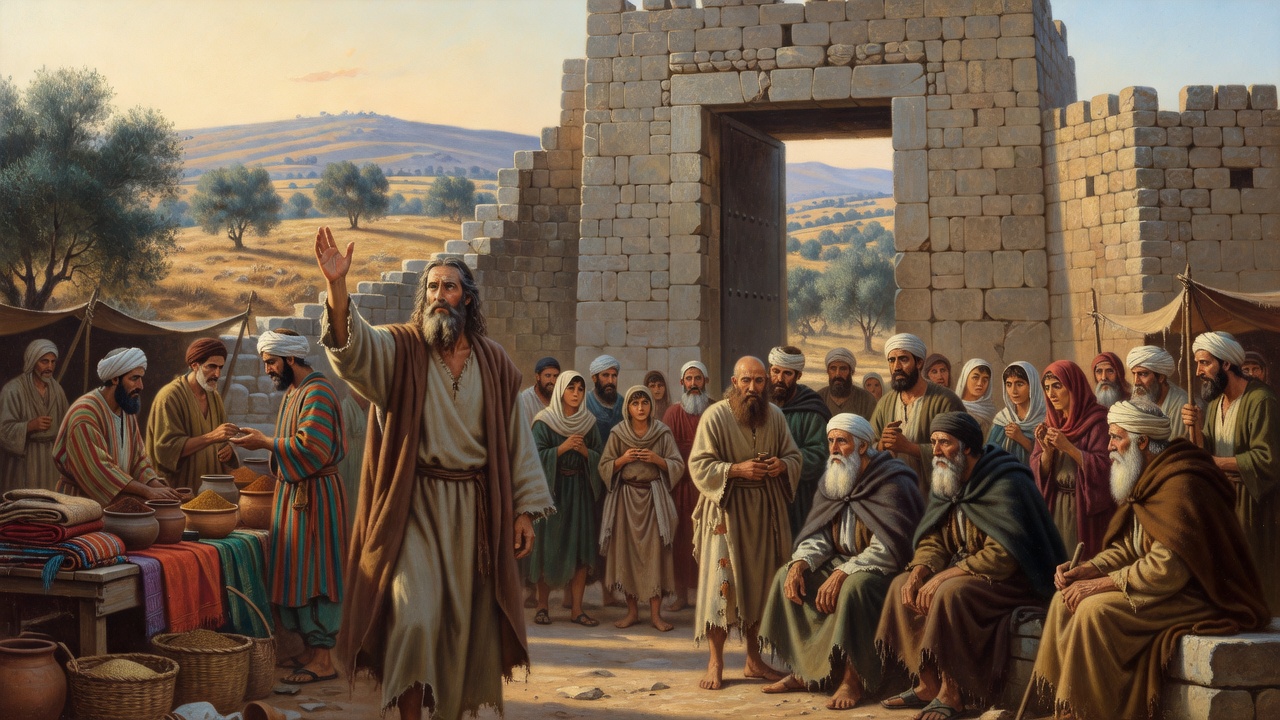
- En las antiguas ciudades israelitas, la puerta de la ciudad servía como el principal centro cívico y judicial donde se resolvían disputas legales y los ancianos administraban justicia. Amós denunció a las élites por aceptar sobornos, silenciar a testigos íntegros y despojar de sus derechos a los pobres en estos juicios.Fuentes: el propio texto bíblico
- La advertencia de que Israel sería llevado al exilio más allá de Damasco señalaba una inminente derrota y deportación al noreste de la antigua capital siria. Damasco era una destacada potencia política y comercial al norte de Jerusalén, y representaba una referencia geográfica clave para las invasiones norteñas.Fuentes: el propio texto bíblico · Damascus
Notas escritas con ayuda de IA a partir de fuentes abiertas (Theographic Bible Metadata, CC BY-SA 4.0; Easton’s Bible Dictionary, dominio público) y revisadas antes de publicarse.
Lugares de este capítulo
- Damascus · 33.511, 36.306 · versículo 27
Solo aparecen lugares identificados con alta confianza (90 % o más según las fuentes académicas reunidas por OpenBible). Mapa de la época: DARE (Digital Atlas of the Roman Empire), CC BY 4.0; mapa actual: © colaboradores de OpenStreetMap; lugares: OpenBible.info (CC BY 4.0).
Créditos y licencia de esta traducción
Nhanderuete ayvu iky'a e'ỹ va'e
New Testament in Guaraní, Mbyá
copyright © 2004 Wycliffe Bible Translators, Inc.
Language: Mbyá Guaraní (Guaraní, Mbyá)
Translation by: Wycliffe Bible Translators, Inc.
Copyright Information
© 2004, Wycliffe Bible Translators, Inc. All rights reserved.
This translation text is made available to you under the
terms of the Creative Commons License: Attribution-Noncommercial-No Derivative Works.
( http://creativecommons.org/licenses/by-nc-nd/3.0/ )
In addition, you have permission to port the text to different file formats, as long as you
do not change any of the text or punctuation of the Bible.
You may share, copy, distribute, transmit, and extract portions
or quotations from this work, provided that you include the above copyright
information:
You must give Attribution to the work.
You do not sell this work for a profit.
You do not make any derivative works that change any of the actual words or punctuation of the Scriptures.
Permissions beyond the scope of this license may be
available if you contact
us with your request.
Printed book ISBN 853110565X
The New Testament
in Guaraní, Mbyá
© 2004, Wycliffe Bible Translators, Inc. All rights reserved.
This translation is made available to you under the terms of the
Creative Commons Attribution-Noncommercial-No Derivatives license 4.0.
You may share and redistribute this Bible translation or extracts from it in any format, provided that:
You include the above copyright and source information.
You do not sell this work for a profit.
You do not change any of the words or punctuation of the Scriptures.
Pictures included with Scriptures and other documents on this site are licensed just for use with those Scriptures and documents.
For other uses, please contact the respective copyright owners.
2014-08-06
Fuente: http://ebible.org/gun/ · eBible.org