Amos 5
Nhanderuete ayvu iky'a e'ỹ va'e · Tap a verse to see its cross-references.
“Peka Nhanderuete peikove aguã”, he'iague
1Peẽ Israel kuery, pendu ke pova'e ayvu peẽ kuery re nda'eveia rupi xeayvu rã.
2Mba'eta ho'a ma Israel kuery kunhataĩgue rami ikuai va'ekue, nopu'ã kuaavei ma guive. Oyvy re ae ho'a oupy, ha'e ndoikoi imbovyarã.
3Mba'eta po rami Senhor Nhanderuete ijayvu:
— Tetã gui mil Israel regua joe opu'ãa katy oje'oi teĩ cem ete'i ju 'rã ojevy, ha'e cem oo va'ekue regua ma dez ete'i 'rã ojevy.
4Ha'e gui po rami Senhor ijayvu Israel kuery pe:
— Xereka ke peikove aguã.
5Peka eme mba'emo Betel py oĩ va'e, neĩ Gilgal ha'e Berseba katy ma voi tapeove eme. Mba'eta Gilgal pygua kuery ma ogueraapaa 'rã escravo-rã, Betel tetã voi ombovaipaa 'rã — he'i.
6Peka ke Senhor anho peikove aguã. Ha'e rami e'ỹ rã José kuery ikuaia py ou 'rã tata rami imokanhymbaarã. Ha'e va'e mboguearã ma ndoikoi 'rã Betel tetã py.
7Peẽ kuery ma ha'evea rami pejoguerekoa gui pejepe'a vy penhombojexavai, yvy py rive peity vy teko porã rupi pejoguereko aguã va'ekue.
8Peka ke jaxy-tata Eixu ha'e Órion apoare, ha'e ko'ẽ ju aguã pytũ reia oguerova va'e, ha'e pytũ aguã ju ára oguerova va'e. Ha'e ma ye'ẽ ogueru vy yvy áry rupi ju onhoẽ va'e. Senhor ma hery va'e.
9Ha'e ae ombou 'rã imbaraetekueve mokanhymbaarã, oo ikorapa va'e mbovaipaarã guive.
10Ha'e rã peẽ kuery ma napenduxei tetã rokẽ py penemongetaa rã, anhetẽ rupi ijayvua rã pejou vai guive.
11Ha'e nunga rupi iporiaukue'i re pepyrõmba rei vy ha'e kuery pe trigo pendejeupe guarã ae peme'ẽ uka rire napeĩvei 'rã penderorã ita gui pejapo va'ekue py, ndapey'uvei 'rã guive vinho uva porãgueve penhotỹ va'ekue guigua.
12Mba'eta xee aikuaa mbovykue rei e'ỹ pendeko vai rã, opa marã rei pejejavy ramo guive. Mba'eta pembojexavai heko porã va'e, ha'eve'ỹa rami guarã pejopy peráta, ha'e tetã rokẽ py iporiaukue'i ojerure rã peẽ kuery napepenai.
13Ha'e nunga rupi oiko kuaa va'e kuery okyrirĩ 'rã, mba'eta kova'e ára nda'evei va'e.
14Peka ke mba'emo porã peikove aguã, mba'emo vai nda'ei. Ha'e ramo 'rãe Senhor oiko peẽ kuery reve, aipopejeaty rami ae.
15Pejeguaru ke mba'emo vai gui, perovy'a iporã va'e anho. Ha'evea rami pota ke pejoguereko tetã rokẽ py. Ha'e ramo José ramymino kuery pekuave'i va'e, xapy'a rei Senhor Nhanderuete ixondaro reta va'e penemboaxy nho 'rã.
16Mba'eta po rami Senhor nhandererekoa ijayvu, Nhanderuete ixondaro reta va'e:
— Tetã mbyte ha'e javi rupi onhendu 'rã ojae'o va'e. Tape ikuai va'e rupi “Ai! Ai!” 'ea 'rã. Omba'eapo va'e kuery voi oenoĩmbaa 'rã ojae'o aguã, ojae'o kuaa va'e kuery reve.
17Uvaty ha'e javi rupi ikuai 'rã ojae'o va'e, pendekuaia mbyte rupi aaxa ramo — he'i Senhor.
18Nda'evei ete 'rã Senhor ára pearõ va'e pe! Mba'erã tu pearõ pekuapy Senhor ára? Mba'eta ha'e va'e ára ma pytũmba rive 'rã, hexakã 'rã e'ỹ.
19Mba'eta oiko 'rã xivi gui ava onha rã urso ju ojoua rami, ha'e'ỹ vy ngoo py oike vy oo mbotya re opoko ho'amy ramo mboi oixu'ua rami.
20Senhor ára ma hexakã aguã e'ỹ, pytũ vaikue anho 'rã. Ha'e javi ete rupi pytũmba 'rã, hexakã va'e peteĩve henda py ojekuaa e'ỹ re.
“Nhanderuete oipota mba'emo nhame'ẽ 'rãgue py ha'evea rami jajoguereko”, he'iague
21Senhor aipoe'i:
— Xee ndajou porãi, ajou vai ete ngaru pejapo pekuapya, peteĩ henda py ma voi xevy guarã nhemboaty pejapo va'e ndarovy'ai guive.
22Xevy pe mba'emo peapy va'erã peru, mba'emo aju guigua guive teĩ ha'e nunga xee ndarovy'ai, xereve peteĩ rami pendekuaia regua mymba iporãgueve peme'ẽ teĩ xee nama'ẽi 'rã ha'e nunga re.
23Xee naenduxei peporaeia revovo rive, naendui 'rãe penembaraka pu.
24Ha'e rami 'rãgue py toĩ ha'evea rami pejoguerekoa yy oxyry va'e rami, toĩ pendereko porãa yakã oxyry riae va'e rami.
25Ha'e gui peẽ Israel kuery, quarenta ma'etỹ re tekoa e'ỹa rupi pendekuai jave py xevy pe teve peme'ẽ raka'e mymba ha'e mba'emo aju guigua?
26Mba'eta Sicute ra'angaa rive peraa va'ekue penderuvixarã, Quium ra'angaa, jaxy-tata ra'angaa guive penderueterã peẽ ae pejapo va'ekue.
27Ha'e nunga rupi xee ma Damasco tetã rovai peve rogueraa ukapa 'rã escravo-rã — he'i Senhor Nhanderuete ixondaro reta va'e hery va'e.
Did you know?
A Call to Justice and Lamentation
- Amos urged the northern kingdom of Israel not to seek ancient pilgrimage sites such as Bethel, Gilgal, or Beersheba, warning that these sanctuaries would not save them from destruction. Bethel and Gilgal were prominent historical worship centers, while Beersheba lay far to the south, but the prophet insisted that ritual devotion at these locations was worthless without moral obedience.Sources: the Bible text itself · Bethel (of Palestine) · Gilgal · Beersheba
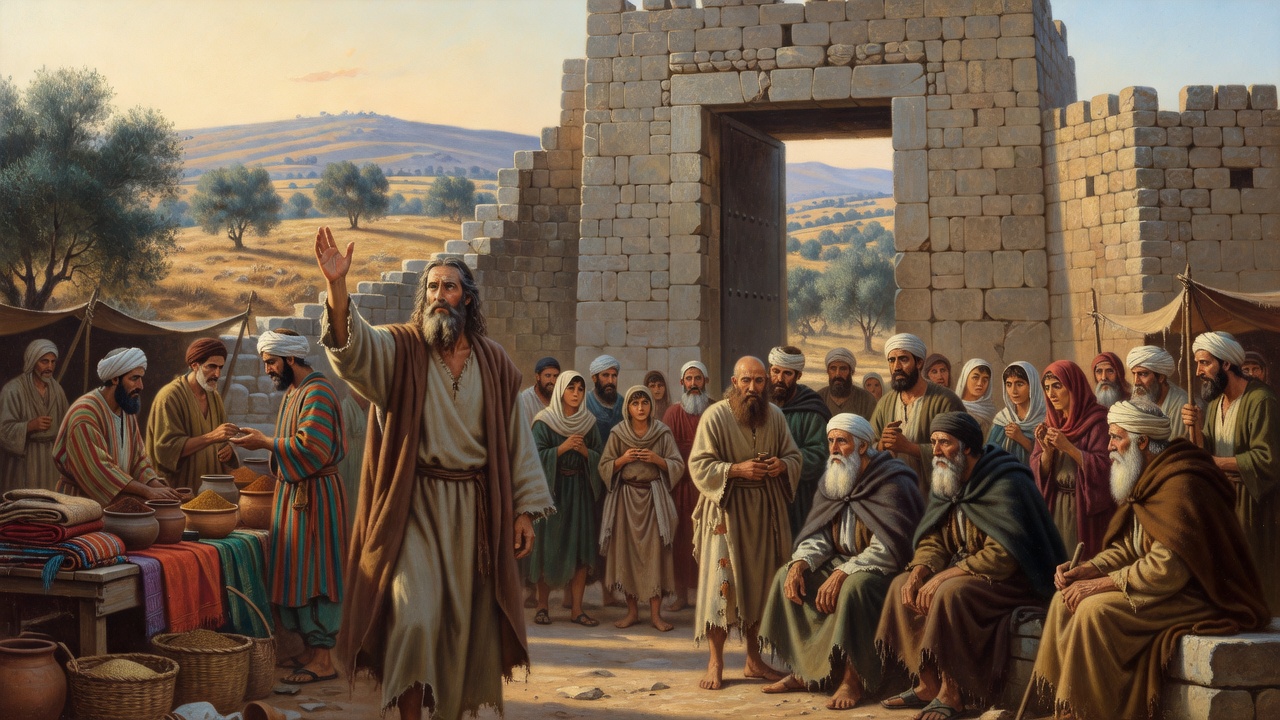
- In ancient Israelite cities, the gate served as the primary civic and judicial center where legal disputes were heard and elders administered justice. Amos condemned the ruling elite for accepting bribes, silencing honest witnesses, and trampling the rights of the poor in these legal assemblies.Sources: the Bible text itself
- The warning that Israel would be exiled beyond Damascus pointed to a coming defeat and deportation far northeast of the ancient Syrian capital. Damascus was a major political and commercial power located north of Jerusalem, marking a key geographical boundary for northern campaigns.Sources: the Bible text itself · Damascus
Notes written with AI assistance from open sources (Theographic Bible Metadata, CC BY-SA 4.0; Easton’s Bible Dictionary, public domain) and reviewed before publishing.
Places in this chapter
- Damascus · 33.511, 36.306 · verse 27
Only places identified with high confidence are shown (90% or more according to the scholarly sources compiled by OpenBible). Period map: DARE (Digital Atlas of the Roman Empire), CC BY 4.0; modern map: © OpenStreetMap contributors; places: OpenBible.info (CC BY 4.0).
Credits and license for this translation
Nhanderuete ayvu iky'a e'ỹ va'e
New Testament in Guaraní, Mbyá
copyright © 2004 Wycliffe Bible Translators, Inc.
Language: Mbyá Guaraní (Guaraní, Mbyá)
Translation by: Wycliffe Bible Translators, Inc.
Copyright Information
© 2004, Wycliffe Bible Translators, Inc. All rights reserved.
This translation text is made available to you under the
terms of the Creative Commons License: Attribution-Noncommercial-No Derivative Works.
( http://creativecommons.org/licenses/by-nc-nd/3.0/ )
In addition, you have permission to port the text to different file formats, as long as you
do not change any of the text or punctuation of the Bible.
You may share, copy, distribute, transmit, and extract portions
or quotations from this work, provided that you include the above copyright
information:
You must give Attribution to the work.
You do not sell this work for a profit.
You do not make any derivative works that change any of the actual words or punctuation of the Scriptures.
Permissions beyond the scope of this license may be
available if you contact
us with your request.
Printed book ISBN 853110565X
The New Testament
in Guaraní, Mbyá
© 2004, Wycliffe Bible Translators, Inc. All rights reserved.
This translation is made available to you under the terms of the
Creative Commons Attribution-Noncommercial-No Derivatives license 4.0.
You may share and redistribute this Bible translation or extracts from it in any format, provided that:
You include the above copyright and source information.
You do not sell this work for a profit.
You do not change any of the words or punctuation of the Scriptures.
Pictures included with Scriptures and other documents on this site are licensed just for use with those Scriptures and documents.
For other uses, please contact the respective copyright owners.
2014-08-06
Source: http://ebible.org/gun/ · eBible.org