Josué 1
Tupàn ze'eg · Toca un versículo para ver sus referencias cruzadas.
Acerca de este libro
Acerca de Josué
- El Diccionario Bíblico de Easton (1897) explica el nombre de Josué como "Jehová es su ayuda" o "Jehová el Salvador". Era hijo de Nun, de la tribu de Efraín, nacido en Egipto, y sucesor de Moisés como líder de Israel; las guerras de conquista que dirigió quedan registradas en el libro que lleva su nombre. Ese artículo no nombra al autor del libro ni da una fecha para su composición.Fuentes: Easton: Joshua · Joshua
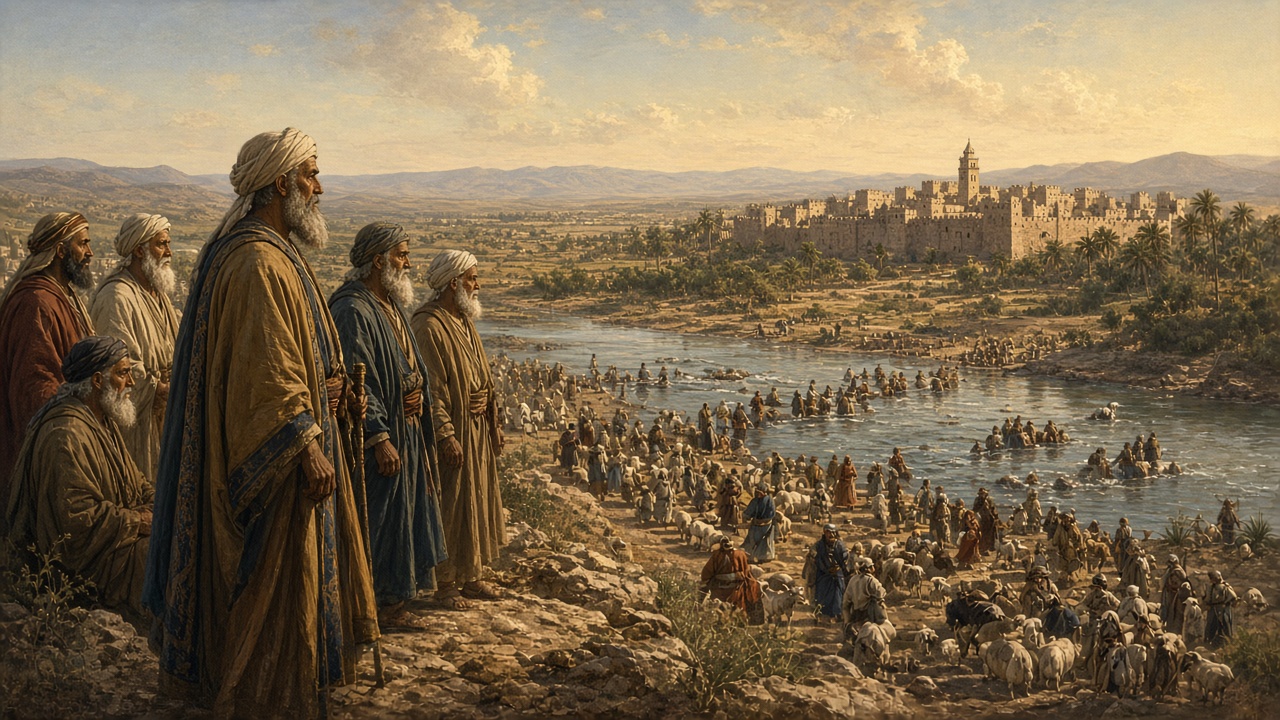
- Cuando Josué asumió el mando, el pueblo estaba acampado en Sitim. Cruzaron el Jordán y acamparon en Gilgal, donde, según Easton, circuncidó al pueblo y celebró la Pascua. Jericó, ciudad fortificada entre palmeras, a unas cinco millas al oeste del Jordán, se describe como la fortaleza más fuerte de Canaán y la llave de la Palestina occidental; Hai, al este de Betel, fue la segunda ciudad cananea tomada, después de una derrota inicial.Fuentes: Easton: Joshua · Jericho · Ai
- El Diccionario Bíblico de Easton (1897) dice que Josué conquistó seis naciones y treinta y un reyes, y luego repartió la tierra entre las tribus, quedándose Timnat-sera, en el monte Efraín, como herencia propia. Al este del Jordán, Galaad se describe como una región montañosa ocupada por las tribus de Gad y Rubén y por la parte sur de Manasés.Fuentes: Easton: Joshua · Gilead
- Citando a Edersheim, el diccionario dice que el nombre de Josué fue cambiado de Oshea, "ayuda", a Jehoshua, "Jehová es ayuda", y señala que se le llama Jesús en Hechos 7:45 y Hebreos 4:8. Afirma que murió a los ciento diez años, veinticinco años después de cruzar el Jordán, y que fue sepultado en su propia ciudad, Timnat-sera; de su padre, Nun, no se registra nada más que el hecho de que era el padre de Josué.Fuentes: Easton: Joshua · Joshua · Nun
- Antes de dirigir la conquista, Josué comandó el ejército de Israel contra los amalecitas en Refidim, sirvió como ministro de Moisés y fue uno de los doce enviados a explorar Canaán; solo él y Caleb trajeron un informe alentador. Tal como Easton describe el libro, este va desde el cruce del Jordán y la toma de Jericó, a través de años de guerra, hasta el reparto de la tierra y el último discurso de Josué.Fuentes: Easton: Joshua
Notas escritas con ayuda de IA a partir de fuentes abiertas (Theographic Bible Metadata, CC BY-SA 4.0; Easton’s Bible Dictionary, dominio público) y revisadas antes de publicarse.
Zuzue wiko Moizez hekuzaromo kury
1Amo 'ar mehe Moizez a'e, Tupàn hemiruze'eg Tupàn pe uma'ereko ma'e a'e, umàno a'e kury. Na'e Tupàn uze'eg Zuzue Nun ta'yr pe a'e kury. Zuzue a'e, a'e 'ym mehe wiko Moizez ipytywà har romo a'e.
2— Moizez heremiruze'eg umàno kwez a'e kury, i'i Tupàn Zuzue pe. — A'e rupi ne nehe kury, ko teko paw a'e wà nehe no, pezemuàgà'ym nehe kury. Ta'e pe peahaw putar yrykaw Zotàw her ma'e nehe kury xe. Peixe putar a'e ywy rehe nehe, peme heremimono ràm rehe nehe, Izaew izuapyapyr wanupe heremimono ràm rehe nehe kury, i'i Tupàn Zuzue pe. 3— Aze pepyrog amo ywy rehe pepy pupe nehe, amono putar a'e ywy peme nehe, Moizez pe heremimume'u kwer rupi katete nehe. 4Ko rupi peywy uzypyrog ywyxiguhu pe nehe. Oho putar ywy Irimano her ma'e pe nehe. Kwe rupi uzypyrog yrykawhu Ewparat her ma'e pe nehe. Oho putar Mezitehàn yryhu pe nehe no, yryhu kwarahy heixe haw kutyr har pe nehe no. Pepyhyk putar Ete izuapyapyr waiwy paw nehe no. Ta'e waiwy a'e xe, ywy heremimono ràm myter pe tuz a'e xe. 5Nereko mehe nehe, nemàno 'ym mehe we nehe, ni amo teko nupuner kwaw nereitykaw rehe wà nehe. (Izaew izuapyapyr wiko putar a'e ywy wazar romo wà nehe. Ereiko putar waneruze'egar romo nerekuwe mehe nehe.) Aiko Moizez hehe we har romo ihe. Nezewegatete aiko putar nerehe we har romo ihe nehe no. Nuruezar pixik kwaw ihe nehe. Napuir pixik kwaw newi nehe, i'i Tupàn Zuzue pe a'e. 6— Nekàg nehe, ekyze zo ma'e wi nehe. Ta'e ereraha putar ko teko a'e ywy rehe nehe xe. Eremuigo kar putar a'e teko a'e ywy izar romo ne wà nehe no. Ta'e amume'u tuwe ko ywy waipy wanupe kwehe mehe ihe xe. 7Nekàg nehe, ekyze zo ma'e wi nehe. Nema'enukwaw katu heze'eg heremiruze'eg Moizez pe imono pyrer rehe nehe. Amono a'e ze'eg newe no. Eruzar katu a'e ze'eg nehe. Eata katu herape rupi nehe. Ezewyr zo ko rupi nehe, ezewyr zo kwe rupi nehe. Epytu'u zo heze'eg heruzar ire nehe. Nezewe mehe wyzài ywy rehe wyzài tawhu pe neho mehe nereko haw ikatu putar nehe. Xo ikatuahy ma'e zo uzeapo putar newe nehe. 8Heze'eg imuapyk pyrer a'e nehe, epytu'u zo hehe neze'eg ire nehe. Nema'enukwaw katu a'e ze'eg rehe tuweharupi nehe, 'aromo nehe, pyhaw nehe no. Nezewe mehe erekwaw katu putar heze'eg imuapyk pyrer nehe. Nezewe mehe ereruzar putar nehe no, upaw rupi nehe no. Nezewe mehe uzeapo putar ikatuahy ma'e newe nehe. Neremiapo ràm ikatuahy putar nehe no. 9— Nekàg nehe, ekyze zo ma'e wi nehe, a'e kwez newe kury. Ekyzeahy zo (a'e ywy rehe har wanuwi nehe). Nerury'ar zo nehe. Ta'e ihe nezar romo aiko putar wyzài neho àwàm me ihe nehe xe, i'i Tupàn Zuzue pe.
Uzemuàgà'ym Zotàw 'yahaw paw rehe wà
10A'e rupi Zuzue uze'eg teko waneruze'egar wanupe a'e kury.
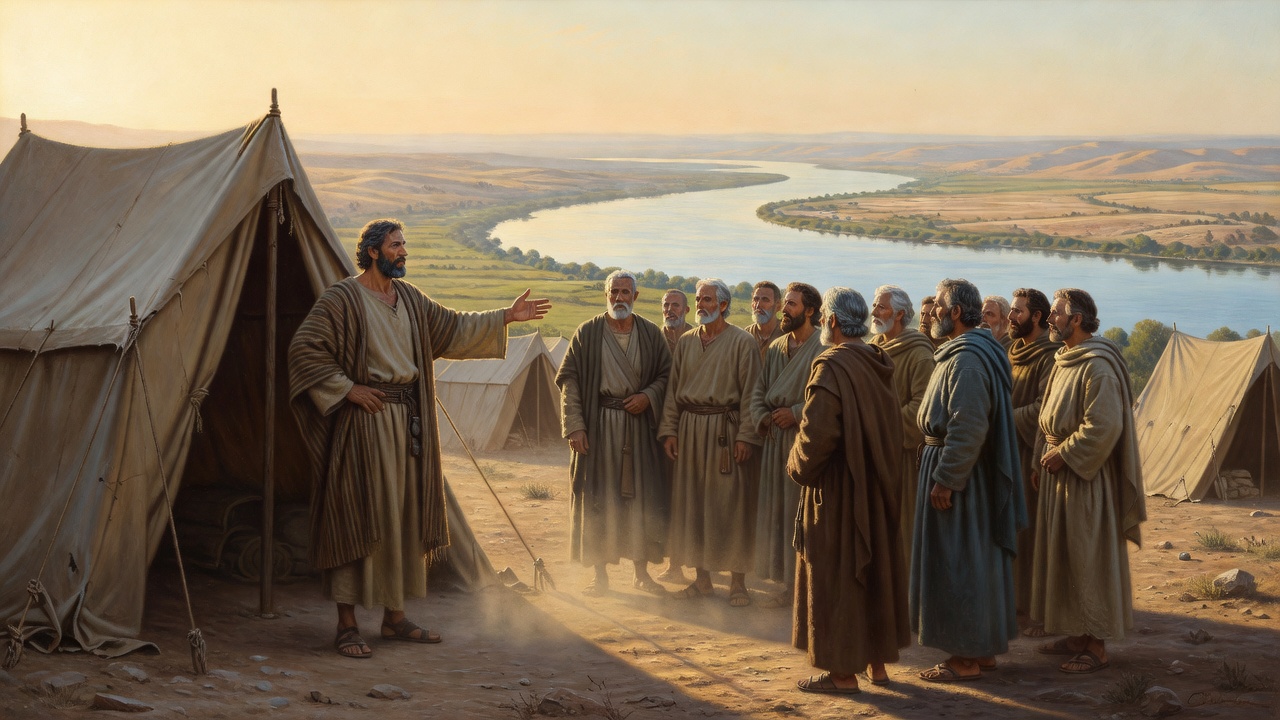
11— Peata teko waneko haw rupi teko wanupe peze'eg pà nezewe nehe ty wà, i'i wanupe. — Pemuàgà'ym pema'e nehe ty wà, peze wanupe nehe. — Kutàri henataromo na'iruz 'ar pawire peahaw putar Zotàw yrykaw xe nehe. Peixe putar a'e ywy rehe nehe. Pepyhyk putar a'e ywy nehe, izar romo peneko pà nehe. Ta'e Tupàn pezar umur putar a'e ywy peme a'e nehe xe, izar romo pemuigo kar pà a'e nehe xe, peze wanupe nehe, i'i Zuzue tuwihawete wanupe. 12Uze'eg wi Zuzue Humen izuapyapyr wanupe, Kaz izuapyapyr wanupe no, amo Manaxe izuapyapyr wanehe har wanupe no.
13— Pema'enukwaw Moizez Tupàn Zanezar hemiruze'eg ize'eg awer rehe nehe. — Tupàn pezar pemupytu'u kar putar a'e nehe. Umur putar ko ywy peme a'e nehe. 14Penemireko a'e wà nehe, pena'yr penazyr a'e wà nehe no, peneimaimaw a'e wà nehe no, upuner putar upyta haw rehe ywy Zotàw huwake har kwarahy hemaw kutyr har rehe a'e wà nehe, ywy Moizez peme imur pyrer rehe a'e wà nehe. Pe awakwer zauxiapekwer peahaw putar yrykaw peànàm wanenataromo nehe, petakihepuku waneraha pà nehe. Peàro putar peànàm yrykaw waz rehe pe wà nehe. 15Pepytywà a'e ywy rehe har wàmàtyry'ym mehe pe wà nehe, aze upyhyk tuwe ywy Tupàn hemimur kwer wà nehe, xo a'e mehe zo pepuner peywy pe pezewyr haw rehe nehe. Xo a'e mehe zo pepuner ywy ipyhykaw rehe nehe, Moizez Tupàn Zanezar hemiruze'eg hemimur kwer ipyhykaw rehe nehe. A'e ywy Zotàw yrykaw huwake kwarahy hemaw kutyr har huwake tuz a'e, i'i Zuzue wanupe.
16Na'e uze'eg Zuzue pe a'e wà. — Uruzapo putar tuwe ma'e neze'eg rupi katete ure nehe. Oroho putar tuwe wyzài tawhu pe wyzài ywy rehe ure nehe no. 17Ureruzar tuwe Moizez ze'eg. Nezewegatete ureruzar putar tuwe neze'eg ure nehe no. Tupàn nezar wiko Moizez rehe we tuweharupi a'e. Tuwe hekon nerehe we tuweharupi nezewegatete nehe no. 18Aze neze'eg iro amo pe nehe, aze nuweruzar kwaw amo neze'eg nehe, uruzuka putar a'e teko ure nehe. Nekàg tuwe nehe. Ekyze zo ma'e wi nehe, i'i Zuzue pe wà.
¿Sabías que…?
Josué asume el liderazgo
- Josué, hijo de Nun y de la tribu de Efraín, sirvió como asistente y comandante militar de Moisés antes de ser designado para sucederlo como líder de Israel. Su nombre significa "el Señor es su ayuda" o "el Señor el Salvador".Fuentes: Joshua · el propio texto bíblico
- El territorio descrito en el encargo a Josué abarcaba desde el desierto y la cordillera del Líbano, al norte, hasta el río Éufrates ("el gran río"), al este, y el mar Mediterráneo ("el gran mar"), al oeste.Fuentes: el propio texto bíblico · Lebanon · Euphrates · Great Sea
- Las tribos de Rubén, Gad y la media tribu de Manasés ya habían recibido tierras al este del río Jordán bajo el mando de Moisés. Aun así, sus hombres de guerra debían cruzar armados delante de las demás tribus para ayudarlas hasta asegurar toda la tierra.Fuentes: el propio texto bíblico · Manasseh (son of Joseph)
Notas escritas con ayuda de IA a partir de fuentes abiertas (Theographic Bible Metadata, CC BY-SA 4.0; Easton’s Bible Dictionary, dominio público) y revisadas antes de publicarse.
Lugares de este capítulo
- Jordan · Hoy: Jordan River · 31.761, 35.558 · versículos 2, 11, 14, 15
- Euphrates · Hoy: Euphrates River · 31.004, 47.442 · versículo 4
- Great Sea · Hoy: Mediterranean Sea · 31.805, 34.170 · versículo 4
- Lebanon · 33.540, 35.584 · versículo 4
- Negeb · 31.245, 34.841 · versículo 4
- Syria · Hoy: Aram · 33.511, 36.306 · versículo 4
Solo aparecen lugares identificados con alta confianza (90 % o más según las fuentes académicas reunidas por OpenBible). Mapa de la época: DARE (Digital Atlas of the Roman Empire), CC BY 4.0; mapa actual: © colaboradores de OpenStreetMap; lugares: OpenBible.info (CC BY 4.0).
Créditos y licencia de esta traducción
Tupàn ze'eg
Bible without Deuterocanon in Guajajára (BR:gub:Guajajára)
copyright © 2007 Wycliffe Bible Translators, Inc.
Language: Guajajára
Translation by: Wycliffe Bible Translators, Inc.
Guajajára [gub], Brazil
Copyright Information
© 2007, Wycliffe Bible Translators, Inc. All rights reserved.
This translation text is made available to you under the
terms of the Creative Commons License: Attribution-Noncommercial-No Derivative Works.
( http://creativecommons.org/licenses/by-nc-nd/3.0/ )
In addition, you have permission to port the text to different file formats, as long as you
do not change any of the text or punctuation of the Bible.
You may share, copy, distribute, transmit, and extract portions
or quotations from this work, provided that you include the above copyright
information:
You must give Attribution to the work.
You do not sell this work for a profit.
You do not make any derivative works that change any of the actual words or punctuation of the Scriptures.
Permissions beyond the scope of this license may be
available if you contact
us with your request.
Printed book ISBN 9788531109713
The Bible without Deuterocanon
in Guajajára
© 2007, Wycliffe Bible Translators, Inc. All rights reserved.
This translation is made available to you under the terms of the
Creative Commons Attribution-Noncommercial-No Derivatives license 4.0.
You may share and redistribute this Bible translation or extracts from it in any format, provided that:
You include the above copyright and source information.
You do not sell this work for a profit.
You do not change any of the words or punctuation of the Scriptures.
Pictures included with Scriptures and other documents on this site are licensed just for use with those Scriptures and documents.
For other uses, please contact the respective copyright owners.
2020-03-30
Fuente: http://ebible.org/gubBl/ · eBible.org