Joshua 1
Tupàn ze'eg · Tap a verse to see its cross-references.
About this book
About Joshua
- Easton's Bible Dictionary (1897) explains Joshua's name as "Jehovah is his help" or "Jehovah the Saviour." He was the son of Nun, of the tribe of Ephraim, born in Egypt, and Moses' successor as leader of Israel; the wars of conquest he carried on are recorded in the book that bears his name. That entry does not name the book's author or give a date for its writing.Sources: Easton: Joshua · Joshua
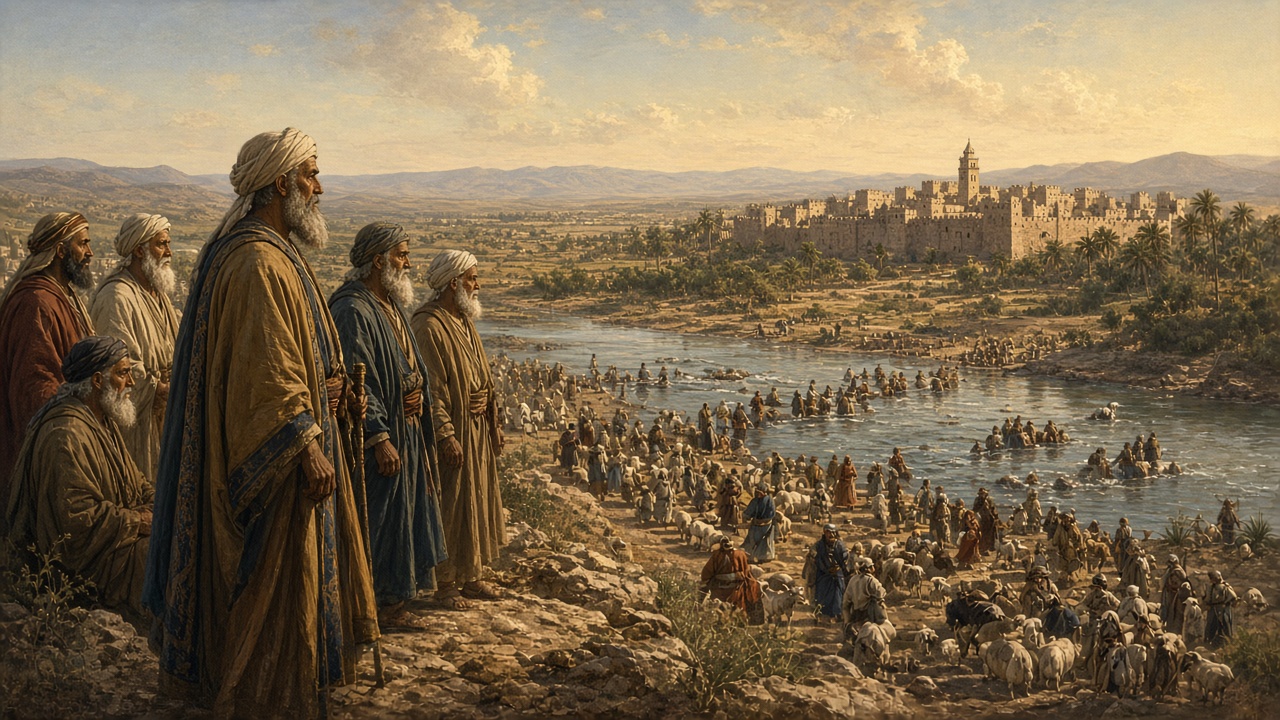
- When Joshua took command, the people were encamped at Shittim. They crossed the Jordan and camped at Gilgal, where, Easton says, he circumcised the people and kept the Passover. Jericho, a fortified city among palm trees about five miles west of the Jordan, is described as Canaan's strongest fortress and the key to western Palestine; Ai, east of Bethel, was the second Canaanite city taken, after an initial defeat.Sources: Easton: Joshua · Jericho · Ai
- Easton's Bible Dictionary (1897) says Joshua conquered six nations and thirty-one kings, then divided the land among the tribes, with Timnath-serah in Mount Ephraim assigned to himself. East of the Jordan, Gilead is described as a mountainous region held by the tribes of Gad and Reuben and the southern part of Manasseh.Sources: Easton: Joshua · Gilead
- Quoting Edersheim, the dictionary says Joshua's name was changed from Oshea, "help," to Jehoshua, "Jehovah is help," and notes that he is called Jesus in Acts 7:45 and Hebrews 4:8. It states that he died at the age of one hundred and ten, twenty-five years after crossing the Jordan, and was buried in his own city of Timnath-serah; of his father Nun, nothing more is recorded than that he was Joshua's father.Sources: Easton: Joshua · Joshua · Nun
- Before leading the conquest, Joshua commanded Israel's host against the Amalekites at Rephidim, served as Moses' minister, and was one of twelve sent to explore Canaan; only he and Caleb brought back an encouraging report. As Easton sketches the book, it runs from the crossing of the Jordan and the taking of Jericho through years of war to the division of the land and Joshua's last address.Sources: Easton: Joshua
Notes written with AI assistance from open sources (Theographic Bible Metadata, CC BY-SA 4.0; Easton’s Bible Dictionary, public domain) and reviewed before publishing.
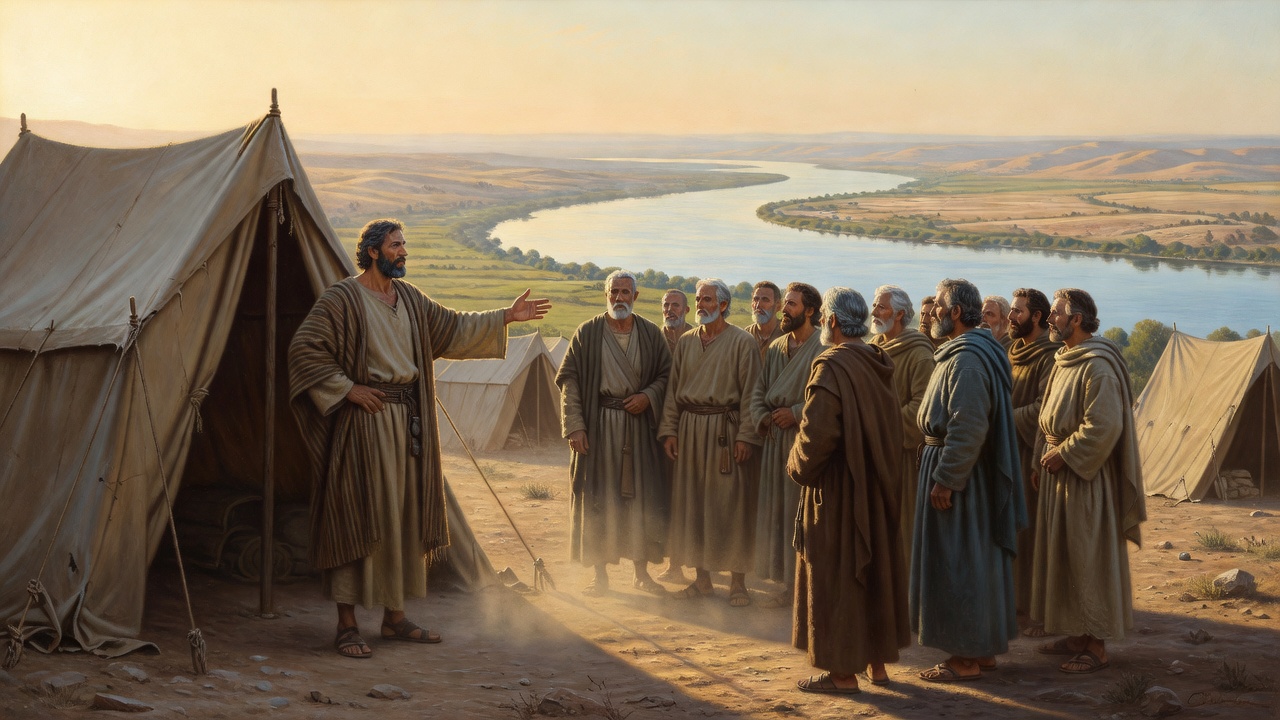
Zuzue wiko Moizez hekuzaromo kury
1Amo 'ar mehe Moizez a'e, Tupàn hemiruze'eg Tupàn pe uma'ereko ma'e a'e, umàno a'e kury. Na'e Tupàn uze'eg Zuzue Nun ta'yr pe a'e kury. Zuzue a'e, a'e 'ym mehe wiko Moizez ipytywà har romo a'e.
2— Moizez heremiruze'eg umàno kwez a'e kury, i'i Tupàn Zuzue pe. — A'e rupi ne nehe kury, ko teko paw a'e wà nehe no, pezemuàgà'ym nehe kury. Ta'e pe peahaw putar yrykaw Zotàw her ma'e nehe kury xe. Peixe putar a'e ywy rehe nehe, peme heremimono ràm rehe nehe, Izaew izuapyapyr wanupe heremimono ràm rehe nehe kury, i'i Tupàn Zuzue pe. 3— Aze pepyrog amo ywy rehe pepy pupe nehe, amono putar a'e ywy peme nehe, Moizez pe heremimume'u kwer rupi katete nehe. 4Ko rupi peywy uzypyrog ywyxiguhu pe nehe. Oho putar ywy Irimano her ma'e pe nehe. Kwe rupi uzypyrog yrykawhu Ewparat her ma'e pe nehe. Oho putar Mezitehàn yryhu pe nehe no, yryhu kwarahy heixe haw kutyr har pe nehe no. Pepyhyk putar Ete izuapyapyr waiwy paw nehe no. Ta'e waiwy a'e xe, ywy heremimono ràm myter pe tuz a'e xe. 5Nereko mehe nehe, nemàno 'ym mehe we nehe, ni amo teko nupuner kwaw nereitykaw rehe wà nehe. (Izaew izuapyapyr wiko putar a'e ywy wazar romo wà nehe. Ereiko putar waneruze'egar romo nerekuwe mehe nehe.) Aiko Moizez hehe we har romo ihe. Nezewegatete aiko putar nerehe we har romo ihe nehe no. Nuruezar pixik kwaw ihe nehe. Napuir pixik kwaw newi nehe, i'i Tupàn Zuzue pe a'e. 6— Nekàg nehe, ekyze zo ma'e wi nehe. Ta'e ereraha putar ko teko a'e ywy rehe nehe xe. Eremuigo kar putar a'e teko a'e ywy izar romo ne wà nehe no. Ta'e amume'u tuwe ko ywy waipy wanupe kwehe mehe ihe xe. 7Nekàg nehe, ekyze zo ma'e wi nehe. Nema'enukwaw katu heze'eg heremiruze'eg Moizez pe imono pyrer rehe nehe. Amono a'e ze'eg newe no. Eruzar katu a'e ze'eg nehe. Eata katu herape rupi nehe. Ezewyr zo ko rupi nehe, ezewyr zo kwe rupi nehe. Epytu'u zo heze'eg heruzar ire nehe. Nezewe mehe wyzài ywy rehe wyzài tawhu pe neho mehe nereko haw ikatu putar nehe. Xo ikatuahy ma'e zo uzeapo putar newe nehe. 8Heze'eg imuapyk pyrer a'e nehe, epytu'u zo hehe neze'eg ire nehe. Nema'enukwaw katu a'e ze'eg rehe tuweharupi nehe, 'aromo nehe, pyhaw nehe no. Nezewe mehe erekwaw katu putar heze'eg imuapyk pyrer nehe. Nezewe mehe ereruzar putar nehe no, upaw rupi nehe no. Nezewe mehe uzeapo putar ikatuahy ma'e newe nehe. Neremiapo ràm ikatuahy putar nehe no. 9— Nekàg nehe, ekyze zo ma'e wi nehe, a'e kwez newe kury. Ekyzeahy zo (a'e ywy rehe har wanuwi nehe). Nerury'ar zo nehe. Ta'e ihe nezar romo aiko putar wyzài neho àwàm me ihe nehe xe, i'i Tupàn Zuzue pe.
Uzemuàgà'ym Zotàw 'yahaw paw rehe wà
10A'e rupi Zuzue uze'eg teko waneruze'egar wanupe a'e kury.
11— Peata teko waneko haw rupi teko wanupe peze'eg pà nezewe nehe ty wà, i'i wanupe. — Pemuàgà'ym pema'e nehe ty wà, peze wanupe nehe. — Kutàri henataromo na'iruz 'ar pawire peahaw putar Zotàw yrykaw xe nehe. Peixe putar a'e ywy rehe nehe. Pepyhyk putar a'e ywy nehe, izar romo peneko pà nehe. Ta'e Tupàn pezar umur putar a'e ywy peme a'e nehe xe, izar romo pemuigo kar pà a'e nehe xe, peze wanupe nehe, i'i Zuzue tuwihawete wanupe. 12Uze'eg wi Zuzue Humen izuapyapyr wanupe, Kaz izuapyapyr wanupe no, amo Manaxe izuapyapyr wanehe har wanupe no.
13— Pema'enukwaw Moizez Tupàn Zanezar hemiruze'eg ize'eg awer rehe nehe. — Tupàn pezar pemupytu'u kar putar a'e nehe. Umur putar ko ywy peme a'e nehe. 14Penemireko a'e wà nehe, pena'yr penazyr a'e wà nehe no, peneimaimaw a'e wà nehe no, upuner putar upyta haw rehe ywy Zotàw huwake har kwarahy hemaw kutyr har rehe a'e wà nehe, ywy Moizez peme imur pyrer rehe a'e wà nehe. Pe awakwer zauxiapekwer peahaw putar yrykaw peànàm wanenataromo nehe, petakihepuku waneraha pà nehe. Peàro putar peànàm yrykaw waz rehe pe wà nehe. 15Pepytywà a'e ywy rehe har wàmàtyry'ym mehe pe wà nehe, aze upyhyk tuwe ywy Tupàn hemimur kwer wà nehe, xo a'e mehe zo pepuner peywy pe pezewyr haw rehe nehe. Xo a'e mehe zo pepuner ywy ipyhykaw rehe nehe, Moizez Tupàn Zanezar hemiruze'eg hemimur kwer ipyhykaw rehe nehe. A'e ywy Zotàw yrykaw huwake kwarahy hemaw kutyr har huwake tuz a'e, i'i Zuzue wanupe.
16Na'e uze'eg Zuzue pe a'e wà. — Uruzapo putar tuwe ma'e neze'eg rupi katete ure nehe. Oroho putar tuwe wyzài tawhu pe wyzài ywy rehe ure nehe no. 17Ureruzar tuwe Moizez ze'eg. Nezewegatete ureruzar putar tuwe neze'eg ure nehe no. Tupàn nezar wiko Moizez rehe we tuweharupi a'e. Tuwe hekon nerehe we tuweharupi nezewegatete nehe no. 18Aze neze'eg iro amo pe nehe, aze nuweruzar kwaw amo neze'eg nehe, uruzuka putar a'e teko ure nehe. Nekàg tuwe nehe. Ekyze zo ma'e wi nehe, i'i Zuzue pe wà.
Did you know?
Joshua Assumes Leadership
- Joshua, the son of Nun from the tribe of Ephraim, served as Moses' assistant and military commander before being commissioned to succeed him as leader of Israel. His name means "Jehovah is his help" or "Jehovah the Saviour."Sources: Joshua · the Bible text itself
- The territory outlined in God's commission to Joshua stretches from the southern wilderness and the Lebanon mountain range in the north to the Euphrates (called "the great river") in the east and the Mediterranean ("the Great Sea") to the west.Sources: the Bible text itself · Lebanon · Euphrates · Great Sea
- The tribes of Reuben, Gad, and the half-tribe of Manasseh had already received territory east of the Jordan River under Moses. However, their armed warriors were required to cross over ahead of the other tribes to assist them until the entire land was secured.Sources: the Bible text itself · Manasseh (son of Joseph)
Notes written with AI assistance from open sources (Theographic Bible Metadata, CC BY-SA 4.0; Easton’s Bible Dictionary, public domain) and reviewed before publishing.
Places in this chapter
- Jordan · Today: Jordan River · 31.761, 35.558 · verses 2, 11, 14, 15
- Euphrates · Today: Euphrates River · 31.004, 47.442 · verse 4
- Great Sea · Today: Mediterranean Sea · 31.805, 34.170 · verse 4
- Lebanon · 33.540, 35.584 · verse 4
- Negeb · 31.245, 34.841 · verse 4
- Syria · Today: Aram · 33.511, 36.306 · verse 4
Only places identified with high confidence are shown (90% or more according to the scholarly sources compiled by OpenBible). Period map: DARE (Digital Atlas of the Roman Empire), CC BY 4.0; modern map: © OpenStreetMap contributors; places: OpenBible.info (CC BY 4.0).
Credits and license for this translation
Tupàn ze'eg
Bible without Deuterocanon in Guajajára (BR:gub:Guajajára)
copyright © 2007 Wycliffe Bible Translators, Inc.
Language: Guajajára
Translation by: Wycliffe Bible Translators, Inc.
Guajajára [gub], Brazil
Copyright Information
© 2007, Wycliffe Bible Translators, Inc. All rights reserved.
This translation text is made available to you under the
terms of the Creative Commons License: Attribution-Noncommercial-No Derivative Works.
( http://creativecommons.org/licenses/by-nc-nd/3.0/ )
In addition, you have permission to port the text to different file formats, as long as you
do not change any of the text or punctuation of the Bible.
You may share, copy, distribute, transmit, and extract portions
or quotations from this work, provided that you include the above copyright
information:
You must give Attribution to the work.
You do not sell this work for a profit.
You do not make any derivative works that change any of the actual words or punctuation of the Scriptures.
Permissions beyond the scope of this license may be
available if you contact
us with your request.
Printed book ISBN 9788531109713
The Bible without Deuterocanon
in Guajajára
© 2007, Wycliffe Bible Translators, Inc. All rights reserved.
This translation is made available to you under the terms of the
Creative Commons Attribution-Noncommercial-No Derivatives license 4.0.
You may share and redistribute this Bible translation or extracts from it in any format, provided that:
You include the above copyright and source information.
You do not sell this work for a profit.
You do not change any of the words or punctuation of the Scriptures.
Pictures included with Scriptures and other documents on this site are licensed just for use with those Scriptures and documents.
For other uses, please contact the respective copyright owners.
2020-03-30
Source: http://ebible.org/gubBl/ · eBible.org