Salmos 125
Kitaaba Woyyuu · Toca un versículo para ver sus referencias cruzadas.
Wobii Kolbaa Waaqaa
Faaruu Ittiin Ol Bayanu
1Worri Mootii Waan Maraatitti addatu
akka gaara Xiyoonii,
ka ijjumaa hin tachoone,
ka haga bara baraa jabaatee dhaabbatuu ti.
2Akkuma gaaroti Yerusaalem marsaneeranu,
ammaa jalqabee haga bara baraa,
Mootiin Waan Maraa
kolbaa ifii hin marsa.
3Worri hamaan
lafa worra balchoole'ee hin bulchanu;
yoo bulchane,
kolbaan balchaan
waan hantuu hujiisaaf harka diriirfatti.
4Ee Mootii Waan Maraa,
worra dansaa te'eef,
worra gadhaa ifii keessatti
qajeelaa te'eefille dansaa godhi.
5Ammoo, Mootiin Waan Maraa
worra waan hantuu huju,
worra karaa dabaalessa ifii gula deebi'e
woliin hin gata.
Nageenni Israa'eliif te'uu ti.
¿Sabías que…?
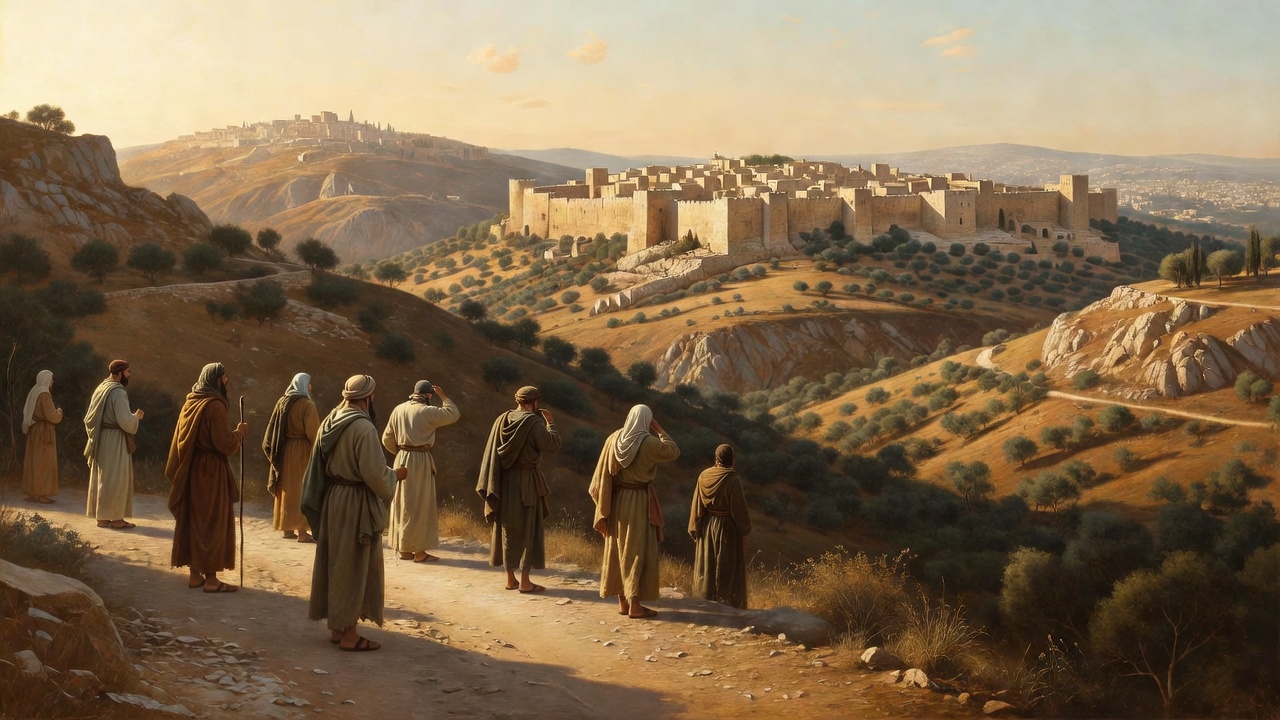
La seguridad inquebrantable en Jerusalén
- El Salmo 125 es uno de los Cánticos de las Subidas y compara a los que confían en Dios con el monte Sion. El monte Sion era una colina naturalmente fortificada en Jerusalén, rodeada por valles profundos en casi todos sus lados, lo que lo convertía en un símbolo de estabilidad duradera.Fuentes: el propio texto bíblico · Mount Zion
- El salmista recurre a la geografía local al destacar cómo los montes rodean a Jerusalén. Establecida como una fortaleza montañosa rodeada de alturas contiguas, la ciudad ofrecía una elocuente ilustración física de la protección divina alrededor de su pueblo.Fuentes: el propio texto bíblico · Jerusalem
- El salmo concluye con una súplica de paz para Israel, lo cual guarda armonía con la interpretación tradicional del nombre de Jerusalén como posesión o cimiento de paz.Fuentes: el propio texto bíblico · Jerusalem
Notas escritas con ayuda de IA a partir de fuentes abiertas (Theographic Bible Metadata, CC BY-SA 4.0; Easton’s Bible Dictionary, dominio público) y revisadas antes de publicarse.
Lugares de este capítulo
Solo aparecen lugares identificados con alta confianza (90 % o más según las fuentes académicas reunidas por OpenBible). Mapa de la época: DARE (Digital Atlas of the Roman Empire), CC BY 4.0; mapa actual: © colaboradores de OpenStreetMap; lugares: OpenBible.info (CC BY 4.0).
Créditos y licencia de esta traducción
Kitaaba Woyyuu
Oromo, Borana-Arsi-Guji: Kitaaba Woyyuu (Bible)
copyright © 2025 The Word for the World International
Language: gujii
Contributor: Bible Society of Ethiopia
This translation is made available to you under the terms of the
Creative Commons Attribution Share-Alike license 4.0.
You have permission to share and redistribute this Bible translation in any format and to make reasonable revisions and adaptations of this translation, provided that:
You include the above copyright and source information.
If you make any changes to the text, you must indicate that you did so in a way that makes it clear that the original licensor is not necessarily endorsing your changes.
If you redistribute this text, you must distribute your contributions under the same license as the original.
Pictures included with Scriptures and other documents on this site are licensed just for use with those Scriptures and documents.
For other uses, please contact the respective copyright owners.
Note that in addition to the rules above, revising and adapting God's Word involves a great responsibility to be true to God's Word. See Revelation 22:18-19.
2025-05-02
Fuente: http://ebible.org/gax/ · eBible.org