Salmos 124
Kitaaba Woyyuu · Toca un versículo para ver sus referencias cruzadas.
Waaqi Kolbaa Ifii Hin Eega
Faaruu Daawitii, Ta Ittiin ol bayanu
1Mootiin Waan Maraa
nu woliin adoo jiraatuu dhabaatee,
Israa'el,
2«Yennaa diinoti keenna nu lolanu,
Mootiin Waan Maraa
adoo nu woliin jiraatuu dhabaatee,
3yennaa aariin isaanii
nu irratti bobeette san,
silaa adoo jirruu nu liqinsaniiyyu;
4silaa bisaan nu haxowee dabaraayyu;
lolaan nu irra garagalaayyu;
5silaa bisaan hamaan
nu irra yaa'aayyu» jettuu ti.
6Ilkaan isaanii akka nu kukkutatu
ka nu hin lakkisin,
Mootiin Waan Maraa leellifamuu ti.
7Akka sinbirrooti
tiyyoo worra adansuu jalaa baatu,
nuutille tiyyoo isaanii jalaa baane;
tiyyoon ciccitte; nuutille jalaa baane.
8Maqaa Mootii Waan Maraa
ol-gubba'aa fi lafa dadeen,
nuuti qarqaarsa dhagganne.
¿Sabías que…?
Cántico de Liberación de Israel
- El encabezado del Salmo 124 lo define como un cántico de las subidas atribuido a David. Funciona como un himno comunitario de gratitud que invita a Israel a proclamar en conjunto que sobrevivió al asalto de sus adversarios únicamente porque el Señor estuvo de su lado.Fuentes: el propio texto bíblico
- El poema describe el peligro enfrentado por la comunidad mediante intensas metáforas de la naturaleza, comparando a los enemigos con fieras listas para devorarlos con sus dientes y con torrentes y aguas embravecidas que amenazaban con arrastrarlos.Fuentes: el propio texto bíblico
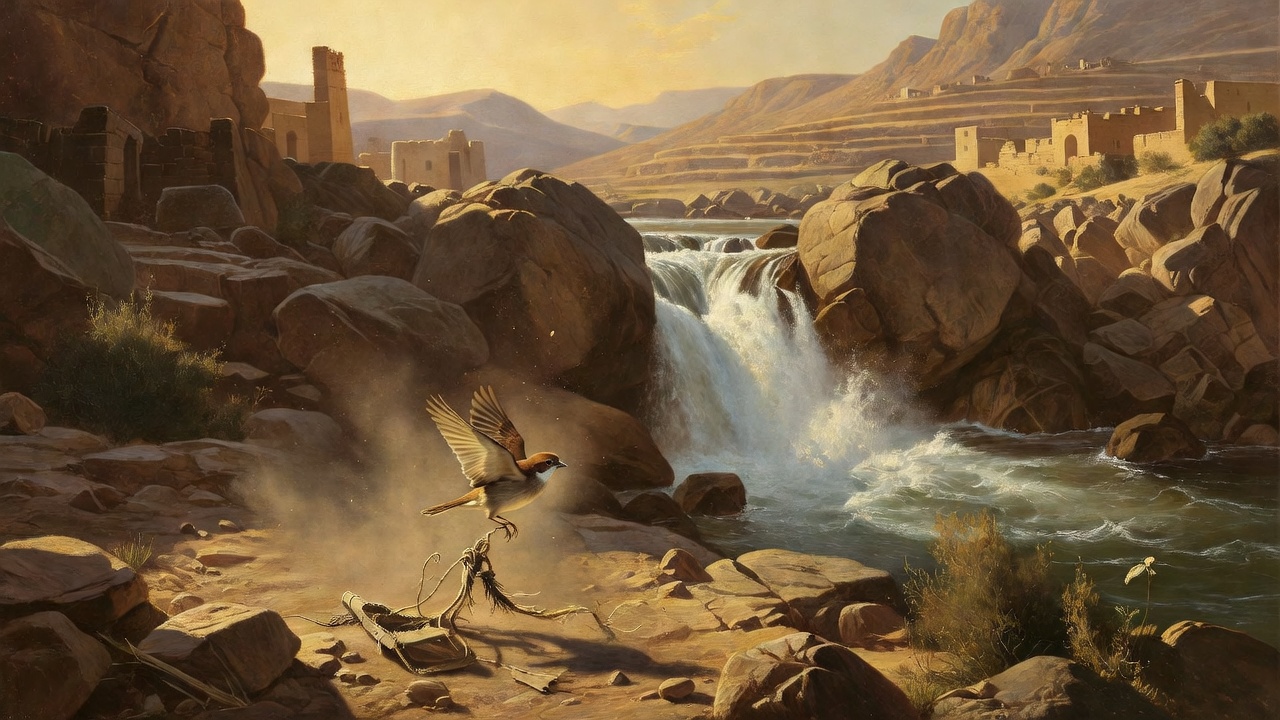
- El salmo concluye su reflexión sobre la liberación con la figura de un ave que escapa de la trampa rota de un cazador, afirmando que el auxilio de la comunidad reside en el nombre del Señor, Creador del cielo y de la tierra.Fuentes: el propio texto bíblico
Notas escritas con ayuda de IA a partir de fuentes abiertas (Theographic Bible Metadata, CC BY-SA 4.0; Easton’s Bible Dictionary, dominio público) y revisadas antes de publicarse.
Lugares de este capítulo
- Jerusalem · 31.777, 35.234 · versículo 1
Solo aparecen lugares identificados con alta confianza (90 % o más según las fuentes académicas reunidas por OpenBible). Mapa de la época: DARE (Digital Atlas of the Roman Empire), CC BY 4.0; mapa actual: © colaboradores de OpenStreetMap; lugares: OpenBible.info (CC BY 4.0).
Créditos y licencia de esta traducción
Kitaaba Woyyuu
Oromo, Borana-Arsi-Guji: Kitaaba Woyyuu (Bible)
copyright © 2025 The Word for the World International
Language: gujii
Contributor: Bible Society of Ethiopia
This translation is made available to you under the terms of the
Creative Commons Attribution Share-Alike license 4.0.
You have permission to share and redistribute this Bible translation in any format and to make reasonable revisions and adaptations of this translation, provided that:
You include the above copyright and source information.
If you make any changes to the text, you must indicate that you did so in a way that makes it clear that the original licensor is not necessarily endorsing your changes.
If you redistribute this text, you must distribute your contributions under the same license as the original.
Pictures included with Scriptures and other documents on this site are licensed just for use with those Scriptures and documents.
For other uses, please contact the respective copyright owners.
Note that in addition to the rules above, revising and adapting God's Word involves a great responsibility to be true to God's Word. See Revelation 22:18-19.
2025-05-02
Fuente: http://ebible.org/gax/ · eBible.org