Proverbios 11
Kitaaba Woyyuu · Toca un versículo para ver sus referencias cruzadas.
1Mootiin Waan Maraa madaala sobaa jibba;
dhakaa madaalaa ka sirrii te'etti gammada.
2Koorri yennaa dhufu,
salphinni hin dhufa;
gad ifi qabiisaan ammoo qarummaan dhutti.
3Worri qajeelaan komii dhabiisaan qajeelfaman;
worri hin addatanne ammoo
maltumma'aan badan.
4Guyyaa mura'aa durummaan bu'aa hin qaddu;
balchummaan ammoo du'a irraa si hamburti.
5Worra komii hin qanne
balachummaan karaa isaanii qajeelchiti;
worri hamaan ammoo
hammeennuma ifiitiin jiga.
6Nama qajeelaa
balchumma'atti isa baasa;
worri hin addatanne ammoo
halchuma ifii hantu'uun qabaman.
7Nami hamaan yennaa du'u,
addiin isaalle hin baddi;
durummaan inni addatu
womaa isaaf hin baatu.
8Nami balchaan rakkoo jalaa hin baya;
nami hamaan ammoo
addee isaa rakkinnatti hin gala.
9Nami hamaan dubbii afaan ifiitiin nama balleessa;
nami balchaan beekkumsa ifiitiin baya.
10Worra balcha'aaf yennaa milkoottu,
kolbaan qacha'aa hin firinxiixi.
Worri hamaan yennaa badu,
isaan hin ilillisan.
11Eebba worra balcha'aatiin qachaan tokko guddata;
dubbii afaan worra hama'aatiin ammoo hin bada.
12Nami qalbii hin qanne nama tuffata;
nami qalbii qabu ammoo cadhi jedha.
13Nami hamatu dhossaa eegee hin dande'u;
nami addatamaan ammoo dhossaa eega.
14Gorsitooti yoo hin jiraatin
mootummaan takka hin jiddi;
gorsitooti hedduun yoo jiraatte ammoo
nageyaan jiraatti.
15Nami alaga'aaf wobii te'u hin rakkata;
nami wobii te'iisa jibbu ammoo
nageyaan hin jiraata.
16Dubartiin arjaan ulfinna hin dhaggatti;
worri hunnaan nama irratti ka'u ammoo
durummaa qofa dhaggata.
17Gadhi-laafessi
ifumaaf bu'aa dhaggatta;
gadhi-jabeessi ammoo
ifuma miidha.
18Nami hamaan bu'aa isa sobu dhaggata;
nami balchumma'aan huju ammoo
gatii addachiittuu dhaggata.
19Nami dhugumaan balchaa te'e jiru'uun hin le'a;
nami waan hantuu ari'u ammoo hin du'a.
20Mootiin Waan Maraa
worra yaada micciirama'aa jibba;
worra komii hin qannetti ammoo
hin gammada.
21Dhugumaan nami hamaan
adoo hin adabamin hin hafu;
worri balchaan ammoo
adabbii jalaa hin baya.
22Dubartiin shaggittiin qalbii hin qanne,
akka qubee worqi'ii
ta funnaan booyye'ee irra jirtuu ti.
23Halchaan nama balcha'aa
waan dansaa qofaan muummotti;
halchaan nama hama'aa ammoo
mufi'iin muummotti.
24Nami gariin toluma karra ifii namaaf kenna;
ammoo irra caalaa duroomaa deema;
nami gariin akka malee donnooma;
ammoo hiyyoommataatuma deema.
25Nami arjaan hin durooma;
nami dheebuu nama baasulle
ifille'eef dheebuu hin baya.
26Nama midhaan kuufatee tursu
kolbaan hin abaarti;
nami midhaan baasee
gurguratu ammoo
eebba dhaggata.
27Nami waan dansaa jabaatee barbaadu,
waan dansaa dhaggata;
nami waan hantuu barbaadu ammoo
waan hantuu dhaggatta.
28Nami durummaa ifiititti addatu hin jiga;
nami balchaan ammoo
akka baala jiidha'aa hin bisila.
29Nami maatii ifii rakkisu,
harka duwwaa hin hafa;
gowwaan tajaajilaa qaro'oo hin te'a.
30Hujiin nama balcha'aa
muka jiru'uu ti;
nami barsiisee lubbuu namaa deebisu qaro'o.
31Worri balchaan lafa irratti
gatii hujii ifii akkuma dhaggatanu,
worri Waaqa malee le'uu fi
worri cubbaaleyyiille lafa irratti akkasuma
gatii hujii ifii hin dhaggatan.
¿Sabías que…?
Integridad, riqueza y la comunidad
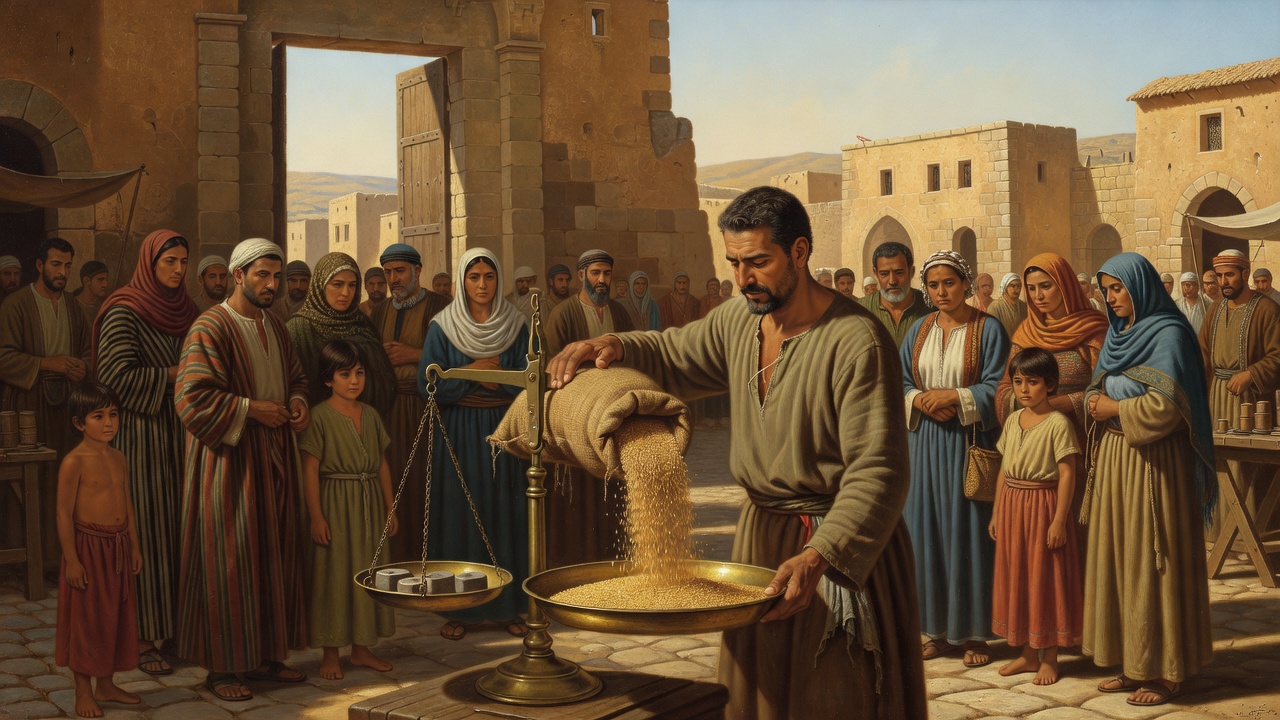
- El comercio antiguo dependía de balanzas con pesas de piedra para medir metales preciosos y mercancías. El capítulo comienza condenando las balanzas deshonestas y elogiando el peso exacto, subrayando que la honradez en las transacciones cotidianas refleja la conducta ante Dios.Fuentes: el propio texto bíblico
- Proverbios 11 resalta el impacto cívico del comportamiento individual, señalando que la estabilidad y la alegría de una ciudad dependen de la integridad de los justos, de sabios consejeros y de líderes rectos, en contraste con las acciones destructivas de los impíos.Fuentes: el propio texto bíblico
- En las sociedades agrícolas, acaparar grano durante la escasez para encarecer los precios provocaba un gran sufrimiento. El capítulo contrasta al acaparador de grano, que recibe la maldición del pueblo, con el comerciante que vende su alimento para sustentar a sus vecinos.Fuentes: el propio texto bíblico
Notas escritas con ayuda de IA a partir de fuentes abiertas (Theographic Bible Metadata, CC BY-SA 4.0; Easton’s Bible Dictionary, dominio público) y revisadas antes de publicarse.
Créditos y licencia de esta traducción
Kitaaba Woyyuu
Oromo, Borana-Arsi-Guji: Kitaaba Woyyuu (Bible)
copyright © 2025 The Word for the World International
Language: gujii
Contributor: Bible Society of Ethiopia
This translation is made available to you under the terms of the
Creative Commons Attribution Share-Alike license 4.0.
You have permission to share and redistribute this Bible translation in any format and to make reasonable revisions and adaptations of this translation, provided that:
You include the above copyright and source information.
If you make any changes to the text, you must indicate that you did so in a way that makes it clear that the original licensor is not necessarily endorsing your changes.
If you redistribute this text, you must distribute your contributions under the same license as the original.
Pictures included with Scriptures and other documents on this site are licensed just for use with those Scriptures and documents.
For other uses, please contact the respective copyright owners.
Note that in addition to the rules above, revising and adapting God's Word involves a great responsibility to be true to God's Word. See Revelation 22:18-19.
2025-05-02
Fuente: http://ebible.org/gax/ · eBible.org