Ezequiel 46
Biblica® Se aɖeke mebla Biblia zazã o Agbenya La™ · Toca un versículo para ver sus referencias cruzadas.
1“ ‘Nya si Aƒetɔ Yehowa gblɔe nye esi: Ele be xɔxɔnu emetɔ ƒe agbo si dze ŋgɔ ɣedzeƒe la nanɔ tutu le dɔwɔŋkeke adeawo me, ke woaʋui le Dzudzɔgbe la kple Ɣleti Yeye la ƒe ŋkekenyui la dzi. 2Fiavi ŋutsuvi la ato gota age ɖe eme to akpata la ƒe agbo me, eye wòatsi tsitre ɖe agbo la ƒe ʋɔtruti nu. Nunɔlaawo asa numevɔwo kple akpedavɔwo, asubɔ le agbo la ƒe agbali me, eye wòado go, gake womatu agbo la o va se ɖe fiẽ me. 3Le Dzudzɔgbewo kple Ɣleti Yeyewo ƒe ŋkekenyuiwo dzi la, anyigba la dzi nɔlawo asubɔ le Yehowa ŋkume le agbo la ƒe mɔnu. 4Numevɔsa si fiavi ŋutsuvi la tsɔ vɛ na Yehowa le Dzudzɔgbe la dzi la, anye agbo fɛ̃ ade kple agbo ɖeka, lã siwo ŋu kpɔtsɔtsɔ aɖeke mele o. 5Nuɖuvɔsa si wòna kpe ɖe agbo la ŋu la, anye wɔ agba ɖeka, eye nuɖuvɔsa si kpe ɖe agbo fɛ̃awo ŋu la asɔ gbɔ ɖe eya ŋutɔ ƒe didi nu, eye ami lita ene nakpe ɖe agba ɖeka ɖe sia ɖe ŋu. 6Le Ɣleti Yeye la ƒe ŋkekenyui dzi la, ana nyitsu fɛ̃ ɖeka, alẽvi ade kple agbo ɖeka, lã siwo katã ŋuti kpɔtsɔtsɔ aɖeke mele o. 7Nu siwo wòana hena nuɖuvɔsa la woe nye wɔ agba ɖeka kpe ɖe nyitsu la ŋu, eye wɔ agba ɖeka nakpe ɖe agbo la ŋu, wòana nu si eya ŋutɔ lɔ̃ la kpe ɖe alẽviawo ŋu, eye ami lita ene nakpe ɖe agba ɖe sia ɖe ŋu. 8Ne fiavi ŋutsuvi la ge ɖe eme la, ato akpata la ƒe agbo nu, eye wòado go to teƒe ma ke.
9“ ‘Ne anyigba la dzi nɔlawo va Aƒetɔ Yehowa ŋkume le ŋkekenyui ɖoɖiawo dzi la, ame sia ame si age ɖe eme to agbo anyiehemetɔ me be yeasubɔ la, ado go to agbo dziehetɔ me. Nenema ke, ame sia ame si age ɖe eme to agbo dziehetɔ me la, ado go to agbo anyiehetɔ me. Ame aɖeke mado go to agbo si me wòto ge ɖe eme o, ke ame sia ame ado go to agbo evelia me. 10Fiavi ŋutsuvi la anɔ wo dome age ɖe eme ne ameawo ge ɖe eme, ado go ne ameawo do go.
11“ ‘Le azãwo kple ŋkekenyui ɖoɖiwo dzi la, nuɖuvɔsa la anye wɔ agba ɖeka kpe ɖe nyitsu ɖeka ŋu, wɔ agba ɖeka nakpe ɖe agbo ɖeka ŋu, eye nu sia nu si dze ame aɖe ŋu la, nakpe ɖe alẽviawo ŋu, eye ami lita ene nakpe ɖe wɔ agba ɖeka ŋu. 12Ne fiaviŋutsu la wɔ lɔlɔ̃nununana na Aƒetɔ Yehowa, numevɔsa alo akpedavɔsa la, woaʋu agbo si dze ŋgɔ ɣedzeƒe la nɛ. Ana eƒe numevɔsa alo akpedavɔsawo abe ale si wòwɔna le Dzudzɔgbe la ene. Ekema ado go, eye ne edo go la, woatu agbo la.
13“ ‘Gbe sia gbe la, miana alẽvi aɖe si xɔ ƒe ɖeka, lã si ŋu kpɔtsɔtsɔ aɖeke mele o hena numevɔsa na Aƒetɔ Yehowa; mianae ŋdi sia ŋdi. 14Kpe ɖe esia ŋu la, ŋdi sia ŋdi miana nuɖuvɔsa wɔ agba ɖeka kple ami lita ene be woatsɔ ablu wɔ lae. Nuɖuvɔsa sia nana Aƒetɔ Yehowa nye ɖoɖo mavɔ. 15Ale woana alẽvi la kple nuɖuvɔsa la kple ami la ŋdi sia ŋdi hena gbe sia gbe ƒe numevɔsa.
16“ ‘Nu si Aƒetɔ Yehowa gblɔe nye esi: Ne fiaviŋutsu la na nu via ŋutsuwo dometɔ aɖe tso eƒe domenyinu me la, anye Via ŋutsu la ƒe dzidzimeviwo hã tɔ; anye wo tɔ to domenyinyi me. 17Ke, ne ena nane eƒe subɔlawo dometɔ ɖeka tso eƒe domenyinyi me la, anye subɔla la tɔ va se ɖe ablɔɖeƒe la dzi, ekema agazu fiaviŋutsu la tɔ. Eƒe domenyinuwo nye viawo ɖeɖe ko tɔ; woawo tɔe. 18Fiaviŋutsu la maxɔ ameawo ƒe domenyinuwo, anya ameawo le woƒe domenyinuwo gbɔ o. Ana domenyinuwo viawo tso eya ŋutɔ ƒe domenyinuwo me, ale womama nye ameawo dometɔ aɖeke ɖa tso nu si nye etɔ la gbɔ o.’ ”
19Azɔ la, ŋutsu la kplɔm to mɔnu si le agbo la xa yi xɔ kɔkɔe siwo dze ŋgɔ anyiehe la gbɔ; xɔ siawo nye nunɔlawo tɔwo, eye wòfia teƒe aɖem le axadzi le ɣetoɖoƒe lɔƒo. 20Egblɔ nam be, “Afi siae nunɔlaawo aɖa fɔɖivɔsawo kple nu vɔ̃ ŋuti vɔsawo le. Woame nuɖuvɔsawo hã le afi sia be womatsɔ wo ava xɔxɔnu egodotɔ, eye woakɔ ameawo ŋuti o.”
21Azɔ la, ekplɔm yi xɔxɔnu egodotɔ, eye wòkplɔm yi xɔxɔnu la ƒe dzogoe eneawo dzi. 22Le xɔxɔnu egodotɔ ƒe dzogoe eneawo dzi la, mekpɔ xɔxɔnu bubu le dzogoe ɖe sia ɖe dzi, ɖe sia ɖe didi mita blaeve, eye wòkeke mita wuiatɔ̃. Dzidzeme ɖeka li na xɔxɔnu eneawo le dzogoe eneawo dzi. 23Woɖo kpegli ɖe xɔxɔnu eneawo dometɔ ɖe sia ɖe me ƒo xlãe, eye woɖi mlekpui ɖe kpegliawo ŋu ƒo xlãe kpe ɖo. 24Egblɔ nam be, “Esiawoe nye dzodoƒe siwo me ame siwo subɔna le gbedoxɔ la me la aɖa ameawo ƒe vɔsanuwo le.”
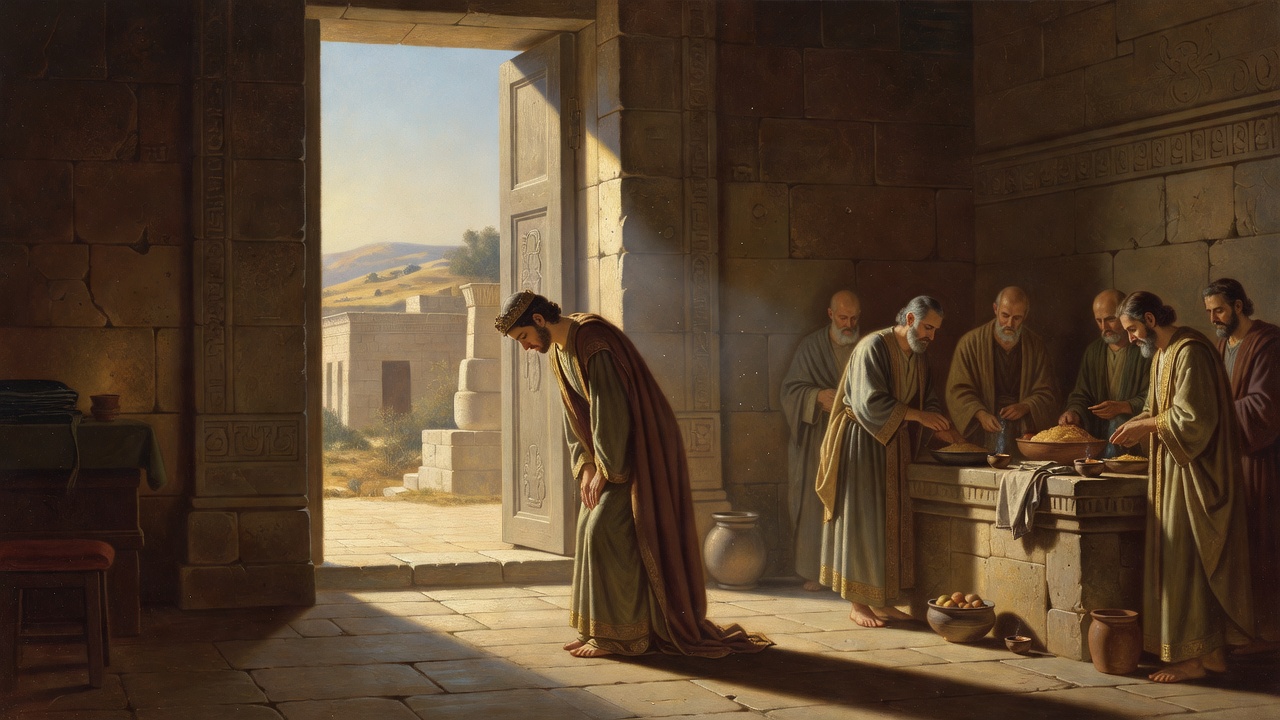
¿Sabías que…?
Culto, Deberes Reales y Cocinas del Templo
- La puerta oriental del atrio interior se mantenía cerrada durante los seis días de trabajo, pero se abría en el día de reposo y en el novilunio. El príncipe debía permanecer junto al poste de la puerta y adorar en el umbral mientras los sacerdotes presentaban sus ofrendas, tras lo cual la puerta permanecía abierta hasta la tarde.Fuentes: el propio texto bíblico
- Durante las fiestas señaladas, los fieles que entraban por la puerta norte debían salir por la del sur, y los que entraban por el sur debían salir por el norte. Asimismo, las leyes de propiedad prohibían que el príncipe despojara al pueblo de sus tierras, exigiéndole heredar únicamente de sus propias posesiones.Fuentes: el propio texto bíblico
- La visión describe áreas de cocina independientes: salas especiales en el extremo occidental para que los sacerdotes cocinaran las ofrendas por la culpa y el pecado, y cuatro atrios en las esquinas del atrio exterior donde los ministros del templo cocinaban los sacrificios del pueblo.Fuentes: el propio texto bíblico
Notas escritas con ayuda de IA a partir de fuentes abiertas (Theographic Bible Metadata, CC BY-SA 4.0; Easton’s Bible Dictionary, dominio público) y revisadas antes de publicarse.
Créditos y licencia de esta traducción
Biblica® Se aɖeke mebla Biblia zazã o Agbenya La™ Éwé: Biblica® Se aɖeke mebla Biblia zazã o Agbenya La™ (Bible) of Ghana copyright © 1988, 2006, 2020 Biblica, Inc. Language: eʋegbe Contributor: Biblica, Inc. Dɔwɔƒe si na wò asi ka agbalẽ sia lae nye Creative Commons Attribution-ShareAlike 4.0 International License (CC BY-SA). Ne èdi be yeakpɔ laisensi alo mɔɖegbalẽ sia la, yi ɖe http://creativecommons.org/licenses/by-sa/4.0 alo ŋlɔ agbalẽ na Creative Commons Dɔwɔƒea to adrɛsi sia dzi: Creative Commons, PO Box 1866, Mountain View, CA 94042, USA. Biblica, Inc. na wode Biblica® kple eƒe dzesidenu agbalẽ me, eye woaŋlɔ agbalẽ axɔ mɔɖeɖe tso Biblica, Inc. gbɔ hafi woawɔ Biblica® ƒe dzesidenu la ŋu dɔ. Le CC BY-SA ƒe mɔɖeɖe ƒe sewo nu la, àte ŋu azã agbalẽ sia me nyawo le dɔ bubuwo wɔwɔ me gake ele be nàde dzesi Biblica ƒe dzesidenu la abe ale si wòle ene. Ne ètrɔ asi le agbalẽ sia ŋu alo zãe le mɔ bubu nu la, ele be nàɖe Biblica® ƒe dzesidenu la ɖa. Ele be nàde dzesi tɔtrɔ siwo nèwɔ la ɖe agbalẽ la me eye nàde dzesii be: “Àte ŋu akpɔ Biblica, Inc. ƒe dɔ gbãtɔ le www.biblica.com kple open.bible femaxee.” Ele be nutɔnyenye ƒe dzeside nadze le agbalẽ la ƒe axa si tanya alo nutɔnyenye ƒe dzesi nɔna la ale: Biblica® Se aɖeke mebla Biblia zazã o Agbenya La™ Nutɔnyenye © 1988, 2006, 2020 Biblica, Inc. Biblica® Open Ewe Contemporary Scriptures™ Copyright © 1988, 2006, 2020 by Biblica, Inc. Biblica, Inc. na Dɔwɔƒe si Kpɔa Nutɔnyenye kple Adzɔdodo ƒe Nyawo dzi le Amerika la de “Biblica” kple eƒe dzesidenu agbalẽ me. Woaxɔ mɔɖeɖe na ezazã. “Biblica” is a trademark registered in the United States Patent and Trademark Office by Biblica, Inc. Used with permission. Ele be nàna míaƒe asi naka wò agbalẽ la le laisensi alo mɔɖeɖe ƒe se (CC BY-SA) sia nu. Ne èdi be yeana nyanya Biblica, Inc. tso agbalẽ sia zazã ŋu la, anyo be nàdo ta ɖe mía gbɔ le https://open.bible/contact-us. This work is made available under the Creative Commons Attribution-ShareAlike 4.0 International License (CC BY-SA). To view a copy of this license, visit http://creativecommons.org/licenses/by-sa/4.0 or send a letter to Creative Commons, PO Box 1866, Mountain View, CA 94042, USA. Biblica® is a trademark registered by Biblica, Inc., and use of the Biblica® trademark requires the written permission of Biblica, Inc. Under the terms of the CC BY-SA license, you may copy and redistribute this unmodified work as long as you keep the Biblica® trademark intact. If you modify a copy or translate this work, thereby creating a derivative work, you must remove the Biblica® trademark. On the derivative work, you must indicate what changes you have made and attribute the work as follows: “The original work by Biblica, Inc. is available for free at www.biblica.com and open.bible.” Notice of copyright must appear on the title or copyright page of the work as follows: Biblica® Se aɖeke mebla Biblia zazã o Agbenya La™ Nutɔnyenye © 1988, 2006, 2020 Biblica, Inc. Biblica® Open Ewe Contemporary Scriptures™ Copyright © 1988, 2006, 2020 by Biblica, Inc. Biblica, Inc. na Dɔwɔƒe si Kpɔa Nutɔnyenye kple Adzɔdodo ƒe Nyawo dzi le Amerika la de “Biblica” kple eƒe dzesidenu agbalẽ me. Woaxɔ mɔɖeɖe na ezazã. “Biblica” is a trademark registered in the United States Patent and Trademark Office by Biblica, Inc. Used with permission. You must also make your derivative work available under the same license (CC BY-SA). If you would like to notify Biblica, Inc. regarding your translation of this work, please contact us at https://open.bible/contact-us. This translation is made available to you under the terms of the Creative Commons Attribution Share-Alike license 4.0. You have permission to share and redistribute this Bible translation in any format and to make reasonable revisions and adaptations of this translation, provided that: You include the above copyright and source information. If you make any changes to the text, you must indicate that you did so in a way that makes it clear that the original licensor is not necessarily endorsing your changes. If you redistribute this text, you must distribute your contributions under the same license as the original. Pictures included with Scriptures and other documents on this site are licensed just for use with those Scriptures and documents. For other uses, please contact the respective copyright owners. Note that in addition to the rules above, revising and adapting God's Word involves a great responsibility to be true to God's Word. See Revelation 22:18-19. 2025-05-01
Fuente: http://ebible.org/ewe/ · eBible.org