Isaías 15
Young's Literal Translation · Toca un versículo para ver sus referencias cruzadas.
The Burden against Moab
1The burden of Moab. Because in a night destroyed was Ar of Moab — It hath been cut off, Because in a night destroyed was Kir of Moab — It hath been cut off. 2He hath gone up to Bajith and Dibon, The high places — to weep, On Nebo and on Medeba Moab howleth, On all its heads [is] baldness, every beard cut off. 3In its out-places they girded on sackcloth, On its pinnacles, and in its broad places, Every one howleth — going down with weeping. 4And cry doth Heshbon and Elealeh, Unto Jahaz heard hath been their voice, Therefore the armed ones of Moab do shout, His life hath been grievous to him. 5My heart [is] toward Moab, Cry do her fugitives unto Zoar, a heifer of the third [year], For — the ascent of Luhith — With weeping he goeth up in it, For, in the way of Horonaim, A cry of destruction they wake up. 6For, the waters of Nimrim are desolations, For, withered hath been the hay, Finished hath been the tender grass, A green thing there hath not been. 7Therefore the abundance he made, and their store, Unto the brook of the willows they carry. 8For gone round hath the cry the border of Moab, Unto Eglaim [is] its howling, And to Beer-Elim [is] its howling. 9For the waters of Dimon have been full of blood, For I set on Dimon additions, For the escaped of Moab a lion, And for the remnant of Adamah!
¿Sabías que…?
La Profecía sobre Moab
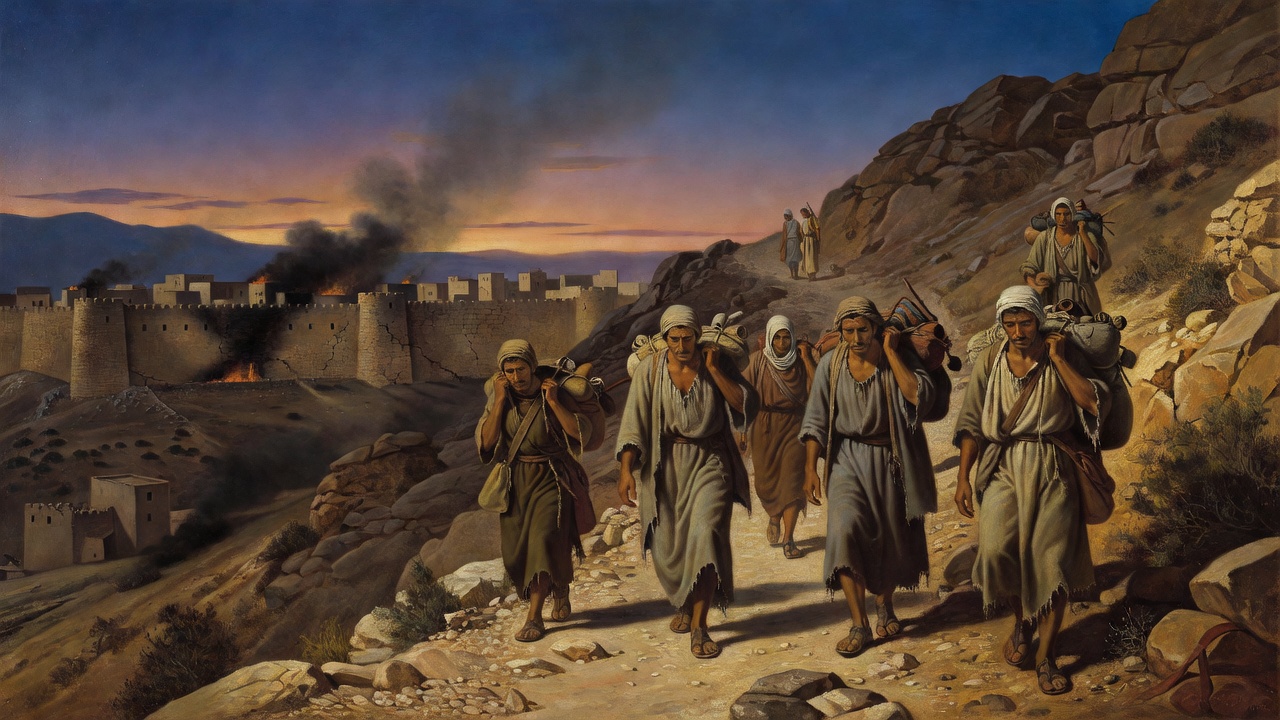
- Moab era una región ubicada al este del Mar Muerto y del río Jordán, que incluía antiguos asentamientos como Ar, Quir y Medeba. En este capítulo, el profeta lamenta la repentina destrucción nocturna y el llanto que recorre las ciudades y los lugares altos moabitas.Fuentes: Moab · Medeba · el propio texto bíblico
- El texto retrata rituales tradicionales de duelo practicados en la región en tiempos de calamidad. Ante la devastación, los habitantes de Moab se rapan la cabeza, se cortan la barba y se visten de cilicio mientras lloran en las plazas y sobre las azoteas.Fuentes: el propio texto bíblico
- La ciudad de Dibón, situada al norte del río Arnón y al este del Mar Muerto, también recibe el nombre de Dimón en Isaías 15:9. El oráculo ilustra la gravedad de la invasión al describir las aguas de Dimón llenas de sangre mientras los fugitivos huyen.Fuentes: Dibon · el propio texto bíblico
Notas escritas con ayuda de IA a partir de fuentes abiertas (Theographic Bible Metadata, CC BY-SA 4.0; Easton’s Bible Dictionary, dominio público) y revisadas antes de publicarse.
Lugares de este capítulo
- Moab · Hoy: Moab 1 · 31.181, 35.701 · versículos 1, 2, 4, 5, 8, 9
- Dibon · Hoy: Tall Dhiban · 31.502, 35.777 · versículo 2
- Medeba · Hoy: Madaba · 31.716, 35.795 · versículo 2
Solo aparecen lugares identificados con alta confianza (90 % o más según las fuentes académicas reunidas por OpenBible). Mapa de la época: DARE (Digital Atlas of the Roman Empire), CC BY 4.0; mapa actual: © colaboradores de OpenStreetMap; lugares: OpenBible.info (CC BY 4.0).
Créditos y licencia de esta traducción
Young's Literal Translation
Young's Literal Translation of the Holy Bible
Public Domain
Language: ENGLISH (English)
Dialect: archaic British
Translation by: Robert Young
This public domain Bible translation is brought to you courtesy of eBible.org.
If you would like to make a donation to help keep free Bible access like this going, please visit https://eBible.org/give.php .
2019-10-20
Títulos de sección adaptados de la Berean Standard Bible (dominio público); no forman parte del texto bíblico de esta traducción.
Fuente: http://ebible.org/engylt/ · eBible.org