Isaiah 15
Young's Literal Translation · Tap a verse to see its cross-references.
The Burden against Moab
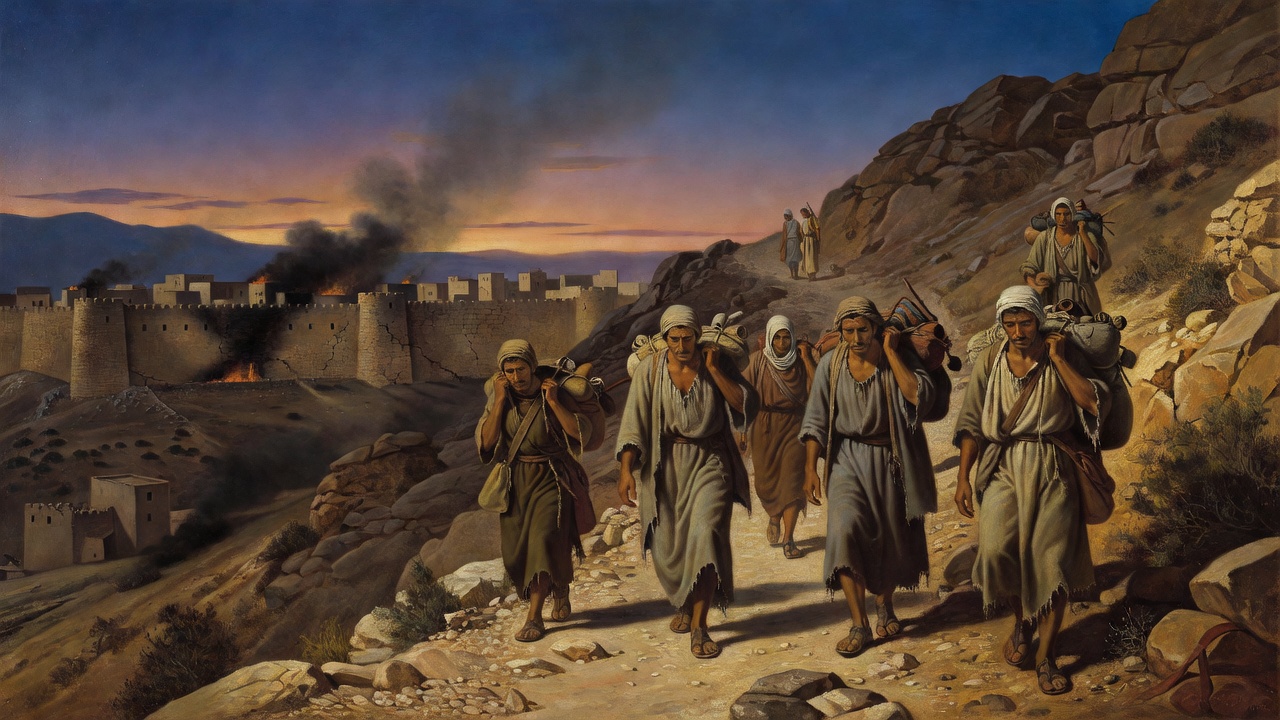
1The burden of Moab. Because in a night destroyed was Ar of Moab — It hath been cut off, Because in a night destroyed was Kir of Moab — It hath been cut off. 2He hath gone up to Bajith and Dibon, The high places — to weep, On Nebo and on Medeba Moab howleth, On all its heads [is] baldness, every beard cut off. 3In its out-places they girded on sackcloth, On its pinnacles, and in its broad places, Every one howleth — going down with weeping. 4And cry doth Heshbon and Elealeh, Unto Jahaz heard hath been their voice, Therefore the armed ones of Moab do shout, His life hath been grievous to him. 5My heart [is] toward Moab, Cry do her fugitives unto Zoar, a heifer of the third [year], For — the ascent of Luhith — With weeping he goeth up in it, For, in the way of Horonaim, A cry of destruction they wake up. 6For, the waters of Nimrim are desolations, For, withered hath been the hay, Finished hath been the tender grass, A green thing there hath not been. 7Therefore the abundance he made, and their store, Unto the brook of the willows they carry. 8For gone round hath the cry the border of Moab, Unto Eglaim [is] its howling, And to Beer-Elim [is] its howling. 9For the waters of Dimon have been full of blood, For I set on Dimon additions, For the escaped of Moab a lion, And for the remnant of Adamah!
Did you know?
The Oracle Concerning Moab
- Moab was a territory situated east of the Dead Sea and the Jordan River, containing ancient settlements such as Ar, Kir, and Medeba. In this chapter, the prophet laments the sudden overnight destruction and wailing throughout these Moabite towns and high places.Sources: Moab · Medeba · the Bible text itself
- The chapter depicts traditional ancient mourning rituals practiced across the region in times of catastrophe. As grief overtakes the land, the people of Moab shave their heads, cut off their beards, and put on sackcloth while weeping publicly in the squares and on flat rooftops.Sources: the Bible text itself
- The city of Dibon, situated north of the Arnon River and east of the Dead Sea, is also identified as Dimon in Isaiah 15:9. The oracle vividly portrays the severity of the invasion by describing the waters of Dimon filled with blood while surviving refugees flee.Sources: Dibon · the Bible text itself
Notes written with AI assistance from open sources (Theographic Bible Metadata, CC BY-SA 4.0; Easton’s Bible Dictionary, public domain) and reviewed before publishing.
Places in this chapter
- Moab · Today: Moab 1 · 31.181, 35.701 · verses 1, 2, 4, 5, 8, 9
- Dibon · Today: Tall Dhiban · 31.502, 35.777 · verse 2
- Medeba · Today: Madaba · 31.716, 35.795 · verse 2
Only places identified with high confidence are shown (90% or more according to the scholarly sources compiled by OpenBible). Period map: DARE (Digital Atlas of the Roman Empire), CC BY 4.0; modern map: © OpenStreetMap contributors; places: OpenBible.info (CC BY 4.0).
Credits and license for this translation
Young's Literal Translation
Young's Literal Translation of the Holy Bible
Public Domain
Language: ENGLISH (English)
Dialect: archaic British
Translation by: Robert Young
This public domain Bible translation is brought to you courtesy of eBible.org.
If you would like to make a donation to help keep free Bible access like this going, please visit https://eBible.org/give.php .
2019-10-20
Section headings adapted from the Berean Standard Bible (public domain); they are not part of this translation’s text.
Source: http://ebible.org/engylt/ · eBible.org