Salmos 79
NET Bible · Toca un versículo para ver sus referencias cruzadas.
A psalm of Asaph.
A Prayer for Deliverance
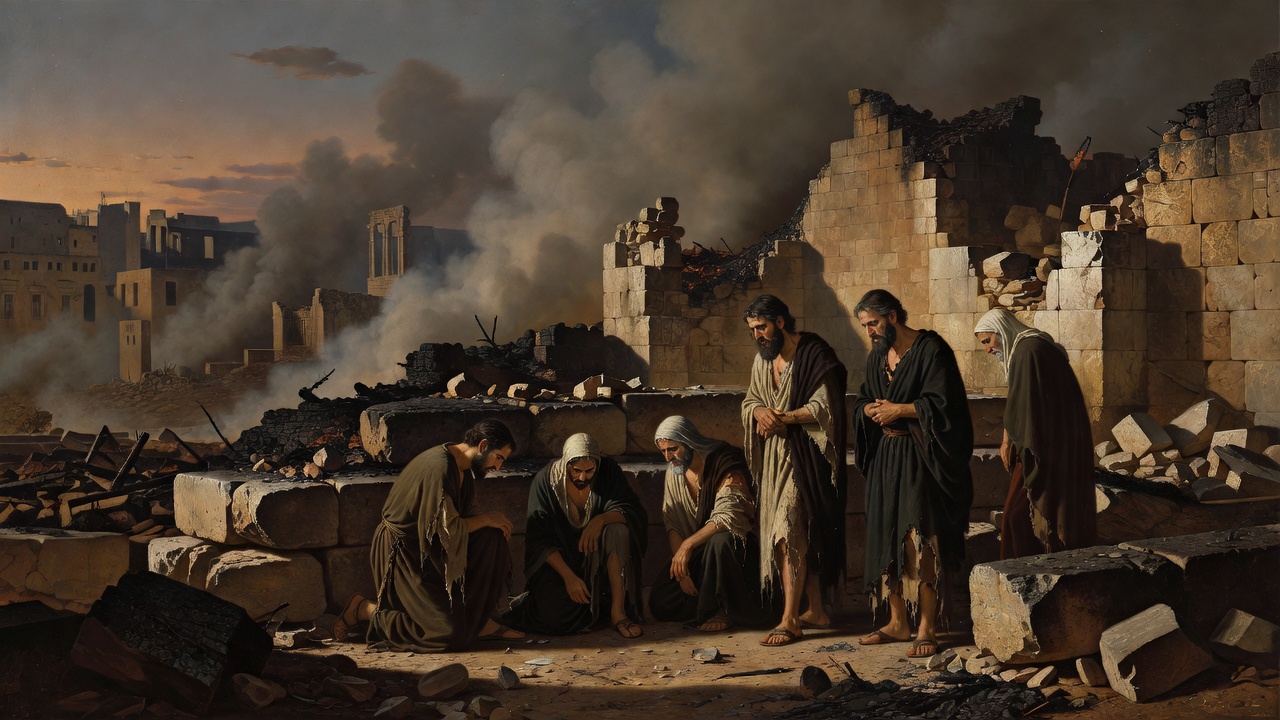
1O God, foreigners have invaded your chosen land;
they have polluted your holy temple
and turned Jerusalem into a heap of ruins.
2They have given the corpses of your servants
to the birds of the sky;
the flesh of your loyal followers
to the beasts of the earth.
3They have made their blood flow like water
all around Jerusalem, and there is no one to bury them.
4We have become an object of disdain to our neighbors;
those who live on our borders taunt and insult us.
5How long will this go on, O Lord?
Will you stay angry forever?
How long will your rage burn like fire?
6Pour out your anger on the nations that do not acknowledge you,
on the kingdoms that do not pray to you!
7For they have devoured Jacob
and destroyed his home.
8Do not hold us accountable for the sins of earlier generations!
Quickly send your compassion our way,
for we are in serious trouble!
9Help us, O God, our deliverer!
For the sake of your glorious reputation, rescue us!
Forgive our sins for the sake of your reputation!
10Why should the nations say, “Where is their God?”
Before our very eyes may the shed blood of your servants
be avenged among the nations!
11Listen to the painful cries of the prisoners!
Use your great strength to set free those condemned to die!
12Pay back our neighbors in full!
May they be insulted the same way they insulted you, O Lord!
13Then we, your people, the sheep of your pasture,
will continually thank you.
We will tell coming generations of your praiseworthy acts.
¿Sabías que…?
Un lamento por la destrucción de Jerusalén
- El Salmo 79 lleva por título un salmo de Asaf, ubicándose en la colección de salmos (Salmos 50 y 73–83) asociados con el músico y vidente levita Asaf. En el registro bíblico, el encabezado también puede referirse a los hijos de Asaf, un gremio de cantores y poetas del templo.Fuentes: Asaph (Levite) · el propio texto bíblico
- El salmo lamenta la profanación del santo templo, la reducción de Jerusalén a escombros y los cadáveres insepultos alrededor de la ciudad. Jerusalén, conocida como la ciudad santa y una fortaleza montañosa, es presentada sufriendo una invasión devastadora por parte de naciones vecinas.Fuentes: Jerusalem · el propio texto bíblico
- El poema pide la ayuda divina debido a que naciones extranjeras han devorado a Jacob y asolado su morada. En la tradición bíblica, el nombre del patriarca Jacob se utiliza a menudo de manera poética para designar a todos sus descendientes y su territorio.Fuentes: Jacob (Israel) · el propio texto bíblico
Notas escritas con ayuda de IA a partir de fuentes abiertas (Theographic Bible Metadata, CC BY-SA 4.0; Easton’s Bible Dictionary, dominio público) y revisadas antes de publicarse.
Lugares de este capítulo
Solo aparecen lugares identificados con alta confianza (90 % o más según las fuentes académicas reunidas por OpenBible). Mapa de la época: DARE (Digital Atlas of the Roman Empire), CC BY 4.0; mapa actual: © colaboradores de OpenStreetMap; lugares: OpenBible.info (CC BY 4.0).
Créditos y licencia de esta traducción
NET Bible
NET Bible®, New English Translation (NET)
copyright © 1996-2016 Biblical Studies Press, L. L. C.
Please see https://netbible.com/copyright/ for full NET Bible copyright and permissions information. You can also read the NET Bible at http://NETBible.org .
Language: English
Dialect (if applicable): American
Language in English: English
Translation by:
Please see https://netbible.com/copyright/ for full NET Bible copyright and permissions information. You can also read the NET Bible at http://NETBible.org .
The NET Bible (New English Translation) is a completely new translation of the Bible with 58,506 translators’ notes ! It was completed by more than 25 scholars – experts in the original biblical languages – who worked directly from the best currently available Hebrew, Aramaic, and Greek texts. Turn the pages and see the breadth of the translators’ notes, documenting their decisions and choices as they worked.
The translators’ notes make the original languages far more accessible, allowing you to look over the translator’s shoulder at the very process of translation. This level of documentation is a first for a Bible translation, making transparent the textual basis and the rationale for key renderings (including major interpretive options and alternative translations).
This unparalleled level of detail helps connect people to the Bible in the original languages in a way never before possible without years of study of Hebrew, Aramaic, and Greek. It unlocks the riches of the Bible’s truth from entirely new perspectives.
A donation is appreciated. Donate at Bible.org/donations_form so we can continue to provide our material for free for our 16,000+ articles on Bible.org and our world class Bible Study tool at lumina.bible.org .
2026-10-02
Títulos de sección adaptados de la Berean Standard Bible (dominio público); no forman parte del texto bíblico de esta traducción.
Fuente: http://ebible.org/engnet/ · eBible.org