Psalms 79
NET Bible · Tap a verse to see its cross-references.
A psalm of Asaph.
A Prayer for Deliverance
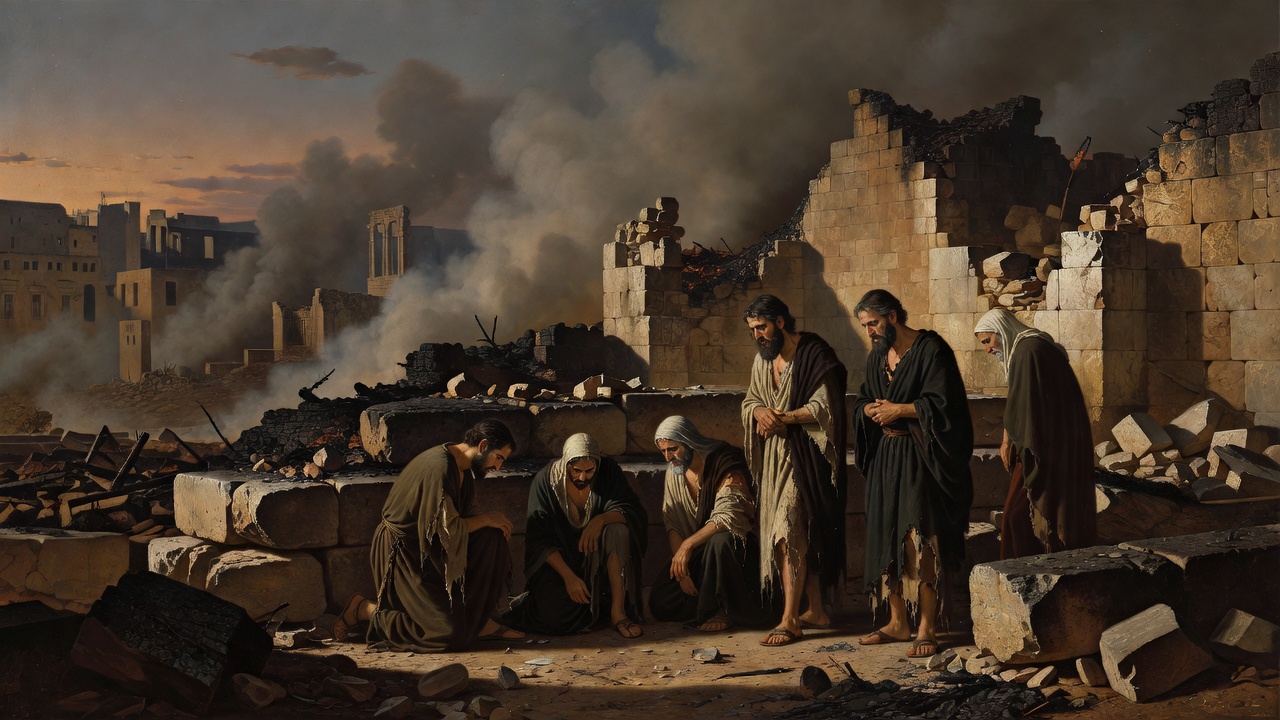
1O God, foreigners have invaded your chosen land;
they have polluted your holy temple
and turned Jerusalem into a heap of ruins.
2They have given the corpses of your servants
to the birds of the sky;
the flesh of your loyal followers
to the beasts of the earth.
3They have made their blood flow like water
all around Jerusalem, and there is no one to bury them.
4We have become an object of disdain to our neighbors;
those who live on our borders taunt and insult us.
5How long will this go on, O Lord?
Will you stay angry forever?
How long will your rage burn like fire?
6Pour out your anger on the nations that do not acknowledge you,
on the kingdoms that do not pray to you!
7For they have devoured Jacob
and destroyed his home.
8Do not hold us accountable for the sins of earlier generations!
Quickly send your compassion our way,
for we are in serious trouble!
9Help us, O God, our deliverer!
For the sake of your glorious reputation, rescue us!
Forgive our sins for the sake of your reputation!
10Why should the nations say, “Where is their God?”
Before our very eyes may the shed blood of your servants
be avenged among the nations!
11Listen to the painful cries of the prisoners!
Use your great strength to set free those condemned to die!
12Pay back our neighbors in full!
May they be insulted the same way they insulted you, O Lord!
13Then we, your people, the sheep of your pasture,
will continually thank you.
We will tell coming generations of your praiseworthy acts.
Did you know?
A Lament over the Destruction of Jerusalem
- Psalm 79 is titled a psalm of Asaph, placing it among a collection of psalms (Psalms 50 and 73–83) associated with the Levite musician and seer Asaph. In the biblical record, the title may also refer to the sons of Asaph, a recognized guild of temple singers and poets.Sources: Asaph (Levite) · the Bible text itself
- The psalm laments the defilement of the holy temple, the destruction of Jerusalem into rubble, and the unburied bodies left throughout the city. Jerusalem, known as the holy city and a mountain fastness, is portrayed here as having suffered devastating invasion by surrounding nations.Sources: Jerusalem · the Bible text itself
- The poem calls upon God for help because foreign nations have devoured Jacob and devastated his homeland. In biblical tradition, the name of the patriarch Jacob is frequently used as a poetic collective term for his descendants and their shared homeland.Sources: Jacob (Israel) · the Bible text itself
Notes written with AI assistance from open sources (Theographic Bible Metadata, CC BY-SA 4.0; Easton’s Bible Dictionary, public domain) and reviewed before publishing.
Places in this chapter
Only places identified with high confidence are shown (90% or more according to the scholarly sources compiled by OpenBible). Period map: DARE (Digital Atlas of the Roman Empire), CC BY 4.0; modern map: © OpenStreetMap contributors; places: OpenBible.info (CC BY 4.0).
Credits and license for this translation
NET Bible
NET Bible®, New English Translation (NET)
copyright © 1996-2016 Biblical Studies Press, L. L. C.
Please see https://netbible.com/copyright/ for full NET Bible copyright and permissions information. You can also read the NET Bible at http://NETBible.org .
Language: English
Dialect (if applicable): American
Language in English: English
Translation by:
Please see https://netbible.com/copyright/ for full NET Bible copyright and permissions information. You can also read the NET Bible at http://NETBible.org .
The NET Bible (New English Translation) is a completely new translation of the Bible with 58,506 translators’ notes ! It was completed by more than 25 scholars – experts in the original biblical languages – who worked directly from the best currently available Hebrew, Aramaic, and Greek texts. Turn the pages and see the breadth of the translators’ notes, documenting their decisions and choices as they worked.
The translators’ notes make the original languages far more accessible, allowing you to look over the translator’s shoulder at the very process of translation. This level of documentation is a first for a Bible translation, making transparent the textual basis and the rationale for key renderings (including major interpretive options and alternative translations).
This unparalleled level of detail helps connect people to the Bible in the original languages in a way never before possible without years of study of Hebrew, Aramaic, and Greek. It unlocks the riches of the Bible’s truth from entirely new perspectives.
A donation is appreciated. Donate at Bible.org/donations_form so we can continue to provide our material for free for our 16,000+ articles on Bible.org and our world class Bible Study tool at lumina.bible.org .
2026-10-02
Section headings adapted from the Berean Standard Bible (public domain); they are not part of this translation’s text.
Source: http://ebible.org/engnet/ · eBible.org