Job 5
Geneva Bible 1599 · Toca un versículo para ver sus referencias cruzadas.
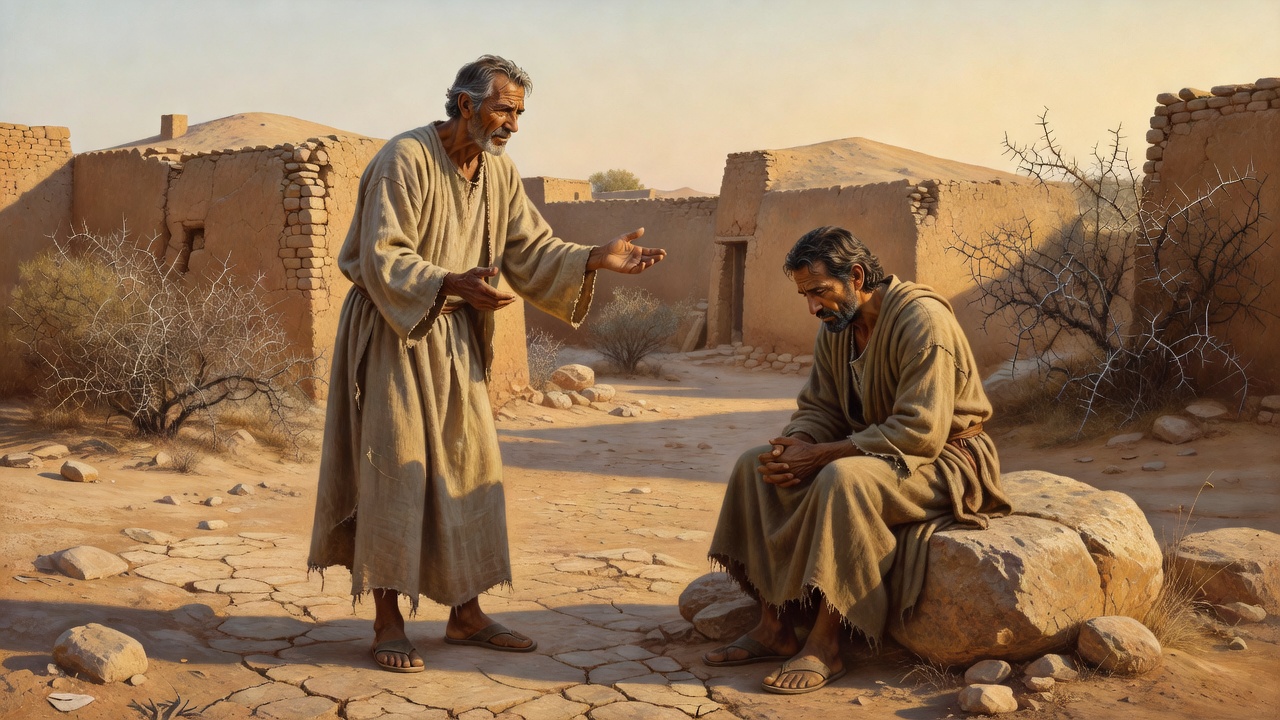
Eliphaz Continues: God Blesses those Who Seek Him
1Call nowe, if any will answere thee, and to which of the Saintes wilt thou turne? 2Doubtlesse anger killeth the foolish, and enuie slayeth the idiote. 3I haue seene the foolish well rooted, and suddenly I cursed his habitation, saying, 4His children shalbe farre from saluation, and they shall be destroyed in the gate, and none shall deliuer them. 5The hungrie shall eate vp his haruest: yea, they shall take it from among the thornes, and the thirstie shall drinke vp their substance. 6For miserie commeth not foorth of the dust, neither doeth affliction spring out of the earth. 7But man is borne vnto trauaile, as the sparkes flie vpwarde. 8But I would inquire at God, and turne my talke vnto God: 9Which doeth great things and vnsearchable, and marueilous things without nomber. 10He giueth raine vpon the earth, and powreth water vpon the streetes, 11And setteth vp on hie them that be lowe, that the sorowfull may be exalted to saluation. 12He scattereth the deuices of the craftie: so that their handes can not accomplish that which they doe enterprise. 13He taketh the wise in their craftinesse, and the counsel of the wicked is made foolish. 14They meete with darkenesse in the day time, and grope at noone day, as in the night. 15But he saueth the poore from the sword, from their mouth, and from the hande of the violent man, 16So that the poore hath his hope, but iniquitie shall stop her mouth. 17Beholde, blessed is the man whome God correcteth: therefore refuse not thou the chastising of the Almightie. 18For he maketh the wound, and bindeth it vp: he smiteth, and his handes make whole. 19He shall deliuer thee in sixe troubles, and in the seuenth the euill shall not touch thee. 20In famine he shall deliuer thee from death: and in battel from the power of the sworde. 21Thou shalt be hid from the scourge of the tongue, and thou shalt not be afraid of destruction when it commeth. 22But thou shalt laugh at destruction and dearth, and shalt not be afraide of the beast of the earth. 23For the stones of the fielde shall be in league with thee, and the beastes of the field shall be at peace with thee. 24And thou shalt knowe, that peace shall be in thy tabernacle, and thou shalt visite thine habitation, and shalt not sinne. 25Thou shalt perceiue also, that thy seede shalbe great, and thy posteritie as the grasse of the earth. 26Thou shalt goe to thy graue in a ful age, as a ricke of corne commeth in due season into the barne. 27Lo, thus haue we inquired of it, and so it is: heare this and knowe it for thy selfe.
¿Sabías que…?
El Consejo de Elifaz sobre el Sufrimiento y la Corrección Divina
- Elifaz presenta el sufrimiento como una disciplina divina con propósito y no como una calamidad arbitraria, afirmando que la aflicción no brota del suelo sin causa. Por ello, exhorta a Job a no despreciar la corrección del Todopoderoso, quien hiere solo para vendar y sanar.Fuentes: el propio texto bíblico
- Al prometer rescate de seis calamidades e incluso de siete, Elifaz recurre a una fórmula poética tradicional de paralelismo numérico gradual. Este recurso, habitual en la literatura sapiencial del Antiguo Oriente Próximo, añade énfasis para expresar una protección cabal y absoluta.Fuentes: el propio texto bíblico
- Elifaz describe la restauración plena mediante imágenes agrícolas y pastoriles, imaginando una existencia en la que los animales del campo y las piedras del suelo dejan de ser hostiles. Anticipa una muerte en la vejez con vigor, semejante a una gavilla de grano recogida a su debido tiempo.Fuentes: el propio texto bíblico
Notas escritas con ayuda de IA a partir de fuentes abiertas (Theographic Bible Metadata, CC BY-SA 4.0; Easton’s Bible Dictionary, dominio público) y revisadas antes de publicarse.
Créditos y licencia de esta traducción
Geneva Bible 1599
The Geneva Bible in Old English of 1599
Public Domain
Language: English
Dialect: Old
This digital copy is freely available world-wide, with no copyright restrictions, courtesy of eBible.org and many others. Note that the spelling used is the original spelling, which is not modern English.
2024-03-16
Títulos de sección adaptados de la Berean Standard Bible (dominio público); no forman parte del texto bíblico de esta traducción.
Fuente: http://ebible.org/enggnv/ · eBible.org