Job 5
Geneva Bible 1599 · Tap a verse to see its cross-references.
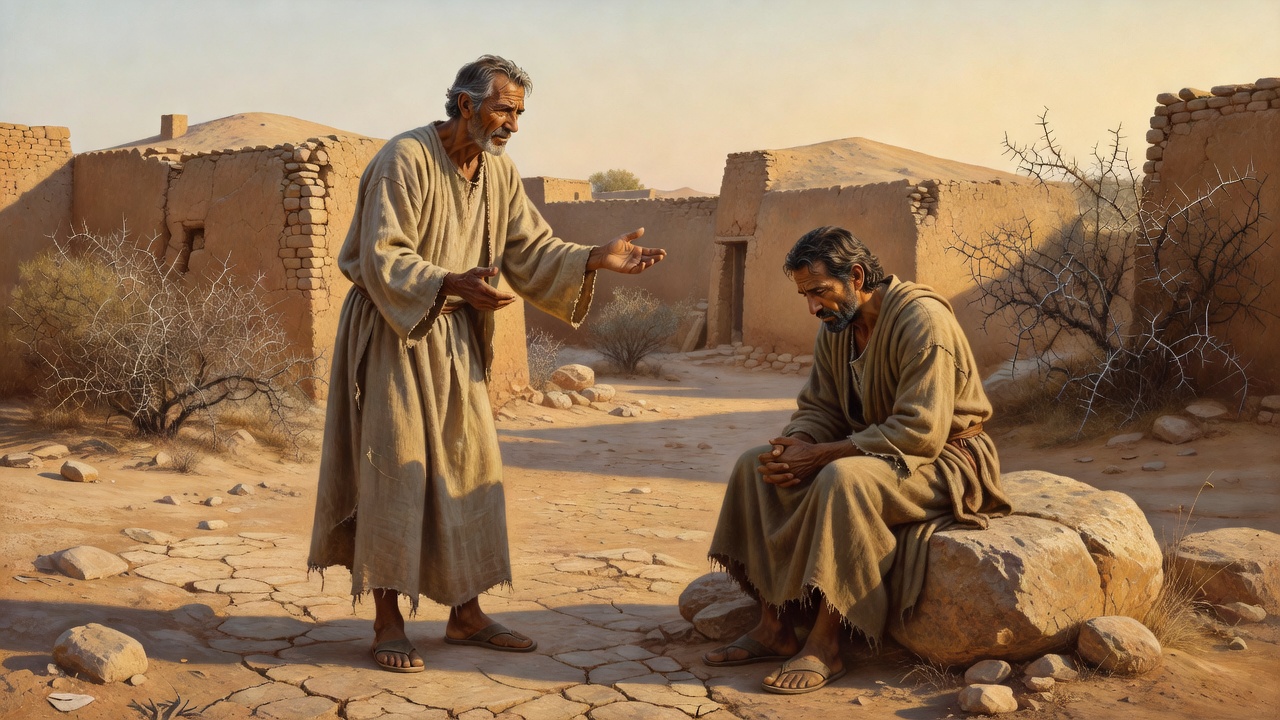
Eliphaz Continues: God Blesses those Who Seek Him
1Call nowe, if any will answere thee, and to which of the Saintes wilt thou turne? 2Doubtlesse anger killeth the foolish, and enuie slayeth the idiote. 3I haue seene the foolish well rooted, and suddenly I cursed his habitation, saying, 4His children shalbe farre from saluation, and they shall be destroyed in the gate, and none shall deliuer them. 5The hungrie shall eate vp his haruest: yea, they shall take it from among the thornes, and the thirstie shall drinke vp their substance. 6For miserie commeth not foorth of the dust, neither doeth affliction spring out of the earth. 7But man is borne vnto trauaile, as the sparkes flie vpwarde. 8But I would inquire at God, and turne my talke vnto God: 9Which doeth great things and vnsearchable, and marueilous things without nomber. 10He giueth raine vpon the earth, and powreth water vpon the streetes, 11And setteth vp on hie them that be lowe, that the sorowfull may be exalted to saluation. 12He scattereth the deuices of the craftie: so that their handes can not accomplish that which they doe enterprise. 13He taketh the wise in their craftinesse, and the counsel of the wicked is made foolish. 14They meete with darkenesse in the day time, and grope at noone day, as in the night. 15But he saueth the poore from the sword, from their mouth, and from the hande of the violent man, 16So that the poore hath his hope, but iniquitie shall stop her mouth. 17Beholde, blessed is the man whome God correcteth: therefore refuse not thou the chastising of the Almightie. 18For he maketh the wound, and bindeth it vp: he smiteth, and his handes make whole. 19He shall deliuer thee in sixe troubles, and in the seuenth the euill shall not touch thee. 20In famine he shall deliuer thee from death: and in battel from the power of the sworde. 21Thou shalt be hid from the scourge of the tongue, and thou shalt not be afraid of destruction when it commeth. 22But thou shalt laugh at destruction and dearth, and shalt not be afraide of the beast of the earth. 23For the stones of the fielde shall be in league with thee, and the beastes of the field shall be at peace with thee. 24And thou shalt knowe, that peace shall be in thy tabernacle, and thou shalt visite thine habitation, and shalt not sinne. 25Thou shalt perceiue also, that thy seede shalbe great, and thy posteritie as the grasse of the earth. 26Thou shalt goe to thy graue in a ful age, as a ricke of corne commeth in due season into the barne. 27Lo, thus haue we inquired of it, and so it is: heare this and knowe it for thy selfe.
Did you know?
Eliphaz's Counsel on Suffering and Divine Correction
- Eliphaz portrays suffering as purposeful divine discipline rather than arbitrary misfortune, asserting that trouble does not arise without cause from the soil. He urges Job not to despise the correction of the Almighty, who wounds only to heal and restore.Sources: the Bible text itself
- In promising deliverance from six calamities and even seven, Eliphaz employs a traditional poetic formula known as graded numerical parallelism. This rhetorical pattern, common in ancient Near Eastern wisdom poetry, builds emphasis to express comprehensive and complete protection.Sources: the Bible text itself
- Eliphaz describes ultimate restoration in vivid agricultural and pastoral terms, depicting a life where wild beasts and stony soil cease to be hostile. He envisions a peaceful death occurring in full vigor, likened to a sheaf of grain harvested at the proper season.Sources: the Bible text itself
Notes written with AI assistance from open sources (Theographic Bible Metadata, CC BY-SA 4.0; Easton’s Bible Dictionary, public domain) and reviewed before publishing.
Credits and license for this translation
Geneva Bible 1599
The Geneva Bible in Old English of 1599
Public Domain
Language: English
Dialect: Old
This digital copy is freely available world-wide, with no copyright restrictions, courtesy of eBible.org and many others. Note that the spelling used is the original spelling, which is not modern English.
2024-03-16
Section headings adapted from the Berean Standard Bible (public domain); they are not part of this translation’s text.
Source: http://ebible.org/enggnv/ · eBible.org