Miqueas 1
Berean Standard Bible · Toca un versículo para ver sus referencias cruzadas.
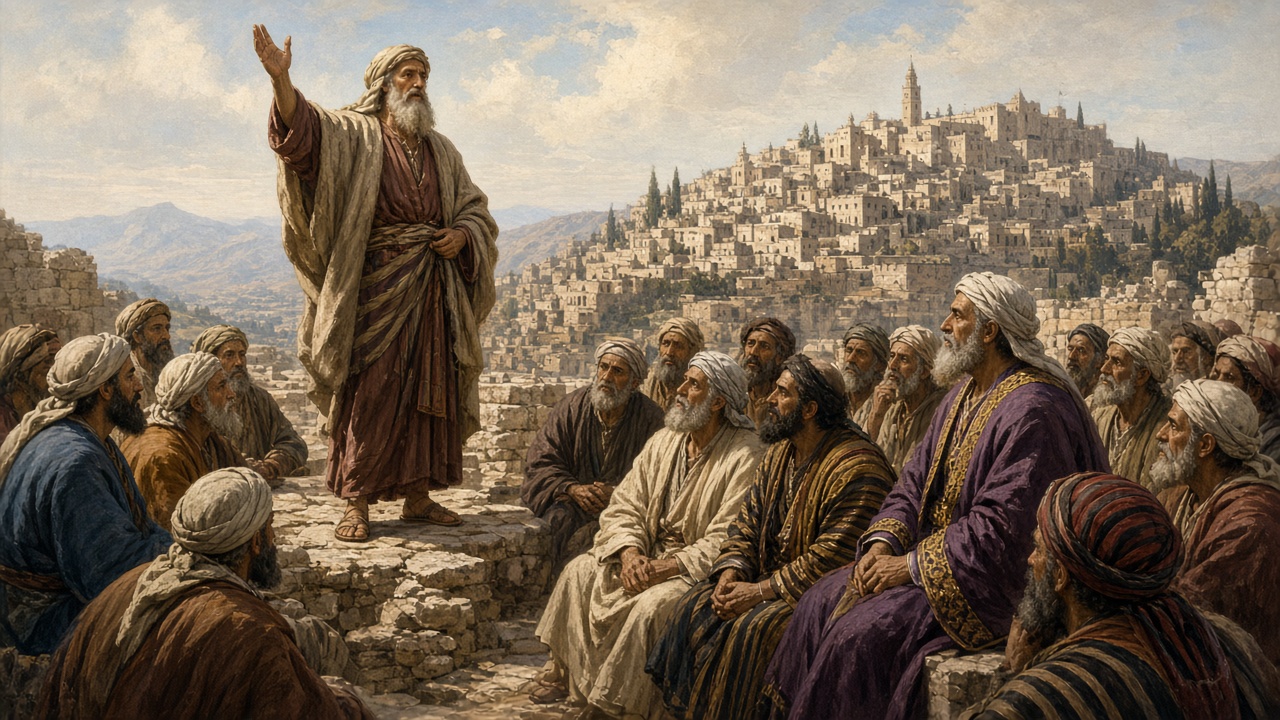
Acerca de este libro
Acerca de Miqueas
- Según la superscripción, tal como la registra el Easton's Bible Dictionary (1897), Miqueas ejerció su oficio en los reinados de Jotam, Acaz y Ezequías. Easton ofrece dos maneras de calcular ese ministerio: desde el comienzo del reinado de Jotam hasta el fin del de Ezequías (759-698 a. C.), unos cincuenta y nueve años, o desde la muerte de Jotam hasta la subida de Ezequías al trono (743-726 a. C.), solo dieciséis años.Fuentes: Easton: Micah, Book of
- El artículo de Easton sobre Miqueas lo llama el morastita, para distinguirlo de Micaías, hijo de Imla. Lo describe como profeta de Judá, contemporáneo de Isaías y natural de Moreset de Gat, y señala que se sabe muy poco de las circunstancias de su vida.Fuentes: Micah
- Los reyes nombrados en la superscripción gobernaron Judá en sucesión. Easton dice que Jotam, hijo de Uzías, reinó en el temor de Dios y prosperó; que Acaz se entregó a la idolatría y pidió ayuda a Tiglat-pileser de Asiria contra Rezín de Damasco y Peka de Israel; y que Ezequías, hijo de Acaz, llevó a cabo una reforma para abolir la idolatría en Judá, incluido el culto a la serpiente de bronce.Fuentes: Jotham · Ahaz · Hezekiah
- El Easton's Bible Dictionary (1897) sitúa el libro en sexto lugar entre los llamados profetas menores y describe tres secciones, cada una abierta con un reproche, "Oíd", y cerrada con una promesa: los capítulos 1-2; los capítulos 3-5, dirigidos especialmente a los príncipes y jefes del pueblo; y los capítulos 6-7, en los que se representa a Jehová en controversia con su pueblo. El conjunto concluye con un cántico de triunfo por la gran liberación que el Señor logrará para su pueblo.Fuentes: Easton: Micah, Book of
- Easton señala que el libro comienza con palabras también dichas por Micaías, hijo de Imla: "Oíd, pueblo, cada uno de vosotros". Recoge que la predicción de Miqueas 5:2 sobre el lugar en que Cristo había de nacer se cita en Mateo 2:6, y enumera otros vínculos: Miqueas 5:2 con Juan 7:42, Miqueas 7:6 con Mateo 10:21, 35-36, y el versículo final, Miqueas 7:20, con el cántico de Zacarías en Lucas 1:72-73.Fuentes: Easton: Micah, Book of
Notas escritas con ayuda de IA a partir de fuentes abiertas (Theographic Bible Metadata, CC BY-SA 4.0; Easton’s Bible Dictionary, dominio público) y revisadas antes de publicarse.
Judgment to Come
1This is the word of the LORD that came to Micah the Moreshite in the days of Jotham, Ahaz, and Hezekiah, kings of Judah—what he saw regarding Samaria and Jerusalem:
2Hear, O peoples, all of you;
listen, O earth, and everyone in it!
May the Lord GOD bear witness against you,
the Lord from His holy temple.
3For behold, the LORD comes forth
from His dwelling place;
He will come down and tread
on the high places of the earth.
4The mountains will melt beneath Him,
and the valleys will split apart,
like wax before the fire,
like water rushing down a slope.
5All this is for the transgression of Jacob
and the sins of the house of Israel.
What is the transgression of Jacob?
Is it not Samaria?
And what is the high place of Judah?
Is it not Jerusalem?
6Therefore I will make Samaria
a heap of rubble in the open field,
a planting area for a vineyard.
I will pour her stones into the valley
and expose her foundations.
7All her carved images will be smashed to pieces;
all her wages will be burned in the fire,
and I will destroy all her idols.
Since she collected the wages of a prostitute,
they will be used again on a prostitute.
Weeping and Mourning
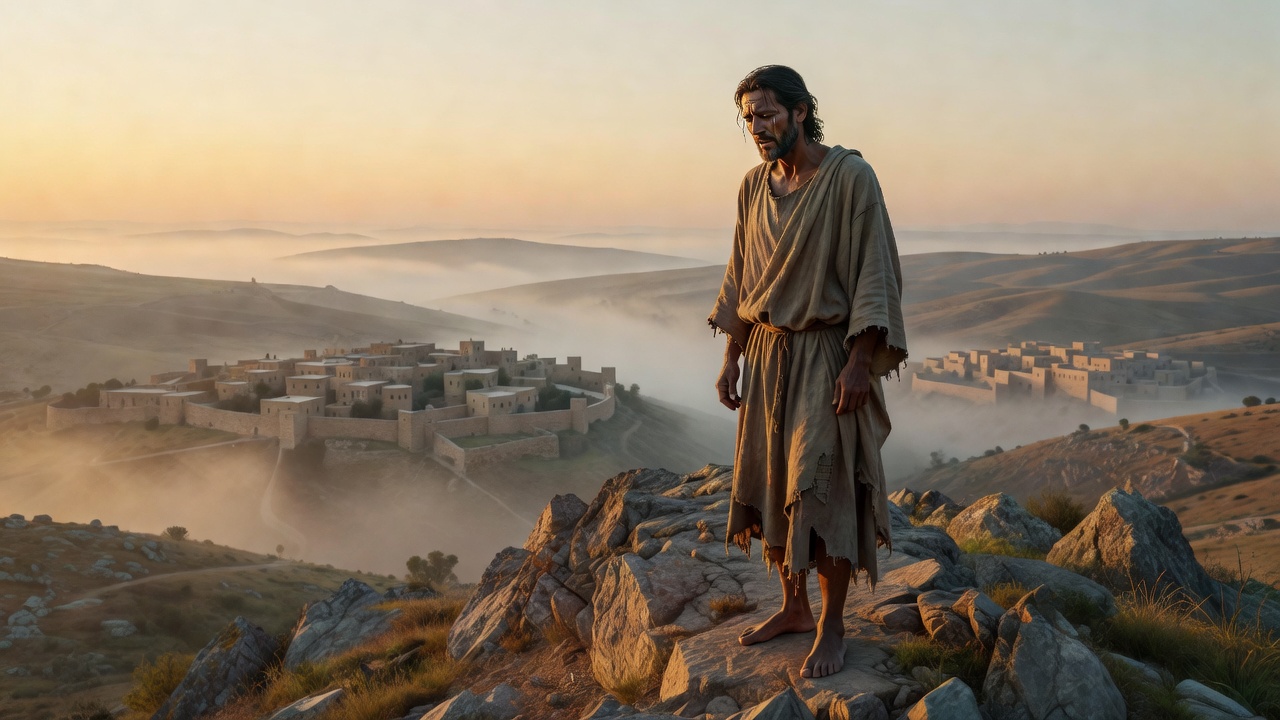
8Because of this I will lament and wail;
I will walk barefoot and naked.
I will howl like a jackal
and mourn like an ostrich.
9For her wound is incurable;
it has reached even Judah;
it has approached the gate of my people,
as far as Jerusalem itself.
10Do not tell it in Gath; do not weep at all.
Roll in the dust in Beth-leaphrah.
11Depart in shameful nakedness,
O dwellers of Shaphir.
The dwellers of Zaanan
will not come out.
Beth-ezel is in mourning;
its support is taken from you.
12For the dwellers of Maroth pined for good,
but calamity came down from the LORD,
even to the gate of Jerusalem.
13Harness your chariot horses,
O dweller of Lachish.
You were the beginning of sin to the Daughter of Zion,
for the transgressions of Israel were found in you.
14Therefore, send farewell gifts to Moresheth-gath;
the houses of Achzib will prove deceptive
to the kings of Israel.
15I will again bring a conqueror against you,
O dweller of Mareshah.
The glory of Israel will come to Adullam.
16Shave yourselves bald and cut off your hair
in mourning for your precious children;
make yourselves as bald as an eagle,
for they will go from you into exile.
¿Sabías que…?
El juicio sobre Samaria y Jerusalén
- Miqueas fue un profeta oriundo del pueblo de Moreset, en Judá, que ejerció su ministerio durante los reinados de Jotam, Acaz y Ezequías. Su mensaje de apertura proclama el inminente juicio divino tanto sobre Samaria, la capital del reino del norte de Israel, como sobre Jerusalén, la capital de Judá.Fuentes: Micah · el propio texto bíblico
- El capítulo incluye un lamento poético sobre varias poblaciones de las colinas bajas y llanuras de Judá, como Laquis, Zaanán y Bet-le-afrá (que significa casa de polvo, donde se indica a los habitantes que se revuelquen en el polvo). Miqueas advierte que la devastación que azota a Samaria avanzaría hasta las puertas de Jerusalén.Fuentes: Beth-le-aphrah · el propio texto bíblico
Notas escritas con ayuda de IA a partir de fuentes abiertas (Theographic Bible Metadata, CC BY-SA 4.0; Easton’s Bible Dictionary, dominio público) y revisadas antes de publicarse.
Lugares de este capítulo
- Jerusalem · 31.777, 35.234 · versículos 1, 5, 9, 12
- Samaria · 32.276, 35.195 · versículos 1, 5, 6, 9
- Lachish · Hoy: Tell ed Duweir · 31.565, 34.849 · versículo 13
- Zion · Hoy: Jerusalem · 31.777, 35.234 · versículo 13
- Mareshah · Hoy: Tel Maresha · 31.593, 34.898 · versículo 15
Solo aparecen lugares identificados con alta confianza (90 % o más según las fuentes académicas reunidas por OpenBible). Mapa de la época: DARE (Digital Atlas of the Roman Empire), CC BY 4.0; mapa actual: © colaboradores de OpenStreetMap; lugares: OpenBible.info (CC BY 4.0).
Créditos y licencia de esta traducción
Berean Standard Bible
The Holy Bible in English: Berean Standard Bible
Public Domain
Language: English
Contributor: BSB Publishing, LLC
2026-10-02
Fuente: http://ebible.org/engbsb/ · eBible.org