Mateo 11
Berean Standard Bible · Toca un versículo para ver sus referencias cruzadas.
John’s Inquiry
1After Jesus had finished instructing His twelve disciples, He went on from there to teach and preach in their cities.
2Meanwhile John heard in prison about the works of Christ, and he sent his disciples 3to ask Him, “Are You the One who was to come, or should we look for someone else?”
4Jesus replied, “Go back and report to John what you hear and see: 5The blind receive sight, the lame walk, the lepers are cleansed, the deaf hear, the dead are raised, and the good news is preached to the poor. 6Blessed is the one who does not fall away on account of Me.”
Jesus Testifies about John
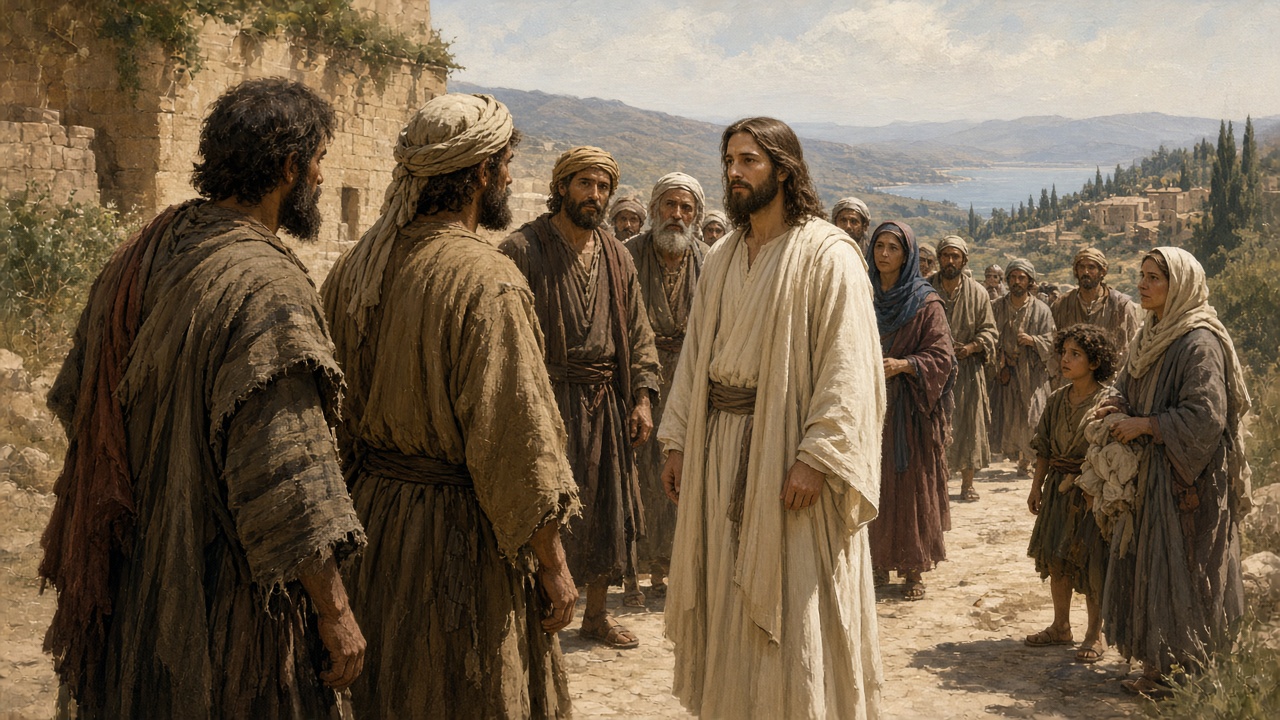
7As John’s disciples were leaving, Jesus began to speak to the crowds about John: “What did you go out into the wilderness to see? A reed swaying in the wind? 8Otherwise, what did you go out to see? A man dressed in fine clothes? Look, those who wear fine clothing are found in kings’ palaces. 9What then did you go out to see? A prophet? Yes, I tell you, and more than a prophet. 10This is the one about whom it is written:
‘Behold, I will send My messenger ahead of You,
who will prepare Your way before You.’
11Truly I tell you, among those born of women there has risen no one greater than John the Baptist. Yet even the least in the kingdom of heaven is greater than he. 12From the days of John the Baptist until now, the kingdom of heaven has been subject to violence, and the violent lay claim to it. 13For all the Prophets and the Law prophesied until John. 14And if you are willing to accept it, he is the Elijah who was to come.
15He who has ears, let him hear.
16To what can I compare this generation? They are like children sitting in the marketplaces and calling out to others:
17‘We played the flute for you,
and you did not dance;
we sang a dirge,
and you did not mourn.’
18For John came neither eating nor drinking, and they say, ‘He has a demon!’ 19The Son of Man came eating and drinking, and they say, ‘Look at this glutton and drunkard, a friend of tax collectors and sinners!’ But wisdom is vindicated by her actions.”
Woe to the Unrepentant
20Then Jesus began to denounce the cities in which most of His miracles had been performed, because they did not repent. 21“Woe to you, Chorazin! Woe to you, Bethsaida! For if the miracles that were performed in you had been performed in Tyre and Sidon, they would have repented long ago in sackcloth and ashes. 22But I tell you, it will be more bearable for Tyre and Sidon on the day of judgment than for you.
23And you, Capernaum, will you be lifted up to heaven? No, you will be brought down to Hades! For if the miracles that were performed in you had been performed in Sodom, it would have remained to this day. 24But I tell you that it will be more bearable for Sodom on the day of judgment than for you.”
Rest for the Weary
25At that time Jesus declared, “I praise You, Father, Lord of heaven and earth, because You have hidden these things from the wise and learned, and revealed them to little children. 26Yes, Father, for this was well-pleasing in Your sight.
27All things have been entrusted to Me by My Father. No one knows the Son except the Father, and no one knows the Father except the Son and those to whom the Son chooses to reveal Him.
28Come to Me, all you who are weary and burdened, and I will give you rest. 29Take My yoke upon you and learn from Me; for I am gentle and humble in heart, and you will find rest for your souls. 30For My yoke is easy and My burden is light.”
¿Sabías que…?
La pregunta de Juan y las ciudades que no se arrepintieron
- Desde la cárcel, Juan envió a sus discípulos a preguntar si Jesús era el que había de venir. Jesús dijo a las multitudes que Juan era más que un profeta —el mensajero enviado por delante para preparar el camino— y, si estaban dispuestos a aceptarlo, el Elías que había de venir. Un diccionario bíblico llama a Juan el precursor y dice que su misión ya era objeto de profecía, citando Isaías 40:3 y Malaquías 3:1; también presenta a Elías como el Elías del Nuevo Testamento.Fuentes: el propio texto bíblico · John the Baptist · Elijah
- Luego Jesús denunció a Corazín, Betsaida y Capernaúm, donde se había hecho la mayor parte de sus milagros, porque no se arrepintieron. Un diccionario identifica Corazín con la actual Kerazeh, a unas dos millas y media subiendo el uadi Kerazeh desde Capernaúm, y dice que Capernaúm, ausente del Antiguo Testamento, llegó a ser la propia ciudad de Jesús después de que dejó Nazaret. Sitúa Betsaida en el lado oriental del lago, dos millas río Jordán arriba, en Gaulanítide, ampliada por Felipe el tetrarca y llamada Julias por la hija del emperador, aunque algunos han supuesto que hubo una sola Betsaida, cerca de donde el Jordán entra en el lago.Fuentes: el propio texto bíblico · Chorazin · Capernaum · Bethsaida
- Contrastó esas ciudades con Tiro y Sidón, de las que dijo que se habrían arrepentido hace mucho, en cilicio y ceniza, y con Sodoma, de la que dijo que habría permanecido hasta hoy. Sidón, en la costa del Mediterráneo, a unas veinticinco millas al norte de Tiro, era la ciudad fenicia más antigua de allí y la ciudad madre de Tiro. Un diccionario afirma que el comercio del mundo entero se reunía en los almacenes de Tiro y que Sodoma, en el valle de Sidim, fue destruida por fuego del cielo de modo tan completo que no se ha hallado rastro de ella.Fuentes: el propio texto bíblico · Sidon · Tyre · Sodom
Notas escritas con ayuda de IA a partir de fuentes abiertas (Theographic Bible Metadata, CC BY-SA 4.0; Easton’s Bible Dictionary, dominio público) y revisadas antes de publicarse.
Lugares de este capítulo
- Galilee · 32.760, 35.527 · versículo 1
- Sidon · Hoy: Sandikli archaeological site in Sidon · 33.561, 35.372 · versículos 21, 22
- Tyre · 33.271, 35.196 · versículos 21, 22
Solo aparecen lugares identificados con alta confianza (90 % o más según las fuentes académicas reunidas por OpenBible). Mapa de la época: DARE (Digital Atlas of the Roman Empire), CC BY 4.0; mapa actual: © colaboradores de OpenStreetMap; lugares: OpenBible.info (CC BY 4.0).
Créditos y licencia de esta traducción
Berean Standard Bible
The Holy Bible in English: Berean Standard Bible
Public Domain
Language: English
Contributor: BSB Publishing, LLC
2026-10-02
Fuente: http://ebible.org/engbsb/ · eBible.org