Jeremías 47
Berean Standard Bible · Toca un versículo para ver sus referencias cruzadas.
Judgment on the Philistines
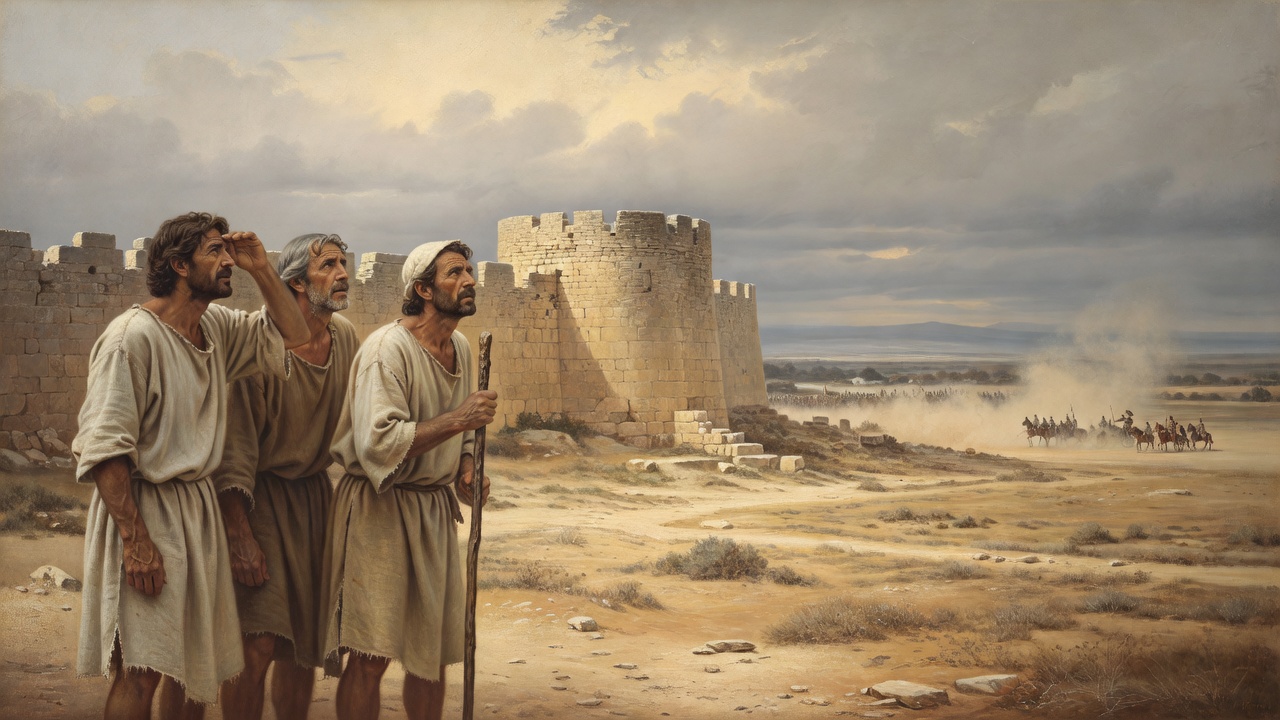
1This is the word of the LORD that came to Jeremiah the prophet about the Philistines before Pharaoh struck down Gaza. 2This is what the LORD says:
“See how the waters are rising from the north
and becoming an overflowing torrent.
They will overflow the land and its fullness,
the cities and their inhabitants.
The people will cry out,
and all who dwell in the land will wail
3at the sound of the galloping hooves of stallions,
the rumbling of chariots,
and the clatter of their wheels.
The fathers will not turn back for their sons;
their hands will hang limp.
4For the day has come
to destroy all the Philistines,
to cut off from Tyre and Sidon
every remaining ally.
Indeed, the LORD is about to destroy the Philistines,
the remnant from the coasts of Caphtor.
5The people of Gaza will shave their heads in mourning;
Ashkelon will be silenced.
O remnant of their valley,
how long will you gash yourself?
6‘Alas, O sword of the LORD,
how long until you rest?
Return to your sheath;
cease and be still!’
7How can it rest
when the LORD has commanded it?
He has appointed it against Ashkelon
and the shore of its coastland.”
¿Sabías que…?
Juicio sobre los Filisteos
- Jeremías se refiere a los filisteos como el remanente de las costas de Caftor. Las tradiciones bíblicas identifican a Caftor como la tierra de origen de los filisteos, un lugar que muchos eruditos asocian con Creta o con zonas de la costa del Mediterráneo oriental.Fuentes: el propio texto bíblico · Caphtor
- El capítulo dirige sus advertencias contra Gaza y Ascalón, dos de las cinco ciudades filisteas destacadas a lo largo de la costa mediterránea. Ambas eran antiguos centros conocidos por su posición estratégica y rutas comerciales que conectaban Egipto con las regiones vecinas.Fuentes: el propio texto bíblico · Gaza · Ashkelon
- La profecía señala que la destrucción inminente cortaría a todos los aliados restantes de Tiro y Sidón. Estos dos importantes puertos fenicios al norte eran centros marítimos cruciales cuyos intereses estaban estrechamente ligados a la región costera.Fuentes: el propio texto bíblico · Tyre · Sidon
Notas escritas con ayuda de IA a partir de fuentes abiertas (Theographic Bible Metadata, CC BY-SA 4.0; Easton’s Bible Dictionary, dominio público) y revisadas antes de publicarse.
Lugares de este capítulo
- Gaza · Hoy: Tell Harube · 31.504, 34.464 · versículos 1, 5
- Sidon · Hoy: Sandikli archaeological site in Sidon · 33.561, 35.372 · versículo 4
- Tyre · 33.271, 35.196 · versículo 4
- Ashkelon · Hoy: Tel Ashkelon · 31.664, 34.546 · versículos 5, 7
- Great Sea · Hoy: Mediterranean Sea · 31.805, 34.170 · versículo 5
- Philistia · 31.664, 34.546 · versículo 5
Solo aparecen lugares identificados con alta confianza (90 % o más según las fuentes académicas reunidas por OpenBible). Mapa de la época: DARE (Digital Atlas of the Roman Empire), CC BY 4.0; mapa actual: © colaboradores de OpenStreetMap; lugares: OpenBible.info (CC BY 4.0).
Créditos y licencia de esta traducción
Berean Standard Bible
The Holy Bible in English: Berean Standard Bible
Public Domain
Language: English
Contributor: BSB Publishing, LLC
2026-10-02
Fuente: http://ebible.org/engbsb/ · eBible.org