Jueces 1
Berean Standard Bible · Toca un versículo para ver sus referencias cruzadas.
Acerca de este libro
Sobre Jueces
- El libro se llama Jueces porque contiene la historia de la liberación y del gobierno de Israel por los hombres que llevaban ese título. El diccionario bíblico de Easton (1897) sitúa esa historia en repetidos tiempos de servidumbre bajo pueblos vecinos y de liberación por los jueces, y afirma que la cronología de todo el período es incierta.Fuentes: Easton: Judges, Book of
- El diccionario bíblico de Easton (1897) sostiene que el autor fue muy probablemente Samuel y que el libro se compuso probablemente durante el reinado de Saúl o al comienzo mismo del reinado de David. Easton señala que las palabras de Jueces 18:30–31 implican una fecha posterior a la toma del arca por los filisteos y a su colocación en Nob, mientras que en el reinado de David el arca estaba en Gabaón.Fuentes: Easton: Judges, Book of
- Según el esquema de Easton, el libro tiene una introducción (1–3:6) que lo enlaza con el relato de Josué, la historia de trece jueces (3:7–16:31) en cuatro períodos y un apéndice (capítulos 17–21) sin conexión formal con lo anterior. Si se incluyen Elí y Samuel, Easton cuenta quince jueces.Fuentes: Easton: Judges, Book of
- El esquema de Easton presenta el marco histórico como una sucesión de servidumbres: bajo Cusan-risataim de Mesopotamia, bajo Eglón de Moab, bajo Jabín de Hazor en Canaán, bajo Madián con Amalec y los hijos del oriente, bajo los amonitas junto con los filisteos, y de nuevo bajo los filisteos. Gedeón, llamado también Jerobaal, abre lo que Easton llama el segundo período; Jefté, traído de Tob por los ancianos de Galaad, juzgó a Israel seis años después de librar al pueblo de los amonitas; Sansón, hijo de Manoa, de Zora, fue nazareo de Dios desde su nacimiento.Fuentes: Easton: Judges, Book of · Gideon · Jephthah · Samson
- El apéndice registra la conquista de Lais por una parte de la tribu de Dan y la casi extinción de Benjamín a manos de las demás tribus, porque Benjamín había ayudado a los hombres de Gabaa. Easton sitúa estos hechos apenas unos años después de la muerte de Josué y dice que muestran la degeneración religiosa y moral del pueblo. Easton también señala que Rut formaba originalmente parte de Jueces y fue separada hacia el año 450 d.C., para quedar en las Escrituras hebreas inmediatamente después del Cantar de los Cantares.Fuentes: Easton: Judges, Book of · Gibeah
Notas escritas con ayuda de IA a partir de fuentes abiertas (Theographic Bible Metadata, CC BY-SA 4.0; Easton’s Bible Dictionary, dominio público) y revisadas antes de publicarse.
The Conquest of Canaan Proceeds
1After the death of Joshua, the Israelites inquired of the LORD, “Who will be the first to go up and fight for us against the Canaanites?”
2“Judah shall go up,” answered the LORD. “Indeed, I have delivered the land into their hands.”
3Then the men of Judah said to their brothers the Simeonites, “Come up with us to our allotted territory, and let us fight against the Canaanites. And we likewise will go with you to your territory.” So the Simeonites went with them.
4When Judah attacked, the LORD delivered the Canaanites and Perizzites into their hands, and they struck down ten thousand men at Bezek. 5And there they found Adoni-bezek and fought against him, striking down the Canaanites and Perizzites.
6As Adoni-bezek fled, they pursued him, seized him, and cut off his thumbs and big toes. 7Then Adoni-bezek said, “Seventy kings with their thumbs and big toes cut off have gathered the scraps under my table. As I have done to them, so God has repaid me.” And they brought him to Jerusalem, where he died.
The Capture of Jerusalem and Hebron
8Then the men of Judah fought against Jerusalem and captured it. They put the city to the sword and set it on fire. 9Afterward, the men of Judah marched down to fight against the Canaanites living in the hill country, in the Negev, and in the foothills.
10Judah also marched against the Canaanites who were living in Hebron (formerly known as Kiriath-arba), and they struck down Sheshai, Ahiman, and Talmai.
11From there they marched against the inhabitants of Debir (formerly known as Kiriath-sepher). 12And Caleb said, “To the man who strikes down Kiriath-sepher and captures it, I will give my daughter Acsah in marriage.” 13So Othniel son of Caleb’s younger brother Kenaz captured the city, and Caleb gave his daughter Acsah to him in marriage.
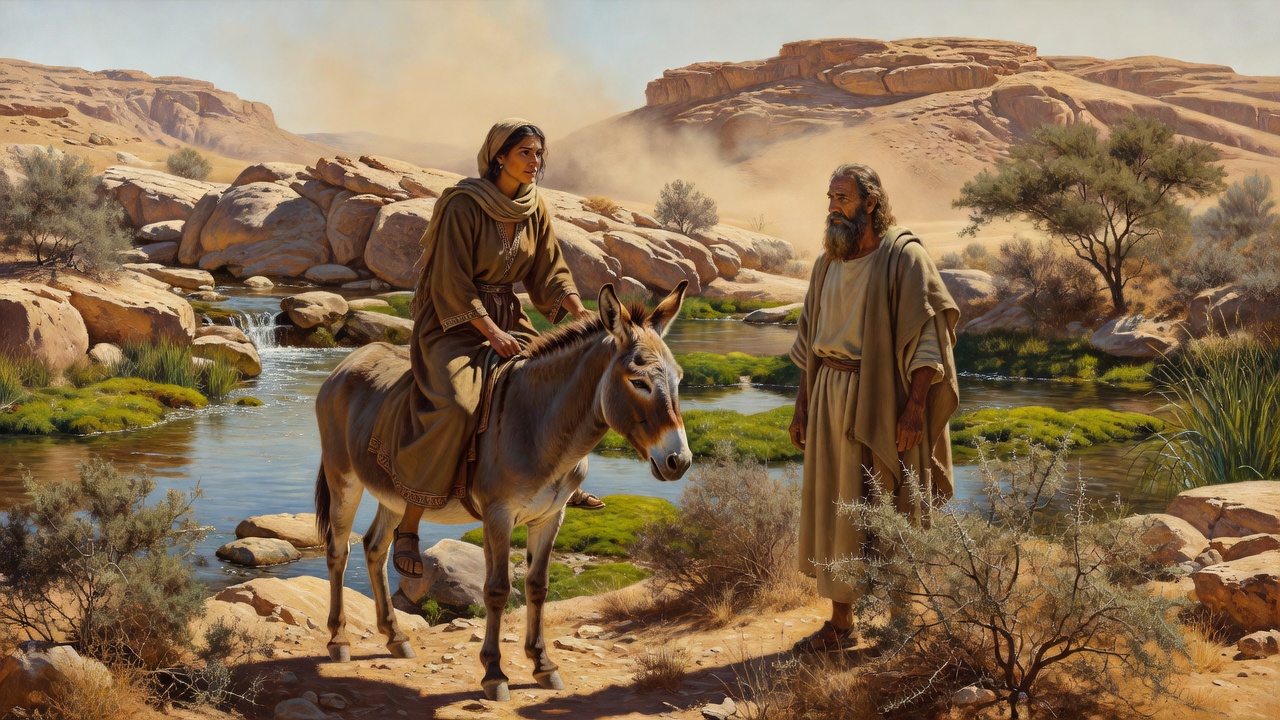
14One day Acsah came to Othniel and urged him to ask her father for a field. When she got off her donkey, Caleb asked her, “What do you desire?”
15“Give me a blessing,” she answered. “Since you have given me land in the Negev, give me springs of water as well.”
So Caleb gave her both the upper and lower springs.
16Now the descendants of Moses’ father-in-law, the Kenite, went up with the men of Judah from the City of Palms to the Wilderness of Judah in the Negev near Arad. They went to live among the people.
17Then the men of Judah went with their brothers the Simeonites, attacked the Canaanites living in Zephath, and devoted the city to destruction. So it was called Hormah. 18And Judah also captured Gaza, Ashkelon, and Ekron—each with its territory. 19The LORD was with Judah, and they took possession of the hill country; but they could not drive out the inhabitants of the plains because they had chariots of iron.
20Just as Moses had promised, Judah gave Hebron to Caleb, who drove out the descendants of the three sons of Anak.
21The Benjamites, however, failed to drive out the Jebusites living in Jerusalem. So to this day the Jebusites live there among the Benjamites.
22The house of Joseph also attacked Bethel, and the LORD was with them. 23They sent spies to Bethel (formerly known as Luz), 24and when the spies saw a man coming out of the city, they said to him, “Please show us how to get into the city, and we will treat you kindly.”
25So the man showed them the entrance to the city, and they put the city to the sword but released that man and all his family. 26And the man went to the land of the Hittites, built a city, and called it Luz, which is its name to this day.
The Failure to Complete the Conquest
27At that time Manasseh failed to drive out the inhabitants of Beth-shean, Taanach, Dor, Ibleam, Megiddo, and their villages; for the Canaanites were determined to dwell in that land. 28When Israel became stronger, they pressed the Canaanites into forced labor, but they never drove them out completely.
29Ephraim also failed to drive out the Canaanites living in Gezer; so the Canaanites continued to dwell among them in Gezer.
30Zebulun failed to drive out the inhabitants of Kitron and Nahalol; so the Canaanites lived among them and served as forced laborers.
31Asher failed to drive out the inhabitants of Acco, Sidon, Ahlab, Achzib, Helbah, Aphik, and Rehob. 32So the Asherites lived among the Canaanite inhabitants of the land, because they did not drive them out.
33Naphtali failed to drive out the inhabitants of Beth-shemesh and Beth-anath. So the Naphtalites also lived among the Canaanite inhabitants of the land, but the inhabitants of Beth-shemesh and Beth-anath served them as forced laborers.
34The Amorites forced the Danites into the hill country and did not allow them to come down into the plain. 35And the Amorites were determined to dwell in Mount Heres, Aijalon, and Shaalbim. But when the house of Joseph grew in strength, they pressed the Amorites into forced labor. 36And the border of the Amorites extended from the Ascent of Akrabbim to Sela and beyond.
¿Sabías que…?
Las primeras conquistas y desafíos de Israel
- Como el Neguev era una región árida en el sur, Acsa, la hija de Caleb, le pidió a su padre manantiales de agua además de la tierra que le había asignado, recibiendo tanto las fuentes de arriba como las de abajo.Fuentes: el propio texto bíblico · Achsah · Negeb
- La narración registra los antiguos nombres cananeos de varios lugares conquistados, incluidos Hebrón (antes Quiriat-arba), Debir (antes Quiriat-séfer) y Betel (originalmente Luz).Fuentes: el propio texto bíblico · Hebron · Bethel (of Palestine)
- Aunque la tribu de Judá tomó el control de la región montañosa, no pudo expulsar a los habitantes de los llanos porque aquellos defensores contaban con carros de hierro.Fuentes: el propio texto bíblico
Notas escritas con ayuda de IA a partir de fuentes abiertas (Theographic Bible Metadata, CC BY-SA 4.0; Easton’s Bible Dictionary, dominio público) y revisadas antes de publicarse.
Lugares de este capítulo
- Jerusalem · 31.777, 35.234 · versículos 7, 8, 21
- Negeb · 31.245, 34.841 · versículos 9, 15, 16
- Shephelah · 31.692, 34.875 · versículo 9
- Hebron · Hoy: Tel Rumeida · 31.525, 35.102 · versículos 10, 20
- Gulloth-mayim · Hoy: within 5 km of Khirbet Rabud · 31.432, 35.015 · versículo 15
- Lower Gulloth · Hoy: within 5 km of Khirbet Rabud · 31.432, 35.015 · versículo 15
- Upper Gulloth · Hoy: within 5 km of Khirbet Rabud · 31.432, 35.015 · versículo 15
- Jericho · Hoy: Tell es Sultan · 31.872, 35.445 · versículo 16
- Zephath · Hoy: Tel Masos · 31.212, 34.958 · versículo 17
- Ashkelon · Hoy: Tel Ashkelon · 31.664, 34.546 · versículo 18
- Ekron · Hoy: Tel Miqne · 31.777, 34.852 · versículo 18
- Gaza · Hoy: Tell Harube · 31.504, 34.464 · versículo 18
- Luz · Hoy: Beitin · 31.923, 35.241 · versículo 23
- Megiddo · Hoy: Tel Megiddo · 32.585, 35.184 · versículo 27
- Taanach · Hoy: Tell Ta’anakh · 32.522, 35.219 · versículo 27
- Gezer · Hoy: Tel Gezer · 31.859, 34.919 · versículo 29
- Acco · Hoy: Tel Akko · 32.921, 35.088 · versículo 31
- Sidon · Hoy: Sandikli archaeological site in Sidon · 33.561, 35.372 · versículo 31
Solo aparecen lugares identificados con alta confianza (90 % o más según las fuentes académicas reunidas por OpenBible). Mapa de la época: DARE (Digital Atlas of the Roman Empire), CC BY 4.0; mapa actual: © colaboradores de OpenStreetMap; lugares: OpenBible.info (CC BY 4.0).
Créditos y licencia de esta traducción
Berean Standard Bible
The Holy Bible in English: Berean Standard Bible
Public Domain
Language: English
Contributor: BSB Publishing, LLC
2026-10-02
Fuente: http://ebible.org/engbsb/ · eBible.org