Santiago 1
Berean Standard Bible · Toca un versículo para ver sus referencias cruzadas.
Acerca de este libro
Acerca de Santiago
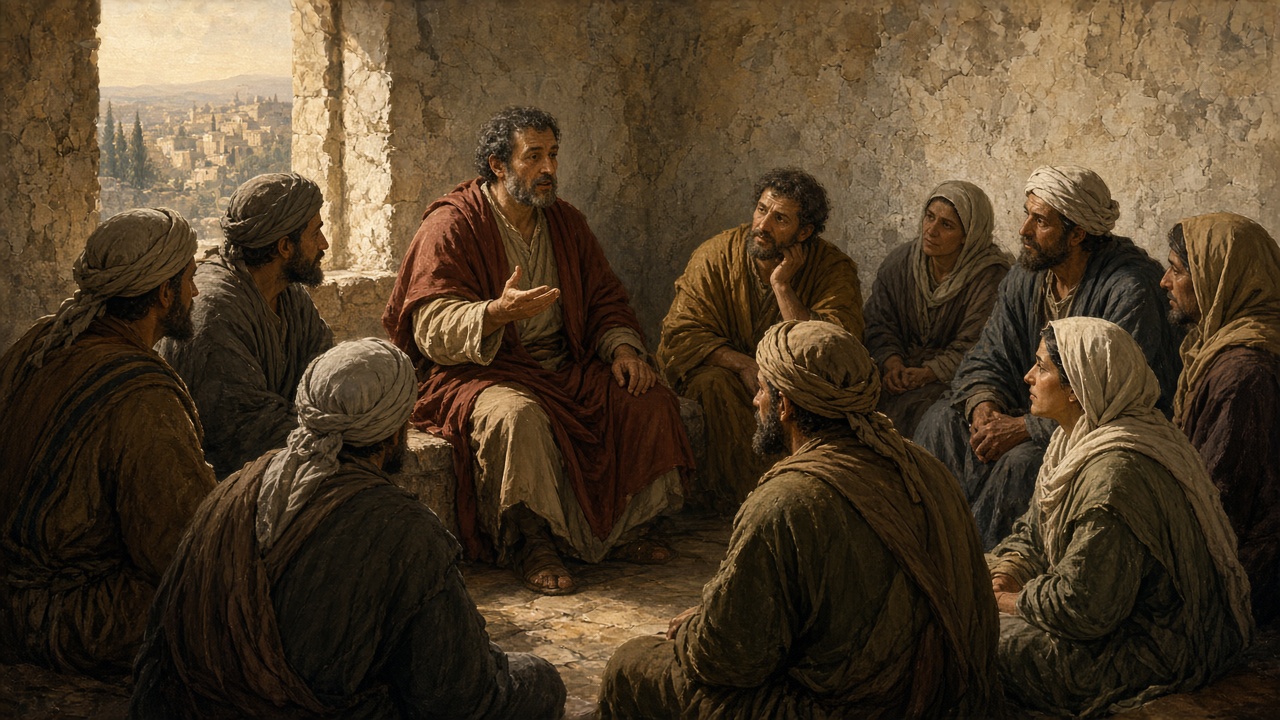
- El Diccionario Bíblico de Easton (1897) identifica al autor como Santiago el Menor, hermano del Señor y uno de los doce apóstoles, y como uno de los tres pilares de la Iglesia. Una entrada relacionada lo llama hijo de Alfeo, o Cleofás, pariente cercano de Jesús, apodado "el Menor" o "el Pequeño", probablemente por ser bajo de estatura, y afirma que este Santiago escribió la carta que lleva su nombre.Fuentes: Easton: James, Epistle of · James (Brother of Jesus)
- El Diccionario Bíblico de Easton (1897) sitúa la redacción en Jerusalén, donde Santiago vivía, y, a partir de indicios internos, en el período entre los dos encarcelamientos de Pablo en Roma, probablemente hacia el año 62 d.C.Fuentes: Easton: James, Epistle of
- La carta está dirigida a los judíos de la dispersión, "las doce tribus esparcidas". El mismo Santiago es descrito como cabeza de la iglesia en Jerusalén, donde presidió el concilio que consideró el caso de los gentiles.Fuentes: Easton: James, Epistle of · James (Brother of Jesus)
- Según Easton, el autor buscaba inculcar los deberes prácticos de la vida cristiana, advirtiendo contra el formalismo, el fanatismo, el fatalismo, el inclinarse ante los ricos, el uso falso de las palabras y los juramentos, el partidismo, la maledicencia, la jactancia y la opresión. Presenta como gran lección la paciencia en la prueba, en las buenas obras y bajo provocación, opresión y persecución, fundada en la cercanía de la venida del Señor, que habría de enderezar los entuertos.Fuentes: Easton: James, Epistle of
- Una entrada sobre Job lo cita, en relación con esta carta, como ejemplo para las generaciones posteriores de integridad y de paciencia sumisa en las calamidades más severas.Fuentes: Job
Notas escritas con ayuda de IA a partir de fuentes abiertas (Theographic Bible Metadata, CC BY-SA 4.0; Easton’s Bible Dictionary, dominio público) y revisadas antes de publicarse.
A Greeting from James
1James, a servant of God and of the Lord Jesus Christ,
To the twelve tribes of the Dispersion:
Greetings.
Rejoicing in Trials
2Consider it pure joy, my brothers, when you encounter trials of many kinds, 3because you know that the testing of your faith develops perseverance. 4Allow perseverance to finish its work, so that you may be mature and complete, not lacking anything.
5Now if any of you lacks wisdom, he should ask God, who gives generously to all without finding fault, and it will be given to him. 6But he must ask in faith, without doubting, because he who doubts is like a wave of the sea, blown and tossed by the wind. 7That man should not expect to receive anything from the Lord. 8He is a double-minded man, unstable in all his ways.
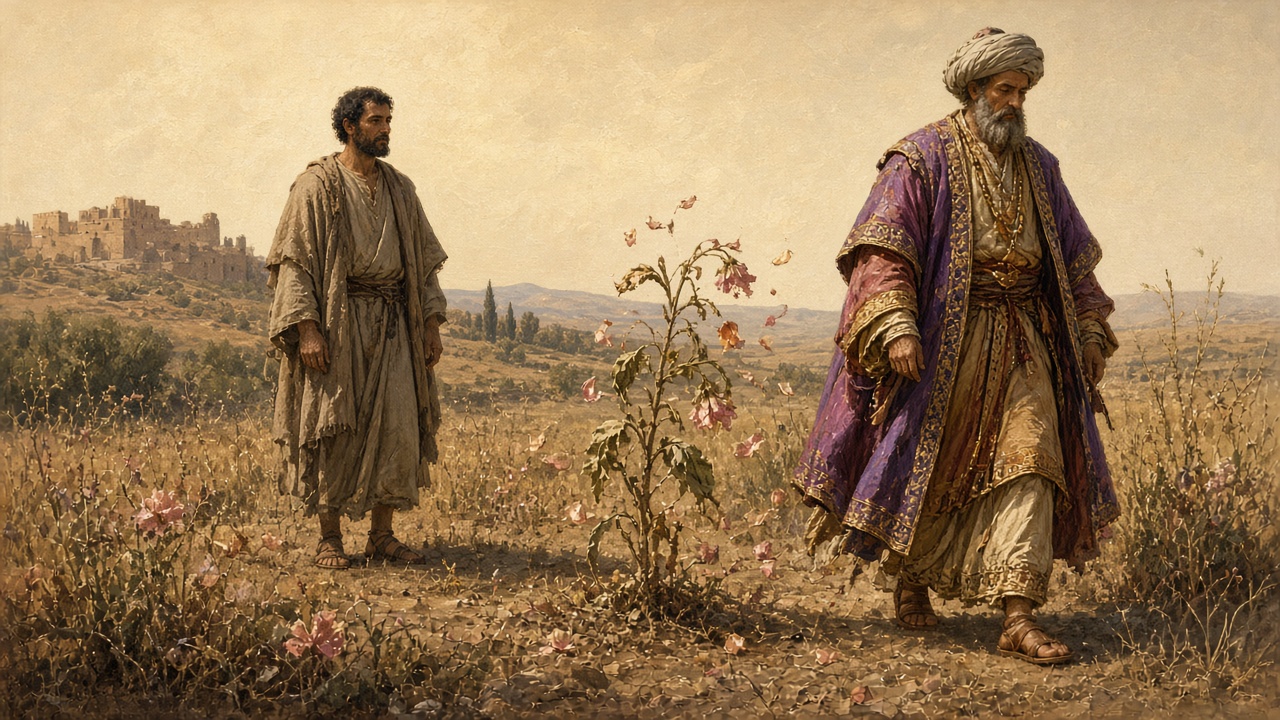
9The brother in humble circumstances should exult in his high position. 10But the one who is rich should exult in his low position, because he will pass away like a flower of the field. 11For the sun rises with scorching heat and withers the plant; its flower falls and its beauty is lost. So too, the rich man will fade away in the midst of his pursuits.
12Blessed is the man who perseveres under trial, because when he has stood the test, he will receive the crown of life that God has promised to those who love Him.
Good and Perfect Gifts
13When tempted, no one should say, “God is tempting me.” For God cannot be tempted by evil, nor does He tempt anyone. 14But each one is tempted when by his own evil desires he is lured away and enticed. 15Then after desire has conceived, it gives birth to sin; and sin, when it is full-grown, gives birth to death.
16Do not be deceived, my beloved brothers. 17Every good and perfect gift is from above, coming down from the Father of the heavenly lights, with whom there is no change or shifting shadow. 18He chose to give us birth through the word of truth, that we would be a kind of firstfruits of His creation.
Hearing and Doing
19My beloved brothers, understand this: Everyone should be quick to listen, slow to speak, and slow to anger, 20for man’s anger does not bring about the righteousness that God desires. 21Therefore, get rid of all moral filth and every expression of evil, and humbly accept the word planted in you, which can save your souls.
22Be doers of the word, and not hearers only. Otherwise, you are deceiving yourselves. 23For anyone who hears the word but does not carry it out is like a man who looks at his face in a mirror, 24and after observing himself goes away and immediately forgets what he looks like. 25But the one who looks intently into the perfect law of freedom, and continues to do so—not being a forgetful hearer, but an effective doer—he will be blessed in what he does.
26If anyone considers himself religious and yet does not bridle his tongue, he deceives his heart and his religion is worthless. 27Pure and undefiled religion before our God and Father is this: to care for orphans and widows in their distress, and to keep oneself from being polluted by the world.
¿Sabías que…?
Pruebas y religión pura
- La carta comienza en nombre de “Santiago, siervo de Dios y del Señor Jesucristo”. Un relato tradicional lo identifica como hijo de Alfeo, o Cleofás, llamado Santiago “el Menor” o “el Pequeño”, probablemente porque era de baja estatura, y como hermano, pariente cercano o primo de Jesús. Ese relato dice que parece haber encabezado la iglesia en Jerusalén y que presidió el concilio reunido para considerar el caso de los gentiles.Fuentes: James (Brother of Jesus) · el propio texto bíblico
- Se dirige a “las doce tribus de la Dispersión” y las saluda como hermanos. Trata las pruebas de muchas clases como una prueba de la fe que desarrolla la perseverancia, pero advierte que nadie, al ser tentado, debe decir: “Dios me está tentando”, porque Dios no tienta a nadie.Fuentes: el propio texto bíblico
- El rico, dice, debe gloriarse en su baja posición, porque pasará como la flor del campo cuando el sol sale con calor abrasador y marchita la planta. La religión pura y sin mancha, en sus palabras, consiste en cuidar de los huérfanos y de las viudas en su aflicción y en guardarse de ser contaminado por el mundo.Fuentes: el propio texto bíblico
Notas escritas con ayuda de IA a partir de fuentes abiertas (Theographic Bible Metadata, CC BY-SA 4.0; Easton’s Bible Dictionary, dominio público) y revisadas antes de publicarse.
Créditos y licencia de esta traducción
Berean Standard Bible
The Holy Bible in English: Berean Standard Bible
Public Domain
Language: English
Contributor: BSB Publishing, LLC
2026-10-02
Fuente: http://ebible.org/engbsb/ · eBible.org