Hageo 1
Berean Standard Bible · Toca un versículo para ver sus referencias cruzadas.
Acerca de este libro
Sobre Hageo
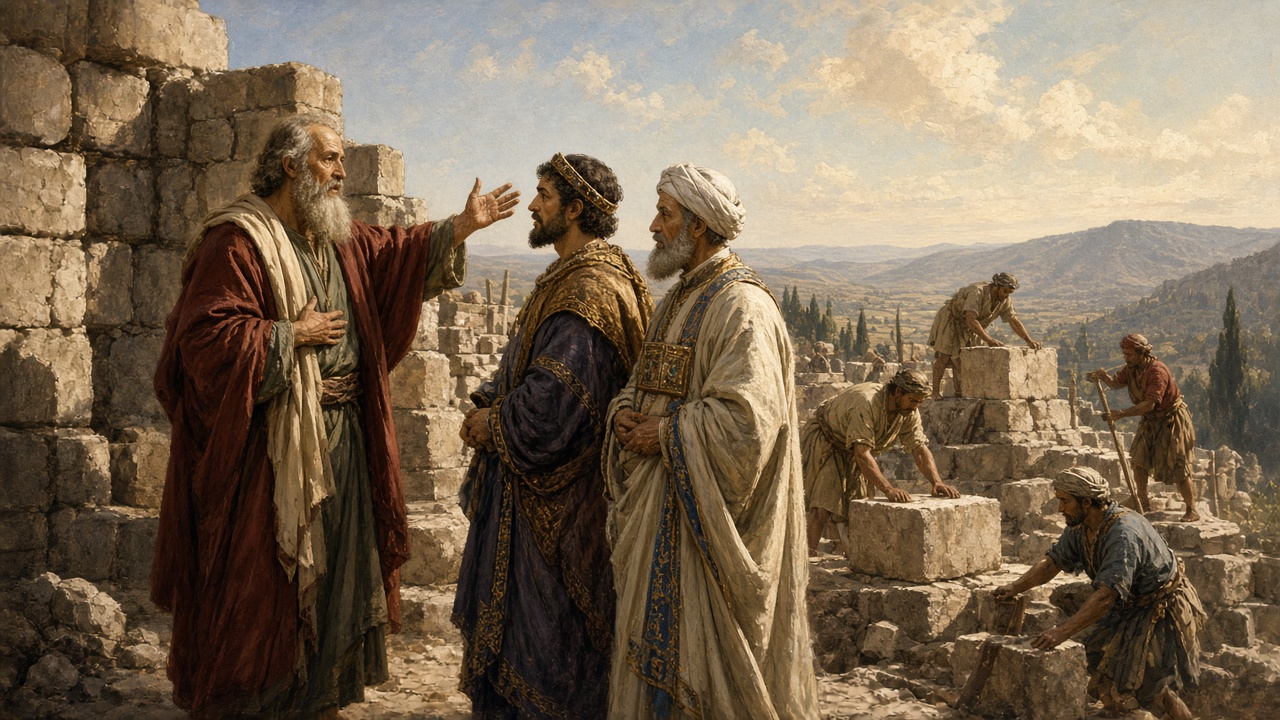
- El Easton's Bible Dictionary (1897) presenta a Hageo, cuyo nombre el diccionario explica como “festivo”, como uno de los doce llamados profetas menores. Fue el primero de tres cuyo ministerio perteneció al período de la historia judía que comenzó después del regreso del cautiverio en Babilonia; Zacarías fue su contemporáneo y, en ese relato, Malaquías vino unos cien años después. Casi nada se sabe de su historia personal: puede haber sido uno de los cautivos llevados a Babilonia por Nabucodonosor, y comenzó su ministerio unos dieciséis años después del Regreso.Fuentes: Easton: Haggai · Haggai
- Una nota biográfica llama a Zorobabel hijo de Salatiel y también hijo de Pedaías, y explica esto último como nieto o sobrino de Salatiel. En el primer año de Ciro, rey de Persia, condujo el primer grupo de judíos que regresaban, cuarenta y dos mil trescientas sesenta personas además de un gran número de siervos, al cabo de setenta años de cautiverio. En el segundo año después del Regreso levantó un altar y puso el cimiento del templo sobre las ruinas del templo destruido por Nabucodonosor; la misma nota también le da el nombre persa Sesbasar.Fuentes: Zerubbabel · Shealtiel
- Easton afirma que la reconstrucción del templo fue detenida por las intrigas de los samaritanos y, tras quince años de suspensión, se reanudó por los esfuerzos de Hageo y Zacarías. Con sus exhortaciones, despertaron al pueblo de su letargo y lo indujeron a aprovechar una oportunidad favorable surgida de un cambio en la política del gobierno persa. Josué, hijo de Josadac, era el sumo sacerdote de los judíos bajo Zorobabel y es nombrado con él en Hageo.Fuentes: Easton: Haggai · Haggai · Joshua
- El Easton's Bible Dictionary caracteriza las profecías de Hageo por una dignidad sencilla y grave y por una repetición enfática dirigida por igual al príncipe, al sacerdote y al pueblo: “Esforzaos” (Hageo 2:4) y “Considerad vuestros caminos” (1:5, 7; 2:15, 18). Citando a Stanley, presenta esos estribillos como un apremio para que los oyentes examinaran su propio corazón y su propia conciencia y se aferraran a la obra que tenían que hacer.Fuentes: Easton: Haggai
Notas escritas con ayuda de IA a partir de fuentes abiertas (Theographic Bible Metadata, CC BY-SA 4.0; Easton’s Bible Dictionary, dominio público) y revisadas antes de publicarse.
A Call to Rebuild the Temple
1In the second year of the reign of Darius, on the first day of the sixth month, the word of the LORD came through Haggai the prophet to Zerubbabel son of Shealtiel, governor of Judah, and to Joshua son of Jehozadak, the high priest, stating 2that this is what the LORD of Hosts says:
“These people say, ‘The time has not yet come
to rebuild the house of the LORD.’”
3Then the word of the LORD came through Haggai the prophet, saying:
4“Is it a time for you yourselves
to live in your paneled houses,
while this house lies in ruins?”
5Now this is what the LORD of Hosts says:
“Consider carefully your ways.
6You have planted much
but harvested little.
You eat but never have enough.
You drink but never have your fill.
You put on clothes but never get warm.
You earn wages to put into a bag pierced through.”
7This is what the LORD of Hosts says:
“Consider carefully your ways.
8Go up into the hills,
bring down lumber, and build the house,
so that I may take pleasure in it and be glorified,
says the LORD.
9You expected much,
but behold, it amounted to little.
And what you brought home, I blew away.
Why? declares the LORD of Hosts.
Because My house still lies in ruins,
while each of you is busy
with his own house.
10Therefore, on account of you
the heavens have withheld their dew
and the earth has withheld its crops.
11I have summoned a drought
on the fields and on the mountains,
on the grain, new wine, and oil,
and on whatever the ground yields,
on man and beast,
and on all the labor of your hands.”
The People Obey
12Then Zerubbabel son of Shealtiel and Joshua son of Jehozadak, the high priest, as well as all the remnant of the people, obeyed the voice of the LORD their God and the words of the prophet Haggai, because the LORD their God had sent him. So the people feared the LORD.
13Haggai, the messenger of the LORD, delivered the message of the LORD to the people:
“I am with you,”
declares the LORD.
14So the LORD stirred the spirit of Zerubbabel son of Shealtiel, governor of Judah, and the spirit of Joshua son of Jehozadak, the high priest, as well as the spirit of all the remnant of the people. And they came and began the work on the house of the LORD of Hosts, their God, 15on the twenty-fourth day of the sixth month, in the second year of King Darius.
¿Sabías que…?
El Llamado a Reconstruir el Templo
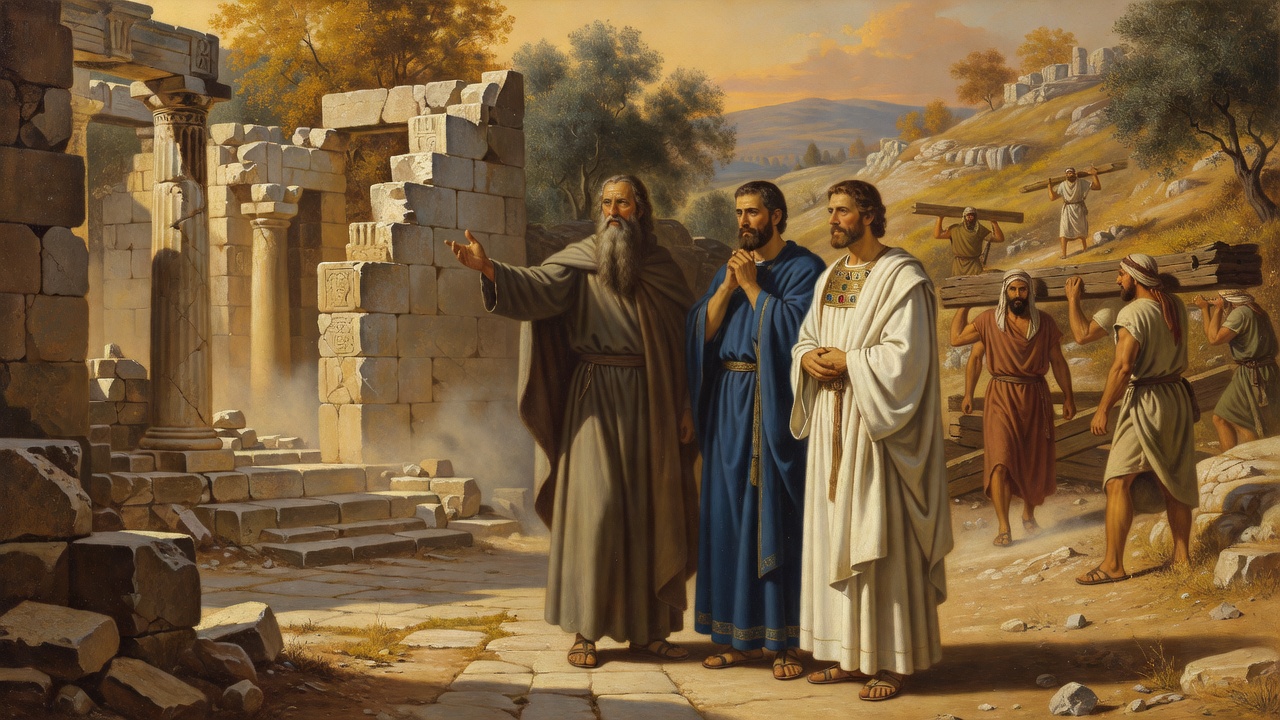
- Hageo comenzó su ministerio profético en el segundo año del rey persa Darío, unos dieciséis años después del regreso del cautiverio en Babilonia. La reconstrucción del templo había estado suspendida durante quince años mientras la gente se ocupaba en construir sus propias casas artesonadas, lo que motivó a Hageo a instarlos a reanudar la obra.Fuentes: el propio texto bíblico · Haggai
- El mensaje profético se dirigió a Zorobabel hijo de Salatiel, gobernador de Judá que había liderado el primer contingente de repatriados de Babilonia, y a Josué hijo de Josadac, el sumo sacerdote. Poco más de tres semanas después de las palabras de Hageo, los líderes y el resto del pueblo obedecieron y reiniciaron la construcción del templo.Fuentes: el propio texto bíblico · Zerubbabel · Joshua
- Hageo fue el primero de los tres profetas cuyo ministerio correspondió al período posterior al exilio babilónico, junto con su contemporáneo Zacarías y, aproximadamente un siglo más tarde, Malaquías.Fuentes: Haggai
Notas escritas con ayuda de IA a partir de fuentes abiertas (Theographic Bible Metadata, CC BY-SA 4.0; Easton’s Bible Dictionary, dominio público) y revisadas antes de publicarse.
Créditos y licencia de esta traducción
Berean Standard Bible
The Holy Bible in English: Berean Standard Bible
Public Domain
Language: English
Contributor: BSB Publishing, LLC
2026-10-02
Fuente: http://ebible.org/engbsb/ · eBible.org