Génesis 10
Berean Standard Bible · Toca un versículo para ver sus referencias cruzadas.
The Table of Nations
1This is the account of Noah’s sons Shem, Ham, and Japheth, who also had sons after the flood.
The Japhethites
2The sons of Japheth:
Gomer, Magog, Madai, Javan, Tubal, Meshech, and Tiras.
3The sons of Gomer:
Ashkenaz, Riphath, and Togarmah.
4And the sons of Javan:
Elishah, Tarshish, the Kittites, and the Rodanites. 5From these, the maritime peoples separated into their territories, according to their languages, by clans within their nations.
The Hamites
6The sons of Ham:
Cush, Mizraim, Put, and Canaan.
7The sons of Cush:
Seba, Havilah, Sabtah, Raamah, and Sabteca.
And the sons of Raamah:
Sheba and Dedan.
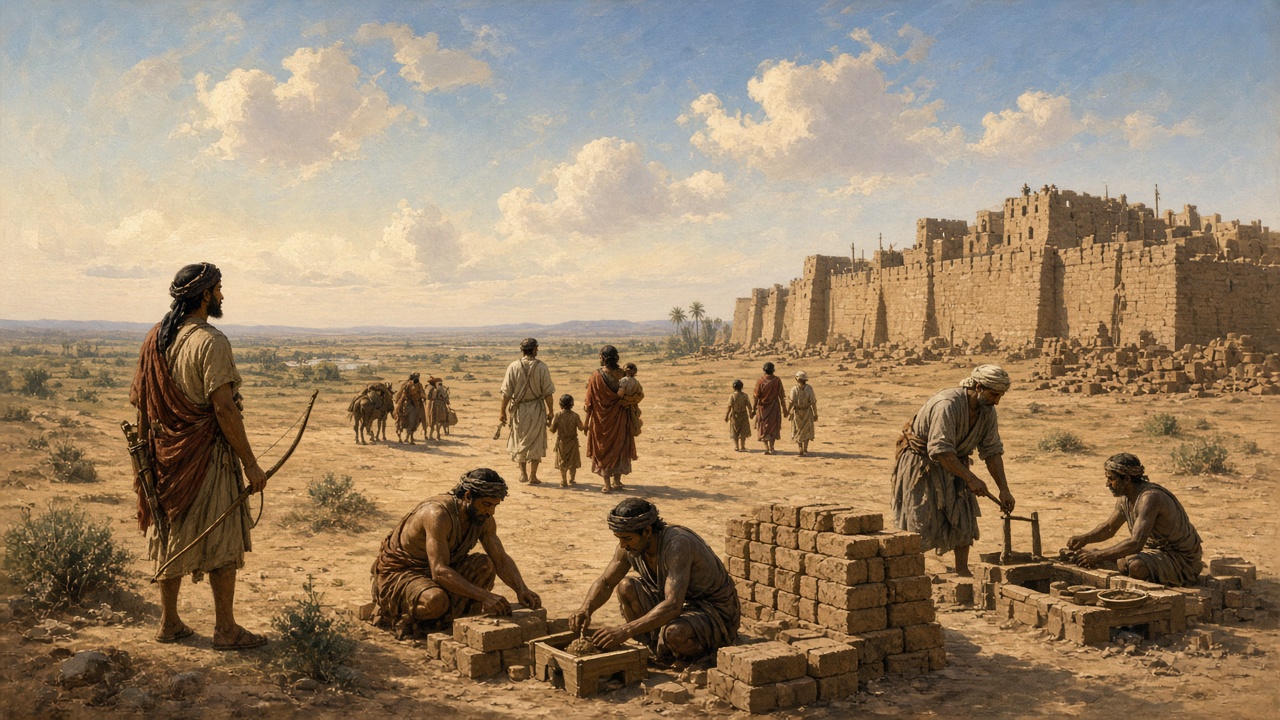
8Cush was the father of Nimrod, who began to be a mighty one on the earth. 9He was a mighty hunter before the LORD; so it is said, “Like Nimrod, a mighty hunter before the LORD.” 10His kingdom began in Babylon, Erech, Accad, and Calneh, in the land of Shinar. 11From that land he went forth into Assyria, where he built Nineveh, Rehoboth-Ir, Calah, 12and Resen, which is between Nineveh and the great city of Calah.
13Mizraim was the father of the Ludites, the Anamites, the Lehabites, the Naphtuhites, 14the Pathrusites, the Casluhites (from whom the Philistines came), and the Caphtorites.
15And Canaan was the father of Sidon his firstborn, and of the Hittites, 16the Jebusites, the Amorites, the Girgashites, 17the Hivites, the Arkites, the Sinites, 18the Arvadites, the Zemarites, and the Hamathites.
Later the Canaanite clans were scattered, 19and the borders of Canaan extended from Sidon toward Gerar as far as Gaza, and then toward Sodom, Gomorrah, Admah, and Zeboiim, as far as Lasha.
20These are the sons of Ham according to their clans, languages, lands, and nations.
The Semites
21And sons were also born to Shem, the older brother of Japheth; Shem was the forefather of all the sons of Eber.
22The sons of Shem:
Elam, Asshur, Arphaxad, Lud, and Aram.
23The sons of Aram:
Uz, Hul, Gether, and Mash.
24Arphaxad was the father of Shelah, and Shelah was the father of Eber.
25Two sons were born to Eber: One was named Peleg, because in his days the earth was divided, and his brother was named Joktan.
26And Joktan was the father of Almodad, Sheleph, Hazarmaveth, Jerah, 27Hadoram, Uzal, Diklah, 28Obal, Abimael, Sheba, 29Ophir, Havilah, and Jobab. All these were sons of Joktan. 30Their territory extended from Mesha to Sephar, in the eastern hill country.
31These are the sons of Shem, according to their clans, languages, lands, and nations.
32All these are the clans of Noah’s sons, according to their generations and nations. From these the nations of the earth spread out after the flood.
¿Sabías que…?
Las naciones después del diluvio
- Génesis 10 sigue las familias de los tres hijos de Noé, Sem, Cam y Jafet, y dice que, después del diluvio, las naciones de la tierra se extendieron a partir de ellos, agrupadas por clanes, lenguas, tierras y naciones. La línea de Jafet se vincula con pueblos del este de Europa y del norte de Asia: Gomer es generalmente considerado antepasado de los celtas y de los cimerios, que en tiempos antiguos se establecieron al norte del mar Negro, y Javán llegó a ser el nombre hebreo que los pueblos de Oriente usaban para los griegos, sobre todo los de Jonia.Fuentes: el propio texto bíblico · Japheth · Gomer (son of Japheth) · Javan
- Cus, hijo de Cam, fue el padre de Nimrod, recordado como un poderoso cazador delante del Señor, cuyo reino comenzó en Babilonia, Erec, Acad y Calné, en la tierra de Sinar, probablemente Babilonia o el sur de Mesopotamia. Desde aquella tierra pasó a Asiria y edificó Nínive, Rehobot-Ir, Cala y Resén; el sitio de Cala corresponde probablemente a las ruinas de Nimrud, en la orilla izquierda del Tigris.Fuentes: el propio texto bíblico · Shinar · Nineveh · Calah
- Mizraim, forma dual de una palabra hebrea que significa montículo o fortaleza, puede referirse al Alto y al Bajo Egipto y es el nombre que los hebreos solían dar a ese país; el árabe todavía lo llama Muzr. Sem es llamado hermano mayor de Jafet y antepasado de todos los hijos de Heber, considerado fundador del pueblo hebreo, mientras que una tradición árabe recuerda a Joctán, hijo de Heber y Kahtan en árabe, como antepasado de tribus del centro y del sur de Arabia.Fuentes: el propio texto bíblico · Mizraim · Eber (Heber) · Joktan
Notas escritas con ayuda de IA a partir de fuentes abiertas (Theographic Bible Metadata, CC BY-SA 4.0; Easton’s Bible Dictionary, dominio público) y revisadas antes de publicarse.
Lugares de este capítulo
- Erech · Hoy: Uruk · 31.322, 45.636 · versículo 10
- Shinar · Hoy: Babylonia · 32.543, 44.422 · versículo 10
- Assyria · 36.359, 43.153 · versículo 11
- Calah · Hoy: Nimrud · 36.098, 43.329 · versículos 11, 12
- Nineveh · 36.359, 43.153 · versículos 11, 12
- Canaan · 32.767, 35.333 · versículo 19
- Gaza · Hoy: Tell Harube · 31.504, 34.464 · versículo 19
- Sidon · Hoy: Sandikli archaeological site in Sidon · 33.561, 35.372 · versículo 19
Solo aparecen lugares identificados con alta confianza (90 % o más según las fuentes académicas reunidas por OpenBible). Mapa de la época: DARE (Digital Atlas of the Roman Empire), CC BY 4.0; mapa actual: © colaboradores de OpenStreetMap; lugares: OpenBible.info (CC BY 4.0).
Créditos y licencia de esta traducción
Berean Standard Bible
The Holy Bible in English: Berean Standard Bible
Public Domain
Language: English
Contributor: BSB Publishing, LLC
2026-10-02
Fuente: http://ebible.org/engbsb/ · eBible.org