Gálatas 1
Berean Standard Bible · Toca un versículo para ver sus referencias cruzadas.
Acerca de este libro
Acerca de Gálatas
- El Easton's Bible Dictionary (1897) atribuye la carta a los Gálatas a Pablo. Sostiene que probablemente se escribió poco después de su segunda visita a Galacia y después del concilio de Jerusalén y, por su semejanza con Romanos, en el invierno del 57–58 d.C., durante la estancia de Pablo en Corinto.Fuentes: Easton: Galatians, Epistle to
- Según Easton, el propio Pablo había fundado las iglesias de Galacia, formadas sobre todo por conversos que no eran judíos, junto con algunos conversos judíos. Los escritores romanos llamaban a la región la «Galia» de Oriente; su pueblo eran celtas que invadieron Macedonia hacia el 280 a.C., fueron invitados por el rey de Bitinia a pasar al Asia Menor y allí se mezclaron con griegos, como galo-griegos.Fuentes: Easton: Galatians, Epistle to · Galatia
- Easton dice que algunos conversos judíos, probablemente influidos por maestros judaizantes, intentaron incorporar los ritos del judaísmo al cristianismo y habían persuadido a la mayoría de las iglesias. Escrita con urgencia tras llegar las noticias, la carta se opone a esa tendencia, llama a los gálatas a volver a la sencillez del evangelio y defiende la afirmación de Pablo de ser un apóstol comisionado por Dios.Fuentes: Easton: Galatians, Epistle to
- La cuestión que aborda la carta, en el relato de Easton, es si la ley judía obligaba a los cristianos; argumenta que las personas son justificadas por la fe, sin las obras de la ley de Moisés. Tras una breve apertura, Pablo defiende su autoridad apostólica, expone el daño causado por los judaizantes, exhorta a los gálatas a mantenerse firmes, a mostrar el fruto del Espíritu y a usar bien su libertad, y cierra con un resumen y una bendición.Fuentes: Easton: Galatians, Epistle to
- Al final, Pablo señala que los gálatas pueden ver cuán grande carta ha escrito de su propia mano. Easton entiende esto como una diferencia respecto de su costumbre de añadir solo el saludo final con su propia letra.Fuentes: Easton: Galatians, Epistle to
Notas escritas con ayuda de IA a partir de fuentes abiertas (Theographic Bible Metadata, CC BY-SA 4.0; Easton’s Bible Dictionary, dominio público) y revisadas antes de publicarse.
Paul’s Greeting to the Galatians
1Paul, an apostle—sent not from men nor by man, but by Jesus Christ and God the Father, who raised Him from the dead— 2and all the brothers with me,
To the churches of Galatia:
3Grace and peace to you from God our Father and the Lord Jesus Christ, 4who gave Himself for our sins to rescue us from the present evil age, according to the will of our God and Father, 5to whom be glory forever and ever. Amen.
No Other Gospel
6I am amazed how quickly you are deserting the One who called you by the grace of Christ and are turning to a different gospel— 7which is not even a gospel. Evidently some people are troubling you and trying to distort the gospel of Christ.
8But even if we or an angel from heaven should preach a gospel contrary to the one we preached to you, let him be under a curse! 9As we have said before, so now I say again: If anyone is preaching to you a gospel contrary to the one you received, let him be under a curse!
Paul Preaches the Gospel
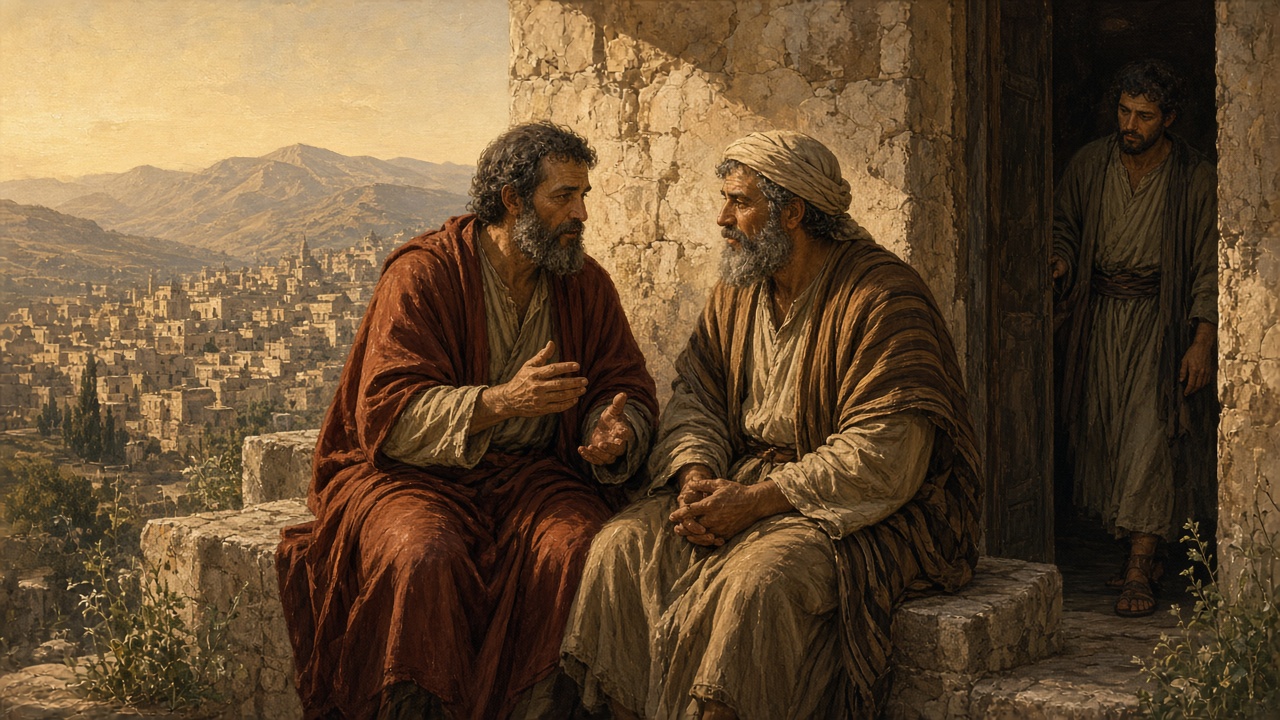
10Am I now seeking the approval of men, or of God? Or am I striving to please men? If I were still trying to please men, I would not be a servant of Christ. 11For I certify to you, brothers, that the gospel I preached was not devised by man. 12I did not receive it from any man, nor was I taught it; rather, I received it by revelation from Jesus Christ.
13For you have heard of my former way of life in Judaism, how severely I persecuted the church of God and tried to destroy it. 14I was advancing in Judaism beyond many of my contemporaries and was extremely zealous for the traditions of my fathers.
15But when God, who set me apart from my mother’s womb and called me by His grace, was pleased 16to reveal His Son in me so that I might preach Him among the Gentiles, I did not rush to consult with flesh and blood, 17nor did I go up to Jerusalem to the apostles who came before me, but I went into Arabia and later returned to Damascus.
18Only after three years did I go up to Jerusalem to confer with Cephas, and I stayed with him fifteen days. 19But I saw none of the other apostles except James, the Lord’s brother. 20I assure you before God that what I am writing to you is no lie.
21Later I went to the regions of Syria and Cilicia. 22I was personally unknown, however, to the churches of Judea that are in Christ. 23They only heard the account: “The man who formerly persecuted us is now preaching the faith he once tried to destroy.” 24And they glorified God because of me.
¿Sabías que…?
Un evangelio que no vino de hombres
- Pablo se dirige a las iglesias de Galacia, una región de Asia Menor cuyos habitantes los escritores romanos llamaban Galli. El Easton's Bible Dictionary (1897) remonta su origen a una migración celta que invadió Macedonia hacia el 280 a. C.; invitados por el rey de Bitinia a cruzar a Asia Menor y ayudarlo en sus guerras, acabaron estableciéndose allí y, mezclados con griegos, fueron llamados Gallo-Graeci.Fuentes: el propio texto bíblico · Galatia
- Pablo escribe que, después de que Dios tuvo a bien revelar a su Hijo en él para que lo predicara entre los gentiles, no se apresuró a consultar con carne y sangre, ni subió a Jerusalén a ver a los apóstoles que lo precedieron, sino que fue a Arabia y luego regresó a Damasco. El Easton's Bible Dictionary (1897) llama a Damasco capital de Siria y lo sitúa a unas 133 millas al norte de Jerusalén. Solo después de tres años subió para consultar con Cefas, y se quedó con él quince días.Fuentes: el propio texto bíblico · Damascus
- Pablo dice que no vio a ninguno de los otros apóstoles, sino a Jacobo, el hermano del Señor, a quien el Easton's Bible Dictionary (1897) llama 'hermano', o pariente cercano o primo, de Jesús, y que, según ese relato, parece haber estado al frente de la iglesia en Jerusalén. Después fue a las regiones de Siria y de Cilicia. Cilicia era una provincia marítima en el sureste de Asia Menor, constituida como provincia romana en 67 a. C., y Tarso, donde nació Pablo, era una de sus principales ciudades.Fuentes: el propio texto bíblico · James (Brother of Jesus) · Cilicia · Paul
Notas escritas con ayuda de IA a partir de fuentes abiertas (Theographic Bible Metadata, CC BY-SA 4.0; Easton’s Bible Dictionary, dominio público) y revisadas antes de publicarse.
Lugares de este capítulo
- Galatia · 39.267, 32.983 · versículo 2
- Arabia · Hoy: Arabia Petraea · 30.070, 35.350 · versículo 17
- Damascus · 33.511, 36.306 · versículo 17
- Jerusalem · 31.777, 35.234 · versículos 17, 18
- Cilicia · 36.913, 34.892 · versículo 21
- Syria · Hoy: Syria 2 · 33.511, 36.306 · versículo 21
- Judea · Hoy: Judea 1 · 31.777, 35.234 · versículo 22
Solo aparecen lugares identificados con alta confianza (90 % o más según las fuentes académicas reunidas por OpenBible). Mapa de la época: DARE (Digital Atlas of the Roman Empire), CC BY 4.0; mapa actual: © colaboradores de OpenStreetMap; lugares: OpenBible.info (CC BY 4.0).
Créditos y licencia de esta traducción
Berean Standard Bible
The Holy Bible in English: Berean Standard Bible
Public Domain
Language: English
Contributor: BSB Publishing, LLC
2026-10-02
Fuente: http://ebible.org/engbsb/ · eBible.org