Génesis 20
Wycliffe Bible · Toca un versículo para ver sus referencias cruzadas.
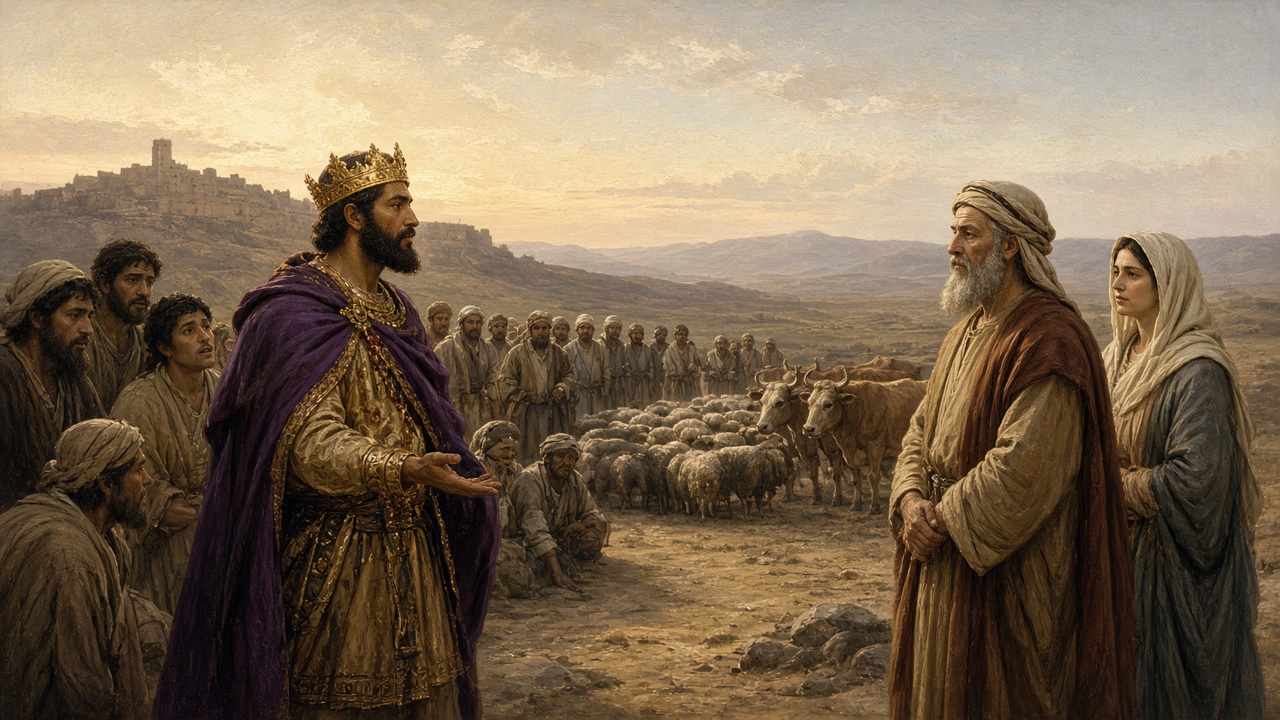
Abraham, Sarah, and Abimelech
1Abraham yede forth fro thennus in to the lond of the south, and dwellide bitwixe Cades and Sur, and was a pilgrym in Geraris; 2and he seide of Sare, his wijf, Sche is my sistir. Therfor Abymalec, kyng of Gerare, sente, and took hir. 3Sotheli God cam to Abymalec bi a sweuene in the nyyt, and seide to hym, Lo! thou schalt die, for the wooman which thou hast take, for sche hath an hosebond. 4Forsothe Abymalech touchide not hir; and he seide, Lord, whether thou schalt sle folc vnkunnynge and iust? 5Whether he seide not to me, Sche is my sistir, and sche seide, He is my brother? In the symplenesse of myn herte, and in the clennesse of myn hondis Y dide this. 6And the Lord seide to hym, And Y woot that thou didist bi symple herte, and therfor Y kepte thee, lest thou didist synne ayens me, and I suffride not that thou touchidist hir; 7now therfor yelde thou the wijf to hir hosebonde, for he is a profete; and he schal preye for thee, and thou schalt lyue; sotheli if thou nylte yelde, wite thou that thou schalt die bi deeth, thou and alle thingis that ben thine. 8And anoon Abynalech roos bi nyyt, and clepide alle his seruauntis, and spak alle these wordis in the eeris of hem; and alle men dredden greetli. 9Sotheli Abymalec clepide also Abraham, and seide to hym, What hast thou do to vs? what synneden we ayens thee, for thou hast brouyt in on me and on my rewme a greuouse synne? thou hast do to vs whiche thingis thou ouytist not do. 10And eft Abimalech axide, and seide, What thing seiyist thou, that thou woldist do this? 11Abraham answerde, Y thouyte with me, and seide, in hap the drede of God is not in this place; and thei schulen sle me for my wijf; 12in other maner forsothe and sche is my sister verili, the douyter of my fadir, and not the douyter of my moder; and Y weddide hir in to wijf; 13sotheli aftir that God ladde me out of the hous of my fadir, Y seide to hir, Thou schalt do this mercy with me in ech place to which we schulen entre; thou schalt seie, that Y am thi brother. 14Therfore Abymelech took scheep, and oxun, and seruauntis, and handmaydenes, and yaf to Abraham; and he yeldide to him Sare, `his wijf, and seide, The lond is bifor you; 15dwelle thou, where euere it plesith thee. Forsothe Abymelech seide to Sare, Lo! 16Y yaf a thousand platis of siluer to thi brother; this schal be to thee in to hiling of iyen to al men that ben with thee; and whider euere thou goist, haue thou mynde that thou art takun. 17Sotheli for Abraham preiede, God curide Abymelech, and his wijf, and handmaydens, and thei childiden; 18for God hadde closid ech wombe of the hows of Abymelech, for Sare, the wijf of Abraham.
¿Sabías que…?
Hermana y esposa en Gerar
- Abraham estaba en Gerar, una ciudad y un distrito muy antiguos en la frontera sur de Palestina, gobernados entonces por un rey llamado Abimelec. Había ido a la región del Néguev, el distrito árido al sur de Palestina en la ruta de las caravanas hacia Egipto, y se estableció entre Cades y Shur. Shur, nombre que significa “muro”, era una región desértica en el límite noreste de Egipto, probablemente llamada así por la muralla fronteriza que los egipcios construyeron allí.Fuentes: el propio texto bíblico · Gerar · Negeb · Shur
- Cuando Abraham dijo que Sara era su hermana, el parentesco no era del todo inventado: ella también era su media hermana, hija de su padre, pero no de su madre. El diccionario bíblico de Easton (1897) indica que el nombre Sara significa “princesa” y que ese nombre se le dio cuando se anunció que sería la madre de la criatura prometida.Fuentes: el propio texto bíblico · Sarah
- El nombre Abimelec vuelve a aparecer en Gerar en la historia de Isaac. El diccionario bíblico de Easton (1897) describe a ese rey posterior como probablemente hijo del Abimelec que Abraham encontró, y dice que reprendió a Isaac por un engaño semejante acerca de su esposa Rebeca, que el rey descubrió por casualidad. La misma obra dice que Gerar parece haber sido una rica región de pastoreo.Fuentes: Abimelech (King of Gerar) · Gerar
Notas escritas con ayuda de IA a partir de fuentes abiertas (Theographic Bible Metadata, CC BY-SA 4.0; Easton’s Bible Dictionary, dominio público) y revisadas antes de publicarse.
Lugares de este capítulo
- Negeb · 31.245, 34.841 · versículo 1
Solo aparecen lugares identificados con alta confianza (90 % o más según las fuentes académicas reunidas por OpenBible). Mapa de la época: DARE (Digital Atlas of the Roman Empire), CC BY 4.0; mapa actual: © colaboradores de OpenStreetMap; lugares: OpenBible.info (CC BY 4.0).
Créditos y licencia de esta traducción
Wycliffe Bible
This is the Pentateuch and Gospels from The Holy Bible, containing the Old and New Testaments, with the apocryphal books, in the earliest English version made from the latin Vulgate by John Wycliffe and his followers. c.1395
Public Domain
Language: Middle English (English)
Dialect: Middle
Translation by: John Wycliffe
2016-11-08
Títulos de sección adaptados de la Berean Standard Bible (dominio público); no forman parte del texto bíblico de esta traducción.
Fuente: http://ebible.org/engWycliffe/ · eBible.org