Genesis 20
Wycliffe Bible · Tap a verse to see its cross-references.
Abraham, Sarah, and Abimelech
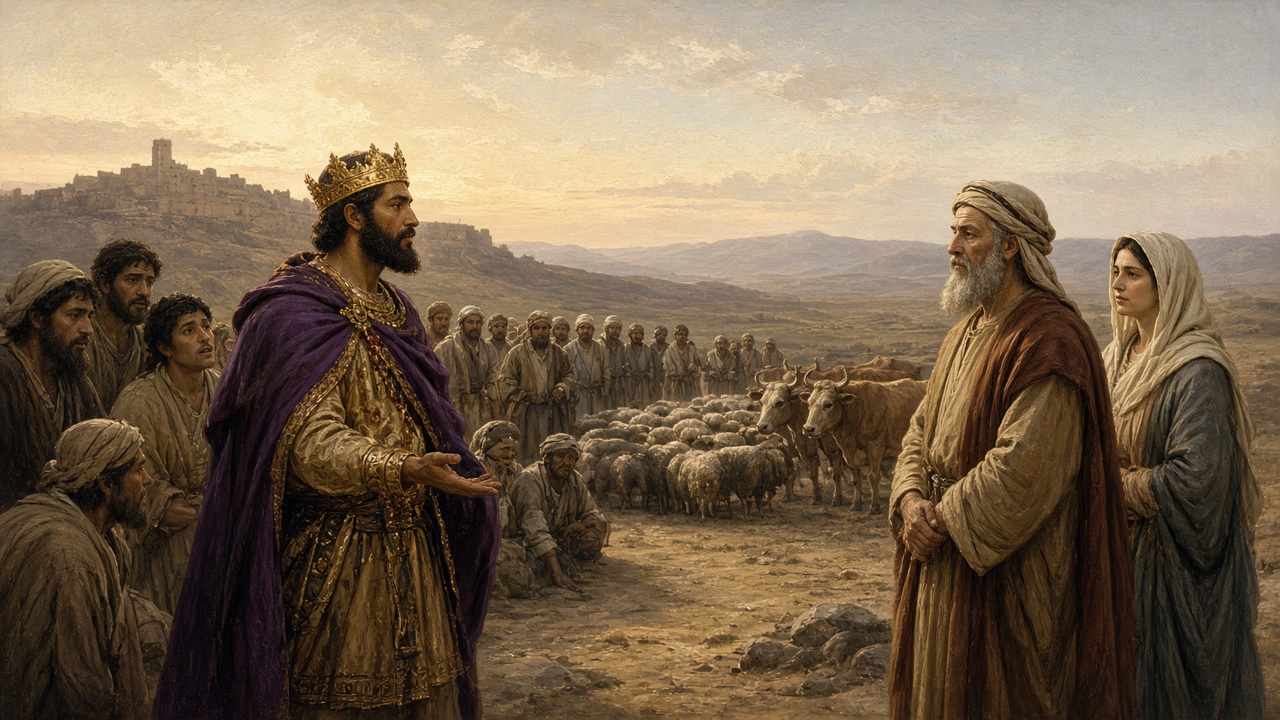
1Abraham yede forth fro thennus in to the lond of the south, and dwellide bitwixe Cades and Sur, and was a pilgrym in Geraris; 2and he seide of Sare, his wijf, Sche is my sistir. Therfor Abymalec, kyng of Gerare, sente, and took hir. 3Sotheli God cam to Abymalec bi a sweuene in the nyyt, and seide to hym, Lo! thou schalt die, for the wooman which thou hast take, for sche hath an hosebond. 4Forsothe Abymalech touchide not hir; and he seide, Lord, whether thou schalt sle folc vnkunnynge and iust? 5Whether he seide not to me, Sche is my sistir, and sche seide, He is my brother? In the symplenesse of myn herte, and in the clennesse of myn hondis Y dide this. 6And the Lord seide to hym, And Y woot that thou didist bi symple herte, and therfor Y kepte thee, lest thou didist synne ayens me, and I suffride not that thou touchidist hir; 7now therfor yelde thou the wijf to hir hosebonde, for he is a profete; and he schal preye for thee, and thou schalt lyue; sotheli if thou nylte yelde, wite thou that thou schalt die bi deeth, thou and alle thingis that ben thine. 8And anoon Abynalech roos bi nyyt, and clepide alle his seruauntis, and spak alle these wordis in the eeris of hem; and alle men dredden greetli. 9Sotheli Abymalec clepide also Abraham, and seide to hym, What hast thou do to vs? what synneden we ayens thee, for thou hast brouyt in on me and on my rewme a greuouse synne? thou hast do to vs whiche thingis thou ouytist not do. 10And eft Abimalech axide, and seide, What thing seiyist thou, that thou woldist do this? 11Abraham answerde, Y thouyte with me, and seide, in hap the drede of God is not in this place; and thei schulen sle me for my wijf; 12in other maner forsothe and sche is my sister verili, the douyter of my fadir, and not the douyter of my moder; and Y weddide hir in to wijf; 13sotheli aftir that God ladde me out of the hous of my fadir, Y seide to hir, Thou schalt do this mercy with me in ech place to which we schulen entre; thou schalt seie, that Y am thi brother. 14Therfore Abymelech took scheep, and oxun, and seruauntis, and handmaydenes, and yaf to Abraham; and he yeldide to him Sare, `his wijf, and seide, The lond is bifor you; 15dwelle thou, where euere it plesith thee. Forsothe Abymelech seide to Sare, Lo! 16Y yaf a thousand platis of siluer to thi brother; this schal be to thee in to hiling of iyen to al men that ben with thee; and whider euere thou goist, haue thou mynde that thou art takun. 17Sotheli for Abraham preiede, God curide Abymelech, and his wijf, and handmaydens, and thei childiden; 18for God hadde closid ech wombe of the hows of Abymelech, for Sare, the wijf of Abraham.
Did you know?
Sister and Wife in Gerar
- Abraham was staying in Gerar, a very ancient town and district on the southern border of Palestine, then ruled by a king named Abimelech. He had journeyed to the Negev, the arid district south of Palestine on the caravan route toward Egypt, and settled between Kadesh and Shur. Shur, a name meaning “wall,” was a desert region on Egypt’s northeastern edge, probably named for the frontier wall the Egyptians built there.Sources: the Bible text itself · Gerar · Negeb · Shur
- When Abraham said that Sarah was his sister, the kinship was not wholly invented: she was also his half-sister, the daughter of his father but not of his mother. Easton's Bible Dictionary (1897) gives the name Sarah as meaning “princess,” and says that name was given when it was announced that she would be the mother of the promised child.Sources: the Bible text itself · Sarah
- The name Abimelech appears again at Gerar in Isaac’s story. Easton's Bible Dictionary (1897) describes that later king as probably the son of the Abimelech Abraham met, and says he rebuked Isaac for a similar deception about his wife Rebekah, which the king discovered by accident. The same work says Gerar seems to have been a rich pastoral country.Sources: Abimelech (King of Gerar) · Gerar
Notes written with AI assistance from open sources (Theographic Bible Metadata, CC BY-SA 4.0; Easton’s Bible Dictionary, public domain) and reviewed before publishing.
Places in this chapter
- Negeb · 31.245, 34.841 · verse 1
Only places identified with high confidence are shown (90% or more according to the scholarly sources compiled by OpenBible). Period map: DARE (Digital Atlas of the Roman Empire), CC BY 4.0; modern map: © OpenStreetMap contributors; places: OpenBible.info (CC BY 4.0).
Credits and license for this translation
Wycliffe Bible
This is the Pentateuch and Gospels from The Holy Bible, containing the Old and New Testaments, with the apocryphal books, in the earliest English version made from the latin Vulgate by John Wycliffe and his followers. c.1395
Public Domain
Language: Middle English (English)
Dialect: Middle
Translation by: John Wycliffe
2016-11-08
Section headings adapted from the Berean Standard Bible (public domain); they are not part of this translation’s text.
Source: http://ebible.org/engWycliffe/ · eBible.org