Deuteronomio 24
Douay-Rheims 1899 · Toca un versículo para ver sus referencias cruzadas.
Marriage and Divorce Laws
1If a man take a wife, and have her, and she find not favour in his eyes, for some uncleanness: he shall write a bill of divorce, and shall give it in her hand, and send her out of his house. 2And when she is departed, and marrieth another husband, 3And he also hateth her, and hath given her a bill of divorce, and hath sent her out of his house or is dead: 4The former husband cannot take her again to wife: because she is defiled, and is become abominable before the Lord: lest thou cause thy land to sin, which the Lord thy God shall give thee to possess. 5When a man hath lately taken a wife, he shall not go out to war, neither shall any public business be enjoined him, but he shall be free at home without fault, that for one year he may rejoice with his wife.
Additional Laws
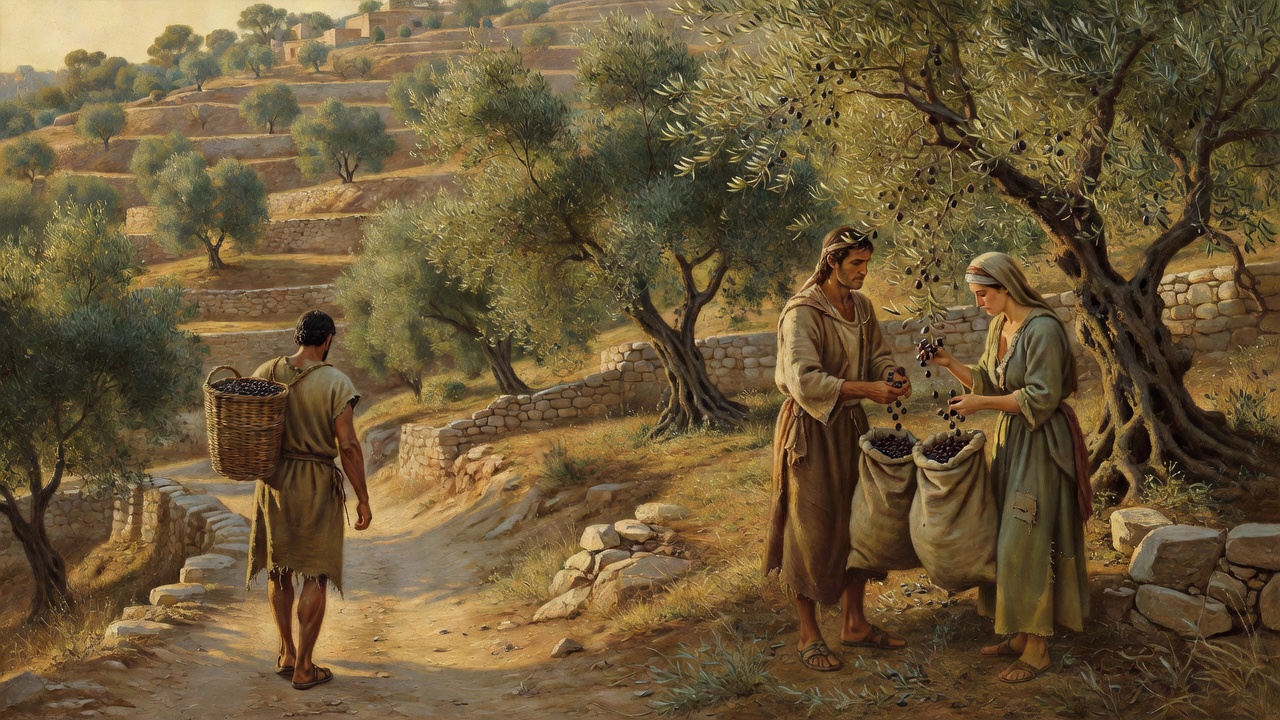
6Thou shalt not take the nether, nor the upper millstone to pledge: for he hath pledged his life to thee. 7If any man be found soliciting his brother of the children of Israel, and selling him shall take a price, he shall be put to death, and thou shalt take away the evil from the midst of thee. 8Observe diligently that thou incur not the stroke of the leprosy, but thou shalt do whatsoever the priests of the Levitical race shall teach thee, according to what I have commanded them, and fulfill thou it carefully. 9Remember what the Lord your God did to Mary, in the way when you came out of Egypt. 10When thou shalt demand of thy neighbour any thing that he oweth thee, thou shalt not go into his house to take away a pledge: 11But then shalt stand without, and he shall bring out to thee what he hath. 12But if he be poor, the pledge shall not lodge with thee that night, 13But thou shalt restore it to him presently before the going down of the sun: that he may sleep in his own raiment and bless thee, and thou mayst have justice before the Lord thy God. 14Thou shalt not refuse the hire of the needy, and the poor, whether he be thy brother, or a stranger that dwelleth with thee in the land, and is within thy gates: 15But thou shalt pay him the price of his labour the same day, before the going down of the sun, because he is poor, and with it maintaineth his life: lest he cry against thee to the Lord, and it be reputed to thee for a sin. 16The fathers shall not be put to death for the children, nor the children for the fathers, but every one shall die for his own sin. 17Thou shalt not pervert the judgment of the stranger nor of the fatherless, neither shalt thou take away the widow’s raiment for a pledge. 18Remember that thou wast a slave in Egypt, and the Lord thy God delivered thee from thence. Therefore I command thee to do this thing. 19When thou hast reaped the corn in thy field, and hast forgot and left a sheaf, thou shalt not return to take it away: but thou shalt suffer the stranger, and the fatherless and the widow to tabs it away: that the Lord thy God may bless thee in all the works of thy hands. 20If thou have gathered the fruit of thy olive trees, thou shalt not return to gather whatsoever remaineth on the trees: but shalt leave it for the stranger, for the fatherless, and the widow. 21If thou make the vintage of thy vineyard, thou shalt not gather the clusters that remain, but they shall be for the stranger, the fatherless, and the widow. 22Remember that thou also wast a bondman in Egypt, and therefore I command thee to do this thing.
¿Sabías que…?
Leyes de Compasión, Justicia y Protección Social
- Las leyes de cosecha de Israel exigían que los propietarios dejaran gavillas olvidadas, aceitunas rezagadas y rebuscos de uvas para los grupos vulnerables: el extranjero residente, el huérfano y la viuda. Este sistema de ayuda social se fundamentaba en el recuerdo de que los propios israelitas habían sido esclavos en Egipto.Fuentes: el propio texto bíblico · Egypt
- Los deudores y jornaleros estaban protegidos por límites legales específicos. Se prohibía a los acreedores entrar en la casa de un deudor para tomar una prenda, retener piedras de molino esenciales para el sustento diario o quedarse con el manto de dormir de un necesitado tras la puesta del sol, y los pagos debían entregarse antes del anochecer.Fuentes: el propio texto bíblico
- Al dar instrucciones sobre enfermedades infecciosas de la piel y las directivas de los sacerdotes levitas, el texto evoca lo ocurrido a Miriam, hermana de Moisés y Aarón, durante la travesía por el desierto tras salir de Egipto.Fuentes: el propio texto bíblico · Miriam · Egypt
Notas escritas con ayuda de IA a partir de fuentes abiertas (Theographic Bible Metadata, CC BY-SA 4.0; Easton’s Bible Dictionary, dominio público) y revisadas antes de publicarse.
Lugares de este capítulo
Solo aparecen lugares identificados con alta confianza (90 % o más según las fuentes académicas reunidas por OpenBible). Mapa de la época: DARE (Digital Atlas of the Roman Empire), CC BY 4.0; mapa actual: © colaboradores de OpenStreetMap; lugares: OpenBible.info (CC BY 4.0).
Créditos y licencia de esta traducción
Douay-Rheims 1899
The Holy Bible in English, Douay-Rheims American Edition of 1899, translated from the Latin Vulgate
Public Domain
Language: English
Dialect: archaic American
Translation by: English College, Douai
This Public Domain Bible text is brought to you courtesy of eBible.org.
Help support free Bible access at https://eBible.org/give.php .
2022-11-03
Títulos de sección adaptados de la Berean Standard Bible (dominio público); no forman parte del texto bíblico de esta traducción.
Fuente: http://ebible.org/engDRA/ · eBible.org