Deuteronomio 23
Douay-Rheims 1899 · Toca un versículo para ver sus referencias cruzadas.
Exclusion from the Congregation
1An eunuch, whose testicles are broken or cut away, or yard cut off, shall not enter into the church of the Lord. 2A mamzer, that is to say, one born of a prostitute, shall not enter into the church of the Lord, until the tenth generation. 3The Ammonite and the Moabite, even after the tenth generation shall not enter into the church of the Lord for ever: 4Because they would not meet you with bread and water in the way, when you came out of Egypt: hand because they hired against thee Balaam, the son of Beer, from Mesopotamia in Syria, to curse thee. 5And the Lord thy God would not hear Balaam, and he turned his cursing into thy blessing, because he loved thee. 6Thou shalt not make peace with them, neither shalt thou seek their prosperity all the days of thy life for ever. 7Thou shalt not abhor the Edomite, because he is thy brother: nor the Egyptian, because thou wast a stranger in his land. 8They that are born of them, in the third generation shall enter into the church of the Lord.
Uncleanness in the Camp
9When thou goest out to war against thy enemies, thou shalt keep thyself from every evil thing. 10If there be among you any man, that is defiled in a dream by night, he shall go forth out of the camp. 11And shall not return, before he be washed with water in the evening: and after sunset he shall return into the camp. 12Thou shalt have a place without the camp, to which thou mayst go for the necessities of nature, 13Carrying a paddle at thy girdle. And when thou sittest down, thou shalt dig round about, and with the earth that is dug up thou shalt cover 14That which thou art eased of: (for the Lord thy God walketh in the midst of thy camp, to deliver thee, and to give up thy enemies to thee:) and let thy camp be holy, and let no uncleanness appear therein, lest he go away from thee.
Miscellaneous Laws
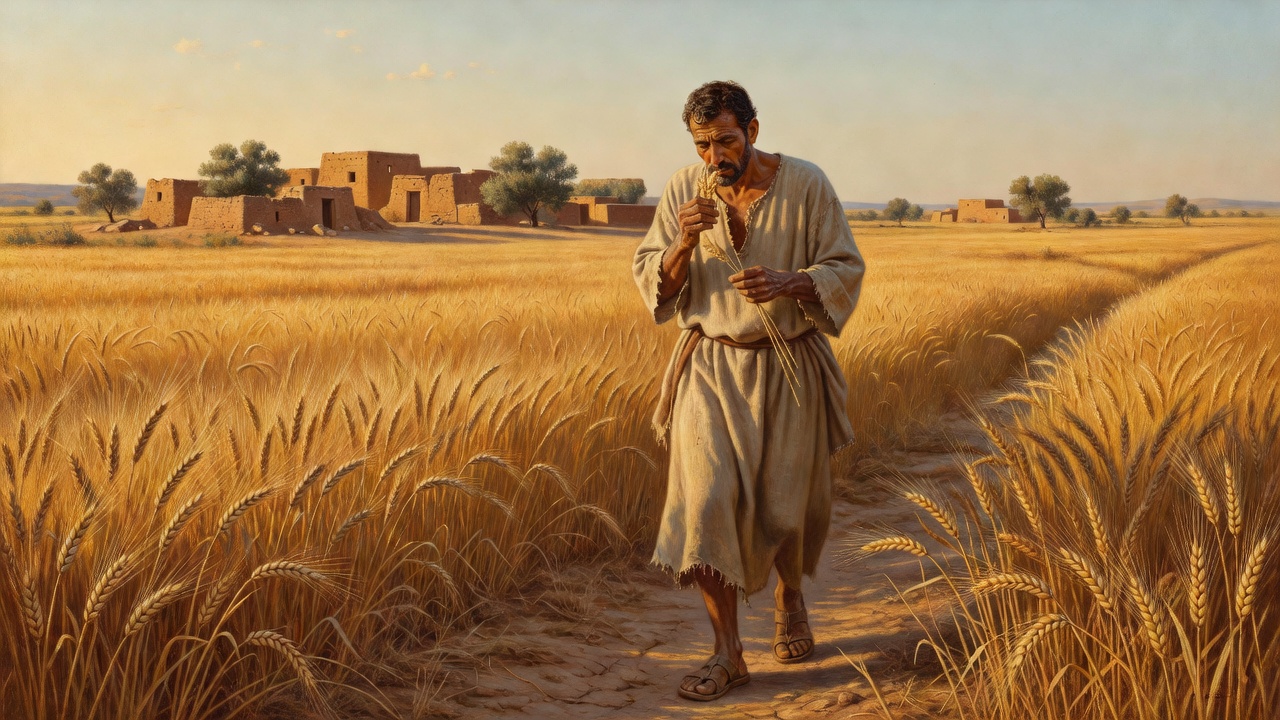
15Thou shalt not deliver to his master the servant that is fled to thee. 16He shall dwell with thee ill the place that shall please him, and shall rest, in one of thy cities: give him no trouble. 17There shall be no whore among the daughters of Israel, nor whoremonger among the sons of Israel. 18Thou shalt not offer the hire of a strumpet, nor the price of a dog, in the house of the Lord thy God, whatsoever it be that thou hast vowed: because both these are an abomination to the Lord thy God. 19Thou shalt not lend to thy brother money to usury, nor corn, nor any other thing: 20But to the stranger. To thy brother thou shalt lend that which he wanteth, without usury: that the Lord thy God may bless thee in all thy works in the land, which thou shalt go in to possess. 21When thou hast made a vow to the Lord thy God, thou shalt not delay to pay it: because the Lord thy God will require it. And if thou delay, it shall be imputed to thee for a sin. 22If thou wilt not promise, thou shalt be without sin. 23But that which is once gone out of thy lips, thou shalt observe, and shalt do as thou hast promised to the Lord thy God, and hast spoken with thy own will and with thy own mouth. 24Going into thy neighbour’s vineyard, thou mayst eat as many grapes as thou pleasest: but must carry none out with thee: 25If thou go into thy friend’s corn, thou mayst break the ears, and rub them in thy hand: but not reap them with a sickle.
¿Sabías que…?
Pureza de la Comunidad y Leyes Sociales
- Amonitas y moabitas fueron excluidos de la asamblea porque negaron pan y agua y contrataron a Balaam hijo de Beor contra Israel. Balaam procedía de Petor en Aram-naharaim (Mesopotamia), una región entre los ríos Tigris y Éufrates donde Petor se identifica con el antiguo enclave de Pitru.Fuentes: el propio texto bíblico · Balaam · Pethor · Mesopotamia
- En contraste con la exclusión de Amón y Moab, se ordenó a los israelitas no aborrecer a los edomitas, a quienes consideraban hermanos, ni a los egipcios, en cuya tierra vivieron como forasteros. Los descendientes de la tercera generación de ambos grupos podían entrar en la asamblea del Señor.Fuentes: el propio texto bíblico · Egypt
- El capítulo establece protecciones sociales y militares singulares, como dar asilo a los esclavos fugitivos en lugar de devolverlos a sus amos. También permitía a los viajeros hambrientos comer uvas o arrancar espigas con la mano en el campo ajeno, siempre que no usaran recipientes ni hoces.Fuentes: el propio texto bíblico
Notas escritas con ayuda de IA a partir de fuentes abiertas (Theographic Bible Metadata, CC BY-SA 4.0; Easton’s Bible Dictionary, dominio público) y revisadas antes de publicarse.
Lugares de este capítulo
- Egypt · 30.129, 31.308 · versículo 4
- Mesopotamia · Hoy: Aram-naharaim · 36.864, 39.033 · versículo 4
- Pethor · Hoy: Til Barsip · 36.701, 38.087 · versículo 4
Solo aparecen lugares identificados con alta confianza (90 % o más según las fuentes académicas reunidas por OpenBible). Mapa de la época: DARE (Digital Atlas of the Roman Empire), CC BY 4.0; mapa actual: © colaboradores de OpenStreetMap; lugares: OpenBible.info (CC BY 4.0).
Créditos y licencia de esta traducción
Douay-Rheims 1899
The Holy Bible in English, Douay-Rheims American Edition of 1899, translated from the Latin Vulgate
Public Domain
Language: English
Dialect: archaic American
Translation by: English College, Douai
This Public Domain Bible text is brought to you courtesy of eBible.org.
Help support free Bible access at https://eBible.org/give.php .
2022-11-03
Títulos de sección adaptados de la Berean Standard Bible (dominio público); no forman parte del texto bíblico de esta traducción.
Fuente: http://ebible.org/engDRA/ · eBible.org