Josué 20
LXX2012: Septuagint in American English 2012 · Toca un versículo para ver sus referencias cruzadas.
Six Cities of Refuge
1And the Lord spoke to Joshua, saying, 2Speak to the children of Israel, saying, Assign the cities of refuge, of which I spoke to you by Moses. 3Even a refuge to the slayer who has struck a man unintentionally; and the cities shall be to you a refuge, and the slayer shall not be put to death by the avenger of blood, until he have stood before the congregation for judgment. 4And Joshua separated Cades in Galilee in the mount Nephthali, and Sychem in the mount Ephraim, and the city of Arboc; this is Chebron, in the mountain of Juda. 5And beyond Jordan he appointed Bosor in the wilderness in the plain out of the tribe of Ruben, and Aremoth in Galaad out of the tribe of Gad, and Gaulon in the country of Basan out of the tribe of Manasse. 6These were the cities selected for the sons of Israel, and for the stranger dwelling among them, that every one who smites a soul unintentionally should flee there, that he should not die by the hand of the avenger of blood, until he should stand before the congregation for judgment.
¿Sabías que…?
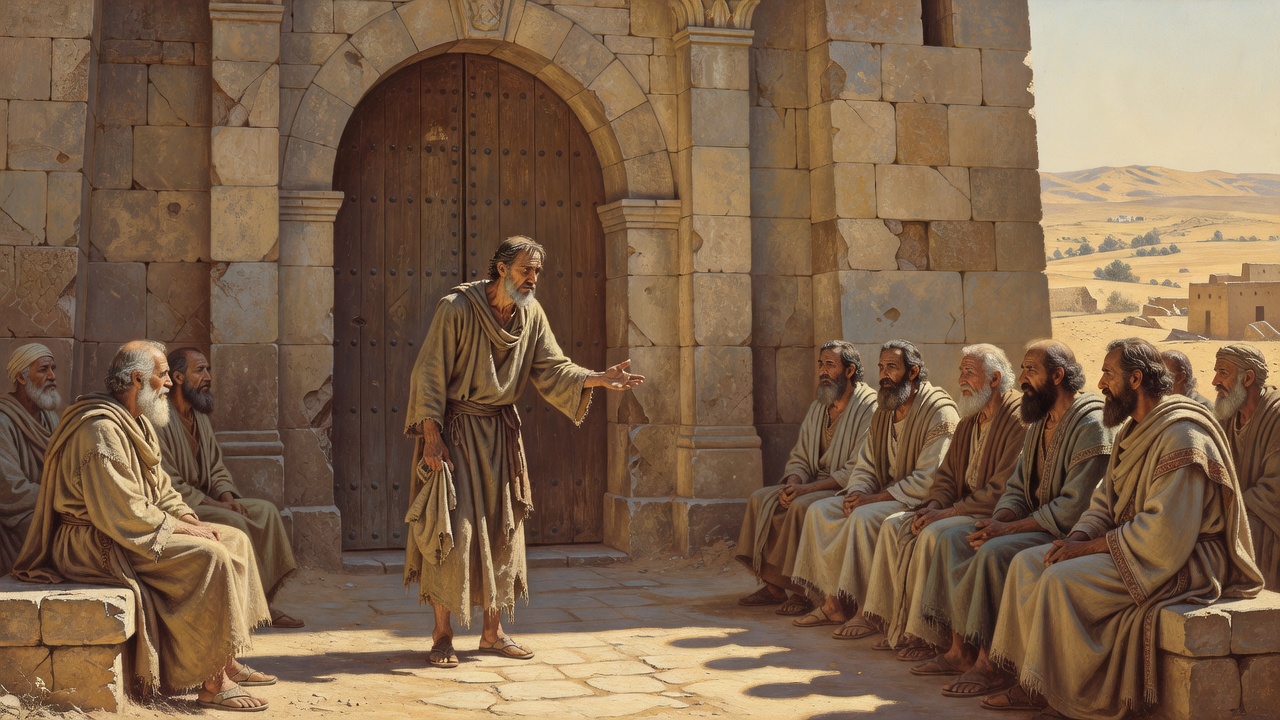
Las ciudades de refugio
- Las ciudades de refugio brindaban protección a quien causara una muerte accidental, librándolo de la represalia del vengador de la sangre. El fugitivo debía presentar su caso ante los ancianos a la puerta de la ciudad y podía permanecer a salvo hasta comparecer a juicio ante la asamblea y hasta la muerte del sumo sacerdote en funciones.Fuentes: el propio texto bíblico
- Se designaron seis ciudades en todo el territorio, repartidas equitativamente en tres a cada lado del río Jordán. Cedes, Siquem y Hebrón cubrían la región montañosa al oeste del Jordán, mientras que Béser, Ramot de Galaad y Golán en Basán servían a las tribus del este.Fuentes: el propio texto bíblico · Hebron · Shechem · Kedesh
- La protección legal ofrecida por las ciudades de refugio se aplicaba tanto a los israelitas nativos como a los extranjeros que residían entre ellos.Fuentes: el propio texto bíblico
Notas escritas con ayuda de IA a partir de fuentes abiertas (Theographic Bible Metadata, CC BY-SA 4.0; Easton’s Bible Dictionary, dominio público) y revisadas antes de publicarse.
Lugares de este capítulo
- Galilee · 32.760, 35.527 · versículo 7
- Hebron · Hoy: Tel Rumeida · 31.525, 35.102 · versículo 7
- Kedesh · Hoy: Tel Kedesh · 33.112, 35.530 · versículo 7
- Shechem · Hoy: Tell Balatah · 32.214, 35.282 · versículo 7
- Bashan · 32.781, 35.935 · versículo 8
- Gilead · Hoy: Gilead 1 · 32.187, 35.692 · versículo 8
- Jericho · Hoy: Tell es Sultan · 31.872, 35.445 · versículo 8
- Jordan · Hoy: Jordan River · 31.761, 35.558 · versículo 8
- Ramoth · Hoy: Tall er Rumeith · 32.500, 36.015 · versículo 8
Solo aparecen lugares identificados con alta confianza (90 % o más según las fuentes académicas reunidas por OpenBible). Mapa de la época: DARE (Digital Atlas of the Roman Empire), CC BY 4.0; mapa actual: © colaboradores de OpenStreetMap; lugares: OpenBible.info (CC BY 4.0).
Créditos y licencia de esta traducción
LXX2012: Septuagint in American English 2012
The Septuagint with Apocrypha, translated from Greek to English by Sir Lancelot C. L. Brenton and published in 1885, with some language updates (American English)
Public Domain
Language: English
Dialect (if applicable): American
Language in English: English
Translation by:
Sir Lancelot Charles Lee Brenton
Michael Paul Johnson
LXX2012: Septuagint in English 2012
This is a translation of the Old Testament and Apocrypha/Deuterocanon from Hebrew to Greek to 19th Century British English, with some updates of spelling and word usage to contemporary American English. The original English translation was done by Sir Lancelot Charles Lee Brenton and published by Samuel Bagster & Sons, Ltd., in London in 1851. It has entered the Public Domain due to the passage of sufficient time. In the process of scanning and typing the text, the original poetry and prose formatting, as well as peripheral material like introductions and notes, have been omitted.
This edition of the Septuagint has some language updates. Brenton's word order and punctuation has been mostly retained, meaning that quotation marks are not used, and sentences within quotes may not start with capital letters, as was standard usage in 1851. Names transliterated from Greek to those transliterated from Hebrew in the common English Bibles often differ. These language updates are dedicated to the Public Domain by the author of those edits, Michael Paul Johnson. Therefore this edition may be freely copied, published, etc.
Before considering making changes to the text of this work, I recommend that you consult with God, because this is really His Book.
If you find errors in the text, please report them so that we can correct them.
Donations to help with the expenses of operating this web site and thus help others have free access to the Word of God may be made to us, but are not required. Please see http://MLJohnson.org/partner/ for more about that.
Títulos de sección adaptados de la Berean Standard Bible (dominio público); no forman parte del texto bíblico de esta traducción.
Fuente: http://ebible.org/eng-lxx2012/ · eBible.org