Isaías 64
Brenton Septuagint Translation · Toca un versículo para ver sus referencias cruzadas.
A Prayer for God’s Power
1as wax melts before the fire; and fire shall burn up the enemies, and thy name shall be manifest among the adversaries: at thy presence the nations shall be troubled, 2whenever thou shalt work gloriously; trembling from thee shall take hold upon the mountains.
3From of old we have not heard, neither have our eyes seen a God beside thee, and thy works which thou wilt perform to them that wait for mercy. 4For these blessings shall happen to them that work righteousness, and they shall remember thy ways: behold, thou wast angry and we have sinned; therefore we have erred, 5and we are all become as unclean, and all our righteousness as a filthy rag: and we have fallen as leaves because of our iniquities; thus the wind shall carry us away. 6And there is none that calls upon thy name, or that remembers to take hold on thee: for thou hast turned thy face away from us, and hast delivered us up because of our sins.
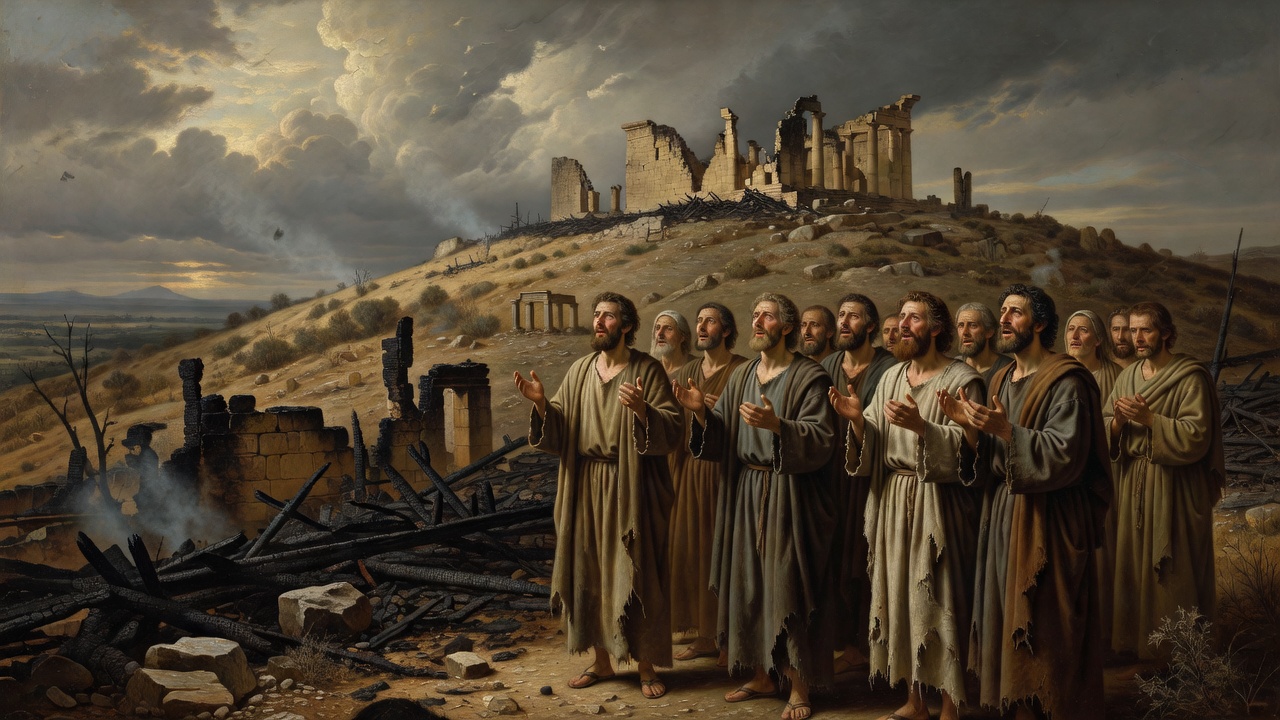
7And now, O Lord, thou art our Father, and we are clay, all of us the work of thine hands. 8Be not very wroth with us, and remember not our sins for ever; but now look on us, for we are all thy people. 9The city of thy holiness has become desolate, Sion has become as a wilderness, Jerusalem a curse. 10The house, our sanctuary, and the glory which our fathers blessed, has been burnt with fire: and all our glorious things have gone to ruin. 11And for all these things thou, O Lord, hast withholden thyself, and been silent, and hast brought us very low.
¿Sabías que…?
Una Oración por Misericordia en Medio de la Ruina
- El pasaje comienza con una súplica para que Dios rasgue los cielos y descienda con poder sobrecogedor, como fuego que enciende la leña. Sin embargo, contrasta este deseo de la presencia divina con una confesión de la indignidad humana, comparando a las personas con hojas secas arrastradas por sus propias iniquidades.Fuentes: el propio texto bíblico
- En Isaías 64, la comunidad apela a Dios como Padre y artesano, declarando: "nosotros somos el barro, y tú nuestro alfarero". Esta metáfora subraya la fragilidad humana y la total dependencia de Dios, suplicando misericordia divina a pesar del reconocimiento de sus culpas.Fuentes: el propio texto bíblico
- El capítulo lamenta la destrucción de los lugares sagrados, describiendo a Sion y Jerusalén como desolaciones y desiertos. El texto lamenta específicamente el incendio y la ruina del templo sagrado donde las generaciones pasadas habían ofrecido alabanzas.Fuentes: el propio texto bíblico · Zion · Jerusalem
Notas escritas con ayuda de IA a partir de fuentes abiertas (Theographic Bible Metadata, CC BY-SA 4.0; Easton’s Bible Dictionary, dominio público) y revisadas antes de publicarse.
Lugares de este capítulo
Solo aparecen lugares identificados con alta confianza (90 % o más según las fuentes académicas reunidas por OpenBible). Mapa de la época: DARE (Digital Atlas of the Roman Empire), CC BY 4.0; mapa actual: © colaboradores de OpenStreetMap; lugares: OpenBible.info (CC BY 4.0).
Créditos y licencia de esta traducción
Translation of the Greek Septuagint into English by Sir Lancelot Charles Lee Brenton
Published in 1851, and now in the Public Domain.
If you find errors in the text, please report them so that we can correct them.
Títulos de sección adaptados de la Berean Standard Bible (dominio público); no forman parte del texto bíblico de esta traducción.
Fuente: http://ebible.org/eng-Brenton/ · eBible.org