Malaquías 1
Geeshsha Mas'aafaa · Toca un versículo para ver sus referencias cruzadas.
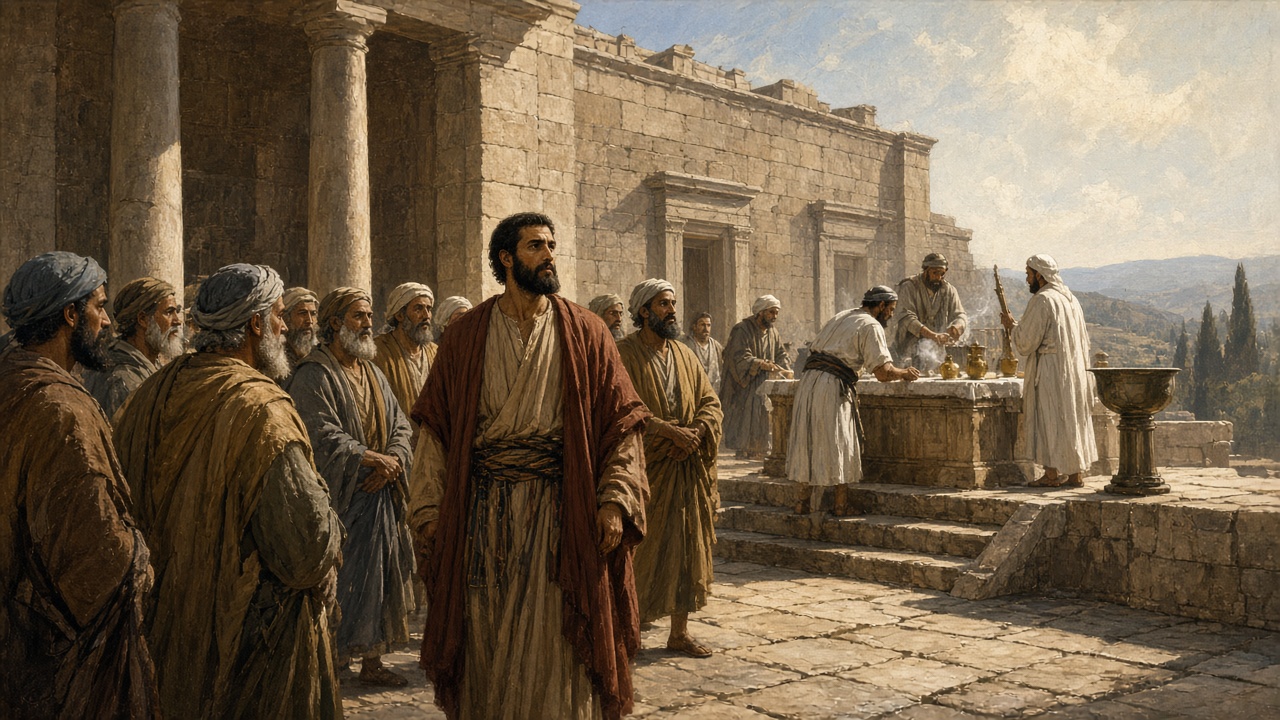
Acerca de este libro
Sobre Malaquías
- El Easton's Bible Dictionary (1897) presenta a Malaquías, nombre que significa "mensajero" o "ángel", como el último de los profetas menores y el autor del último libro del canon del Antiguo Testamento. No se sabe nada de él más allá de lo que contiene su libro de profecías.Fuentes: Easton: Malachi · Malachi
- Algunos han supuesto que el nombre es simplemente un título para un mensajero de Jehová, y no un nombre propio. El Easton's Bible Dictionary (1897), sin embargo, concluye que hay razón para considerar que Malaquías era el nombre habitual del profeta.Fuentes: Easton: Malachi · Malachi
- El Easton's Bible Dictionary (1897) fecha las profecías hacia 420 a. C., después del segundo regreso de Nehemías desde Persia, o posiblemente antes de ese regreso. Como Esdras no lo menciona y él no habla de la restauración del templo, el diccionario infiere que profetizó después de Hageo y Zacarías.Fuentes: Easton: Malachi
- El Easton's Bible Dictionary (1897) trata a Malaquías como contemporáneo de Nehemías, al comparar Malaquías 2:8 con Nehemías 13:15 y Malaquías 2:10-16 con Nehemías 13:23. También señala que los servicios del templo aún existían, citando Malaquías 1:10, 3:1 y 3:10.Fuentes: Easton: Malachi
Notas escritas con ayuda de IA a partir de fuentes abiertas (Theographic Bible Metadata, CC BY-SA 4.0; Easton’s Bible Dictionary, dominio público) y revisadas antes de publicarse.
Goday Israa'eeliyaw De'iyaa K'aalaa C'aak'uwaa Siik'uu D'iishetussaa
1Med'ina Goday Milkkiyaasa baggana Israa'eeliyaa asaa bolla odeedda timbbitiyaa kiitay hawaa. 2Med'ina Goday bare asaa, «Taani hinttena siik'aaddi» yaagee.
Shin hintte, «Neeni nuuna ayan siik'aaddi?» yaagiita.
Med'ina Goday, «Eesay Yaak'ooba ishaa gidenneeyee? Gidooppenne taani Yaak'ooba siik'aaddi; 3shin Eesaa is's'aaddi. Taani Eesaa deretuwaa mela udaad; Aa gadiyaakka worakanatuu de'iyaa bazzuwaa udaad» yaagee.
4Eesaa zeretsaa gidiyaa Eedoomatuu, «Nu katamatuu koletteeddino; shin nuuni unttuntta zaaretsiide kees's'ana» yaagana.
Ubbaappe Wolk'k'aama Med'ina Goday, «Unttunttu zaaretsiide kees's'anawantta; shin taani kolana. Asay unttuntta, ‹Ha biittay, iita biittaa; ha biittaa asaykka Med'ina Goday med'inaw hank'k'etteedda asaa› yaagana» yaagee.
5Hewaa hintte hintte ayifiyaan be'iide, «Med'ina Goday Israa'eeliyaa biittaa zawaappe karennakka wolk'k'aama» yaagana.
Israa'eelata Amanetabeenna Diraw Seeray Gakkeedda
6Ubbaappe Wolk'k'aama Med'ina Goday, «Hinttenoo, ta suntsaa kawushshiyaa k'eesatoo, na'ay bare aawuwaa, k'oomaykka bare godaa bonchchee. Yaatina, taani hinttenttoo aawuwaa gidooppe, hintte taana bonchchiyaa bonchchuu ane? K'ay taani hinttenttoo goda gidooppe, hintte taw yayyiyaa yashshay anee? yaatiide k'ay, ‹Nuuni ne suntsaa wootiide kawushsheeddoo?› yaagiita. 7Hintte taw yarshshiyaa sa'aa bollan tuneedda yarshshuwaa shiishshiyaawaan ta suntsaa kawushsheeddita.
«K'aykka hintte, ‹Nuuni neena wootiide tunisseeddoo?› yaagiita.
«Hintte Med'ina Godaw shiishshiyaa Gaytay kad'etteeddawaa gidennee yaagiide k'oppiyaawan taana tunisseeddita. 8Hintte yarshshuwaa yarshshiyaa wode, k'ook'aa woy hargganchchaa woy wobba gideedda mehiyaa yarshshooppe, hewe iitabaa gidennee? Hintte hewaa mala mehiyaa hintte kaappo imotaa ootsiide immintto, I hewaa nashechchaan akkanawaa hinttenttoo malatii?» yaagee Med'inaa Goday.
9K'aykka Ubbaappe Wolk'k'aama Med'ina Goday, «S'oossay hinttenttoo k'arettana mala, ha"i Aa woossite. Won hintte hewaa malabaa ootsina, I hinttew zaaranawaa malatii?» yaagee.
10Ubbaappe Wolk'k'aama Med'ina Goday, «Hintte taw yarshshiyaa sa'aa bollan c'oo tamaa eetsiyaawaappe, hintteppe itti uray Geeshsha Golliyaa penggiyaa gorddiyaawaa gideerenneeshsha! Taani hinttenan nashettikke; hintte yarshshiyaa yarshshuwaakka akkikke» yaagee.
11K'aykka Ubbaappe Wolk'k'aama Med'ina Goday, «Away doliyaasaappe biide wulliyaasaa gakkanaw, ta suntsay kawutetsatuwaa giddon wolk'k'aama. Sa'aa ubbaan asatuu taw is'aanaa c'uwissiino; geeshsha yarshshuwaakka yarshshiino; ayaw gooppe, ta suntsay kawutetsatuwaa giddon wolk'k'aama» yaagee.
12Ubbaappe Wolk'k'aama Med'ina Goday, «Shin hintte, ‹Med'ina Godaw shiishshiyaa Gaytay tuna; aan wotsiyaa yarshshuukka kad'etteeddawaa› yaagiide Aa kawushsheeddita. 13K'ay hintte, ‹Hawe daaburssiyaawaa› yaagi k'iliic'iide, hintte siid'iyaan sim"iita.
«Hintte bonk'k'i akkeeddawaa woy wobbaa woy hargganchcha imotaa ootsiide shiishshiita. Yaatina, taani hintte kushiyaappe hewaa akkoo? 14Taw yarshshana giide shiik'etteedda attuma dorssay Aa wudiyaa giddon de'ishshin, sheneyiyaabay de'iyaa dorssaa yarshshiyaa he c'immiyaawe shek'etteeddawaa gido! Ayaw gooppe, taani Ubbaappe Wolk'k'aama Med'ina Godaanne Wolk'k'aama Kaatiyaa; ta suntsaykka kawutetsatuwaa giddon yayetteeddawaa» yaagee.
¿Sabías que…?
La honra a Dios y los sacrificios defectuosos
- El nombre Malaquías significa mensajero o ángel. Aunque algunos han sugerido que se trataba de un título en vez de un nombre propio, la tradición lo considera el nombre del profeta, ubicando su ministerio en la época de Nehemías, después de Hageo y Zacarías.Fuentes: Malachi
- El mensaje inicial evoca a los hermanos gemelos Jacob y Esaú, antepasados de Israel y Edom. El texto contrasta el amor del pacto con Israel frente a la desolación que sobrevendría sobre la región montañosa de Edom.Fuentes: Esau (Edom) · Jacob (Israel) · Edom · el propio texto bíblico
- Los sacerdotes son reprendidos por presentar sobre el altar animales ciegos, cojos y enfermos en lugar de animales sanos. Malaquías evidencia su falta de respeto preguntando si acaso un gobernador aceptaría tales ofrendas defectuosas.Fuentes: el propio texto bíblico
Notas escritas con ayuda de IA a partir de fuentes abiertas (Theographic Bible Metadata, CC BY-SA 4.0; Easton’s Bible Dictionary, dominio público) y revisadas antes de publicarse.
Lugares de este capítulo
- Edom · 30.746, 35.604 · versículo 4
Solo aparecen lugares identificados con alta confianza (90 % o más según las fuentes académicas reunidas por OpenBible). Mapa de la época: DARE (Digital Atlas of the Roman Empire), CC BY 4.0; mapa actual: © colaboradores de OpenStreetMap; lugares: OpenBible.info (CC BY 4.0).
Créditos y licencia de esta traducción
Geeshsha Mas'aafaa
The Holy Bible in the Dawuro language of Ethiopia, Latin script
copyright © 2024 The Word for the World International
Language: (Dawro)
Contributor: The Word for the World International
This translation is made available to you under the terms of the
Creative Commons Attribution Share-Alike license 4.0.
You have permission to share and redistribute this Bible translation in any format and to make reasonable revisions and adaptations of this translation, provided that:
You include the above copyright and source information.
If you make any changes to the text, you must indicate that you did so in a way that makes it clear that the original licensor is not necessarily endorsing your changes.
If you redistribute this text, you must distribute your contributions under the same license as the original.
Pictures included with Scriptures and other documents on this site are licensed just for use with those Scriptures and documents.
For other uses, please contact the respective copyright owners.
Note that in addition to the rules above, revising and adapting God's Word involves a great responsibility to be true to God's Word. See Revelation 22:18-19.
2025-05-01
Fuente: http://ebible.org/dwrl/ · eBible.org