Malachi 1
Geeshsha Mas'aafaa · Tap a verse to see its cross-references.
About this book
About Malachi
- Easton's Bible Dictionary (1897) presents Malachi, a name meaning "messenger" or "angel," as the last of the minor prophets and the writer of the last book of the Old Testament canon. Nothing is known of him beyond what is contained in his book of prophecies.Sources: Easton: Malachi · Malachi
- Some have supposed that the name is simply a title for a messenger of Jehovah, not a proper name. Easton's Bible Dictionary (1897) concludes, however, that there is reason to regard Malachi as the prophet's ordinary name.Sources: Easton: Malachi · Malachi
- Easton's Bible Dictionary (1897) dates the prophecies to about 420 B.C., after Nehemiah's second return from Persia, or possibly before that return. Because Ezra does not mention him and he does not mention the restoration of the temple, the dictionary infers that he prophesied after Haggai and Zechariah.Sources: Easton: Malachi
- Easton's Bible Dictionary (1897) treats Malachi as a contemporary of Nehemiah, comparing Malachi 2:8 with Nehemiah 13:15 and Malachi 2:10-16 with Nehemiah 13:23. It also notes that the temple services were still in existence, citing Malachi 1:10, 3:1 and 3:10.Sources: Easton: Malachi
Notes written with AI assistance from open sources (Theographic Bible Metadata, CC BY-SA 4.0; Easton’s Bible Dictionary, public domain) and reviewed before publishing.
Goday Israa'eeliyaw De'iyaa K'aalaa C'aak'uwaa Siik'uu D'iishetussaa
1Med'ina Goday Milkkiyaasa baggana Israa'eeliyaa asaa bolla odeedda timbbitiyaa kiitay hawaa. 2Med'ina Goday bare asaa, «Taani hinttena siik'aaddi» yaagee.
Shin hintte, «Neeni nuuna ayan siik'aaddi?» yaagiita.
Med'ina Goday, «Eesay Yaak'ooba ishaa gidenneeyee? Gidooppenne taani Yaak'ooba siik'aaddi; 3shin Eesaa is's'aaddi. Taani Eesaa deretuwaa mela udaad; Aa gadiyaakka worakanatuu de'iyaa bazzuwaa udaad» yaagee.
4Eesaa zeretsaa gidiyaa Eedoomatuu, «Nu katamatuu koletteeddino; shin nuuni unttuntta zaaretsiide kees's'ana» yaagana.
Ubbaappe Wolk'k'aama Med'ina Goday, «Unttunttu zaaretsiide kees's'anawantta; shin taani kolana. Asay unttuntta, ‹Ha biittay, iita biittaa; ha biittaa asaykka Med'ina Goday med'inaw hank'k'etteedda asaa› yaagana» yaagee.
5Hewaa hintte hintte ayifiyaan be'iide, «Med'ina Goday Israa'eeliyaa biittaa zawaappe karennakka wolk'k'aama» yaagana.
Israa'eelata Amanetabeenna Diraw Seeray Gakkeedda
6Ubbaappe Wolk'k'aama Med'ina Goday, «Hinttenoo, ta suntsaa kawushshiyaa k'eesatoo, na'ay bare aawuwaa, k'oomaykka bare godaa bonchchee. Yaatina, taani hinttenttoo aawuwaa gidooppe, hintte taana bonchchiyaa bonchchuu ane? K'ay taani hinttenttoo goda gidooppe, hintte taw yayyiyaa yashshay anee? yaatiide k'ay, ‹Nuuni ne suntsaa wootiide kawushsheeddoo?› yaagiita. 7Hintte taw yarshshiyaa sa'aa bollan tuneedda yarshshuwaa shiishshiyaawaan ta suntsaa kawushsheeddita.
«K'aykka hintte, ‹Nuuni neena wootiide tunisseeddoo?› yaagiita.
«Hintte Med'ina Godaw shiishshiyaa Gaytay kad'etteeddawaa gidennee yaagiide k'oppiyaawan taana tunisseeddita. 8Hintte yarshshuwaa yarshshiyaa wode, k'ook'aa woy hargganchchaa woy wobba gideedda mehiyaa yarshshooppe, hewe iitabaa gidennee? Hintte hewaa mala mehiyaa hintte kaappo imotaa ootsiide immintto, I hewaa nashechchaan akkanawaa hinttenttoo malatii?» yaagee Med'inaa Goday.
9K'aykka Ubbaappe Wolk'k'aama Med'ina Goday, «S'oossay hinttenttoo k'arettana mala, ha"i Aa woossite. Won hintte hewaa malabaa ootsina, I hinttew zaaranawaa malatii?» yaagee.
10Ubbaappe Wolk'k'aama Med'ina Goday, «Hintte taw yarshshiyaa sa'aa bollan c'oo tamaa eetsiyaawaappe, hintteppe itti uray Geeshsha Golliyaa penggiyaa gorddiyaawaa gideerenneeshsha! Taani hinttenan nashettikke; hintte yarshshiyaa yarshshuwaakka akkikke» yaagee.
11K'aykka Ubbaappe Wolk'k'aama Med'ina Goday, «Away doliyaasaappe biide wulliyaasaa gakkanaw, ta suntsay kawutetsatuwaa giddon wolk'k'aama. Sa'aa ubbaan asatuu taw is'aanaa c'uwissiino; geeshsha yarshshuwaakka yarshshiino; ayaw gooppe, ta suntsay kawutetsatuwaa giddon wolk'k'aama» yaagee.
12Ubbaappe Wolk'k'aama Med'ina Goday, «Shin hintte, ‹Med'ina Godaw shiishshiyaa Gaytay tuna; aan wotsiyaa yarshshuukka kad'etteeddawaa› yaagiide Aa kawushsheeddita. 13K'ay hintte, ‹Hawe daaburssiyaawaa› yaagi k'iliic'iide, hintte siid'iyaan sim"iita.
«Hintte bonk'k'i akkeeddawaa woy wobbaa woy hargganchcha imotaa ootsiide shiishshiita. Yaatina, taani hintte kushiyaappe hewaa akkoo? 14Taw yarshshana giide shiik'etteedda attuma dorssay Aa wudiyaa giddon de'ishshin, sheneyiyaabay de'iyaa dorssaa yarshshiyaa he c'immiyaawe shek'etteeddawaa gido! Ayaw gooppe, taani Ubbaappe Wolk'k'aama Med'ina Godaanne Wolk'k'aama Kaatiyaa; ta suntsaykka kawutetsatuwaa giddon yayetteeddawaa» yaagee.
Did you know?
Honoring God and Defective Offerings
- The name Malachi means messenger or angel. While some have suggested it was a title rather than a proper name, scholars and traditions widely treat it as the prophet's personal name, placing his ministry during the period of Nehemiah, after Haggai and Zechariah.Sources: Malachi
- The opening dispute recalls the twin brothers Jacob and Esau, the ancestors of Israel and Edom. The text contrasts God's covenant love for Israel with the judgment and desolation coming upon the mountainous region of Edom.Sources: Esau (Edom) · Jacob (Israel) · Edom · the Bible text itself
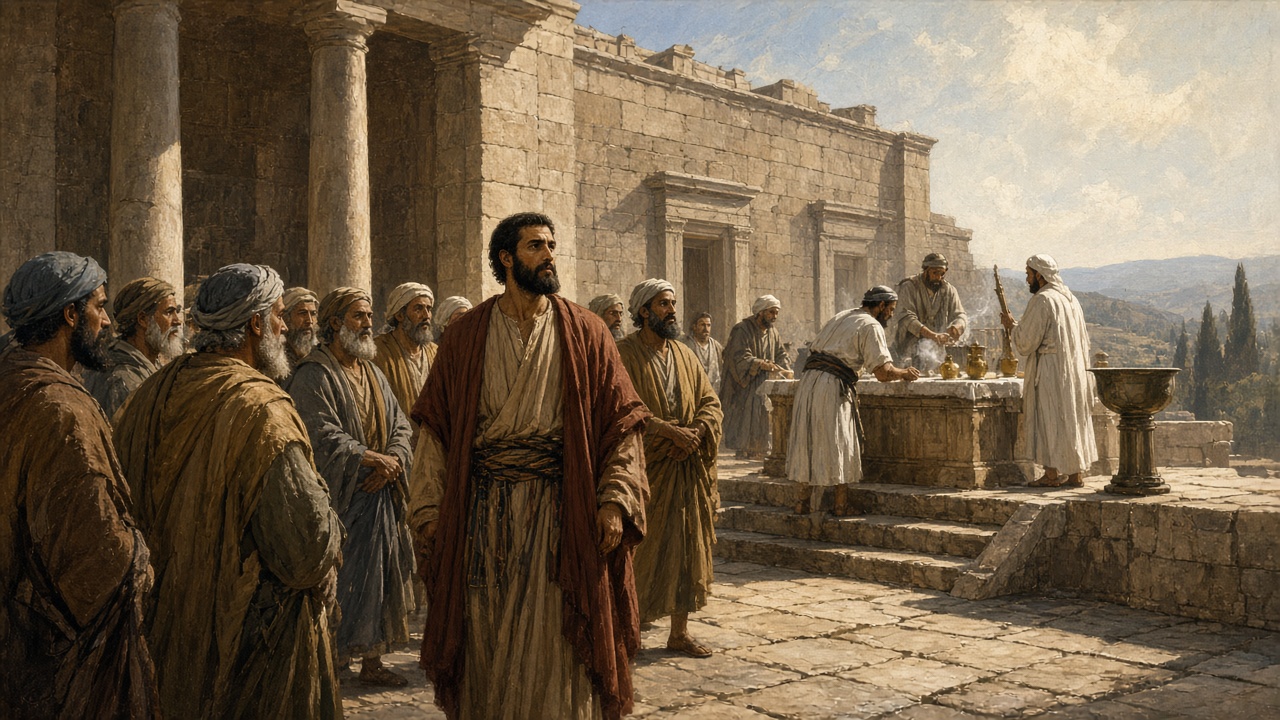
- The priests are rebuked for offering blind, lame, and diseased animals on the altar rather than unblemished livestock. Malachi exposes their disrespect by asking whether a civil governor would accept such inferior gifts.Sources: the Bible text itself
Notes written with AI assistance from open sources (Theographic Bible Metadata, CC BY-SA 4.0; Easton’s Bible Dictionary, public domain) and reviewed before publishing.
Places in this chapter
- Edom · 30.746, 35.604 · verse 4
Only places identified with high confidence are shown (90% or more according to the scholarly sources compiled by OpenBible). Period map: DARE (Digital Atlas of the Roman Empire), CC BY 4.0; modern map: © OpenStreetMap contributors; places: OpenBible.info (CC BY 4.0).
Credits and license for this translation
Geeshsha Mas'aafaa
The Holy Bible in the Dawuro language of Ethiopia, Latin script
copyright © 2024 The Word for the World International
Language: (Dawro)
Contributor: The Word for the World International
This translation is made available to you under the terms of the
Creative Commons Attribution Share-Alike license 4.0.
You have permission to share and redistribute this Bible translation in any format and to make reasonable revisions and adaptations of this translation, provided that:
You include the above copyright and source information.
If you make any changes to the text, you must indicate that you did so in a way that makes it clear that the original licensor is not necessarily endorsing your changes.
If you redistribute this text, you must distribute your contributions under the same license as the original.
Pictures included with Scriptures and other documents on this site are licensed just for use with those Scriptures and documents.
For other uses, please contact the respective copyright owners.
Note that in addition to the rules above, revising and adapting God's Word involves a great responsibility to be true to God's Word. See Revelation 22:18-19.
2025-05-01
Source: http://ebible.org/dwrl/ · eBible.org