Romanos 16
Beibel: okanisi tongo · Toca un versículo para ver sus referencias cruzadas.
Fa fu puu Feibe a boto anda
1Mi e begi u taki, Feibe o kon a u de wan dei. Da u solugu en bun gi mi. Bika ai biibi wi Masaa enke u de seefi. A de wan bun wookoman fu Masaa a mindii fu taa biibiwan a Kenkeleyen Foto. 2Puu en a boto wan fasi, di fiti wan biibiwan enke u seefi, di abi Masaa Jesesi. Solugu en fiti fa biibiwan mu luku taawan. Taampu anga en na ala san a teke fu du. Bika enseefi lobi yeepi taawan, enke fa a be solugu mi somen leisi.
Pawlesi sende odi gi wan // duupu biibiwan
3Tyai odi go doo Pelesela anga en man Akwila de. Den be mokisa makandii anga mi, na a wooko fu Kelestesi Jesesi. 4Den be puu mi a dede mofu seefi, soseefi poti den eigi libi a tiki ede, fu a wooko de ete. Da mi á poi gi den daa sai. Somen biibiwan anda mu fende a daa ya tu. Taa foluku biibiwan seefi mu gi den daa, fu san den du gi mi.
5Meke odi go doo biibiwan di e miti begi makandii a den Akwila osu. Odi mu go doo mi gaan mati Epeneitesi, di fosi teke biibi na a pisiwataa fu Asiya anda, fu komoto a takuudu anga ogii. Bika ne en baka futu taawan teke. 6Gi odi doo Maliya de gi mi. A de wan bun wookoman fu Masaa Jesesi, di tyotyo tyai somen yeepi gi u de seefi. 7Odi mu go doo mi eigi Dyusama Adonikesi anga en uman, Yuniya, di be sooto makandii anga mi. Ala sama sabi taki, Kelestesi Jesesi teke den enke apaiti bosikopuman. Den be de biibisama fosi mi ya seefi. 8Gi odi go doo mi gaan mati Ampiliyatesi. A de biibiwan makandii anga wi, fu abi Kelestesi enke Masaa tu. 9Odi mu go doo Elibanesi tu, di seefi be mokisa anga mi, fu wooko gi Kelestesi. Bali mi gaan mati Stakesi seefi odi gi mi de.
10Gaan odi mu go doo Apelesi di be teke gaan pina, ma a be oli biibi pasa dati, fu teke kai fitoow bakaman fu Kelestesi. Tyai odi go doo ala biibiwan di de wookoman a ini Alistobolesi osu. 11Bali mi eigi Dyusama Helodiyoni wan gaanbigi odi, gi mi tu. Mi e sende odi go doo ala biibiwan, di e tan a ini Nalisesi osu tu. 12Bali Tilipeina anga Tilifosa odi gi mi. Den tu uman ya tyotyo na a wooko fu wi Masaa. Odi mu doo Pelsisi tu, enke wan uman di tyotyo na a wooko ya tu, fu tyai somen yeepi. 13Gi Lufosi odi! Masaa Gadu teke en wan apaiti fasi poti a u de mindii. Odi mu doo en mma seefi di e wooko anga mi enke eigi manpikin, di a meke.
14Bali odi na Asinkeletesi, soseefi Feleikon. Helilmesi, soseefi Patolobesi anga Helimasi. Gi odi doo ala biibiwan, di e miti fu begi makandii anga den disi. 15Odi mu doo Filologesi anga en uman Julija. Nelosi anga en sisa tu. Olimpasi anga ala biibiwan di e miti fu begi makandii anga den disi tu. 16Bali ala biibiwan anda wan switi odi a ini a nen fu Masaa gi wi. Odi komoto dise seefi e kon anda, fu den kulu biibiwan dise.
17Biibiwan! Mi e begi u, fu luku bun anga falisi leliman. Den e waka e leli sani di kengi anga di fu apaiti bosikopuman fu Kelestesi. Da den e tyai paati, fu meke paitei biibiwan di nái go anga denseefi, meke somen sama e lasi Masaa Gadu pasi. Da ná mosoo anga den! 18Bika den nái wooko gi wi Masaa Jesesi Kelestesi. Ma na fu tyai wini gi denseefi. Den tongo gaata, fu taki kisi sama poti a den ondoo. Da den e poti falisi pakisei namo, gi sama di nái denki fu luku bun anga den. 19Bika u dati nen bali taki, u e waka a Kelestesi pasi. Dati e piisii mi ati. Ma mi e wasikoi u ete, fu wooko koni anga u fusutan, fu sabi san bun fu du. Meke a fusutan sa de sondee fu mokisa wan doopu ogii de. 20Da gawgaw, Masaa Gadu o booko didibii makiti gi u, fu sama á sa poi tyai paati de moo. Bika a wani u ala ati de switi makandii. Wi Masaa Jesesi mu tan taampu gi u de, fu teke gaan bun ati fasi namo luku u de.
21Bigi odi komoto a Timotiyesi ya doo u anda. A mokisa e wooko anga mi, gi Kelestesi Jesesi. Lusiyasi anga Yason anga Sosipateli e sende odi tu. Den dii biibiwan ya, na mi eigi foluku sama enke Dyu tu.
22We, na Pawlesi e taki na a biifi ya. Ma na mi enke Telitiyosi e sikiifi gi en ya. Mi seefi e sende odi gi u anda tu. Bika mi anga u e biibi a seefi Masaa makandii.
23Odi komoto a Gaayosi, di oli wi ne en osu, e solugu, di u doo ya. A kulu biibiwan, di e miti begi makandii ne en osu e sende odi tu. Elastesi seefi, enke a lantiman di e oli moni fu a foto ya, fu pai sama. Odi komoto tu, a wi biibi baala Kwalitesi. 24Mi e begi ya baka, meke wi Masaa Jesesi Kelestesi tan teke gaan bun ati fasi namo luku u de. Amen, na so a de!
25Mi e gafa Masaa Gadu, di poi gi u taanga. Na so en Bun Nyunsu di mi e gi, e soi wi. Da na Jesesi Kelestesi tyai a yeepi ya, enke fa a be de Masaa Gadu pakisei, di noiti wanten a be puu kon a kiin. Da a be de wan kibii toli. 26Ma na now, a puu dati kon a kiin, gi en wookoman enke mi ya. Meke taawan sa fusutan san a be piki apaiti takiman, fu sikiifi a fositen anda taki, a musu kon pasa. Da ne en enke Awan di e libi tego sende wi now, fu tyai dati go doo taa foluku, fu teke biibi tu. 27Disi na awan kodo Gadu di de, da ai wooko anga gaan koni naamo. Na sowan fasi, u si taki, a sende Jesesi Kelestesi kon yeepi wi. Da meke u bali gafa en, nownow tego! Amen, na so a de!
¿Sabías que…?
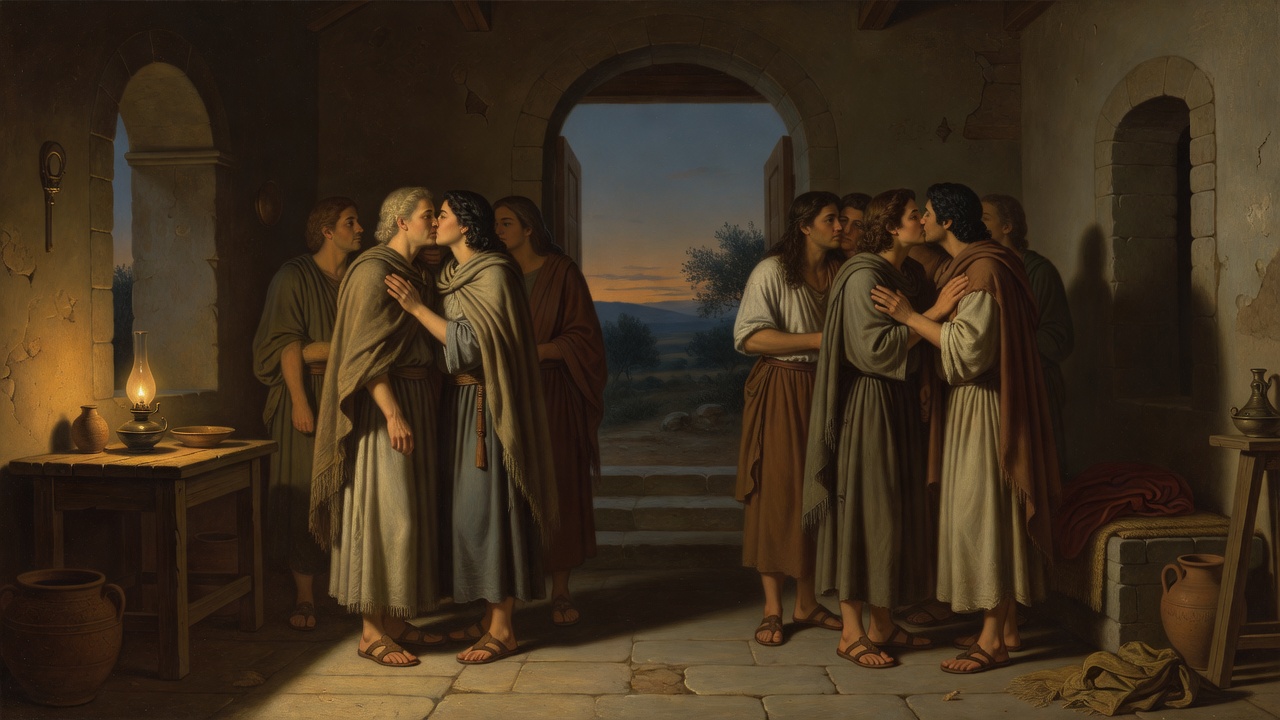
Saludos a la iglesia en Roma
- Pablo recomienda a Febe, sierva de la iglesia en Cencrea, y pide a los destinatarios en Roma que la reciban bien y la ayuden en lo que necesite, porque ha sido de gran ayuda para mucha gente, incluido él. Cencrea era el puerto oriental de Corinto, a unas nueve millas al este de la ciudad y la salida de su comercio con las costas asiáticas del Mediterráneo; el Easton's Bible Dictionary (1897) dice que ella probablemente fue quien llevó esta carta.Fuentes: el propio texto bíblico · Phebe · Cenchreae
- Pablo saluda a Prisca y a Aquila, sus colaboradores en Cristo Jesús, que arriesgaron la vida por él, y también a la iglesia que se reúne en su casa; dice que no solo él, sino todas las iglesias de los gentiles les están agradecidas. El Easton's Bible Dictionary (1897) la llama Priscila y describe a Aquila como fabricante de tiendas, natural del Ponto, que con su esposa dejó Roma a causa de un decreto de Claudio, en el año 50 d. C., que ordenaba a todos los judíos salir de la ciudad; el nombre de ella a veces aparece antes que el de él, como aquí.Fuentes: el propio texto bíblico · Priscilla · Aquila
- Cerca del final, Tercio, quien puso la carta por escrito, añade su propio saludo. Gayo, que ha hospedado a Pablo y a toda la iglesia, también envía saludos, al igual que Erasto, el tesorero de la ciudad, y Cuarto.Fuentes: el propio texto bíblico
Notas escritas con ayuda de IA a partir de fuentes abiertas (Theographic Bible Metadata, CC BY-SA 4.0; Easton’s Bible Dictionary, dominio público) y revisadas antes de publicarse.
Lugares de este capítulo
Solo aparecen lugares identificados con alta confianza (90 % o más según las fuentes académicas reunidas por OpenBible). Mapa de la época: DARE (Digital Atlas of the Roman Empire), CC BY 4.0; mapa actual: © colaboradores de OpenStreetMap; lugares: OpenBible.info (CC BY 4.0).
Créditos y licencia de esta traducción
Beibel: okanisi tongo
New Testament in Eastern Maroon Creole (NS:djk:Eastern Maroon Creole)
copyright © 2009 Wycliffe Bible Translators, Inc.
Language: Eastern Maroon Creole
Translation by: Wycliffe Bible Translators, Inc.
Eastern Maroon Creole
djk
Suriname
Copyright Information
© 2009, Wycliffe Bible Translators, Inc. All rights reserved.
This translation text is made available to you under the
terms of the Creative Commons License: Attribution-Noncommercial-No Derivative Works.
( http://creativecommons.org/licenses/by-nc-nd/3.0/ )
In addition, you have permission to port the text to different file formats, as long as you
do not change any of the text or punctuation of the Bible.
You may share, copy, distribute, transmit, and extract portions
or quotations from this work, provided that you include the above copyright
information:
You must give Attribution to the work.
You do not sell this work for a profit.
You do not make any derivative works that change any of the actual words or punctuation of the Scriptures.
Permissions beyond the scope of this license may be
available if you contact
us with your request.
The New Testament
in Eastern Maroon Creole
© 2009, Wycliffe Bible Translators, Inc. All rights reserved.
This translation is made available to you under the terms of the
Creative Commons Attribution-Noncommercial-No Derivatives license 4.0.
You may share and redistribute this Bible translation or extracts from it in any format, provided that:
You include the above copyright and source information.
You do not sell this work for a profit.
You do not change any of the words or punctuation of the Scriptures.
Pictures included with Scriptures and other documents on this site are licensed just for use with those Scriptures and documents.
For other uses, please contact the respective copyright owners.
2014-04-22
Fuente: http://ebible.org/djkNT/ · eBible.org