Romans 16
Beibel: okanisi tongo · Tap a verse to see its cross-references.
Fa fu puu Feibe a boto anda
1Mi e begi u taki, Feibe o kon a u de wan dei. Da u solugu en bun gi mi. Bika ai biibi wi Masaa enke u de seefi. A de wan bun wookoman fu Masaa a mindii fu taa biibiwan a Kenkeleyen Foto. 2Puu en a boto wan fasi, di fiti wan biibiwan enke u seefi, di abi Masaa Jesesi. Solugu en fiti fa biibiwan mu luku taawan. Taampu anga en na ala san a teke fu du. Bika enseefi lobi yeepi taawan, enke fa a be solugu mi somen leisi.
Pawlesi sende odi gi wan // duupu biibiwan
3Tyai odi go doo Pelesela anga en man Akwila de. Den be mokisa makandii anga mi, na a wooko fu Kelestesi Jesesi. 4Den be puu mi a dede mofu seefi, soseefi poti den eigi libi a tiki ede, fu a wooko de ete. Da mi á poi gi den daa sai. Somen biibiwan anda mu fende a daa ya tu. Taa foluku biibiwan seefi mu gi den daa, fu san den du gi mi.
5Meke odi go doo biibiwan di e miti begi makandii a den Akwila osu. Odi mu go doo mi gaan mati Epeneitesi, di fosi teke biibi na a pisiwataa fu Asiya anda, fu komoto a takuudu anga ogii. Bika ne en baka futu taawan teke. 6Gi odi doo Maliya de gi mi. A de wan bun wookoman fu Masaa Jesesi, di tyotyo tyai somen yeepi gi u de seefi. 7Odi mu go doo mi eigi Dyusama Adonikesi anga en uman, Yuniya, di be sooto makandii anga mi. Ala sama sabi taki, Kelestesi Jesesi teke den enke apaiti bosikopuman. Den be de biibisama fosi mi ya seefi. 8Gi odi go doo mi gaan mati Ampiliyatesi. A de biibiwan makandii anga wi, fu abi Kelestesi enke Masaa tu. 9Odi mu go doo Elibanesi tu, di seefi be mokisa anga mi, fu wooko gi Kelestesi. Bali mi gaan mati Stakesi seefi odi gi mi de.
10Gaan odi mu go doo Apelesi di be teke gaan pina, ma a be oli biibi pasa dati, fu teke kai fitoow bakaman fu Kelestesi. Tyai odi go doo ala biibiwan di de wookoman a ini Alistobolesi osu. 11Bali mi eigi Dyusama Helodiyoni wan gaanbigi odi, gi mi tu. Mi e sende odi go doo ala biibiwan, di e tan a ini Nalisesi osu tu. 12Bali Tilipeina anga Tilifosa odi gi mi. Den tu uman ya tyotyo na a wooko fu wi Masaa. Odi mu doo Pelsisi tu, enke wan uman di tyotyo na a wooko ya tu, fu tyai somen yeepi. 13Gi Lufosi odi! Masaa Gadu teke en wan apaiti fasi poti a u de mindii. Odi mu doo en mma seefi di e wooko anga mi enke eigi manpikin, di a meke.
14Bali odi na Asinkeletesi, soseefi Feleikon. Helilmesi, soseefi Patolobesi anga Helimasi. Gi odi doo ala biibiwan, di e miti fu begi makandii anga den disi. 15Odi mu doo Filologesi anga en uman Julija. Nelosi anga en sisa tu. Olimpasi anga ala biibiwan di e miti fu begi makandii anga den disi tu. 16Bali ala biibiwan anda wan switi odi a ini a nen fu Masaa gi wi. Odi komoto dise seefi e kon anda, fu den kulu biibiwan dise.
17Biibiwan! Mi e begi u, fu luku bun anga falisi leliman. Den e waka e leli sani di kengi anga di fu apaiti bosikopuman fu Kelestesi. Da den e tyai paati, fu meke paitei biibiwan di nái go anga denseefi, meke somen sama e lasi Masaa Gadu pasi. Da ná mosoo anga den! 18Bika den nái wooko gi wi Masaa Jesesi Kelestesi. Ma na fu tyai wini gi denseefi. Den tongo gaata, fu taki kisi sama poti a den ondoo. Da den e poti falisi pakisei namo, gi sama di nái denki fu luku bun anga den. 19Bika u dati nen bali taki, u e waka a Kelestesi pasi. Dati e piisii mi ati. Ma mi e wasikoi u ete, fu wooko koni anga u fusutan, fu sabi san bun fu du. Meke a fusutan sa de sondee fu mokisa wan doopu ogii de. 20Da gawgaw, Masaa Gadu o booko didibii makiti gi u, fu sama á sa poi tyai paati de moo. Bika a wani u ala ati de switi makandii. Wi Masaa Jesesi mu tan taampu gi u de, fu teke gaan bun ati fasi namo luku u de.
21Bigi odi komoto a Timotiyesi ya doo u anda. A mokisa e wooko anga mi, gi Kelestesi Jesesi. Lusiyasi anga Yason anga Sosipateli e sende odi tu. Den dii biibiwan ya, na mi eigi foluku sama enke Dyu tu.
22We, na Pawlesi e taki na a biifi ya. Ma na mi enke Telitiyosi e sikiifi gi en ya. Mi seefi e sende odi gi u anda tu. Bika mi anga u e biibi a seefi Masaa makandii.
23Odi komoto a Gaayosi, di oli wi ne en osu, e solugu, di u doo ya. A kulu biibiwan, di e miti begi makandii ne en osu e sende odi tu. Elastesi seefi, enke a lantiman di e oli moni fu a foto ya, fu pai sama. Odi komoto tu, a wi biibi baala Kwalitesi. 24Mi e begi ya baka, meke wi Masaa Jesesi Kelestesi tan teke gaan bun ati fasi namo luku u de. Amen, na so a de!
25Mi e gafa Masaa Gadu, di poi gi u taanga. Na so en Bun Nyunsu di mi e gi, e soi wi. Da na Jesesi Kelestesi tyai a yeepi ya, enke fa a be de Masaa Gadu pakisei, di noiti wanten a be puu kon a kiin. Da a be de wan kibii toli. 26Ma na now, a puu dati kon a kiin, gi en wookoman enke mi ya. Meke taawan sa fusutan san a be piki apaiti takiman, fu sikiifi a fositen anda taki, a musu kon pasa. Da ne en enke Awan di e libi tego sende wi now, fu tyai dati go doo taa foluku, fu teke biibi tu. 27Disi na awan kodo Gadu di de, da ai wooko anga gaan koni naamo. Na sowan fasi, u si taki, a sende Jesesi Kelestesi kon yeepi wi. Da meke u bali gafa en, nownow tego! Amen, na so a de!
Did you know?
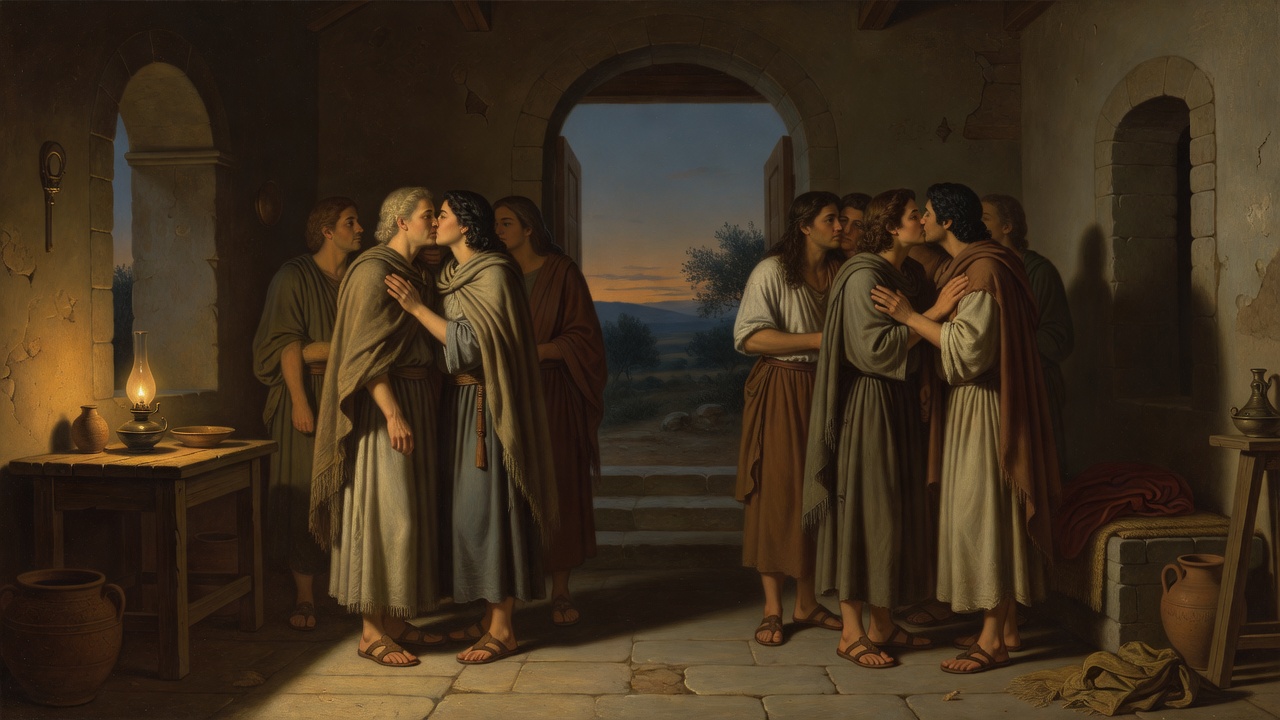
Greetings to the church in Rome
- Paul commends Phoebe, a servant of the church in Cenchrea, and asks the recipients in Rome to welcome her and help her with whatever she needs, because she has been a great help to many people, including him. Cenchrea was the eastern harbor of Corinth, about nine miles east of the city and the outlet for its trade with the Asiatic shores of the Mediterranean; Easton's Bible Dictionary (1897) says she was probably the bearer of this letter.Sources: the Bible text itself · Phebe · Cenchreae
- Paul greets Prisca and Aquila, his fellow workers in Christ Jesus, who risked their lives for him, and also the church that meets in their house; he says that not only he but all the churches of the Gentiles are grateful to them. Easton's Bible Dictionary (1897) calls her Priscilla and describes Aquila as a tent-maker from Pontus who, with his wife, left Rome because of a decree of Claudius in A.D. 50 commanding all Jews to leave the city; her name sometimes comes before his, as it does here.Sources: the Bible text itself · Priscilla · Aquila
- Near the close, Tertius, who wrote the letter down, adds his own greeting. Gaius, who has hosted Paul and all the church, also sends greetings, as do Erastus, the city treasurer, and Quartus.Sources: the Bible text itself
Notes written with AI assistance from open sources (Theographic Bible Metadata, CC BY-SA 4.0; Easton’s Bible Dictionary, public domain) and reviewed before publishing.
Places in this chapter
Only places identified with high confidence are shown (90% or more according to the scholarly sources compiled by OpenBible). Period map: DARE (Digital Atlas of the Roman Empire), CC BY 4.0; modern map: © OpenStreetMap contributors; places: OpenBible.info (CC BY 4.0).
Credits and license for this translation
Beibel: okanisi tongo
New Testament in Eastern Maroon Creole (NS:djk:Eastern Maroon Creole)
copyright © 2009 Wycliffe Bible Translators, Inc.
Language: Eastern Maroon Creole
Translation by: Wycliffe Bible Translators, Inc.
Eastern Maroon Creole
djk
Suriname
Copyright Information
© 2009, Wycliffe Bible Translators, Inc. All rights reserved.
This translation text is made available to you under the
terms of the Creative Commons License: Attribution-Noncommercial-No Derivative Works.
( http://creativecommons.org/licenses/by-nc-nd/3.0/ )
In addition, you have permission to port the text to different file formats, as long as you
do not change any of the text or punctuation of the Bible.
You may share, copy, distribute, transmit, and extract portions
or quotations from this work, provided that you include the above copyright
information:
You must give Attribution to the work.
You do not sell this work for a profit.
You do not make any derivative works that change any of the actual words or punctuation of the Scriptures.
Permissions beyond the scope of this license may be
available if you contact
us with your request.
The New Testament
in Eastern Maroon Creole
© 2009, Wycliffe Bible Translators, Inc. All rights reserved.
This translation is made available to you under the terms of the
Creative Commons Attribution-Noncommercial-No Derivatives license 4.0.
You may share and redistribute this Bible translation or extracts from it in any format, provided that:
You include the above copyright and source information.
You do not sell this work for a profit.
You do not change any of the words or punctuation of the Scriptures.
Pictures included with Scriptures and other documents on this site are licensed just for use with those Scriptures and documents.
For other uses, please contact the respective copyright owners.
2014-04-22
Source: http://ebible.org/djkNT/ · eBible.org