Mateo 8
Beibel: okanisi tongo · Toca un versículo para ver sus referencias cruzadas.
Masaa Jesesi deesi wan gwasiman
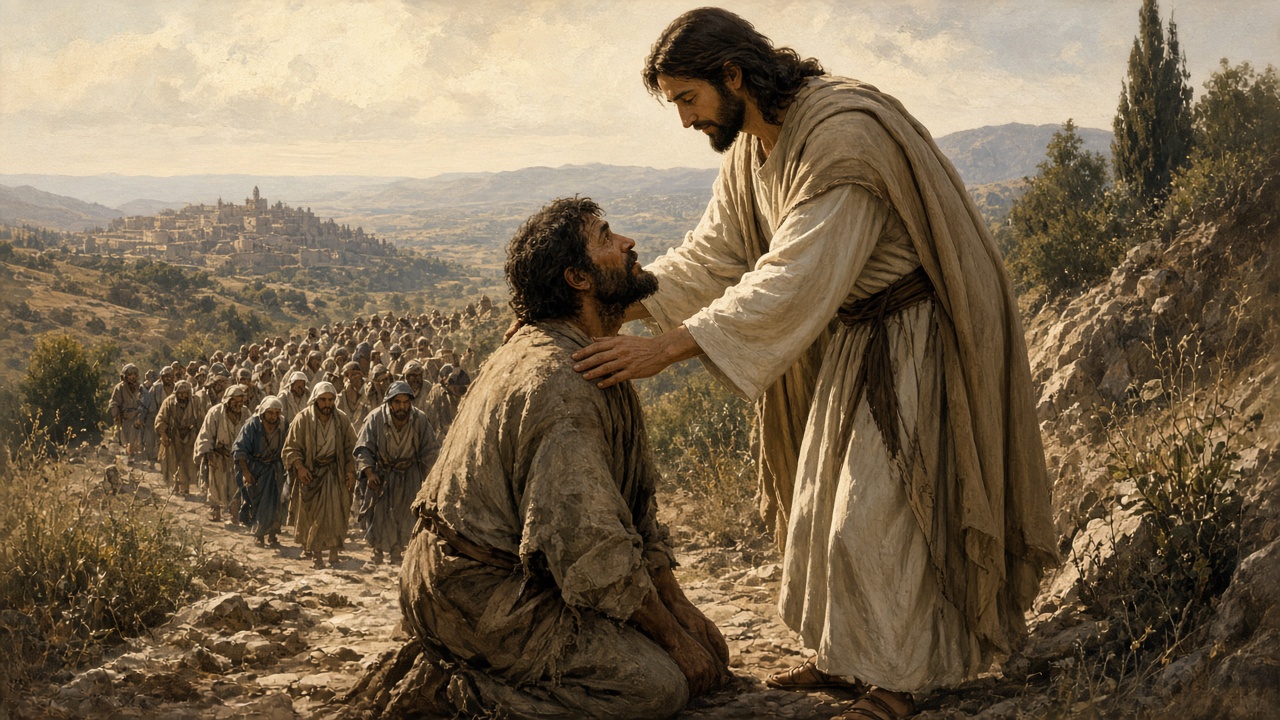
1Namo Masaa Jesesi saka a pikin mongo kon a ondoo baka. Da tyaipi sama be de ne en baka e waka. 2Wan gwasiman dati be de a ini den sama. Ne a lon kon sutu kini a doti gi Masaa Jesesi. Da ai begi taki: “Masaa! Yu sa wani deesi mi? We, da gaantangi deesi mi, no baa?”
3Ne wanten wanten, ne Masaa Jesesi langa ana oli en, taki: “Eeye! Mi wani i kon bun.” Da Masaa Jesesi á kaba taki seefi, a gwasi fu a man gwe kaba. A kon bun kele kele. 4Namo Masaa Jesesi taigi en taki: “Yee ya! Yu á mu go taigi sama fa i du kon bun so! San i mu du, da go a den apaiti begiman na a Mama Keliki a Jelusalem Foto, meke den si fa i kon bun. Soseefi tyai a paiman go pai de, enke fa Mosesi weiti taki, gwasiman mu pai, te den kon bun. Da na dati o meke den sama de si taki, i kon bun tuutuu.”
Masaa Jesesi deesi a futuboi fu a ofisii
5We, ne Masaa Jesesi o komoto go a wan foto, den e kai Kafalnayemu Foto. Na ape a de, wan ofisii fu den suudati fu Loma Foto, lon kon begi en wan sani. 6A taki: “Masaa! Wan fu den futuboi fu mi lan didon a osu. Ai dede anga sikin ati.”
7Ne Masaa Jesesi piki en wanten taki: “Mi o kon anda, fu kon deesi en gi yu.”
8A ofisii piki en baka taki: “Nono Masaa! Bika mi á waiti sai taki, i sa poti i futu a ini mi osu. Na wan wowtu namo mi wani i taki. Da mi futuboi musu kon bun.” 9Soseefi a ofisii taki go doo taki: “Bika mi seefi abi basi a mi tapu. Den e sende mi sani, da mi musu fu du, san den e sende mi. Mi abi suudati a mi ondoo. Den musu fu du, ala san mi e sende den. Efu mi sende wan go a wan peesi, a musu fu go. Mi taigi wan taki, kon! A musu fu kon. Mi taigi wan taki, du so! A musu fu du so.”
10Masaa Jesesi aliki, fa a ofisii fu suudati ya taki, te a kaba. Ne a sani foondoo en te, a daai wanten luku ala sama di taampu ape taki: “Oho! A man di biibi mi a biibi ya! A ná Dyusama, seefi! Ma Dyusama seefi á de di biibi mi a fasi ya wanten. Senten mi e waka lontu a Dyu Kondee, mi á si Dyusama di biibi mi so wanten.” 11Soseefi a taki go doo taki: “Fu tuu! I si fa a man ya biibi mi tide ya? Na letiso somen taa foluku, di á de Dyusama o de na ala uku fu goontapu di o kon sabi fa Masaa Gadu abi makiti. Na den dati o de a ini a Nyun Tii fu Masaa Gadu Kondee a tapu anda, makandii anga den moo gaandi avo gaansama fu wi Dyusama ya, Abalaham, Isaki anga Jakopu. Da na den o sidon makandii anda na a seefi tafaa, fu meke piisii makandii. 12Ma a ná Dyusama Masaa Gadu o tyai go a ini a Nyun Tii fu Masaa Gadu Kondee a tapu anda, no? Weeno! Ma toku, somen fu den o kai gwe a ini a sitaafu peesi pe soso kee anga tyali de, fu di den nái biibi mi.”
13Namo Masaa Jesesi daai go taigi a ofisii taki: “Go a osu fi i! Ala sani musu waka enke fa yu biibi taki mi o du.” Ne a seefi yuu di Masaa Jesesi taki so, ne a futuboi fu a ofisii, kon bun kelle.
Masaa Jesesi deesi somen sikiman
14Moo lati, ne Masaa Jesesi go a Peitilisi osu. Ne a go si a main fu Peitilisi didon anga feba a kama tapu anda. 15Namo a oli a uman de wan ana namo, ne a feba saka wanten. Ne a main fu Peitilisi ya opo go seeka sani fu nyan gi Masaa Jesesi anga den taawan wanten.
16Fa i si neti e doo, sama fu a kondee de seefi tyai somen sama di abi takuu jeje a den tapu kon a Masaa Jesesi. Da Masaa Jesesi e bali den takuu jeje wan kodo mofu namo. Da ala den e komoto wanten wanten a den sama tapu gwe. Soseefi Masaa Jesesi be e deesi ala sama di be abi taanga siki de tu. Ala sikiman be kon betee so moimoi. 17A hii sani ya e waka enke fa Masaa Gadu be piki Jesaja, a fositen apaiti takiman fi en, fu sikiifi taki, dati o kon pasa bakaten. Bika a be sikiifi taki:
“A teke ala u takuu siki puu a u tapu.
Da enseefi tyai wi siki anga wi nowtu gi wi.”
Masaa Jesesi soi fa a tan fu waka // ne en baka
18Namo Masaa Jesesi si taki, somen sama kon lontu en. We, ne ai go fu abaa go na abaase fu a ze, anga den bakaman fi en. 19Namo wan leliman fu Dyuweiti lon kon akisi en taki: “Mesiti! Mi wani kon waka a i baka. Mi wani go na ala pe yu e go.”
20Masaa Jesesi piki en wanten taki: “I sabi san i akisi mi de? I sabi taki, boo peesi á de ya gi mi, enke fa foo abi nesi fu boo? I sabi taki, olo seefi á de ya gi mi fu go didon boo, enke fa busi dagu abi olo fu go didon boo? Bika a Manpikin di saka kon toon libisama ya, da osu á de ya gi en, fu go sidon teke boo.”
21Namo wan fu den bakaman fu Masaa Jesesi dati kon taigi Masaa Jesesi taki: “Masaa! Fosi mi kon waka a yu baka, i sa gi mi pasi fu go beli mi dda fosi, baa?”
22Ne Masaa Jesesi piki en dati taki: “Man! Waka a mi baka. Fika den dede, meke den beli den dede.”
Masaa Jesesi kaasi a seke wataa // anga a winta fu tan pii
23Namo, ne Masaa Jesesi go a ini a boto. Ne den bakaman fi en seefi teke ne en baka. 24A yuu di den e gwe, a wataa e seke te! Den gaan paana e naki kon a ini a boto ogii ogii. Ma Masaa Jesesi didon pii e siibi. 25Na den bakaman fi en e feele te, ne den go weki en. Da den e bali taki: “Oho, oho, oho! Masaa yeepi, no? I nái si taki, wi o dede, no?”
26Namo Masaa Jesesi piki den taki: “Den sama ya! U nái biibi mi sai! Saide u e feele so?” Namo a opo, bali a winta anga a seke wataa taki: “Seke wataa anga winta! U tan pii!” Bakadati, ala sani koo pii tuu.
27Den sama di be de ape foondoo, te a ná sipowtu. Da den e taki: “Sama na a sama ya seefi? A abi makiti te, winta anga seke wataa seefi mu e teke en taki.”
Masaa Jesesi puu takuu jeje // a sama tapu
28Ne di den doo na a pisi fu den Gadaleini sama, na abaase fu Galileya ze, ne tu man waka kon ne en. Da takuu jeje be de a den tu man ya tapu. Den komoto a den siton olo pe den e beli dedesama e kon. Da ná wan sama be poi fu waka na a pisi pasi ya, bika den tu man ya be ogii seefi seefi. 29Ma di den si Masaa Jesesi, ne den bali wanten taki: “Pikin fu Masaa Gadu! San wi anga yu abi, meke i kon ya? Na kon i kon poti wi a sitaafu, fosi a yuu fu kisi sitaafu seefi doo?”
30Da wan duupu agu be de na a pisi kondee de. Bika sama be e kweki agu ape. 31Namo den takuu jeje, di de a den tu sama tapu begi Masaa Jesesi taki: “Gaantangi, baa! Te i puu wi a den tu sama ya tapu, gi wi pasi fu go a ini den agu anda, baa?”
32Namo Masaa Jesesi sende den taki: “Pasa go anda wanten!” Ne wanten wanten, ne den komoto go a ini den agu anda ini. Bakadati, ne ala den agu lon komoto a wan mongo ede, kai go dede a ini a ze. 33Ne den sama di be luku den agu lon go a foto, go taki san pasa ya. 34Namo den sama fu a foto aliki a hii toli, te a kaba. Ne den booko go miti Masaa Jesesi. Ne den begi en gaantangi tangi, fu a gwe komoto na a pisi kondee pe den e tan de.
¿Sabías que…?
Curaciones, fe y el mar
- Capernaum, la ciudad a la que Jesús entra en este capítulo, era una ciudad de Galilea que no se menciona en el Antiguo Testamento. El Easton's Bible Dictionary (1897) dice que llegó a ser “su propia ciudad” después de que dejó Nazaret, e incluye la súplica del centurión y la curación en la casa de Pedro entre los hechos situados allí.Fuentes: Capernaum · el propio texto bíblico
- Jesús dice que muchos vendrán del oriente y del occidente para compartir el banquete con Abraham, Isaac y Jacob en el reino de los cielos. El Easton's Bible Dictionary (1897) presenta a Abraham como hijo de Taré y heredero de las promesas, a Isaac como el único hijo de Abraham con Sara, y a Jacob —también llamado Israel— como el hijo gemelo menor de Isaac y Rebeca.Fuentes: el propio texto bíblico · Abraham · Isaac · Jacob (Israel)
- Mateo presenta las curaciones de aquella noche como cumplimiento de lo dicho por medio del profeta Isaías: “Él tomó nuestras dolencias y cargó con nuestras enfermedades.” El Easton's Bible Dictionary (1897) identifica a Isaías como hijo de Amoz, que profetizó durante los reinados de Uzías, Jotam, Acaz y Ezequías.Fuentes: el propio texto bíblico · Isaiah
Notas escritas con ayuda de IA a partir de fuentes abiertas (Theographic Bible Metadata, CC BY-SA 4.0; Easton’s Bible Dictionary, dominio público) y revisadas antes de publicarse.
Lugares de este capítulo
- Gadara · Hoy: Umm Qais · 32.656, 35.679 · versículo 28
Solo aparecen lugares identificados con alta confianza (90 % o más según las fuentes académicas reunidas por OpenBible). Mapa de la época: DARE (Digital Atlas of the Roman Empire), CC BY 4.0; mapa actual: © colaboradores de OpenStreetMap; lugares: OpenBible.info (CC BY 4.0).
Créditos y licencia de esta traducción
Beibel: okanisi tongo
New Testament in Eastern Maroon Creole (NS:djk:Eastern Maroon Creole)
copyright © 2009 Wycliffe Bible Translators, Inc.
Language: Eastern Maroon Creole
Translation by: Wycliffe Bible Translators, Inc.
Eastern Maroon Creole
djk
Suriname
Copyright Information
© 2009, Wycliffe Bible Translators, Inc. All rights reserved.
This translation text is made available to you under the
terms of the Creative Commons License: Attribution-Noncommercial-No Derivative Works.
( http://creativecommons.org/licenses/by-nc-nd/3.0/ )
In addition, you have permission to port the text to different file formats, as long as you
do not change any of the text or punctuation of the Bible.
You may share, copy, distribute, transmit, and extract portions
or quotations from this work, provided that you include the above copyright
information:
You must give Attribution to the work.
You do not sell this work for a profit.
You do not make any derivative works that change any of the actual words or punctuation of the Scriptures.
Permissions beyond the scope of this license may be
available if you contact
us with your request.
The New Testament
in Eastern Maroon Creole
© 2009, Wycliffe Bible Translators, Inc. All rights reserved.
This translation is made available to you under the terms of the
Creative Commons Attribution-Noncommercial-No Derivatives license 4.0.
You may share and redistribute this Bible translation or extracts from it in any format, provided that:
You include the above copyright and source information.
You do not sell this work for a profit.
You do not change any of the words or punctuation of the Scriptures.
Pictures included with Scriptures and other documents on this site are licensed just for use with those Scriptures and documents.
For other uses, please contact the respective copyright owners.
2014-04-22
Fuente: http://ebible.org/djkNT/ · eBible.org