Hechos 12
Lëk yam · Toca un versículo para ver sus referencias cruzadas.
Kɔc cï gam aacï ŋuɔ̈t ke gum apɛi
1Ë runkä cɔk ëcï baai kööl agut Judia, go bɛ̈ny Judia cɔl Ɣërot Agrïpa kɔc abɛ̈k kɔc cï gam yiic cɔl abaŋ. 2Yeen acï mɛ̈nh Joon cɔl Jemith cɔl atök yeth pal. 3Na le tïŋ ke kɔc Itharel mit puɔ̈th kë cï looi, go Pïtɛr cɔl adɔm ku mac, (yen kënë ë loi rot ɣɔn ciɛm Yan Ayum cïn yic luɔu.) 4Nawën cï Pïtɛr dɔm ku mac, ke thön akuut apuruuk kaŋuan bïk aa tiit. Ku akuɔ̈t tök ë la yic kɔc kaŋuan. Ee cï Ɣërot Agrïpa tak ku bï Pïtɛr ɣäth luk yic aköl Yan Ayum cïn yic luɔu cök ciëën. 5Ku Pïtɛr acï jäl rëër mɛ̈c yic. Ku kɔc cï gam aake ye röök riɛnke apɛi tënë Nhialic.
Atuny Nhialic acï Pïtɛr luɔ̈ny bei ɣön mɛ̈c
6Wɛ̈ɛ̈r yen bï Ɣërot Agrïpa ye cɔl abïï luk yic rial, Pïtɛr ë nin kam apuruuk karou ke tit ye. Ee cï rek cïn arëk karou, ku ɣön mɛ̈c ë tit thok apuruuk kek ke lui akölë. 7Tɛ̈wën nyin yic ka atuny Nhialic bɔ̈ ku kɛ̈ɛ̈c ɣöt thok ku mer ɣöt yic. Ku mɛŋ Pïtɛr kët ku puɔ̈ɔ̈c bï rot jɔt ku lëk ye, “Lɔc rot jɔt! Ku ban yïkɔ̈u!” Nyin yic, ke luɔ̈ŋ awën cï ye rek lööny wei yecin. 8Ku lueel atuny nhial, “Dut yïyic ku ruɔ̈k warku.” Go Pïtɛr yeyic duut ku ruk war, ku lëk atuny nhial ye, “Paat alanhdu yïkɔ̈u ku buɔth ɣa.” 9Go Pïtɛr jäl biaath cök aɣeer, Pïtɛr ë këc kën loi rot deet yic, lɔn nadë ke kë looi atuny nhial ë yic. Ëcï tak ciɛ̈t ye nyuɔ̈th. 10Keek aacï jal tëëk akuɔ̈t tök lɔ̈ɔ̈m, akut apuruuk ke tït, ku benkë rëët akut dɛ̈t ye kek rou lɔ̈ɔ̈m ku jɔlkë ɣet kal thok, kal ye gur thok wëëth cï yethok wɛl geeu. Go kal yethok ŋaany ë rot ku lek aɣeer. Keek aacï jäl la ke cath dhël yic, nawën ka atuny nhial mär.
11Ku jɔl Pïtɛr kë lui rot ye deet yic ku lueel, “Ëmën aca jal ŋic lɔn ye yen yic kënë awën ya tïŋ këcït nyuɔ̈th! Nhialic acä tuɔ̈c atuɔ̈nyde bä bɛ̈n kuɔ̈ny bei Ɣërot Agrïpa cin, ku jɔl aa käk ke ye kɔc Itharel tïŋ ke bïk luɔ̈i ɣa.”
12Nawën ŋic lɔn rëër yen tɛ̈rac, go la pan Maria man Joon Marko. Ku kɔc juëc aake cï kenhïïm kut thïn ë ke rɔ̈ɔ̈k. 13Ku jɔl Pïtɛr ɣöt tɔɔŋ thok aɣeer, go nyan aluaak lui baai cɔl Roda la bï raan ɣöt gut thok la tïŋ. 14Ku ëcï Pïtɛr ŋic röl, go puɔ̈u miɛt apɛi, ku go guɔ kat ke këc ɣöt liep thok, ku le lɛ̈k kɔc lɔn yen ke Pïtɛr yen akääc aɣeer. 15Go kɔc awën rɛ̈ɛ̈r ɣöt lɛ̈k ye, “Yïn acï muɔ̈l!” Go lɛ̈k ke lɔn ë yic yen acï lɛ̈k ke. Gokë lueel, “Ka atiɛ̈mde yen acï bɛ̈n.”
16Ku la Pïtɛr tueŋ ke tɔŋ ɣöt thok, gokë ɣöt ŋaany thok. Gokë tïŋ ku gɛ̈ikë. 17Go Pïtɛr lɛ̈k ke bïk biɛt, ku jɔl tɛ̈t yic ke yen tɛ̈ cï Nhialic ye bɛ̈ɛ̈i bei thïn ɣööt ë mɛ̈c yic ku lëk ke, “Lɛ̈kkë Jemith ku wämäthkuan kɔ̈k yen kë cï rot looi.” Ku jiël bï la tɛ̈dɛ̈t. 18Na la piny bak, go apuruuk ke tït nhïïm la cɔ̈t, ku yekë röt thiëëc kamken, “Yeŋö cï rot looi tënë Pïtɛr?” 19Go Ɣërot Agrïpa apuruuk yɔ̈ɔ̈k bïk yɔ̈ɔ̈p. Ku akëc kë bɛ̈n yök. Go apuruuk cɔl adet thook, ku lëk kɔc kɔc nɔ̈k bï ke nɔ̈k. Tɛ̈wën cï ë kënë rot looi go Ɣërot Agrïpa jäl Judia, ku ben la ceŋ Cetharia.
Antipäth Ɣërot acï thou
20Nawën cï Ɣërot Agrïpa puɔ̈u riääk tënë bäny Tire ku Thidon, gokë la ke ya akut bïk la tïŋ. Ku ë cïk kaŋ lëk Blatuth raan käk pan bɛ̈ny tiit bï wɛ̈tden gam. Ku jɔlkë la tënë Ɣërot Agrïpa ku thiëckë bï dɔ̈ɔ̈r ke ke, rin keek aake ye mïïth yök wun yen mɛc Ɣërot Agrïpa.
21Naɣɔn aköl yen cï Ɣërot Agrïpa lueel bï yen mat ke ke, go ruk alɛ̈thken bääny ku nyuuc thɔ̈nyde nhom ku jiɛɛm ke kɔc. 22Ku jɔl kɔc duɔɔt aa looi ëlä, “Acie raan yen jam, Aciëk.” 23Ee tɛ̈ɛ̈n, Ɣërot Agrïpa acï atuny Nhialic bɛ̈n cɔl atuany, rin cï yen rot looi bï a yen ye door ku cie Nhialic yen ye door. Nawën ke cuet käm tɔ̈ yeyäc yic, ku thou.
24Wɛ̈t Nhialic acï bɛ̈n la tueŋ ku kɔc juëc aacï bɛ̈n gam.
25Ku Barnaba kek Thawul aacï luɔiden bɛ̈n thöl, ku dhukkë Jeruthalem ke cath kek Joon Marko.
¿Sabías que…?
La huida de Pedro y la muerte de Herodes
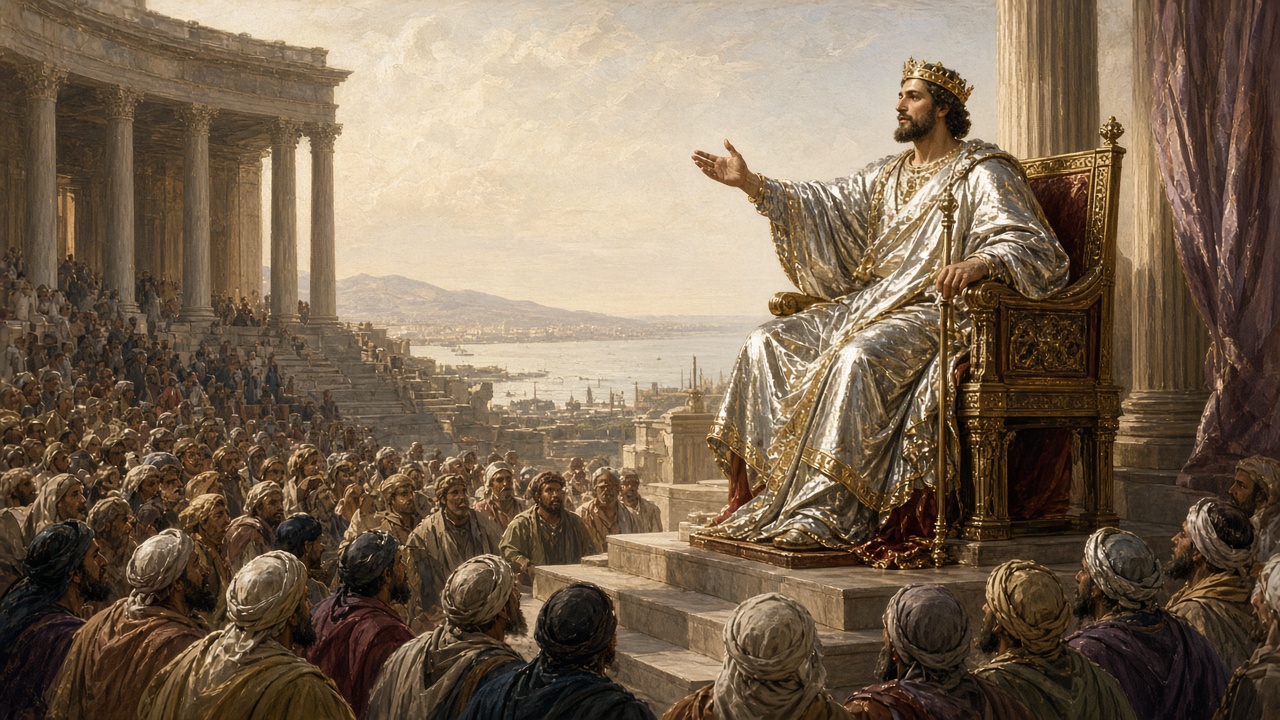
- El rey Herodes de este capítulo es Herodes Agripa I, nieto de Herodes el Grande, que con el tiempo llegó a poseer todo el reino de su abuelo y el título de rey. Hizo matar a Santiago y encarceló a Pedro. El Diccionario Bíblico de Easton (1897) dice que, en el segundo día de una fiesta en honor del emperador Claudio, Agripa apareció en el gran teatro de Cesarea con magníficas vestiduras de plata; era temprano, y los rayos del sol deslumbraban a quienes lo veían.Fuentes: Herod Agrippa I · el propio texto bíblico
- El Santiago muerto a espada era Santiago, hijo de Zebedeo, hermano del apóstolo Juan, un pescador que había trabajado como socio de Pedro. El Diccionario Bíblico de Easton (1897) lo presenta como el primero de los apóstoles en ser muerto y dice que Herodes Agripa lo hizo decapitar. El Santiago a quien Pedro pide que se avise a los creyentes es otro hombre: el mismo diccionario lo identifica como el Santiago que encabezaba la iglesia en Jerusalén.Fuentes: James (Son of Zebedee) · James (Brother of Jesus) · el propio texto bíblico
- Cuando comprendió que estaba libre, Pedro fue a la casa de María, madre de Juan Marcos, en Jerusalén, que el Diccionario Bíblico de Easton (1897) llama lugar habitual de reunión de los discípulos; mucha gente estaba reunida allí orando. La sirvienta que acudió a la puerta exterior se llamaba Rode, nombre que significa una rosa; llena de alegría al oír su voz, corrió adentro para anunciarlo y olvidó abrir la puerta. Juan, llamado también Marcos, era hijo de María —Marcos, su nombre romano, poco a poco reemplazó al nombre judío Juan— y más tarde salió de Jerusalén con Bernabé y Saulo.Fuentes: Mary (Mother of John Mark) · Rhoda · John Mark · el propio texto bíblico
Notas escritas con ayuda de IA a partir de fuentes abiertas (Theographic Bible Metadata, CC BY-SA 4.0; Easton’s Bible Dictionary, dominio público) y revisadas antes de publicarse.
Lugares de este capítulo
- Caesarea · Hoy: Caesarea Maritima · 32.500, 34.892 · versículo 19
- Judea · Hoy: Judea 1 · 31.777, 35.234 · versículo 19
- Sidon · Hoy: Sandikli archaeological site in Sidon · 33.561, 35.372 · versículo 20
- Tyre · 33.271, 35.196 · versículo 20
- Jerusalem · 31.777, 35.234 · versículo 25
Solo aparecen lugares identificados con alta confianza (90 % o más según las fuentes académicas reunidas por OpenBible). Mapa de la época: DARE (Digital Atlas of the Roman Empire), CC BY 4.0; mapa actual: © colaboradores de OpenStreetMap; lugares: OpenBible.info (CC BY 4.0).
Créditos y licencia de esta traducción
Lëk yam
New Testament in Dinka, Southwestern (SU:dik:Dinka, Southwestern)
copyright © 2006 Wycliffe Bible Translators, Inc.
Language: Dinka, Southwestern
Translation by: Wycliffe Bible Translators, Inc.
Dinka, Southwestern
dik
Sudan
Copyright Information
© 2006, Wycliffe Bible Translators, Inc. All rights reserved.
This translation text is made available to you under the
terms of the Creative Commons License: Attribution-Noncommercial-No Derivative Works.
( http://creativecommons.org/licenses/by-nc-nd/3.0/ )
In addition, you have permission to port the text to different file formats, as long as you
do not change any of the text or punctuation of the Bible.
You may share, copy, distribute, transmit, and extract portions
or quotations from this work, provided that you include the above copyright
information:
You must give Attribution to the work.
You do not sell this work for a profit.
You do not make any derivative works that change any of the actual words or punctuation of the Scriptures.
Permissions beyond the scope of this license may be
available if you contact
us with your request.
The New Testament
in Dinka, Southwestern
© 2006, Wycliffe Bible Translators, Inc. All rights reserved.
This translation is made available to you under the terms of the
Creative Commons Attribution-Noncommercial-No Derivatives license 4.0.
You may share and redistribute this Bible translation or extracts from it in any format, provided that:
You include the above copyright and source information.
You do not sell this work for a profit.
You do not change any of the words or punctuation of the Scriptures.
Pictures included with Scriptures and other documents on this site are licensed just for use with those Scriptures and documents.
For other uses, please contact the respective copyright owners.
2014-04-22
Fuente: http://ebible.org/dikNT/ · eBible.org