Mateo 8
Nǫ̀htsı̨̨ Nı̨̨htł'è · Toca un versículo para ver sus referencias cruzadas.
Dǫ wekwǫ̀ tàda t'à eyaelı̨ı̨ sìı k'aàt'ıì ajà
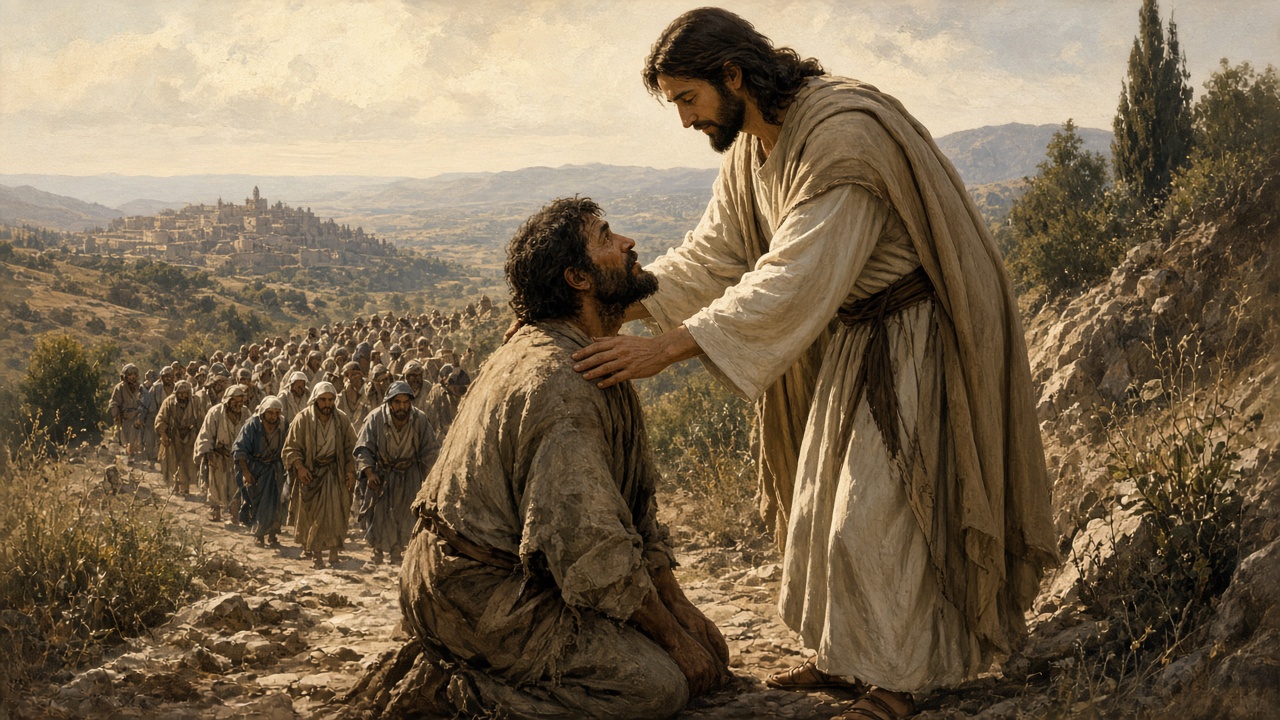
1Zezì shìhka gots'ǫ hodàèhtła ekò dǫ łǫ gık'èè k'edè. 2Dǫ ı̨łè gokwǫ̀ tàda t'à eyaelı̨ı̨ sìı Zezì ts'ǫ̀ èhtła, yets'ǫ̀ nàgòı̨hgè, hadı, “K'àowo, haneewǫ nı̨dè k'aàt'ıì ası̨ı̨le ha dìì-le,” yèhdı.
3Zezì edılà dǫ k'e ayį̀į̀là, hayèhdı, “Hęɂę, hahwhǫ! K'aàt'ıì anede!” yèhdı. Ekòet'ıì wekwǫ̀ tàda whìle ajà. 4Zezì yets'ǫ̀ hadı, “Nets'ǫ̀ dànàhòwoo sìı dǫ wı̨ı̨zìı ts'ǫ̀ haı̨dı-le. Nek'ahoeta gha yahtıı ts'àątła. Moses wenàowoò k'ę̀ę̀ nehołı̨į̀ neghǫ nahoezhe k'èxa yahtıı t'asìı negha k'egııhk'ǫ̀. Hanì-ı̨dè weghàà k'aàt'ıì anaąjà dǫ gık'èezǫ ha,” yèhdı.
Eghǫǫ-dǫǫ̀ gha k'àowo wegha ehkw'ı-ahodı
5Zezì kǫ̀ta Capernaum nììtła ekò eghǫǫ-dǫǫ̀ gha k'àowo Zezì sets'àdı ha nıwǫ t'à yets'ǫ̀ èhtła. 6Eghǫǫ-dǫǫ̀ gha k'àowo hadı, “K'àowo, secheekeè wekw'ǫǫ̀ ełaı̨dè xè hòtł'ò eyaelı̨ t'à sıì daı̨ɂa dìì,” yèhdı.
7Zezì yets'ǫ̀ hadı, “Nexè nekǫ̀ nàhtła gà k'aàt'ıì awehłe ha,” yèhdı.
8Hanìkò eghǫǫ-dǫǫ̀ gha k'àowo yets'ǫ̀ hadı, “K'àowo, sekǫ̀ naątła gha dǫ lahoeht'ı̨-le. Ekìı neyatıì t'à xàyanehtı nı̨dè secheekeè k'aàt'ıì ade ha. 9Sı̨ kò segha k'àowo gǫ̀hłı̨ eyıts'ǫ eghǫǫ-dǫǫ̀ gıgha k'àowo ehłı̨. Dǫ ı̨łè ‘Yeè nàątła,’ wèehsı̨ nı̨dè ekǫ nàtła, eyıts'ǫ k'achı̨ ı̨łè ‘Jǫ nàątła,’ wèehsı̨ nı̨dè jǫ nàtła. Secheekeè, ‘Dıı hanele,’ wèehsı̨ nı̨dè hayehɂı̨,” yèhdı.
10Zezì eyı k'àowo dàdıı sìı yıìkw'o ekò sıì wegha enıìyah dìì. Dǫ łǫ yek'èè k'edèe sìı ts'ǫ̀ hadı, “Ehkw'ı anaxèehsı̨, Israel nèk'e dǫ wınì hanànıhtso ghǫ eèhkw'o whìle. 11Hazǫǫ̀ nèk'e gots'ǫ dǫ łǫ, Nǫ̀htsı̨ Wenàowoò k'ę̀ę̀ hòɂǫǫ k'è goyageedè ha. Ekǫ Abraham, Isaac eyıts'ǫ Jacob xè shègezhe ha. 12Hanìkò Nǫ̀htsı̨ wets'ǫ dǫ ts'ı̨ı̨lı̨ı̨ sìı togoòtł'ò ts'ǫ̀ xàgıdeezhı ha. Ekǫ getse xè sıì gıgha hoìla ha,” Zezì gòhdı.
13Zezì eghǫǫ-dǫǫ̀ gha k'àowo ts'ǫ̀ hadı, “Hot'eè nekǫ̀ ts'ǫ̀ naı̨tłe, hotıì negha ehkw'ı-ahodıı k'ę̀ę̀ agode ha,” yèhdı. Eyıt'à eyı sadzeè et'ıì wecheekeè wegha k'aàt'ıì agòjà.
Zezì dǫ łǫ k'aàt'ıì agǫ̀ǫ̀là
14Zezì, Peter wekǫ̀ goyaèhtła ekò Peter wets'èkeè wemǫ edı-elı̨ t'à daèhte k'e whetı̨ yaɂı̨. 15Zezì yılà daachì t'à k'aàt'ıì ajà. Ekòet'ıì eyı ts'èko nıìtła gà weghǫ shèts'ezhee yeghàı̨dì.
16Eyı xèhts'ǫ̀ dǫ łǫ ı̨nìłı̨ı̨ gıts'ǫ̀-èlı̨ı̨ sìı Zezì ts'ǫ̀ gogeèwa. Edeyatıì t'à ı̨nìłı̨ı̨ xàgodeèzhì eyıts'ǫ dǫ-eyaelı̨ı̨ hazǫǫ̀ k'aàt'ıì agǫ̀ǫ̀là. 17Eyı hagòjàa sìı nakwenàoɂǫǫ Isaıah yeghǫ goı̨de ı̨lèe sìı wek'ę̀ę̀ agòjà:
“Gotàdaà goghǫ yį̀į̀hchì eyıts'ǫ wet'à gogha hoìlaa sìı edek'e ayį̀į̀là,” dek'eèhtł'è.
Dǫ nàke Zezì xè agedè ha gı̨ı̨wǫ
18Zezì dǫ łǫ wemǫǫ̀ ełèwhede goaɂı̨ ekò edecheekeè gots'ǫ̀ hadı, “Įnǫ̀ǫ̀ nats'ııɂè,” gòhdı. 19Nǫ̀htsı̨-yatıì-k'èdìı-dǫǫ̀ ı̨łè yets'àèhtła, hadı, “K'àowo, edı̨į̀ anet'ı̨ı̨ sìı nexè ahde ha dehwhǫ,” yèhdı.
20Zezì yets'ǫ̀ hadı, “Nǫgèe gıɂǫ gǫ̀hłı̨ eyıts'ǫ chı̨ą sı gıt'oh gǫ̀hłı̨, hanìkò Dǫ-wet'àaɂàa-deè edı̨į̀ kwìhɂǫ ha gǫ̀hłı̨-le,” yèhdı.
21K'achı̨ wecheekeè ı̨łè yets'ǫ̀ hadı, “K'àowo, t'akwełǫ̀ǫ̀ setà wekw'ǫǫ̀ nèehtį̀ gà welè,” yèhdı.
22Hanìkò Zezì yets'ǫ̀ hadı, “Dǫ ełaı̨dèe lagı̨ı̨t'ee sìı edets'ǫ dǫ ełaı̨dèe kw'ǫǫ̀ nègııle, hanìkò nı̨ sìı sek'èı̨tła,” yèhdı.
Zezì nı̨hts'ı whìle ayį̀į̀là
23Eyı tł'axǫǫ̀ Zezì elà yìetła, wecheekeè gıxè agejà. 24Hǫtsaa tı k'e gıxè nı̨hts'ı nàtsoo dèts'ı t'à taatı̨į̀ elà yìı at'ı̨. Hanìkò Zezì dètı̨ ı̨lè. 25Wecheekeè ts'ıgį̀ı̨hwho, hagıìhdı, “Gots'ǫ̀ K'àowo, edaxàgoı̨le! Tı t'à ełaàts'ede ha nìkw'o,” gıìhdı.
26Zezì gots'ǫ̀ hadı, “Naxınì nàtso-le. Dànìghǫ sıì dahjı̨ nǫǫ̀?” gòhdı. Elà yìı nàwo xè nı̨hts'ı eyıts'ǫ taatı̨į̀ whìle aahde gòhdı t'à, ts'èwhı̨į̀ hòɂǫǫ̀ agòjà.
27Zezì wecheekeè gıgha enıìyah t'à ełets'ǫ̀ hagedı, “Dıı amìı ne? Nı̨hts'ı eyıts'ǫ taatı̨į̀ kò gık'į̀ı̨t'e,” gedı.
Dǫ nàke ı̨nìłı̨ı̨ gıts'ǫ̀-èlı̨ı̨ sìı k'aàt'ıì agejà
28Zezì ı̨nǫ̀ǫ̀ Gadarene gınèk'e tàwheɂe ekò, dǫkw'ǫǫ̀ whelaa gots'ǫ dǫ nàke gıts'ǫ̀ łeèhtła, į̀łah ı̨nìłı̨ı̨ gıts'ǫ̀-èlı̨. Sıì gıts'àhoejı̨ t'à dǫ wı̨ı̨zìı ekǫ aget'ı̨-le. 29Hòtł'ò gezeh xè hagedı, “Nǫ̀htsı̨ Weza, ayìıha gok'alaąwo? Gogha nèhòkw'ı kwe gogha hoìla hoı̨htsı̨-le, neghǫnàdats'eetì,” gedı.
30Eyı ts'ǫ̀ gǫǫwà-lea gogòò łǫ shègezhe ı̨lè. 31Įnìłı̨ı̨ Zezì ghǫnàdageetì, “Xàgodı̨ı̨zhı ha nı̨dè gogòò yìı ts'ǫ̀ agoı̨le,” gedı.
32“Naahdè!” Zezì gòhdı t'à, dǫ yìı gots'ǫ xàgı̨ı̨de gà gogòò yìı gı̨į̀de. Gogòò hazǫǫ̀ shìh danı̨ı̨chàa gots'ǫ ı̨zhıì hodàgoòɂa ts'ǫ̀ tı yìı łegeèhza t'à ełaàgı̨ı̨dè. 33Dǫ gogòò k'ègedìı sìı natı̨mǫgeèhde. Gıxè dàgòjàa sìı kǫ̀ta yàgòlaa hazǫǫ̀ dǫ ts'ǫ̀ hagedı, eyıts'ǫ dǫ ı̨nìłı̨ı̨ gıts'ǫ̀-èlı̨ ı̨lèe sìı gıxè dàgòjàa ghǫ dǫ xè gogedo. 34Eyı kǫ̀ta gots'ǫ dǫ hazǫǫ̀ Zezì ts'ǫ̀ geède. Zezì gıaɂı̨ ekò “Gonèè ts'ǫǫ̀ naı̨tłe,” gıìhdı gıghǫnàdageetì.
¿Sabías que…?
Curaciones, fe y el mar
- Capernaum, la ciudad a la que Jesús entra en este capítulo, era una ciudad de Galilea que no se menciona en el Antiguo Testamento. El Easton's Bible Dictionary (1897) dice que llegó a ser “su propia ciudad” después de que dejó Nazaret, e incluye la súplica del centurión y la curación en la casa de Pedro entre los hechos situados allí.Fuentes: Capernaum · el propio texto bíblico
- Jesús dice que muchos vendrán del oriente y del occidente para compartir el banquete con Abraham, Isaac y Jacob en el reino de los cielos. El Easton's Bible Dictionary (1897) presenta a Abraham como hijo de Taré y heredero de las promesas, a Isaac como el único hijo de Abraham con Sara, y a Jacob —también llamado Israel— como el hijo gemelo menor de Isaac y Rebeca.Fuentes: el propio texto bíblico · Abraham · Isaac · Jacob (Israel)
- Mateo presenta las curaciones de aquella noche como cumplimiento de lo dicho por medio del profeta Isaías: “Él tomó nuestras dolencias y cargó con nuestras enfermedades.” El Easton's Bible Dictionary (1897) identifica a Isaías como hijo de Amoz, que profetizó durante los reinados de Uzías, Jotam, Acaz y Ezequías.Fuentes: el propio texto bíblico · Isaiah
Notas escritas con ayuda de IA a partir de fuentes abiertas (Theographic Bible Metadata, CC BY-SA 4.0; Easton’s Bible Dictionary, dominio público) y revisadas antes de publicarse.
Lugares de este capítulo
- Gadara · Hoy: Umm Qais · 32.656, 35.679 · versículo 28
Solo aparecen lugares identificados con alta confianza (90 % o más según las fuentes académicas reunidas por OpenBible). Mapa de la época: DARE (Digital Atlas of the Roman Empire), CC BY 4.0; mapa actual: © colaboradores de OpenStreetMap; lugares: OpenBible.info (CC BY 4.0).
Créditos y licencia de esta traducción
Nǫ̀htsı̨̨ Nı̨̨htł'è
Dogrib: Dogrib Genesis & New Testament New Testament & Portions of Old Testament
copyright © 2009 Canadian Bible Society
Language: Dogrib
Translation by: Canadian Bible Society
Tłı̨chǫ Genesis and New Testament
About Tłı̨chǫ
Tłı̨chǫ (Dogrib) is a Na-Dene (Athabaskan) language. It is spoken by the First Nations Tłı̨chǫ people in the Northwest Territories in Canada. It has the largest number of speakers of any of the Aboriginal language communities in the NWT, and is one of the official languages of the Northwest Territories.
About This Translation
This translation includes the book of Genesis and the New Testament in Tłı̨chǫ. The first edition of the Tłı̨chǫ New Testament was published in 2003. It was a historic event, as it was the first time in more than a hundred years that a complete New Testament was published for one of the Dene First Nations in the Territories. The first edition was well received and quickly sold out. In the meantime the book of Genesis had been completed. Consequently, the 2008 reprint of the Tłı̨chǫ New Testament included Genesis.
Though this translation of the New Testament and Genesis took a total of ten years, the people who worked on it built on years of labor invested by the Tłı̨chǫ people, elders, priests and missionaries, translators, educators, and linguists. The material contained in this book was checked and approved by consultants from Wycliffe Bible Translators and the Canadian Bible Society.
If you are interested in obtaining a printed copy of this Bible, please contact the Canadian Bible Society at http://www.biblescanada.com .
Copyright Information
Dogrib Genesis and New Testament © 2003, 2008 Canadian Bible Society
The text of the Bible in Tłı̨chǫ that appears in this electronic format or website is for personal use only.
Up to five hundred (500) verses of the Bible text in any form (written, visual, electronic or audio) may be quoted without permission. The quoted verses may not be more than 50% of a complete book of the Bible, or more than 25% of the total text of the work in which they are quoted. Prior written permission must be obtained for any other use of the text. Copyright acknowledgement must in all cases appear on the title or copyright page.
For more information on copyright conditions or to apply, visit http://www.biblesociety.ca/copyright .
This translation is made available to you under the terms of the
Creative Commons Attribution-Noncommercial-No Derivatives license 4.0.
You may share and redistribute this Bible translation or extracts from it in any format, provided that:
You include the above copyright and source information.
You do not sell this work for a profit.
You do not change any of the words or punctuation of the Scriptures.
Pictures included with Scriptures and other documents on this site are licensed just for use with those Scriptures and documents.
For other uses, please contact the respective copyright owners.
2014-04-22
Fuente: http://ebible.org/dgrDOGNT/ · eBible.org