Mateo 5
Nǫ̀htsı̨̨ Nı̨̨htł'è · Toca un versículo para ver sus referencias cruzadas.
Amìı wexè sìghà hǫt'e
1Zezì dǫ łǫ ełèwhede goaɂı̨ ekò shìh dekegǫǫ̀ɂàa k'e dekıìtła. Hoghàgoehtǫ gha dèhkwà, wecheekeè gımǫǫ̀ nìı̨de. 2Dıı hadıì, goxè godo:
3“Amìı eteèt'ı̨ı̨ edek'ègeezǫǫ sìı gıxè sìghà hǫt'e;
Nǫ̀htsı̨ Wenàowoò k'ę̀ę̀ hòɂǫǫ sìı gıts'ǫ̀-èlı̨ hǫt'e.
4Amìı gıdzeè nànııtìı sìı gıxè sìghà hǫt'e;
gıxè hoı̨zı̨ agode ha.
5Amìı k'èeweèt'ı̨ gı̨ı̨lı̨ı̨ sìı gıxè sìghà hǫt'e;
dèè gıghaelı̨ ha.
6Amìı nàowo ehkw'ıı ghǫ sıì hòtł'ò agı̨ı̨wǫǫ sìı gıxè sìghà hǫt'e;
ayìı gı̨ı̨wǫǫ sìı gıghǫ̀t'à ha.
7Amìı wedzeè eteèɂı̨ı̨ gı̨ı̨lı̨ı̨ sìı gıxè sìghà hǫt'e;
Nǫ̀htsı̨ etegoèhɂı̨ ha.
8Amìı wedzeè degaı hǫt'e sìı gıxè sìghà hǫt'e;
Nǫ̀htsı̨ geɂį̀ ha.
9Amìı dǫ xè ts'èwhı̨į̀ hogehtsı̨ı̨ sìı gıxè sìghà hǫt'e;
Nǫ̀htsı̨ weza gìyeh ha.
10Amìı nàowo ehkw'ıı k'ę̀ę̀ geeda k'èxa dǫ dagogį̀ı̨hɂaa sìı gıxè sìghà hǫt'e;
Nǫ̀htsı̨ Wenàowoò k'ę̀ę̀ hòɂǫǫ sìı gıghaelı̨ ha.
11“Sets'ıhɂǫ̀ dǫ naxık'adageedè xè danaxegį̀ı̨hɂa eyıts'ǫ naxıghǫ hogets'ì gogede nı̨dè, naxıxè sìghà hǫt'e. 12Dànì aahda k'èxa yak'e t'asìı nezı̨ı̨ edegha daahnǫǫ sìı naxıdawheɂǫ t'à sıì naxınà hǫt'e. Eyı xèht'eè gıcho nakwenàoɂǫǫ dagogį̀ı̨hɂa ı̨lè.
Dewa eyıts'ǫ dzęh nı̨ı̨dı̨ı̨ laaht'e
13“Naxı̨ sìı dıı nèk'e dǫ hazǫǫ̀ gıgha dewa nàtsoo laaht'e. Hanìkò dewa łedì-le ajà nı̨dè dànì k'achı̨ łedì anajà lì? t'asìı gha wet'àaɂà-le at'į̀-ı̨dè nałats'eehtł'ì gà dǫ gık'e k'edè.
14“Naxı̨ sìı dıı nèk'e dǫ hazǫǫ̀ gha dzęh nı̨ı̨dı̨ı̨ laaht'e. Shìhka kǫ̀godeè gòɂǫǫ sìı dǫ hazǫǫ̀ gha wègaat'ı̨ hǫt'e. 15Dǫ wı̨ı̨zìı tłeèk'ǫ̀ǫ yìhtła gà tǫ tł'a nèyeechı nıìle, hanìkò ı̨dòo dawheɂǫǫ̀ ayehɂı̨. Hanì-ı̨dè dǫ goyìı geèhkw'ee sìı wet'à gıgha dzęh agǫ̀ht'e ha. 16Eyı xèht'eè naxı̨ sı dǫ hazǫǫ̀ gıgha dzęh nı̨ı̨dı̨ı̨ laaht'e ha hǫt'e. Hanì-ı̨dè dànì nezı̨į̀ eghàlaahdaa sìı gıghàeda t'à Naxıtà yak'e whedaa sìı ghàsǫgeedı ha.
Zezì ayìı dek'eèhtł'è k'ę̀ę̀ eghàlaeda
17“Moses wenàowoò eyıts'ǫ nakwenàoɂǫǫ gını̨htł'è wedę ahłe gha jǫ ahjà nıìle; gıyatıì wek'ę̀ę̀ hòɂǫ ahłe ha jǫ nèehtła hǫt'e. 18Ehkw'ı anaxèehsı̨, yak'e eyıts'ǫ dıı nèk'e whìle agode gots'ǫ̀ gıyatıì nechà-lea ı̨łàet'ee kò wedę ha nıìle. T'asìı hazǫǫ̀ dek'enègı̨ı̨tł'èe sìı wek'ę̀ę̀ agode gots'ǫ̀, yatı wı̨ı̨zìı wedę adle ha-le. 19Amìı nàowo nechà-lea kò yek'èı̨t'e-le xè hanì dǫ hoghàehtǫ nı̨dè Nǫ̀htsı̨ gha dek'aɂį̀ elı̨ ha. Hanìkò amìı eyı nàowo k'ę̀ę̀ eghàlaeda xè hanì dǫ hoghàehtǫ nı̨dè Nǫ̀htsı̨ gha dǫ wet'àaɂàa elı̨ ha. 20Eyıt'à ehkw'ı anaxèehsı̨, Pharısee gı̨ı̨lı̨ı̨ eyıts'ǫ Nǫ̀htsı̨-yatıì-k'ègedìı-dǫǫ̀ gınahk'e ehkw'ı aahda lenǫsıı, Nǫ̀htsı̨ Wenàowoò k'ę̀ę̀ hòɂǫǫ sìı goyaahde ha nıìle.
Naxèot'ı̨ gıts'ǫ̀ ehkw'ı aahda
21“Įnę̀ę whaà gots'ǫ dıı yatı naxıts'ǫ̀ nììt'ǫǫ sìı wek'èahsǫ hǫt'e: ‘Dǫ ełaı̨hwhı-le. Amìı dǫ ełaı̨hwhoo sìı wesınìyaetı ha.’ 22Hanìkò sı̨ dıı hanaxèehsı̨: Dǫ edèot'ı̨ ts'ǫ̀ ìch'ee sìı wesınìyaetı ha. Eyıts'ǫ dǫ edèot'ı̨ ts'ǫ̀ ìch'è t'à ‘Gonezǫ-le,’ hadıı sìı k'aodèe gısınìyahtı ha. Eyıts'ǫ amìı edèot'ı̨ ts'ǫ̀ ‘Ezhı̨ne anet'e,’ hadıı sìı wehłı̨kǫ̀ daı̨ɂaà awedle ha sǫnı.
23“Eyıt'à kwe-ladà k'e t'asìı Nǫ̀htsı̨ ghàı̨ɂà ekìıyeè k'e nèot'ı̨ k'èch'a eghàlaneedàa sìı wenaądì nı̨dè, 24t'asìı Nǫ̀htsı̨ ts'ǫ̀ k'eı̨hk'ǫ̀ ha ı̨lèe sìı eyı aìɂǫǫ̀ anele. T'akwełǫ̀ǫ̀ nèot'ı̨ ts'àątła gà ełexè sıìgoahłe, eyı tł'axǫǫ̀-ı̨dè t'asìı Nǫ̀htsı̨ ts'ǫ̀ k'eı̨hk'ǫ̀ ha dìì-le.
25“Dǫ gık'èch'a eghàlaahda t'à naxıghǫ nàyaetı kwe-t'ıì gıxè sıìgoahłe. Gıxè nàyaetıı-kǫ̀ ts'ǫ̀ łaahtłe-t'ıì gıxè sıìgoahłe. Haahłà-le nı̨dè dǫ-sınìyaehtıı-dǫǫ̀ ts'ǫ̀ anaxegele ha. Dǫ-sınìyaehtıı-dǫǫ̀ sìı kw'ahtı ghànaxèehtè ha eyıts'ǫ naxıdaìtį̀ anaxegele ha. 26Ehkw'ı anaxèehsı̨, satsǫ̀ą nǫǫde ts'ǫ̀ naxını̨htł'è naahła-le nı̨dè, dǫ-danìı̨laa-kǫ̀ gots'ǫ kǫahdè ha nıìle.
Ełexè hołı̨ı̨ hoahtsı̨-le
27“Dıı hats'edı ghǫ aàhkw'o ı̨lè, ‘Ełexè hołı̨ı̨ hoahtsı̨-le.’ 28Hanìkò sı̨ dıı hanaxèehsı̨: Amìı ekǫ-le nànıwo t'à ts'èko ghàeda nı̨dè hòt'a edınì t'à yexè hołı̨ı̨ hòèhtsı̨ hǫt'e. 29Naxıdaà ı̨łè wet'à hołı̨ı̨ hoahtsı̨ nı̨dè xàaht'à gà ɂǫ̀ahk'a. Naxıdaà ı̨łè wedıhòłı̨ naxıgha denahk'e nezı̨ hǫt'e. Hanì-le-ı̨dè naxızhį̀į̀ hazǫǫ̀ xè wehłı̨kǫ̀ ts'ǫ̀ anaxedle ha. 30Eyıts'ǫ naxılà ı̨łè t'à hołı̨ı̨ hoahtsı̨ nı̨dè wek'eaht'à gà ɂǫ̀ahk'a. Naxılà ı̨łè wedıhòłı̨ naxıgha denahk'e nezı̨ hǫt'e. Hanì-le-ı̨dè naxızhį̀į̀ hazǫǫ̀ xè wehłı̨kǫ̀ ts'ǫ̀ anaxedle ha.
ʔǫ̀łets'eehdè-le
31“Įnę̀ę dıı hagedı ı̨lè: ‘Dǫzhìı edets'èkeè ɂǫ̀yeede ha nıwǫ nı̨dè ɂǫ̀łets'eehdèe nı̨htł'è yeghàyeɂah ha.’ 32Hanìkò sı̨ dıı hanaxèehsı̨: Dǫ wets'èkeè eyıì-le dǫ xè hołı̨ı̨ hòèhtsı̨-le kò ɂǫ̀yeèdo nı̨dè ededı̨ wet'à wets'èkeè eyıì-le dǫ xè at'ı̨ lanì. Eyıts'ǫ dǫzhìı ts'èko ɂǫ̀weèdoo sìı xè honìdza nı̨dè hołı̨ı̨ hòèhtsı̨ hǫt'e.
Yatı nàtsoo ts'ehtsı̨ı̨ sìı nàts'eezhì nıìle
33“Įnę̀ę gots'ǫ dǫ dıı hagedı ı̨lè: Yatı nàtsoo whahtsı̨ nı̨dè wek'eahzhì-le. Nǫ̀htsı̨ ts'ǫ̀ yatı nàtsoo whahtsı̨ nı̨dè wek'ę̀ę̀ eghàlaahda ha hǫt'e. 34Hanìkò sı̨ dıı hanaxèehsı̨: Yak'e Nǫ̀htsı̨ wedaèhchı̨cho hǫt'e ts'ıhɂǫ̀, wet'à yatı nàtsoo aahtsı̨-le. 35Dıı dèè Nǫ̀htsı̨ yek'e nàèt'è hǫt'e ts'ıhɂǫ̀ wet'à yatı nàtsoo aahtsı̨-le. Eyıts'ǫ Jerusalem k'àowocho wet'àaɂàa deè wekǫ̀godeè ne ts'ıhɂǫ̀ wet'à yatı nàtsoo aahtsı̨-le. 36Naxıkwìghà ı̨łè kò degoo hanì-le-ı̨dè dezǫǫ̀ aahłe ha dìì ts'ıhɂǫ̀ naxıkwì t'à yatı nàtsoo aahtsı̨-le. 37‘Hęɂę,’ dahdı nı̨dè wek'ę̀ę̀ eghàlaahda, eyıts'ǫ ‘į̀le,’ dahdı nı̨dè wek'ę̀ę̀ eghàlaahda; eyı weɂǫ̀ǫ̀ yatı nàtsoo t'à xàyaahtıı sìı wehłı̨ı̨ weyatıì hǫt'e.
Ek'èt'à dǫ ghàhòahɂà-le
38“Dıı hats'edıı weghǫ aàhkw'o ı̨lè: ‘Sedaà nàneeht'ı nı̨dè sı̨ sı nedaà nàeht'ı ha, eyıts'ǫ seghòò nàneezhì nı̨dè sı̨ sı neghòò nàehzhì ha.’ 39Hanìkò sı̨ dıı hanaxèehsı̨: Hołı̨ı̨-dǫǫ̀ elı̨ı̨ sìı naxık'èch'a eghàlaeda kò ek'èt'à weghàhòahɂà-le. Dǫ tsį̀naxı̨ı̨kà nı̨dè k'achı̨ wets'ǫ̀ naahɂa. 40Dǫ naxıghǫ nàyaetıì anaxele ha nıwǫ xè naxıkw'ı̨hɂeè naxıghǫ nıyıìɂa nı̨dè, naxıɂeè sı nıyıìɂa kò. 41Dǫ, ı̨łè echı̨ haı̨wa ts'ǫ̀ wek'èahdè anaxį̀į̀là nı̨dè, nàke echı̨ haı̨wa ts'ǫ̀ wek'èahdè. 42Dǫ t'asìı naxeekè nı̨dè t'asìı weghàahɂà, eyıts'ǫ dǫ t'asìı weghǫnìahɂà naxı̨ı̨hwhǫ nı̨dè, į̀le wèahdı-le.
Dǫ naxınìgelı̨-le sìı gıghǫnıahtǫ
43“Dıı hagedı weghǫ aàhkw'o ı̨lè: ‘Naxèot'ı̨ gıghǫnıahtǫ, hanìkò dǫ naxınìgelı̨-le sìı gıdzaahwhǫ.’ 44Hanìkò sı̨ dıı hanaxèehsı̨: Dǫ naxınìgelı̨-le sìı gıghǫnıahtǫ eyıts'ǫ dǫ danaxegį̀ı̨hɂaa sìı gıgha yaahtı. 45Haaht'ı̨ nı̨dè Nǫ̀htsı̨ Naxıtà yak'e whedaa sìı weza aaht'e. Dǫ nezı̨ı̨, dǫ nezı̨-le ełèht'eè gogha sadeè daaɂaà ayehɂı̨; eyıts'ǫ dǫ ehkw'ı geedaa, dǫ ehkw'ı geeda-le ełèht'eè gogha chǫh at'ı̨į̀ ayehɂı̨. 46Dǫ naxıghǫnegeètǫǫ zǫ gıghǫnıahtǫ nı̨dè, eyı t'asìı nıìle. Sǫǫ̀mba-nàgehtsį̀ı̨-dǫǫ̀ ededı̨ kò ełeghǫnegeètǫ hǫt'e. 47Naxèot'ı̨ zǫ ts'ǫ̀ nezı̨į̀ naahɂa nı̨dè, dǫ eyıì-le gınahk'e t'asìı nezı̨ı̨ hòahtsı̨ nıìle. Dǫ Nǫ̀htsı̨ k'ègeezǫ-le ededı̨ kò ełets'ǫ̀ nezı̨į̀ nageɂa hǫt'e. 48Eyıt'à Nǫ̀htsı̨ Naxıtà yak'e whedaa sìı degaı hǫt'e, wexèht'eè naxı̨ sı degaı aaht'e ha hǫt'e.
¿Sabías que…?
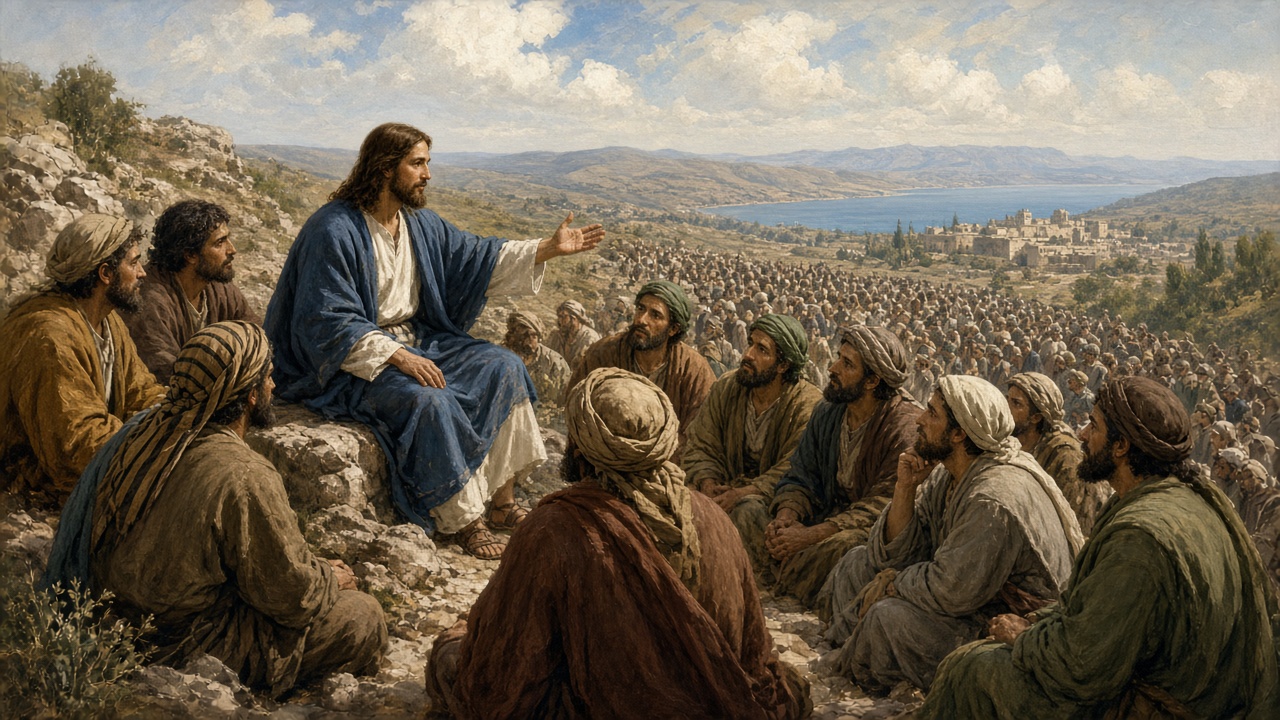
El Sermón del Monte
- Al ver a las multitudes, Jesús subió al monte, se sentó y comenzó a enseñar a sus discípulos. Ese discurso se conoce como el Sermón del Monte. Una nota cronológica sitúa su inicio en el año 28 d. C. y le asigna una duración de un día.Fuentes: el propio texto bíblico · Sermon on the Mount
- Al enseñar sobre los juramentos, Jesús dice que no se jure por Jerusalén, porque es la ciudad del gran Rey. En el original, el nombre está en dual y significa posesión de paz o fundación de paz. Esa forma probablemente alude a los dos montes sobre los que se construyó la ciudad, Sion y Moriah, o, como algunos suponen, a la ciudad alta y la ciudad baja; también se la llamaba ciudad de Dios y ciudad santa.Fuentes: el propio texto bíblico · Jerusalem
Notas escritas con ayuda de IA a partir de fuentes abiertas (Theographic Bible Metadata, CC BY-SA 4.0; Easton’s Bible Dictionary, dominio público) y revisadas antes de publicarse.
Lugares de este capítulo
- Jerusalem · 31.777, 35.234 · versículo 35
Solo aparecen lugares identificados con alta confianza (90 % o más según las fuentes académicas reunidas por OpenBible). Mapa de la época: DARE (Digital Atlas of the Roman Empire), CC BY 4.0; mapa actual: © colaboradores de OpenStreetMap; lugares: OpenBible.info (CC BY 4.0).
Créditos y licencia de esta traducción
Nǫ̀htsı̨̨ Nı̨̨htł'è
Dogrib: Dogrib Genesis & New Testament New Testament & Portions of Old Testament
copyright © 2009 Canadian Bible Society
Language: Dogrib
Translation by: Canadian Bible Society
Tłı̨chǫ Genesis and New Testament
About Tłı̨chǫ
Tłı̨chǫ (Dogrib) is a Na-Dene (Athabaskan) language. It is spoken by the First Nations Tłı̨chǫ people in the Northwest Territories in Canada. It has the largest number of speakers of any of the Aboriginal language communities in the NWT, and is one of the official languages of the Northwest Territories.
About This Translation
This translation includes the book of Genesis and the New Testament in Tłı̨chǫ. The first edition of the Tłı̨chǫ New Testament was published in 2003. It was a historic event, as it was the first time in more than a hundred years that a complete New Testament was published for one of the Dene First Nations in the Territories. The first edition was well received and quickly sold out. In the meantime the book of Genesis had been completed. Consequently, the 2008 reprint of the Tłı̨chǫ New Testament included Genesis.
Though this translation of the New Testament and Genesis took a total of ten years, the people who worked on it built on years of labor invested by the Tłı̨chǫ people, elders, priests and missionaries, translators, educators, and linguists. The material contained in this book was checked and approved by consultants from Wycliffe Bible Translators and the Canadian Bible Society.
If you are interested in obtaining a printed copy of this Bible, please contact the Canadian Bible Society at http://www.biblescanada.com .
Copyright Information
Dogrib Genesis and New Testament © 2003, 2008 Canadian Bible Society
The text of the Bible in Tłı̨chǫ that appears in this electronic format or website is for personal use only.
Up to five hundred (500) verses of the Bible text in any form (written, visual, electronic or audio) may be quoted without permission. The quoted verses may not be more than 50% of a complete book of the Bible, or more than 25% of the total text of the work in which they are quoted. Prior written permission must be obtained for any other use of the text. Copyright acknowledgement must in all cases appear on the title or copyright page.
For more information on copyright conditions or to apply, visit http://www.biblesociety.ca/copyright .
This translation is made available to you under the terms of the
Creative Commons Attribution-Noncommercial-No Derivatives license 4.0.
You may share and redistribute this Bible translation or extracts from it in any format, provided that:
You include the above copyright and source information.
You do not sell this work for a profit.
You do not change any of the words or punctuation of the Scriptures.
Pictures included with Scriptures and other documents on this site are licensed just for use with those Scriptures and documents.
For other uses, please contact the respective copyright owners.
2014-04-22
Fuente: http://ebible.org/dgrDOGNT/ · eBible.org