Lucas 6
Nǫ̀htsı̨̨ Nı̨̨htł'è · Toca un versículo para ver sus referencias cruzadas.
Nǫ̀htsı̨ Dzęę̀ gha K'àowo
1Įłàà Nǫ̀htsı̨ Dzęę̀ k'e Zezì tł'olà dehshee nı k'etło. Wecheekeè tł'olà gìhchı gà edılà t'à tàtsǫgeèhdı gà welǫ jıı nechà-lea weyìı whelaa sìı gedè. 2Pharısee gı̨ı̨lı̨ı̨ mǫ̀hdaa dagogeehke, “Dànìghǫ Nǫ̀htsı̨ Dzęę̀ k'e ayìı wets'àet'ǫǫ sìı haahɂı̨?” gògedı.
3Zezì gots'ǫ̀ hadı, “K'àowocho Davıd ededı̨ eyıts'ǫ wecheekeè degeèhdì ekò ayìı dàyį̀į̀làa sìı Nǫ̀htsı̨ Nı̨htł'è k'e dek'eèhtł'è wek'eyaahtı-le nì? 4Nǫ̀htsı̨kǫ̀ goyaèhtła gà łèt'è degaı goyìı wheɂǫǫ sìı yı̨ı̨ɂà eyıts'ǫ mǫ̀hdaa edecheekeè goghàyı̨ı̨dì. Eyı hajàa sìı ededı̨ wegha wets'àet'ǫ ı̨lè, yahtıı gıgha zǫ wheɂǫ ı̨lè,” gòhdı. 5Eyıt'à Zezì (edeghǫ) gots'ǫ̀ hadı, “Dǫ-wet'àaɂàa-deè sìı Nǫ̀htsı̨ Dzęę̀ gha K'àowo elı̨ hǫt'e,” gòhdı.
6K'achı̨ Nǫ̀htsı̨ Dzęę̀ k'e, Zezì ełègehdèe-kǫ̀ goyaèhtła gà dǫ hoghàehtǫ. Dǫ ı̨łè nàgòts'ehnèe gots'ǫ wılà ełeènııtsoo eyı wheda. 7Pharısee gı̨ı̨lı̨ı̨ eyıts'ǫ Nǫ̀htsı̨-yatıì-k'ègedìı-dǫǫ̀ Zezì k'e nìdahogeeɂà ha gı̨ı̨wǫ t'à, hotıì gıxoehdı, asį̀į̀ Nǫ̀htsı̨ Dzęę̀ k'e dǫ k'aàt'ıì ale ha sǫnı gı̨ı̨wǫ. 8Hanìkò Zezì ayìı ghǫ nànıgedèe sìı gok'èezǫ. Eyıt'à dǫ wılà ełeènııtsoo ts'ǫ̀ hadı, “Nıį̀tła gà dǫ hazǫǫ̀ gınadąą̀ nàąwo,” yèhdı. Eyıt'à eyı dǫ nıìtła gà gonadąą̀ nàwo.
9Zezì gots'ǫ̀ hadı, “Nǫ̀htsı̨ Dzęę̀ k'e ayìı wets'àet'ǫ-le? Dǫ ts'ǫ̀ nezı̨į̀ eghàlats'eeda, hanì-le-ı̨dè dǫ ts'ǫ̀ hoìla eghàlats'eeda? Dǫ edaxàts'eehtèe hanì-le-ı̨dè dǫ ełaàts'ehwhıı?” gòhdı.
10Dǫ hazǫǫ̀ wemǫǫ̀ nàgeèhzaa sìı hotıì goghàeda. Eyı tł'axǫǫ̀ dǫ wılà ełeènııtsoo sìı ts'ǫ̀ hadı, “Nılà daį̀chı,” yèhdı. Edılà daìchì ts'ǫ̀et'ıì wılà k'aàt'ıì anajà. 11Hanìkò Pharısee gı̨ı̨lı̨ı̨ sìı sıì gìch'è, eyıt'à Zezì dàgele ha sìı ghǫ gogede.
Zezì edecheekeè hoònǫ-daats'ǫ̀-nàke gòį̀hchì
12Įłàà Zezì yahtı ha shìhka dekıìtła. To ghàà Nǫ̀htsı̨ ts'ǫ̀ yaı̨htı. 13K'omǫǫ̀dǫǫ̀ agòjà ekò edecheekeè gokayaı̨htı. Dǫ hoònǫ-daats'ǫ̀-nàke nàwhehtsı̨ı̨ sìı, “Secheekeèdeè aahłı̨,” gòhdı. 14Dǫ dıı hagìyeh gòį̀hchì: Sımon (Peter yèhdı), wechı Andrew, James, John, Phılıp, Bartholomew, 15Matthew, Thomas, Alphaeus weza James, Sımon (“dǫ edenèè ghǫneètǫǫ” wìyeh), 16James weza Zhıdàà, eyıts'ǫ Zhıdàà-Iscarıyot, ededı̨ sìı Zezì k'aodèe gotł'aàyehtè ha hǫt'e.
Amìı wexè sìghà ha eyıts'ǫ amìı wexè hoìla ha
17Zezì shìhka gots'ǫ ı̨zhıì edecheekeèdeè goxè hodàèhtła, dèè goı̨tłoa k'e nàwo. Wecheekeè łǫ eyı nègı̨ı̨de eyıts'ǫ Judea nèk'e hazǫǫ̀, Jerusalem gots'ǫ, eyıts'ǫ tıchobàa kǫ̀ta gòlaa Tyre eyıts'ǫ Sıdon gots'ǫ dǫdeè nìı̨de. 18Zezì geèhkw'ǫ ha eyıts'ǫ ayìı t'à eyagı̨ı̨lı̨ı̨ sìı k'aàt'ıì agede gha eyı nègı̨ı̨de. Amìı ı̨nìłı̨ı̨ gık'aladèe sìı k'aàt'ıì agejà. 19Eyıts'ǫ Zezì t'asìı nàtsoo wets'ǫ̀-èlı̨ t'à dǫ k'aàt'ıì aget'į̀ ts'ıhɂǫ̀ dǫ hazǫǫ̀ gıxèlaìdı ha hogeèhdzà.
20Zezì edecheekeè goghàeda, hagòhdı,
“Naxı̨ eteaht'ı̨ı̨ sìı naxıxè sìghà hǫt'e;
Nǫ̀htsı̨ Wenàowoò k'ę̀ę̀ hòɂǫǫ naxıts'ǫ̀-èlı̨ hǫt'e.
21Dıì deahdì nı̨dè naxıxè sìghà hǫt'e;
nezı̨į̀ shèahzhe ha.
Dıì aahtse nı̨dè naxıxè sìghà hǫt'e;
nàɂaahdlò ha.
22Dǫ-wet'àaɂàa-deè wets'ıhɂǫ̀,
dǫ naxıdzagı̨ı̨hwhǫ nı̨dè, naxıdę gı̨ı̨wǫ nı̨dè
naxık'adageedè nı̨dè, naxızì jıı gehtsı̨ nı̨dè,
naxıxè sìghà hǫt'e.
23“Naxıts'ǫ̀ hagòjà nı̨dè wek'èxa yak'e t'asìı nechàa daahnǫǫ sìı naxıdawheɂǫ t'à sıì naxınà dą̀ą yaàhka. Gıcho eyı xèht'eè nakwenàoɂǫǫ ts'ǫ̀ nezı̨į̀ eghàlagı̨ı̨dà-le ı̨lè.
24Naxı̨ dǫ ahxee yàahłı̨ı̨ sìı dıì hòt'a
naxıgha nàhotì-le hòɂǫ t'à naxıgha hoìla ha hǫt'e.
25Dıì nezı̨į̀ shèahzhe nı̨dè deahdì xè
naxıgha hoìla ha hǫt'e.
Dıì nàɂaahdlò nı̨dè naxıdzeè nànııtì xè
aahtse ha.
26Dǫ naxıghǫ nezı̨į̀ agedı nı̨dè
naxıgha hoìla ha hǫt'e.
Gıcho eyı xèht'eè nakwenàoɂǫǫ edegeetsı̨ı̨ sìı ghǫ nezı̨į̀ agedı ı̨lè.
Dǫ naxıts'ǫ̀ xànegı̨ı̨ɂaa sìı gıghǫnıahtǫ
27“Hanìkò amìı seèhkw'ǫǫ sìı dıı hanaxèehsı̨: Dǫ naxınìgelı̨-le sìı gıghǫnıahtǫ eyıts'ǫ dǫ naxıdzagı̨ı̨hwhǫǫ sìı gıts'ǫ̀ nezı̨į̀ eghàlaahda. 28Amìı hoìla naxık'e xàyahtıı sìı eyıts'ǫ amìı naxıts'ǫ̀ nezı̨į̀ eghàlaeda-le sìı gıgha yaahtı. 29Dǫ tsį̀naxį̀ı̨ht'ı nı̨dè k'achı̨ wets'ǫ̀ naahɂa. Dǫ naxıɂeè naxıghǫ neyı̨į̀ɂa nı̨dè naxıkw'ı̨hɂeè sı nıyıìɂa kò. 30Dǫ naxıgeekè nı̨dè t'asìı gıghàahdı eyıts'ǫ t'asìı naxıts'ǫ negı̨į̀wa nı̨dè ‘seghǫahchı’ gìahdı-le. 31Dànì dǫ naxıts'ǫ̀ nezı̨į̀ eghàlageeda ha dahwhǫ k'ę̀ę̀ gıts'ǫ̀ eghàlaahda.
32“Dǫ naxıghǫnegeètǫ zǫ gıghǫnıahtǫ nı̨dè eyı t'asìı nıìle. Hołı̨ı̨-hogehtsı̨ı̨-dǫǫ̀, ededı̨ kò ełeghǫnegeètǫ hǫt'e. 33Dǫ naxıts'ǫ̀ dǫ nezı̨ı̨ gı̨ı̨lı̨ı̨ sìı gıts'ǫ̀ zǫ dǫ nezı̨ı̨ aahłı̨ nı̨dè, eyı t'asìı nıìle. Hołı̨ı̨-hogehtsı̨ı̨-dǫǫ̀, ededı̨ kò, ełets'ǫ̀ dǫ nezı̨ı̨ gı̨ı̨lı̨ hǫt'e. 34Eyıts'ǫ, dǫ ek'èt'à t'asìı naxıghǫ̀gele dahwhǫǫ sìı zǫ t'asìı gıghǫnìahłe nı̨dè eyı t'asìı nıìle. Hołı̨ı̨-hogehtsı̨ı̨-dǫǫ̀, ededı̨ kò, hazǫǫ̀ deghàà ek'èt'à gıghǫeze ha gı̨ı̨wǫ t'à t'asìı ełeghǫnègele hǫt'e. 35Hanìkò dǫ naxıts'ǫ̀ xànegı̨ı̨ɂaa sìı gıghǫnıahtǫ xè gıts'ǫ̀ dǫ nezı̨ı̨ aahłı̨. T'asìı gıghǫnìahłe nı̨dè ek'èt'à seghǫgeele ha dahwhǫ-le. Hanì-ı̨dè wek'èxa t'asìı nechàa naxıda wheɂǫ ha eyıts'ǫ Nǫ̀htsı̨ wenahk'e gǫ̀hłı̨-le sìı weza aahłı̨ ha. Nǫ̀htsı̨ sìı dǫ masì gı̨ı̨wǫ-le eyıts'ǫ dǫ gıjıı ts'ǫ̀ wedzeè eteèɂı̨ hǫt'e. 36Nǫ̀htsı̨ naxıtà wedzeè eteèɂı̨ lanì naxı̨ sı naxıdzeè eteèɂı̨ ha hǫt'e.
Ełesınìyaahtı-le
37“Dǫ sınìyaahtı-le, hanì-ı̨dè naxısınìyaetı ha-le. Dǫ gıdę kò dahwhǫ-le nı̨dè Nǫ̀htsı̨ naxıdę anaxele ha-le. Dǫ ghǫ nahoahłe nı̨dè Nǫ̀htsı̨ naxıghǫ nahoele ha. 38T'asìı dǫ ghàahłe nı̨dè ek'èt'à t'asìı naxıghǫ̀zhe ha. T'asìı dagoòɂǫ xè naxıɂǫ̀ǫ̀ whela ts'ǫ̀ t'asìı naxıghǫ̀zhe ha. T'asìı dàı̨hcho dǫ ghàahɂàa sìı wexèı̨hcho naxıghǫ̀t'à ha hǫt'e,” gòhdı.
39Eyıts'ǫ Zezì dıı hadıì hoghàgoèhtǫ, “Asį̀į̀ dǫ gıdaà goìlee sìı k'ełegeehɂı̨? Į̀łah dèè yìı gǫǫ̀ɂàa goyìı geetł'ì ha-le nì? 40Dǫ hoghàweètǫǫ sìı hoghàyeehtǫǫ-dǫǫ̀ nahk'e elı̨ nıìle, hanìkò deghàà hoghàweètǫ nı̨dè hoghàyeehtǫǫ-dǫǫ̀ xèht'eè lade ha hǫt'e.
41“Ayìıha naxèot'ı̨ wedaà yìı tsolè wheɂǫǫ sìı ghàahda, hanìkò naxıdaà yìı dechı̨ whetǫǫ sìı ts'ǫnıahɂà-le? 42Dànıt'à naxèot'ı̨ ts'ǫ̀ dıı haahdı ha dìì-le, ‘Àgı̨ą, nedaà yìı t'asìa wheɂǫ, negha xàwehchı,’ dahdı, hanìkò naxı̨ naxıdaà yìı dechı̨ whetǫǫ sìı naxıgha wègaat'ı̨-le. Degaı daahtsı̨ kò wek'ę̀ę̀ aahda nıìle! T'akwełǫ̀ǫ̀ naxıdaà yìı dechı̨ whetǫǫ sìı xàahchı nı̨dè naxıgha nezı̨į̀ xègaat'ı̨ agode ha, hanì-ı̨dè naxèot'ı̨ wedaà yìı t'asìa wheɂǫǫ sìı xàahchı ha dìì-le.
Ts'ı eyıts'ǫ wejìecho
43“Ts'ı nezı̨ı̨ sìı wek'e jìecho nezı̨-le gǫ̀hłı̨ nıìle, eyıts'ǫ ts'ı nezı̨-le sìı wek'e jìecho nezı̨ı̨ dehshe nıìle. 44Ts'ı wejìecho ghàà ts'ı wek'èhoedzǫ hǫt'e. Įchį̀ghoò ta gots'ǫ jìe nàts'ehtsį̀ nıìle, eyıts'ǫ gogho nı jìecho nàts'ehtsį̀ nıìle. 45Dǫ nezı̨ı̨ sìı t'asìı nezı̨ı̨ ededzeè yìı whehła t'à nezı̨į̀ k'ehoɂa. Hanìkò hołı̨ı̨-hohtsı̨ı̨-dǫǫ̀ sìı nàowołı̨ı̨ ededzeè yìı whehła t'à ekǫ-le k'ehoɂa. Dǫ gıdzeè yìı dàgǫ̀ht'e ghàà gogede hǫt'e.
Dǫ gǫǫzǫ eyıts'ǫ dǫ gǫǫzǫ-le wegodıì
46“Ayìıha, ‘K'àowo, K'àowo,’ sèahdı, hanìkò sek'èaht'e-le? 47Amìı sets'ǫ̀ at'ı̨, seyatıì ıìkw'o xè yek'ę̀ę̀ edaa sìı dǫ dàhòt'ı̨ı̨ awèehsı̨ı̨ sìı naxıts'ǫ̀ haehsı̨ ha. 48Dǫ dànì kǫ̀ gohtsı̨ lanì. Dèè gǫǫwàa ts'ǫ̀ xàgoı̨hgè gà kwe k'e yìetł'aà gòhtsı̨. Tı daìwì xè taatı̨į̀ nàtsoo kǫ̀ xèɂeèhdı, hanìkò kǫ̀ nezı̨į̀ hòèlı̨ t'à t'asajà-le. 49Hanìkò amìı seyatıì ıìkw'o kò yek'ę̀ę̀ eda-le nı̨dè, dǫ ewaà k'e yìetł'aà dę kǫ̀ gòhtsı̨ lanì. Taatı̨į̀ nàtsoo eyı kǫ̀ xèɂeèhdı ts'ǫ̀et'ıì kǫ̀ nàgoı̨tł'ı xè wedıhòłı̨,” Zezì hadı dǫ xè godo.
¿Sabías que…?
El sábado, los Doce y la llanura
- En un sábado, mientras Jesús pasaba por los sembrados, sus discípulos arrancaban espigas, las restregaban entre las manos y se las comían, y algunos fariseos dijeron que eso era ilícito. Jesús recordó que David y sus compañeros, con hambre, comieron el pan consagrado de la casa de Dios, lícito solo para los sacerdotes, y dijo que el Hijo del Hombre es Señor del sábado. En otro sábado, restauró en la sinagoga la mano derecha atrofiada de un hombre, mientras los escribas y fariseos lo observaban buscando un motivo para acusarlo; una cronología fecha ambos episodios en el año 28 d. C.Fuentes: el propio texto bíblico · Corn on the Sabbath · Healing a Withered Hand
- Después de pasar la noche en oración en el monte, Jesús llamó a sus discípulos y eligió a doce, a quienes designó apóstoles. Entre ellos estaban Simón, a quien llamó Pedro, y Andrés, hermano de Pedro, pescadores de Betsaida, en la costa occidental del mar de Galilea, y Mateo, recaudador de impuestos en Capernaúm, antes conocido como Leví.Fuentes: el propio texto bíblico · Simon Peter · Andrew · Matthew
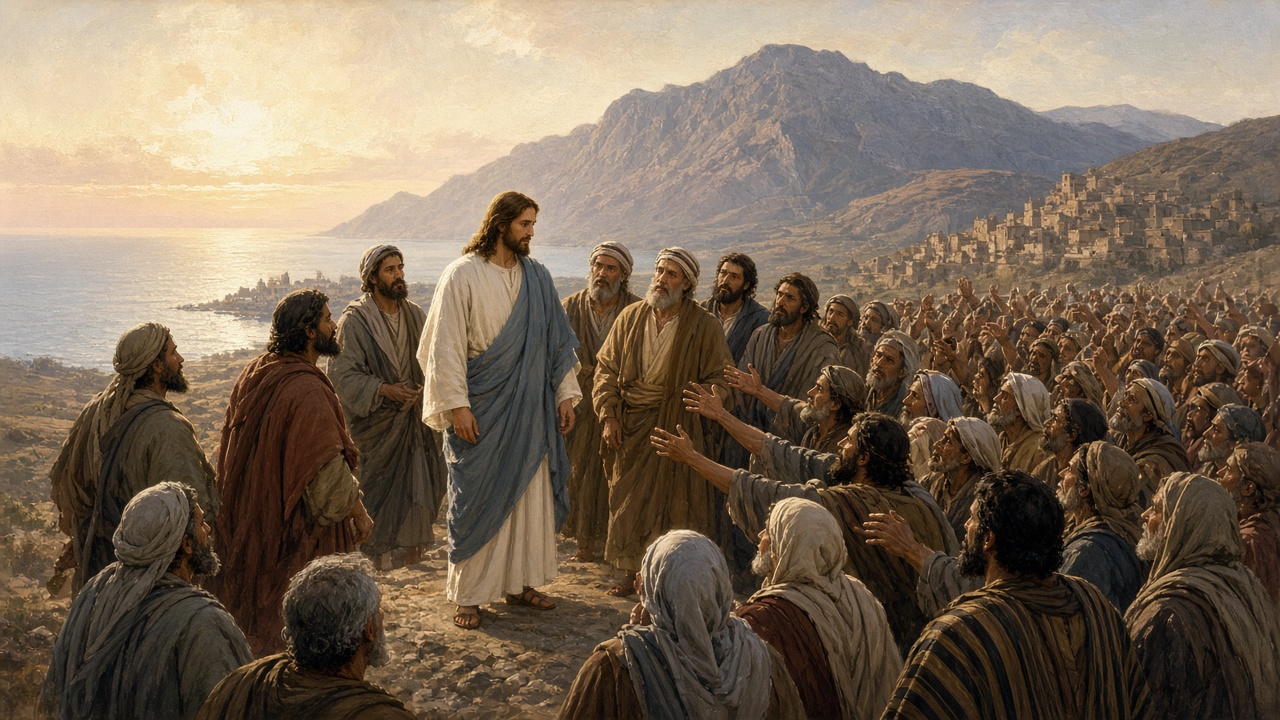
- Jesús bajó con ellos y se detuvo en un lugar llano, donde se había reunido gente de Judea, de Jerusalén y de la costa de Tiro y Sidón para oírlo y ser sanada. Tiro y Sidón eran antiguas ciudades fenicias del Mediterráneo; Sidón, la más antigua, quedaba a unas veinticinco millas al norte de Tiro. Una cronología fecha esta enseñanza en el año 28 d. C. y la titula Sermón del Monte, aunque el relato sitúa a Jesús en terreno llano después de bajar del monte.Fuentes: el propio texto bíblico · Tyre · Sidon · Sermon on the Mount
Notas escritas con ayuda de IA a partir de fuentes abiertas (Theographic Bible Metadata, CC BY-SA 4.0; Easton’s Bible Dictionary, dominio público) y revisadas antes de publicarse.
Lugares de este capítulo
- Jerusalem · 31.777, 35.234 · versículo 17
- Judea · Hoy: Judea 1 · 31.777, 35.234 · versículo 17
- Sidon · Hoy: Sandikli archaeological site in Sidon · 33.561, 35.372 · versículo 17
- Tyre · 33.271, 35.196 · versículo 17
Solo aparecen lugares identificados con alta confianza (90 % o más según las fuentes académicas reunidas por OpenBible). Mapa de la época: DARE (Digital Atlas of the Roman Empire), CC BY 4.0; mapa actual: © colaboradores de OpenStreetMap; lugares: OpenBible.info (CC BY 4.0).
Créditos y licencia de esta traducción
Nǫ̀htsı̨̨ Nı̨̨htł'è
Dogrib: Dogrib Genesis & New Testament New Testament & Portions of Old Testament
copyright © 2009 Canadian Bible Society
Language: Dogrib
Translation by: Canadian Bible Society
Tłı̨chǫ Genesis and New Testament
About Tłı̨chǫ
Tłı̨chǫ (Dogrib) is a Na-Dene (Athabaskan) language. It is spoken by the First Nations Tłı̨chǫ people in the Northwest Territories in Canada. It has the largest number of speakers of any of the Aboriginal language communities in the NWT, and is one of the official languages of the Northwest Territories.
About This Translation
This translation includes the book of Genesis and the New Testament in Tłı̨chǫ. The first edition of the Tłı̨chǫ New Testament was published in 2003. It was a historic event, as it was the first time in more than a hundred years that a complete New Testament was published for one of the Dene First Nations in the Territories. The first edition was well received and quickly sold out. In the meantime the book of Genesis had been completed. Consequently, the 2008 reprint of the Tłı̨chǫ New Testament included Genesis.
Though this translation of the New Testament and Genesis took a total of ten years, the people who worked on it built on years of labor invested by the Tłı̨chǫ people, elders, priests and missionaries, translators, educators, and linguists. The material contained in this book was checked and approved by consultants from Wycliffe Bible Translators and the Canadian Bible Society.
If you are interested in obtaining a printed copy of this Bible, please contact the Canadian Bible Society at http://www.biblescanada.com .
Copyright Information
Dogrib Genesis and New Testament © 2003, 2008 Canadian Bible Society
The text of the Bible in Tłı̨chǫ that appears in this electronic format or website is for personal use only.
Up to five hundred (500) verses of the Bible text in any form (written, visual, electronic or audio) may be quoted without permission. The quoted verses may not be more than 50% of a complete book of the Bible, or more than 25% of the total text of the work in which they are quoted. Prior written permission must be obtained for any other use of the text. Copyright acknowledgement must in all cases appear on the title or copyright page.
For more information on copyright conditions or to apply, visit http://www.biblesociety.ca/copyright .
This translation is made available to you under the terms of the
Creative Commons Attribution-Noncommercial-No Derivatives license 4.0.
You may share and redistribute this Bible translation or extracts from it in any format, provided that:
You include the above copyright and source information.
You do not sell this work for a profit.
You do not change any of the words or punctuation of the Scriptures.
Pictures included with Scriptures and other documents on this site are licensed just for use with those Scriptures and documents.
For other uses, please contact the respective copyright owners.
2014-04-22
Fuente: http://ebible.org/dgrDOGNT/ · eBible.org